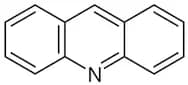
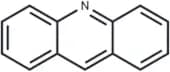
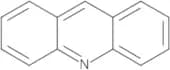
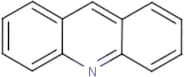
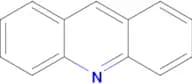
:internalReference - acridine | 260-94-6
Sorry, no product with reference :internalReference been found, but please check out the following similar products:
Acridine
CAS:Formula:C13H9NPurity:>98.0%(T)(HPLC)Color and Shape:White to Brown powder to crystalMolecular weight:179.22Acridine
CAS:Formula:C13H9NPurity:≥ 97.5%Color and Shape:White, light-yellow or light-brown powderMolecular weight:179.22Acridine
CAS:<p>Acridine is a classic fluorescent pH indicator that combines stability and fluorescence properties. Its tricyclic conjugated molecular structure can achieve pH response. In different pH environments, Acridine molecules undergo protonation or deprotonation transformations, and this structural change significantly alters their fluorescence properties.</p>Formula:C13H9NPurity:99.89%Color and Shape:SolidMolecular weight:179.22Acridine
CAS:AcridineFormula:C13H9NPurity:98%Color and Shape: dirty greenish gold crystalsMolecular weight:179.22g/molAcridine
CAS:<p>Applications A quinoline derivative used as manufacturing dyes and as intermediate for antileishmanial agents. A catabolic product of carbamazepine (C175840) metabolite. Dyes and metabolites.<br> Not a dangerous good if item is equal to or less than 1g/ml and there is less than 100g/ml in the package<br>References Pathak, D. et al.: Pharma Chemica, 3, 239 (2011); Mathieu, O. et al.: Xenobiotica, 41, 91 (2011); Rubbo, S.D. et al.: Br. J. Exp. Pathol., 28, 1 (1947);<br></p>Formula:C13H9NColor and Shape:Yellow-OrangeMolecular weight:179.22Acridine
CAS:<p>Acridine is a fluorescent probe that exhibits cholinergic properties. It is used as a model system for biological processes such as the phase transition of acridine and the binding of acridine to DNA. Acridine fluoresces when it binds to DNA, which can be used to study the structural analysis of dna or mitochondrial membrane potential. Acridine has been shown to have antimicrobial activity against bacteria and fungi, with a reaction solution temperature range from 25-50 degrees Celsius. Acridine also exhibits strong binding activity with DNA, which is due to its ability to bind in both the minor groove and major groove regions of the double helix structure.</p>Formula:C13H9NPurity:Min. 97 Area-%Color and Shape:White PowderMolecular weight:179.22 g/molAcridine (Dibenzo[b,e]pyridine)
CAS:Acridine (10-azaanthracene) and indole (2,3-benzopyrrole)Formula:C13H9NColor and Shape:Light Yellow SolidMolecular weight:179.0735