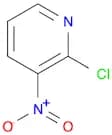
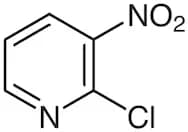
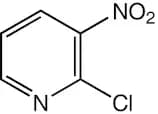
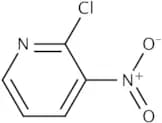
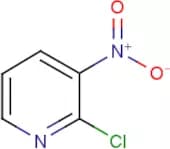
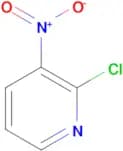
AC-10973 - 2-chloro-3-nitropyridine-99 | 5470-18-8
Sorry, no product with reference AC-10973 been found, but please check out the following similar products:
2-Chloro-3-nitropyridine
CAS:Formula:C5H3ClN2O2Purity:98%Color and Shape:SolidMolecular weight:158.54252-Chloro-3-nitropyridine
CAS:Formula:C5H3ClN2O2Purity:>99.0%(GC)Color and Shape:White to Yellow to Green powder to crystalMolecular weight:158.542-Chloro-3-nitropyridine, 99%
CAS:<p>This Thermo Scientific Chemicals brand product was originally part of the Alfa Aesar product portfolio. Some documentation and label information may refer to the legacy brand. The original Alfa Aesar product / item code or SKU reference has not changed as a part of the brand transition to Thermo Sci</p>Formula:C5H3ClN2O2Purity:99%Color and Shape:White to cream to yellow to brown, Crystals or powder or crystalline powderMolecular weight:158.542-Chloro-3-nitropyridine, 98%
CAS:Formula:C5H3ClN2O2Color and Shape:Powder or crystalsMolecular weight:158.542-Chloro-3-nitropyridine
CAS:2-Chloro-3-nitropyridineFormula:C5H3ClN2O2Purity:98%Color and Shape: brown solidMolecular weight:158.54g/mol2-Chloro-3-nitropyridine
CAS:<p>2-Chloro-3-nitropyridine is a reagent, which is used as a building block for the synthesis of other chemicals. It is a complex compound that can be used to synthesize pharmaceuticals and pesticides. 2-Chloro-3-nitropyridine is also an intermediate that can be used in the synthesis of pesticides, pharmaceuticals, and specialty chemicals. It has been shown to have useful activity as a building block in the synthesis of antibacterial agents and antiviral drugs. This product has been identified by the US Drug Enforcement Administration (DEA) as a chemical of interest.</p>Formula:C5H3ClN2O2Molecular weight:158.54 g/mol2-Chloro-3-nitropyridine
CAS:2-Chloro-3-nitropyridine is a nucleophilic compound that reacts with amines to form substituted amines. It can be synthesized by hydrolysis of chloroacetamide with hydrochloric acid and reacting the resulting ammonium chloride with nitrobenzene. The reactions are nucleophilic substitutions, which means it reacts at an electron rich atom such as the nitrogen in the ammonium chloride. This reaction is exothermic, meaning it releases heat, and the products are 2-chloro-3-nitropyridine and water. 2-Chloro-3-nitropyridine has been shown to inhibit α subunit of protein kinase C (PKCα) activity by binding to the PKCα ATP site. It also has been shown to react with proteins containing reactive sulfhydryl groups such as cysteine residues, forming sulfonamides or sulfoxides that may inhibit enzyme activity orFormula:C5H3ClN2O2Purity:Min. 95%Color and Shape:Slightly Yellow PowderMolecular weight:158.54 g/mol2-Chloro-3-nitropyridine
CAS:Formula:C5H3ClN2O2Purity:98%Color and Shape:SolidMolecular weight:158.542-Chloro-3-nitropyridine
CAS:Controlled Product<p>Applications 2-Chloro-3-nitropyridine (cas# 5470-18-8) is a useful research chemical.<br></p>Formula:C5H3ClN2O2Color and Shape:NeatMolecular weight:158.54