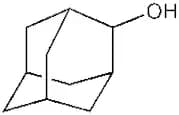
AC-16731 - 2-adamantanol-98 | 700-57-2
Sorry, no product with reference AC-16731 been found, but please check out the following similar products:
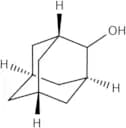
2-Adamantanol, 98%
CAS:<p>This Thermo Scientific Chemicals brand product was originally part of the Alfa Aesar product portfolio. Some documentation and label information may refer to the legacy brand. The original Alfa Aesar product / item code or SKU reference has not changed as a part of the brand transition to Thermo Sci</p>Formula:C10H16OPurity:98%Color and Shape:White, Crystals or powder or crystalline powderMolecular weight:152.242-Adamantanol, 10mM (in DMSO)
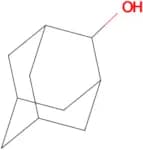
CAS:2-Adamantanol, 10mM (in DMSO)Purity:≥95%Molecular weight:152.23g/molAdamantan-2-ol
CAS:Adamantan-2-olFormula:C10H16OPurity:≥95%Color and Shape: white crystalline powderMolecular weight:152.23g/mol2-Adamantanol
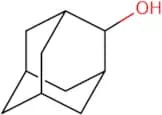
CAS:Formula:C10H16OPurity:>98.0%(GC)Color and Shape:White to Almost white powder to crystalMolecular weight:152.242-Adamantanol
CAS:<p>2-Adamantanol (2-Hydroxyadamantane) was used to synthesize antiallergic drug Mizolastine.</p>Formula:C10H16OPurity:0%Color and Shape:White To Off-White Crystalline PowderMolecular weight:152.232-Adamantanol
CAS:<p>2-Adamantanol is a biologically active compound that can be found in the form of an oily liquid. It has been shown to have effects on the central nervous system, including analgesia, sedation, and muscle relaxation. 2-Adamantanol is also used as a solvent for organic compounds and as a chemical intermediate. In addition to these properties, it can be found in some polyurethane foam insulation materials and in some rubber products. The mechanism of 2-adamantanol's biological activity is not well understood, but it may involve hydrogen bonding with hydroxyl groups on proteins or other molecules. There are many different ways to synthesize 2-adamantanol; however, one of the most commonly used synthesis methods is through reaction between 1-adamantanol and trifluoroacetic acid followed by hydrogenation with a metal catalyst.<br>2-Adamantanol has been observed to react with deuterium isotopes through transfer reactions during titration</p>Formula:C10H16OPurity:Min. 95%Color and Shape:White PowderMolecular weight:152.23 g/mol