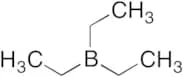
AC-17698 - triethylborane-1m-solution-in-thf-acrosealtm | 109-99-9
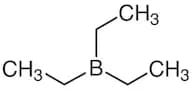
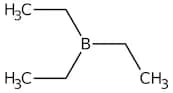
Triethylborane (ca. 11% in Tetrahydrofuran, ca. 1mol/L)
CAS:Formula:C6H15BColor and Shape:Colorless clear liquidMolecular weight:98.00Triethylborane 1.0 M solution in hexanes
CAS:Triethylborane 1.0 M solution in hexanesPurity:≥95%Color and Shape:Colourless LiquidMolecular weight:97.99g/molTriethylborane, 1M soln. in THF
CAS:This Thermo Scientific Chemicals brand product was originally part of the Alfa Aesar product portfolio. Some documentation and label information may refer to the legacy brand. The original Alfa Aesar product / item code or SKU reference has not changed as a part of the brand transition to Thermo Sci
Formula:C6H15BColor and Shape:Clear colorless to yellow to orange, LiquidMolecular weight:98.00CALLERY™ Triethylborane-1,3-diaminopropane, min. 97%
CAS:Formula:(C2H5)3BNH2(CH2)3NH2Purity:min. 97%Color and Shape:colorless to amberMolecular weight:172.12CALLERY™ Triethylborane, min 99.8%
CAS:Formula:B(C2H5)3Purity:min 99.8%Color and Shape:clear to slightly amber liq.Molecular weight:98.00CALLERY™ Triethylborane, 14% in tetrahydrofuran
CAS:Formula:(C2H5)3BColor and Shape:clear to slightly amberMolecular weight:98.00CALLERY™ Triethylborane-diethylenetriamine, min. 97%
CAS:Formula:(C2H5)3BH2N(CH2)2NH(CH2)2NH2Purity:min. 97%Color and Shape:colorless to amberMolecular weight:201.17Triethylborane-1,3-diaminopropane
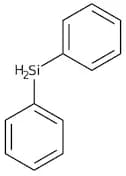
CAS:Triethylborane-1,3-diaminopropane is a polyolefin radiation initiator. It can be used in the production of polypropylene and polyethylene by polymerizing olefins, such as 2-methylanthraquinone, at low energy. This method has been shown to give photocurable polyolefin plastics with benzophenones and coumarin as substrates. The bonding properties of triethylborane-1,3-diaminopropane are due to its ability to form covalent bonds with the unsaturated groups on the substrate molecules.Formula:C9H25BN2Purity:Min. 95%Color and Shape:Clear LiquidMolecular weight:172.12 g/molDiphenylsilane, 97%
CAS:Thiocarbonyl derivatives of secondary alcohols are readily reduced by diphenylsilane in a radical chain process at room temperature using triethylborane-air as an initiator. An improved radical chain procedure for the deoxygenation of secondary and primary alcohols using diphenylsilane as hydrogen a
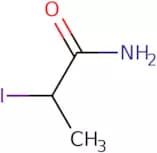
Formula:C12H12SiPurity:97%Color and Shape:Clear colorless, LiquidMolecular weight:184.312-Iodopropanamide
CAS:2-Iodopropanamide is a polymeric compound that is obtained from the reaction of 2-iodobenzene with triethylborane in the presence of polystyrene. The product has a high yield and can be used to make laminates that are semipermeable, osmotic, and environmentally friendly. The polymeric composition is also cyclisable.
Formula:C3H6INOPurity:Min. 95%Molecular weight:198.99 g/mol1-(Triethyl-λ4-Boranyl)Propane-1,3-Diamine
CAS:1-(Triethyl-λ4-Boranyl)Propane-1,3-DiaminePurity:98%Molecular weight:171.11g/molTriethylborane (1.0 M in THF)
CAS:Controlled ProductApplications Triethylborane reacted with 8-hydroxyquinoline to synthesize three 8--hydroxyquinolato (q) boron compounds B(C2H5)2q (1), BPh2q (2), and B(2-naph)2q (3).
References Wu, Q., et al.: Chem. Mater., 12, 79 (2000).Formula:C6H15BColor and Shape:Single SolutionMolecular weight:97.99