AC-18499 - polyacrylic-acid-63-wt-solution-in-water-approx-mw-2000 | 7732-18-5
Diaion™ WK60L(H), ion exchange resin, weakly acidic porous type, 4.4 meq/ml on polyacrylate
Pharmaceuticals, dealkalination, metal recovery, antibiotics, sucrose purifications. Can be used in wide pH range This Thermo Scientific Chemicals brand product was originally part of the Alfa Aesar product portfolio. Some documentation and label information may refer to the legacy brand. The origiColor and Shape:White, BeadsHPTLC Silica Gel 60 GF254, 2.5*7.5cm glass support, 0,25mm coating, binder polyacrylate-Na, 320pcs/box
Color and Shape:LiquidMolecular weight:60.0832-Propenoic acid, potassium salt (1:1)
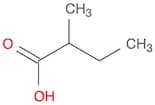
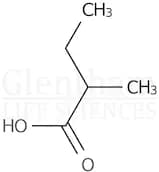
CAS:Formula:C3H3KO2Purity:97%Color and Shape:SolidMolecular weight:110.1530Butanoic acid, 2-methyl-
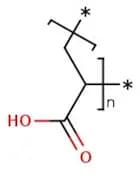
CAS:Formula:C5H10O2Purity:98%Color and Shape:LiquidMolecular weight:102.1317Poly(acrylic acid), 25% soln in water
CAS:Formula:C4H8O2Purity:95%Color and Shape:LiquidMolecular weight:88.1051Poly(acrylic acid); 35% solution in water
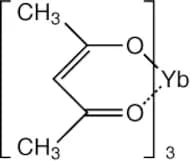
CAS:Formula:CH2CH(CO2H)Color and Shape:Viscous, colourless to light-yellow liquidMolecular weight:72.02113Ytterbium(III) 2,4-pentanedionate, REacton™, 99.9% (REO)
CAS:Ytterbium(III) 2,4-pentanedionate is used as a catalyst for the preparation of aliphatic oligocarbonate polyols. It takes part in transesterification reactions. It is used for the preparation of polyesters or polyacrylates. This Thermo Scientific Chemicals brand product was originally part of the AFormula:C15H21O6YbPurity:99.9%Molecular weight:470.37Benzyl acrylate, 98%, stab. with ca 150ppm 4-methoxyphenol
CAS:Preparation of high refractive index polyacrylatesFormula:C10H10O2Purity:98%Color and Shape:Clear colorless to pale yellow, LiquidMolecular weight:162.19Poly(acrylic acid), 25 wt% soln. in water
CAS:Polyacrylic acid is used in disposable diapers and in ion exchange resins. It is also used to study solute diffusion in polyvinyl alcohol/polyacrylic acid copolymer hydrogel. It is also employed as a thickening, suspending, emulsifying and dispersing agent in pharmaceuticals, cosmetics, adhesives anFormula:(C3H4O2)nColor and Shape:LiquidMolecular weight:72.02113Bathocuproin sulfonate disodium salt hydrate, 97%
CAS:Used as a stain for proteins in polyacrylamide gels; for determination of iron and copper; and uric acid by automated proceduresBathocuproin sulfonate disodium salt hydrate is a mixture of isomers suitable for the determination of iron and copper. It is also used as a stain for proteins in polyacrylFormula:C26H18N2Na2O6S2Purity:97%Color and Shape:White to cream to pale brown, PowderMolecular weight:564.54Butyl Acrylate
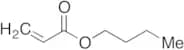
CAS:Applications Butyl Acrylate is one of the monomers used in the synthesis of a polyacrylate emulsion thickening agent synthesized by emulsion polymerization. Butyl Acrylate is also used as a reagent in the synthesis of new bis(acyl)phosphane oxide photoinitiators for surface functionalization of cellulose nanocrystals.
Not a dangerous good if item is equal to or less than 1g/ml and there is less than 100g/ml in the package
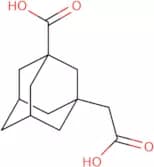
References Dang, Ch., et al.: Shanghai Tuliao, 53, 6 (2015); Yu, J., et al.: Carbohyd. Polym., 141, 143 (2016)Formula:C7H12O2Color and Shape:NeatMolecular weight:128.173-Carboxymethyl-1-adamantane carboxylic acid
CAS:3-Carboxymethyl-1-adamantane carboxylic acid is a tribasic, carboxylic acid that is used in the field of appraisal. 3-Carboxymethyl-1-adamantane carboxylic acid was first synthesized by the reaction of a dibromide and formic acid. This synthesis has been shown to produce a product with high purity, homogeneity, and stability. The use of this technique can be applied in tribasic, carboxylic acids as well as other polycarboxylates such as polyacrylics, polymaleic, and polyitaconic acids. The technique of analyzing these compounds by spectroscopic techniques is called profiling. This technique can be used for the identification of copper in natural environments such as rivers or lakes.Formula:C13H18O4Purity:Min. 95%Color and Shape:PowderMolecular weight:238.28 g/molHexamethylenediamine carbamate
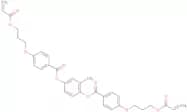
CAS:Hexamethylenediamine carbamate (HMDA) is a compound that is used as a cross-linking agent for polymers. It is made by reacting hexamethylene diamine with carbonyldiimidazole to form the carbamate ester. HMDA can be used in a variety of applications including in polyurethane films, coatings, and adhesives. The reaction mechanism of HMDA involves nucleophilic attack on the carbonyl group by an alcohol or amine to form an acetal or amide linkage. HMDA reacts with hydroxyl groups on polymers such as polyesters and polyacrylates to form ether linkages. This reaction can also take place with carboxyl groups on fatty acids and monocarboxylic acids to form ester linkages.Formula:C7H16N2O2Purity:Min. 95%Color and Shape:PowderMolecular weight:160.21 g/mol2-Methyl-1,4-phenylene bis(4-(3-(acryloyloxy)propoxy)benzoate)
CAS:2-Methyl-1,4-phenylene bis(4-(3-(acryloyloxy)propoxy)benzoate) is a polymerizable liquid crystal monomer that can be used as a polymerization initiator. It is an azobenzene with a chiral carbon atom and the chemical structure of the compound is similar to polyacrylate. This drug is resistant to radiation and can be used for diagnostic purposes. It has been shown to be effective in controlling the growth of resistant cultivars such as "Fusarium oxysporum". The synthesis process includes reacting 2-methyl-1,4-phenylene bis(4-(3-(acryloyloxy)propoxy)benzoate) with a molecular weight of 160 g/mol and benzoic acid in dichloromethane at room temperature under stirring.
Formula:C33H32O10Purity:Min. 95%Color and Shape:White Off-White PowderMolecular weight:588.6 g/molSodium acrylate
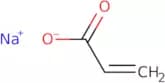
CAS:Sodium acrylate is a monomer used in the production of acrylic acid and polyacrylic acid. It is synthesized from ethylene glycol, acetic acid, and sodium hydroxide. Sodium acrylate has been shown to inhibit the growth of solid tumours and autoimmune diseases in animal models. Sodium acrylate also has a low phase transition temperature, which makes it a good candidate for use as a polymerization initiator. Sodium acrylate can be used in the production of polyacrylic acid with benzalkonium chloride or sodium citrate as an additive to prevent polymerization inhibition. The long-term toxicity of sodium acrylate has not been determined; however, short-term toxicities have been observed with eye disorders and electrochemical impedance spectroscopy (EIS).
Formula:C3H3NaO2Purity:Min. 95%Color and Shape:PowderMolecular weight:94.04 g/mol2-Hydroxyethylacrylate
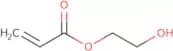
CAS:2-Hydroxyethylacrylate is a monomer that belongs to the class of acrylates. It is used in the synthesis of polymers, such as glycol ethers and polyacrylates. 2-Hydroxyethylacrylate has a high molecular weight and low reactivity, which makes it an excellent candidate for use in medical devices. 2-Hydroxyethylacrylate has been shown to have anti-bacterial activity against methicillin resistant Staphylococcus aureus (MRSA) and Clostridium perfringens. The antimicrobial activity may be due to its ability to bind with bacterial membranes, leading to cell death by lysis. 2-Hydroxyethylacrylate can also form hydrogen bonds with other molecules, which may contribute to its antimicrobial properties.
Formula:C5H8O3Purity:Min. 95 Area-%Color and Shape:PowderMolecular weight:116.12 g/mol