AC-32800 - dab-easy-tablets-for-immunohistochemistry-10-mgtablet | 10043-35-3
10X Phosphate Buffered Saline (PBS) for molecular biology
Phosphate Buffered Saline (PBS) is an essential buffer solution widely utilized in biological research and clinical settings. It plays a critical role in preventing cell rupture or shrinkage caused by osmosis, and its non-toxic formulation is safe for cellular applications. The 10X PBS solution provides a stable pH environment, which is vital for optimal enzyme activity and various biological processes. This stability makes PBS particularly suitable for preparing reagents, conducting protein dialysis, and performing immunohistochemistry, thus ensuring consistent and reliable experimental results. In addition to its applications in cell biology, PBS is also employed in diverse fields, including the development of custom ELISA buffers to optimize antibody-antigen interactions.Color and Shape:Clear, Colourless, LiquidN-Benzylideneaniline, 99%
CAS:N-Benzylideneaniline is an additional stain which is used in various immunoassays including flow cytometry, immunofluorescense, immunohistochemistry, and other applications. This Thermo Scientific Chemicals brand product was originally part of the Alfa Aesar product portfolio. Some documentation andFormula:C13H11NPurity:99%Color and Shape:Pale cream or pale yellow to yellow brown, Crystalline powderMolecular weight:181.24Gold nanoparticles, 100nm, supplied in 0.1mM PBS, reactant-free, 99%, OD1, 572nm absorption
CAS:Ideal for sensitive applications requiring a minimum amount of contaminating reactants. Well suited for protein conjugate development by passive adsorption to the gold nanoparticle surface. Conjugates can be used in blotting, electron microscopy and immunohistochemistry applications This Thermo Scie
Formula:AuPurity:99%Color and Shape:LiquidMolecular weight:196.97Gold nanoparticles, 30nm, supplied in 0.1mM PBS, reactant-free, 99%, OD1, 526nm absorption
CAS:Ideal for sensitive applications requiring a minimum amount of contaminating reactants. Well suited for protein conjugate development by passive adsorption to the gold nanoparticle surface. Conjugates can be used in blotting, electron microscopy and immunohistochemistry applications This Thermo Scie
Formula:AuPurity:99%Molecular weight:196.97Gold nanoparticles, 50nm, supplied in 0.1mM PBS, 95%, OD1, 535nm absorption
CAS:For conjugate development by passive adsorption of proteins and other ligands to the gold nanoparticle surface. Conjugates can be used in blotting, electron microscopy and immunohistochemistry applications. This Thermo Scientific Chemicals brand product was originally part of the Alfa Aesar productFormula:AuPurity:95%Color and Shape:LiquidMolecular weight:196.97Gold nanoparticles, 10nm, supplied in 0.1mM PBS, reactant-free, 99%, OD1, 520nm absorption
CAS:Ideal for sensitive applications requiring a minimum amount of contaminating reactants. Well suited for protein conjugate development by passive adsorption to the gold nanoparticle surface. Conjugates can be used in blotting, electron microscopy and immunohistochemistry applications This Thermo SciePurity:99%Gold nanoparticles, 15nm, supplied in 0.1mM PBS, reactant-free, 99%, OD1, 520nm absorption
CAS:Ideal for sensitive applications requiring a minimum amount of contaminating reactants. Well suited for protein conjugate development by passive adsorption to the gold nanoparticle surface. Conjugates can be used in blotting, electron microscopy and immunohistochemistry applications This Thermo ScieFormula:AuPurity:99%Color and Shape:LiquidMolecular weight:196.97Gold nanoparticles, 20nm, supplied in 0.1mM PBS, reactant-free, 99%, OD1, 524nm absorption
CAS:Ideal for sensitive applications requiring a minimum amount of contaminating reactants. Well suited for protein conjugate development by passive adsorption to the gold nanoparticle surface. Conjugates can be used in blotting, electron microscopy and immunohistochemistry applications This Thermo ScieFormula:AuPurity:99%Color and Shape:LiquidMolecular weight:196.97Gold nanoparticles, 40nm, supplied in 0.1mM PBS, reactant-free, 99%, OD1, 530nm absorption
CAS:Ideal for sensitive applications requiring a minimum amount of contaminating reactants. Well suited for protein conjugate development by passive adsorption to the gold nanoparticle surface. Conjugates can be used in blotting, electron microscopy and immunohistochemistry applications This Thermo Scie
Formula:AuPurity:99%Molecular weight:196.97Gold nanoparticles, 50nm, supplied in 0.1mM PBS, reactant-free, 99%, OD1, 535nm absorption
CAS:Ideal for sensitive applications requiring a minimum amount of contaminating reactants. Well suited for protein conjugate development by passive adsorption to the gold nanoparticle surface. Conjugates can be used in blotting, electron microscopy and immunohistochemistry applications This Thermo ScieFormula:AuPurity:99%Molecular weight:196.97Gold nanoparticles, 5nm, supplied in 0.1mM PBS, reactant-free, 99%, OD1, 515-520nm absorption
CAS:Ideal for sensitive applications requiring a minimum amount of contaminating reactants. Well suited for protein conjugate development by passive adsorption to the gold nanoparticle surface. Conjugates can be used in blotting, electron microscopy and immunohistochemistry applications This Thermo Scie
Formula:AuPurity:99%Color and Shape:LiquidMolecular weight:196.97Gold nanoparticles, 250nm, supplied in 0.1mM PBS, reactant-free, 99%
CAS:Ideal for sensitive applications requiring a minimum amount of contaminating reactants. Well suited for protein conjugate development by passive adsorption to the gold nanoparticle surface. Conjugates can be used in blotting, electron microscopy and immunohistochemistry applications This Thermo ScieFormula:AuPurity:99%Molecular weight:196.97ErbB-2/HER-2 Mouse mAb
ErbB 2 is a receptor tyrosine kinase of the ErbB 2 family. It is closely related instructure to the epidermal growth factor receptor. ErbB 2 oncoprotein is detectable in a proportion of breast and other adenocarconomas, as well as transitional cell carcinomas. In the case of breast cancer, expression determined by immunohistochemistry has been shown to be associated with poor prognosis.ErbB-2/HER-2 Mouse mAb
ErbB 2 is a receptor tyrosine kinase of the ErbB 2 family. It is closely related instructure to the epidermal growth factor receptor. ErbB 2 oncoprotein is detectable in a proportion of breast and other adenocarconomas, as well as transitional cell carcinomas. In the case of breast cancer, expression determined by immunohistochemistry has been shown to be associated with poor prognosis.BYST rabbit pAb
Bystin is expressed as a 2-kb major transcript and a 3.6-kb minor transcript in SNG-M cells and in human trophoblastic teratocarcinoma HT-H cells. Protein binding assays determined that bystin binds directly to trophinin and tastin, and that binding is enhanced when cytokeratins 8 and 18 are present. Immunocytochemistry of HT-H cells showed that bystin colocalizes with trophinin, tastin, and the cytokeratins, suggesting that these molecules form a complex in trophectoderm cells at the time of implantation. Using immunohistochemistry it was determined that trophinin and bystin are found in the placenta from the sixth week of pregnancy. Both proteins were localized in the cytoplasm of the syncytiotrophoblast in the chorionic villi and in endometrial decidual cells at the uteroplacental interface. After week 10, the levels of trophinin, tastin, and bystin decreased and then disappeared from placental villi. [provided by RefSeq, Jul 2008],Anti-MRC2/CD280 Antibody
Anti-MRC2/CD280 Antibody is a humanized anti-MRC2/CD280 antibody that can be used in immunoblotting (WB) and immunohistochemistry experiments.Purity:99.1% (SDS-PAGE); 98.7% (SEC-HPLC) - 99.1% (SDS-PAGE); 98.7% (SEC-HPLC)Color and Shape:Odour LiquidMolecular weight:142.91 kDaAnti-GLP-1R Antibody
Anti-GLP-1R Antibody is an anti-GLP-1R antibody that can be used for immunohistochemistry of paraffin sections.Purity:98.3% (SDS-PAGE); 97.2% (SEC-HPLC) - 98.3% (SDS-PAGE); 97.2% (SEC-HPLC)Color and Shape:Odour LiquidMolecular weight:144.48 kDaRK-10
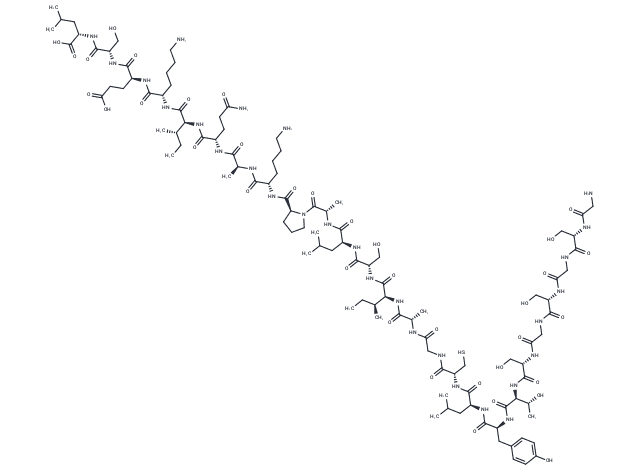
CAS:RK-10 is a peptide that binds to PD-L1. After being conjugated with Cy5 or Biotin, RK-10 can be used to identify PD-L1-expressing tumors through flow cytometry or immunohistochemistry. It is applicable for research in detecting cancers such as non-small cell lung cancer (NSCLC), breast cancer, squamous cell carcinoma, and melanoma.Formula:C105H176N28O36SColor and Shape:SolidMolecular weight:2438.75TMB dihydrochloride
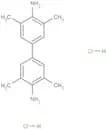
CAS:TMB dihydrochloride is a colorimetric substrate for HRP in ELISA and immunohistochemistry staining.Formula:C16H22Cl2N2Purity:99.78% - 99.98%Color and Shape:White To Pale Yellow PowderMolecular weight:313.27TMB
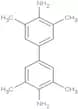
CAS:TMB (BM blue) is a chromogenic substrate. It used in staining procedures in immunohistochemistry and a visualizing reagent used in ELISA.Formula:C16H20N2Purity:99.47% - >99.99%Color and Shape:Physical Description Pale Yellow Crystals Or Off-White Powder (Ntp 1992)Molecular weight:240.34