AC-37729 - triethylaluminium-13m-solution-in-heptane | 142-82-5
Sorry, no product with reference AC-37729 been found, but please check out the following similar products:
Triethylaluminum, min. 93%
CAS:Triethylaluminum, min. 93%
Formula:(C2H5)3AlPurity:min. 93%Color and Shape:colorless liq.Molecular weight:114.17Triethylaluminum paraffin pellet
CAS:Triethylaluminum paraffin pellet
Formula:C6H15AlColor and Shape:paraffin pelletMolecular weight:114.16Triethylaluminum, elec. gr. (99.999+%-Al) PURATREM
CAS:Formula:(C2H5)3AlPurity:(99.999+%-Al)Color and Shape:colorless liq.Molecular weight:114.17Tributylborane
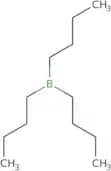
Tributylborane is an isomeric mixture that consists of three molecules of borane with one molecule of triethylaluminium. It is used as a solid catalyst in the synthesis of galacturonic acid from oxalic acid. Tributylborane has been shown to react with zirconium oxide to form a reactive, acidic, and solid catalyst for the reaction mechanism. The test samples were collected from clinical studies and showed that tributylboranes have been used as an alternative to other catalysts in cholesterol synthesis and polymerization reactions due to their high reactivity and low cost.Formula:C12H27BPurity:Min. 95%Molecular weight:182.15 g/mol3,5-Dichloro-4-ethoxyphenol
3,5-Dichloro-4-ethoxyphenol is a chlorinating agent that reacts with aluminium to produce chlorine. It has been shown to react with dichlorides and electron donors such as quinones, producing 3,5-dichloroquinone. This compound is stable in the presence of oxygen and water and can be used to produce chlorine in the absence of air. The yields are low due to the high reactivity of aluminium chloride. In order for this reaction to take place, triethylaluminium must be present as an activator. The radical mechanism for this process is shown below: 3,5-Dichloro-4-ethoxyphenol + Al → 3,5-Dichloroquinone + AlCl The radical mechanism for this process is shown below: 3,5-Dichloro-4-ethoxyphenol + Al → 3,5-Formula:C8H8Cl2O2Purity:Min. 95%Molecular weight:207.05 g/mol