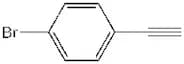
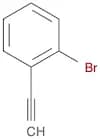
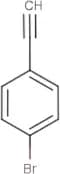
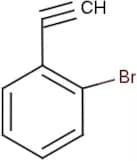
AC-39094 - bis4-bromophenylacetylene-97 | 2789-89-1
Sorry, no product with reference AC-39094 been found, but please check out the following similar products:
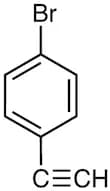
4-Bromophenylacetylene, 97%
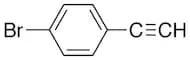
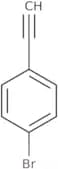
CAS:<p>4-Bromophenylacetylene, is used as the starting material for second-order nonlinear optical materials, heterocyclotriynes, and unsymmetrical 1,4-diarylbutadiynes. This Thermo Scientific Chemicals brand product was originally part of the Alfa Aesar product portfolio. Some documentation and label info</p>Formula:C8H5BrPurity:97%Color and Shape:White to pale cream or pale yellow, Crystals or powder or crystalline powderMolecular weight:181.034-Bromophenylacetylene
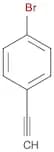
CAS:<p>4-Bromophenylacetylene</p>Formula:C8H5BrPurity:98%Color and Shape: faint to light grey. crystalline solidMolecular weight:181.03g/mol2-Bromophenylacetylene
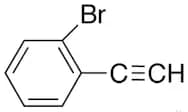
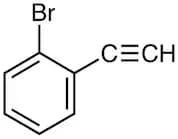
CAS:2-BromophenylacetyleneFormula:C8H5BrPurity:98%Color and Shape: clear. very dark red/orange liquidMolecular weight:181.03g/mol3-Bromophenylacetylene
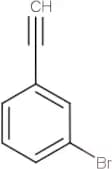
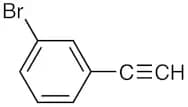
CAS:3-BromophenylacetyleneFormula:C8H5BrPurity:≥95%Color and Shape: clear. very dark yellow liquidMolecular weight:181.03g/mol2-Bromophenylacetylene
CAS:Controlled ProductFormula:C8H5BrColor and Shape:NeatMolecular weight:181.034-Bromophenylacetylene
CAS:Controlled ProductFormula:C8H5BrColor and Shape:NeatMolecular weight:181.034-Bromophenylacetylene
CAS:<p>4-Bromophenylacetylene is a molecule that can be activated by nucleophilic attack, which is the process of reacting with a nucleophile. It is used in clinical studies to determine the activity of pancreatic lipase in humans and animals. 4-Bromophenylacetylene has been shown to have a high degree of regiospecificity, meaning that it only reacts with certain carbon atoms on the molecule, and not all of them. This allows for selective reactions to take place. 4-Bromophenylacetylene also reacts with amines, which are organic molecules containing nitrogen and hydrogen, through an X-ray absorption process. X-ray absorption is defined as an x-ray photon being absorbed by an electron in a molecule, causing the electron to change its energy level and state. The energy level and state changes are characterized by x-ray emission spectroscopy (XES).</p>Formula:C8H5BrPurity:Min. 95%Molecular weight:181.03 g/mol1-Bromo-4-ethynylbenzene
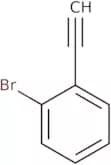
CAS:Formula:C8H5BrPurity:>98.0%(GC)Color and Shape:White to Yellow powder to crystalMolecular weight:181.031-Bromo-2-ethynylbenzene
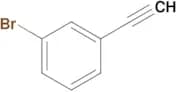
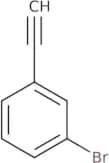
CAS:Formula:C8H5BrPurity:>98.0%(GC)Color and Shape:Light yellow to Brown clear liquidMolecular weight:181.031-Bromo-3-ethynylbenzene
CAS:Formula:C8H5BrPurity:>98.0%(GC)Color and Shape:Light yellow to Brown clear liquidMolecular weight:181.033′-Bromophenyl acetylene
CAS:Formula:C8H5BrPurity:96%Color and Shape:Liquid, ClearMolecular weight:181.0324′-Bromophenyl acetylene
CAS:Formula:C8H5BrPurity:96%Color and Shape:Solid, Powder or Crystalline Powder or Solid or ChunksMolecular weight:181.0322-Bromophenylacetylene
2-Bromophenylacetylene is a synthetic chemical that has been shown to have cytotoxic activity in cervical cancer cells. It was also found to be luminescent, with an emission peak at 535 nm and a maximum quantum yield of 0.3%. 2-Bromophenylacetylene is an adsorbent for sulfonic acid and chloride ions, which can be used for the detection of these ions in water samples. This compound also reacts with lysine residues on histones H3 and H4, which may play a role in its cytotoxic activity. 2-Bromophenylacetylene contains a carbonyl group that can react with the amine group on histone H3 or H4, forming an imine bond. The imine bond can then react with hydroxyl groups on other proteins, leading to cross-linking of the proteins and subsequent cell death.Formula:C8H5BrPurity:Min. 95%Molecular weight:181.03 g/mol3-Bromophenylacetylene
3-Bromophenylacetylene is a metastable compound that is used in the synthesis of alpha-synuclein. This compound can be synthesized by the hydroboration of phenylacetic acid followed by the oxidation of the boronic ester with sodium hypochlorite. 3-Bromophenylacetylene has been shown to act as a ligand for copper and palladium, which enables it to be used in cross-coupling reactions. In addition, this compound can be used for light emission, due to its ability to undergo hydrosilylation.Formula:C8H5BrPurity:Min. 95%Molecular weight:181.03 g/mol