AC-43228 - triethylamine-for-analysis | 121-44-8
Sorry, no product with reference AC-43228 been found, but please check out the following similar products:
5-Amino-1-phenylpyrazole-4-carboxamide
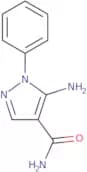
CAS:5-Amino-1-phenylpyrazole-4-carboxamide (APC) is a synthetic compound that has been shown to have potential as an antitumor agent. This compound has been shown to inhibit the growth of cancer cells in vitro, with cytometric analysis showing that it inhibits DNA synthesis and cell proliferation. It also has antibacterial activity, which may be due to its ability to inhibit bacterial DNA gyrase and topoisomerase IV. APC has been found in wastewater at concentrations of 2.6 μg/L, indicating that it is currently being produced and used for industrial purposes. APC can be synthesized by reacting 1-(3-aminopropyl)piperazine with 3-(2H)-furanone and triethylamine to form 5-amino-1-[(2H)-pyridin-2-yl]pyrazole-4-- carboxylic acid chloride, which can thenFormula:C10H10N4OPurity:Min. 95%Color and Shape:PowderMolecular weight:202.21 g/molTriethylammonium acetate, 1M aqueous solution
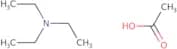
CAS:<p>Triethylammonium acetate, 1M aqueous solution is an ion pairing reagent that can be used to prepare DNA templates for chromatographic analysis. It is also used as a chemical inhibitor in polymer compositions. Triethylammonium acetate has been shown to have the ability to control analytical methods by acting as a fluorescence probe or a control analysis component. The rate constant of triethylammonium acetate is approximately 2.5 x 10⁻³ M-1s-1 at pH 7.0 and 25°C. Triethylammonium acetate, 1M aqueous solution is prepared by dissolving triethylamine in water and adding phosphorus pentoxide to adjust the pH. The pH of the solution should be checked before use because it can affect the stability of triethylammonium acetate and its rate constant.</p>Formula:C8H19NO2Purity:Min. 95%Color and Shape:Clear LiquidMolecular weight:161.24 g/molSulfur trioxide triethylamine complex
CAS:<p>Sulfur trioxide triethylamine complex is a second-order rate constant for the reaction of ester hydrochloride with carbapenem. It has been shown to have anti-inflammatory properties, which may be due to its inhibition of prostaglandin synthesis. Sulfur trioxide triethylamine complex has also been shown to be an effective inhibitor of pyrazoles and chromatographic analysis at nmr spectra. It has been found to act as a substrate for hydroxyl group, fetal bovine serum, and metabolic disorders in urine samples. Disulfate is a byproduct of this reaction.</p>Formula:C6H15N·SO3Purity:Min. 95%Color and Shape:White PowderMolecular weight:181.25 g/molEthyl-2-aminoquinoline-3-carboxylate
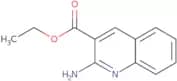
CAS:<p>Ethyl-2-aminoquinoline-3-carboxylate is an intramolecular reductive coupling product. It was synthesized by the reductive coupling of nitrobenzene with triethylamine in the presence of a copper salt. The use of ethyl cyanoacetate as a starting material for this synthesis has been shown to produce regioselective products with high yields. Ethyl-2-aminoquinoline-3-carboxylate is used in the synthesis of quinoline derivatives and fluoroquinolone antibiotics. This compound has been shown to have optimum properties for GC/MS analysis, which makes it an advance in the field of chemistry.</p>Formula:C12H12N2O2Purity:Min. 95%Color and Shape:PowderMolecular weight:216.24 g/molIbuprofen EP impurity H
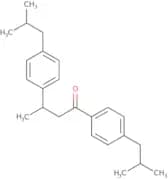
CAS:<p>Ibuprofen EP impurity H is an impurity of ibuprofen. It is a white crystalline powder with a melting point of 182-184°C and a molecular weight of 253.3. Ibuprofen EP impurity H can be synthesized in high purity by reacting 4-bromobenzenesulfonyl chloride with 2-hydroxybenzoic acid in the presence of triethylamine. This impurity has been used as a standard for drug product analysis, pharmacopoeia standards, drug development, and metabolism studies. Ibuprofen EP impurity H can be identified by HPLC using a retention time of 17.2 minutes and an UV absorption maximum at 254 nm.</p>Formula:C24H32OPurity:Min. 95%Molecular weight:336.51 g/mol2-Ethoxy-4-[(hydroxyimino)methyl]phenol
CAS:<p>Oxysporum f. is a fungus that can cause both bacterial and fungal infections in humans, animals, and plants. The 2-Ethoxy-4-[(hydroxyimino)methyl]phenol (2-EtO-4-[(HIM))] is an oxime derivative that has been shown to be an effective antibacterial agent against Oxysporum f. It has also shown antifungal activity against cercospora in vitro. The compound was synthesized by reacting chloroacetyl chloride with 4-[(hydroxyimino)methyl]-2-methoxyphenol in the presence of triethylamine. The 2-EtO-4-[(HIM))] isomers are separated by column chromatography and their elemental analysis is performed by mass spectrometry.<br>2-Ethoxy-4-[(hydroxyimino)methyl]phenol exhibits antibacterial activity against oxysporum f</p>Formula:C9H11NO3Purity:Min. 95%Molecular weight:181.19 g/molMethyl 2,3,5-tri-O-acetyl-D-arabinofuranoside
CAS:<p>Methyl 2,3,5-tri-O-acetyl-D-arabinofuranoside is a monosaccharide that is used in the synthesis of carbohydrates. It has been shown to inhibit the growth of Rhizopus stolonifer and other fungi. Methyl 2,3,5-tri-O-acetyl-D-arabinofuranoside has also been used for the quantitative analysis of deacetylated sugars. A chromatographic method was developed using an ion exchange resin and methyl glycosides as standards. The sugar was quantified by electron ionization mass spectrometry (EI) after conversion to its trimethylsilyl ether derivatives with triethylamine in methylene chloride. The spectrum obtained from EI analysis showed the presence of anomeric proton peaks at m/z 184 and 186, indicating that this sugar contains two anomeric hydroxyl groups on the same carbon atom.</p>Formula:C12H18O8Purity:Min. 95%Molecular weight:290.27 g/mol2-Chloro-N-(3-chlorophenyl)acetamide
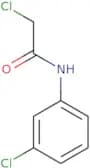
2-Chloro-N-(3-chlorophenyl)acetamide is a benzimidazole derivative that has been shown to have antimicrobial activity. The compound binds ligands on the surface of bacteria, preventing them from attaching to human cells and causing infection. 2-Chloro-N-(3-chlorophenyl)acetamide is active against both gram-positive and gram-negative bacteria, although it is not as potent as other antibiotics such as erythromycin or penicillin. This molecule can be synthesized by reacting 3,5-dichloroaniline with acetic anhydride in the presence of triethylamine and sodium acetate. 2-Chloro-N-(3-chlorophenyl)acetamide has been analyzed using elemental analysis and techniques such as XRD (xray diffraction), FTIR (Fourier transform infrared spectroscopy), NMR (nuclear magnetic resonance), and MS (Formula:C8H7Cl2NOPurity:Min. 95%Molecular weight:204.05 g/mol5-Fluoro-2-formylphenylboronic acid
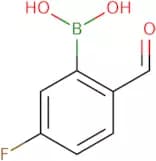
5-Fluoro-2-formylphenylboronic acid is an organic compound with the chemical formula of C8H7FO2B. This compound is a chiral, magnetic resonance active ester that has been shown to react with a variety of other compounds. The reaction mixture was analysed by magnetic resonance and it was found that 5-fluoro-2-formylphenylboronic acid reacts with triethylamine to form an acid salt. The salt was then subjected to high-resolution nuclear magnetic resonance analysis. This analysis showed that the boronic acid group is present in the molecule in its trans configuration, as opposed to its cis configuration which would be expected from a Fischer projection of the structure. The amino acid ester bonds were also found to be present in their trans configuration.Formula:C7H6BFO3Purity:Min. 95%Molecular weight:167.93 g/molRef: 3D-FF33260
Discontinued productTriethylamine hydrobromide
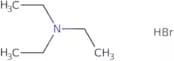
Triethylamine hydrobromide is a chemical reagent that is used in analytical chemistry for the preparation of triethylamine hydrochloride. It is also used in wastewater treatment to remove hydrogen fluoride and phosphorus pentoxide from industrial wastewater discharge. Triethylamine hydrobromide can be prepared by reacting triethylamine with hydrogen bromide and phosphorus pentoxide in a solution of water, methanol, and acetic acid. This reaction produces triethylamine hydrobromide as a white solid that can be purified by recrystallization or fractional distillation. Triethylamine hydrobromide has been used as an inhibitor in analytical methods to control the fluorescence probe during metal chelation analysis of human serum samples.Purity:Min. 95%Triethylamine phosphate
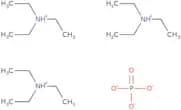
Triethylamine phosphate is an analytical reagent that is used to inhibit chemical reactions in the laboratory. It is a phosphorus-containing amine that has been shown to be a potent inhibitor of DNA template-directed synthesis, as well as control analysis. Triethylamine phosphate has also been shown to be an effective inhibitor of liposome fusion and phospholipase A2 activity, which may have applications in wastewater treatment and infectious diseases.Formula:C6H15N•H3O4PPurity:Min. 95%Molecular weight:199.19 g/mol4-Methoxyphenylglyoxal hydrate
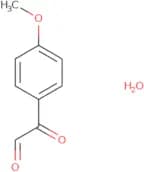
4-Methoxyphenylglyoxal hydrate is a compound that has been used to synthesize esters and amides. The hydrate form of the compound can be prepared by reaction with water at 0°C. 4-Methoxyphenylglyoxal hydrate can be converted to its isomer, 2-methoxybenzaldehyde, by reacting with triethylamine. This conversion is reversible and the two compounds can exist in equilibrium in solution. 4-Methoxyphenylglyoxal hydrate has been studied using x-ray structural analysis techniques, which have shown that it reacts with triethylamine to produce a covalent bond between the nitrogen atom of the amide moiety and one of the oxygen atoms on the benzene ring.Formula:C9H10O4Purity:Min. 95%Molecular weight:182.18 g/mol

![2-Ethoxy-4-[(hydroxyimino)methyl]phenol](/_next/image/?url=https%3A%2Fstatic.cymitquimica.com%2Fproducts%2F3D%2Fthumb-webp%2FJBA18493.webp&w=3840&q=75)