TR-M237445 - methyl-4-methoxy-3-nitrophenoxyacetate | 90923-41-4
Sorry, no product with reference TR-M237445 been found, but please check out the following similar products:
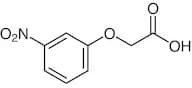
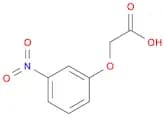
3-Nitrophenoxyacetic Acid
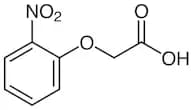
CAS:Formula:C8H7NO5Purity:>98.0%(GC)(T)Color and Shape:White to Orange to Green powder to crystalMolecular weight:197.152-Nitrophenoxyacetic Acid
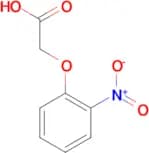
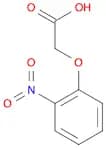
CAS:Formula:C8H7NO5Purity:>98.0%(GC)(T)Color and Shape:White to Light yellow powder to crystalMolecular weight:197.154-Nitrophenoxyacetic acid hydrazide
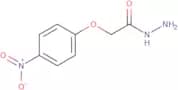
CAS:Formula:C8H9N3O4Color and Shape:SolidMolecular weight:211.17484-Nitrophenoxyacetic acid hydrazide
CAS:<p>4-Nitrophenoxyacetic acid hydrazide</p>Formula:C8H9N3O4Purity:98%Color and Shape: white to off white solidMolecular weight:211.17g/mol4-Nitrophenoxyacetic Acid
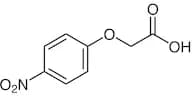
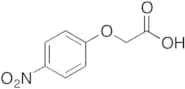
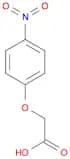
CAS:Formula:C8H7NO5Purity:>98.0%(GC)(T)Color and Shape:White to Light yellow powder to crystalMolecular weight:197.15Methyl 4-Nitrophenoxyacetate
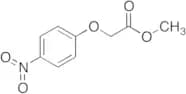
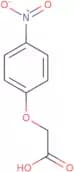
CAS:Controlled ProductFormula:C9H9NO5Color and Shape:NeatMolecular weight:211.174-Nitrophenoxyacetic Acid
CAS:Controlled Product<p>Applications 4-Nitrophenoxyacetic Acid is a butyl p-nitrophenyl ether metabolite. Plant growth regulatory activity.<br>References Yoshimura, H., et al.: Biochem. Pharmacol., 16, 1953 (1967); Aaberg, B.: Swedish J. Agric. Res., 10, 101 (1980)<br></p>Formula:C8H7NO5Color and Shape:NeatMolecular weight:197.142-Nitrophenoxyacetic acid; >98%
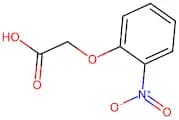
CAS:Formula:C8H7NO5Purity:98%Color and Shape:SolidMolecular weight:197.1464-Formyl-6-methoxy-3-nitrophenoxyacetic acid
CAS:<p>4-Formyl-6-methoxy-3-nitrophenoxyacetic acid is a photolabile formylated nitrophenol that is used to study the formation of concentration gradients across cell membranes. 4-Formyl-6-methoxy-3-nitrophenoxyacetic acid has been found to react with proton gradients and formyl groups in the membrane, which produces formaldehyde. The reaction mechanism for this process is not well understood, but it has been proposed that the reaction proceeds through a transducing step in which an electron from the formyl group reacts with a proton gradient to produce a formate ion. This mechanism is supported by experiments that show that the rate of photochemical reactions increases as the pH gradient across the membrane decreases.</p>Formula:C10H9NO7Purity:Min. 95%Molecular weight:255.18 g/molAcetic acid, 2-(4-nitrophenoxy)-
CAS:Formula:C8H7NO5Purity:98%Color and Shape:SolidMolecular weight:197.1449Acetic acid, 2-(2-nitrophenoxy)-
CAS:Formula:C8H7NO5Purity:98%Color and Shape:SolidMolecular weight:197.1449Acetic acid, 2-(3-nitrophenoxy)-
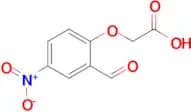
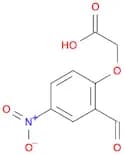
CAS:Formula:C8H7NO5Purity:98%Color and Shape:SolidMolecular weight:197.1449Acetic acid,2-(2-formyl-4-nitrophenoxy)-
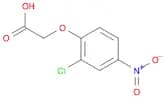
CAS:Formula:C9H7NO6Purity:98%Color and Shape:SolidMolecular weight:225.1550(2-CHLORO-4-NITROPHENOXY)ACETIC ACID
CAS:Formula:C8H6ClNO5Purity:97%Color and Shape:SolidMolecular weight:231.58992-(4-Formyl-2-methoxy-5-nitrophenoxy)acetic acid
CAS:Formula:C10H9NO7Color and Shape:SolidMolecular weight:255.18102-(4-Nitrophenoxy)acetic acid
CAS:<p>2-(4-Nitrophenoxy)acetic acid is a chemical compound with the molecular formula CHNO. It has been shown to inhibit the polymerase chain reaction, which is an important technique in molecular biology. The intramolecular hydrogen bond between HN and OO stabilizes the molecule and inhibits its rotation. This allows 2-(4-Nitrophenoxy)acetic acid to function as a competitive inhibitor of DNA polymerase. 2-(4-Nitrophenoxy)acetic acid inhibits bacterial growth by binding to the beta subunit of DNA gyrase, an enzyme that maintains the integrity of bacterial DNA. This inhibition prevents topoisomerase IV from relaxing supercoiled DNA, leading to cell death by inhibiting protein synthesis and cell division.</p>Formula:C8H7NO5Purity:Min. 95%Color and Shape:PowderMolecular weight:197.14 g/mol2-(2-Nitrophenoxy)Acetic Acid
CAS:2-(2-Nitrophenoxy)Acetic AcidPurity:99%Molecular weight:197.14g/mol2-(4-Nitrophenoxy)acetohydrazide
CAS:<p>2-(4-Nitrophenoxy)acetohydrazide is a crystalline compound that can be used as a ligand for protein-ligand binding studies. It has also been shown to have anticancer activity in vitro against the human breast cancer cell line MCF-7. The bioassay results showed antiproliferative and proapoptotic effects on MCF-7 cells, and single crystal X-ray diffraction studies revealed that 2-(4-Nitrophenoxy)acetohydrazide is an inhibitor of the pyrazole derivatives x-ray structures, which are involved in cancer cell proliferation.</p>Formula:C8H9N3O4Purity:Min. 95%Molecular weight:211.17 g/mol