Microtúbulo associado
Os inibidores de proteínas associadas aos microtúbulos têm como alvo as proteínas que interagem com os microtúbulos, os componentes estruturais do citoesqueleto da célula que são essenciais para a divisão celular. Essas proteínas regulam a estabilidade e a dinâmica dos microtúbulos durante a mitose. A inibição de proteínas associadas aos microtúbulos pode interromper a função dos microtúbulos, levando à parada do ciclo celular e à apoptose, especialmente em células cancerígenas de rápida divisão. Esses inibidores são amplamente utilizados na pesquisa do câncer e no desenvolvimento de medicamentos. Na CymitQuimica, oferecemos uma ampla gama de inibidores de proteínas associadas aos microtúbulos de alta qualidade para apoiar sua pesquisa em divisão celular, dinâmica do citoesqueleto e terapia do câncer.
Foram encontrados 286 produtos para "Microtúbulo associado".
Ordenar por
Pureza (%)
0
100
|
0
|
50
|
90
|
95
|
100
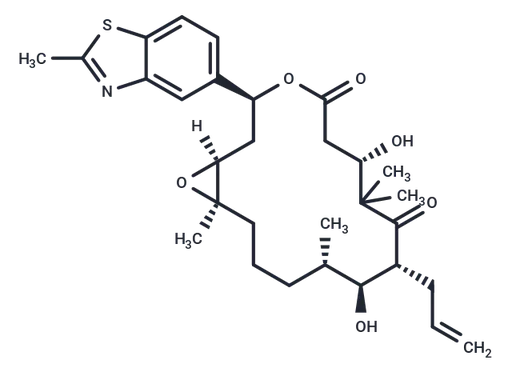
Sagopilone
CAS:Sagopilone: synthetic epothilone, inhibits cell division and induces apoptosis, effective in MDR tumors, not P-gp substrate.Fórmula:C30H41NO6SCor e Forma:SolidPeso molecular:543.71Tubulin polymerization-IN-32
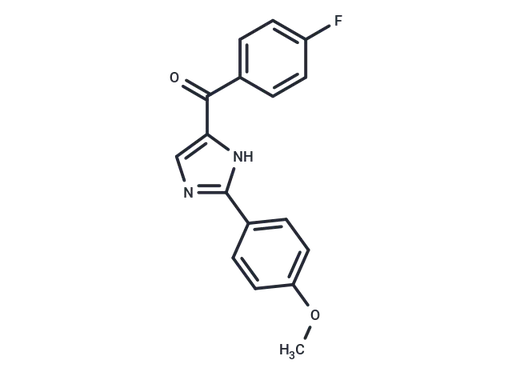
Tubulin polymerization-IN-32: a cancer cell growth inhibitor used for research in cancers like lymphoma.Fórmula:C29H30N2O7Cor e Forma:SolidPeso molecular:518.56Anti-melanoma agent 3
CAS:Compound 5cb, known as Anti-melanoma agent 3, is a derivative of 2-aryl-4-benzoyl-imidazole (ABI) that acts as an inhibitor of melanoma xenogeneic tumors. It exhibits anticancer effects by targeting the colchicine binding site, thereby preventing tubulin polymerization [1].Fórmula:C17H13FN2O2Cor e Forma:SolidPeso molecular:296.3Tubulin inhibitor 16
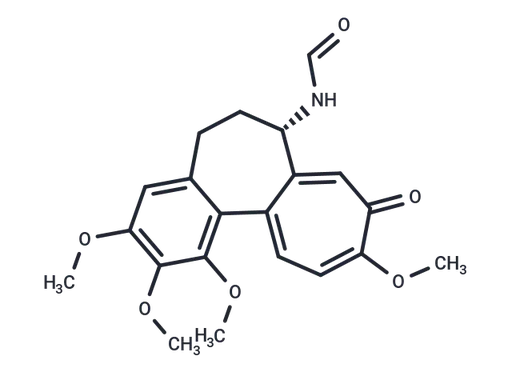
Tubulin inhibitor 16 is a potent tubulin inhibitor with antiproliferative activity. Tubulin inhibitor 16 exhibits cytotoxicity in HepG2 cells [1].Fórmula:C16H12FNO2Cor e Forma:SolidPeso molecular:269.27N-Deacetyl-N-formylcolchicine
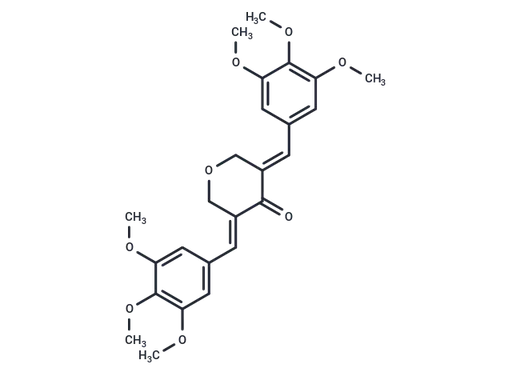
CAS:N-Deacetyl-N-formylcolchicine (N-Formyl-N-deacetylcolchicine, Compound 11) is a selective inhibitor targeting the colchicine binding site on tubulin. It exhibits antiproliferative activity against various cancer cell lines, with IC50 values ranging from 32.61 to 100.28 nM. This compound inhibits microtubule polymerization, blocking cell division, inducing apoptosis in cancer cells, and suppressing cellular migration. N-Deacetyl-N-formylcolchicine shows potential for research in lung cancer and other solid tumors.Fórmula:C21H23NO6Cor e Forma:SolidPeso molecular:385.41BP-M345
CAS:BP-M345 (compound 5) serves as a powerful antiproliferative agent that selectively targets cancer cells while demonstrating minimal toxicity to non-tumor cells. It effectively inhibits cancer cell proliferation, achieving a GI 50 value between 0.17 to 0.45 μM [1].Fórmula:C25H28O8Cor e Forma:SolidPeso molecular:456.49