Microtúbulo associado
Os inibidores de proteínas associadas aos microtúbulos têm como alvo as proteínas que interagem com os microtúbulos, os componentes estruturais do citoesqueleto da célula que são essenciais para a divisão celular. Essas proteínas regulam a estabilidade e a dinâmica dos microtúbulos durante a mitose. A inibição de proteínas associadas aos microtúbulos pode interromper a função dos microtúbulos, levando à parada do ciclo celular e à apoptose, especialmente em células cancerígenas de rápida divisão. Esses inibidores são amplamente utilizados na pesquisa do câncer e no desenvolvimento de medicamentos. Na CymitQuimica, oferecemos uma ampla gama de inibidores de proteínas associadas aos microtúbulos de alta qualidade para apoiar sua pesquisa em divisão celular, dinâmica do citoesqueleto e terapia do câncer.
Foram encontrados 286 produtos para "Microtúbulo associado".
Ordenar por
Pureza (%)
0
100
|
0
|
50
|
90
|
95
|
100
Tau ligand-1
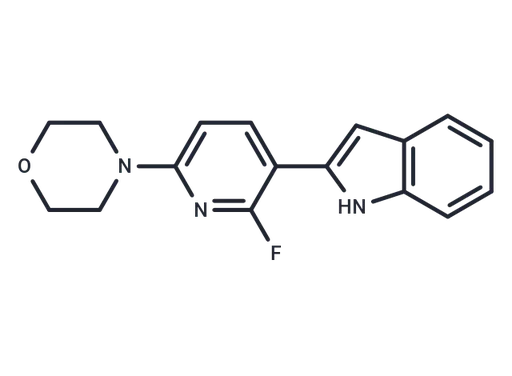
CAS:Tau ligand-1 (Compound 75) is a ligand of aggregated tau protein that can penetrate the blood-brain barrier. In tissues affected by Alzheimer's disease, progressive supranuclear palsy, corticobasal degeneration, and Pick's disease, Tau ligand-1 shows high affinity for aggregated tau protein, with equilibrium dissociation constants (KD) ranging from 1 to 3.8 nM. It holds potential as a positron emission tomography (PET) tracer for imaging studies of tau-related diseases within the central nervous system.Fórmula:C17H16FN3OCor e Forma:SolidPeso molecular:297.327Tubulin inhibitor 16
Tubulin inhibitor 16 is a potent tubulin inhibitor with antiproliferative activity. Tubulin inhibitor 16 exhibits cytotoxicity in HepG2 cells [1].Fórmula:C16H12FNO2Cor e Forma:SolidPeso molecular:269.27Microtubule stabilizer-1
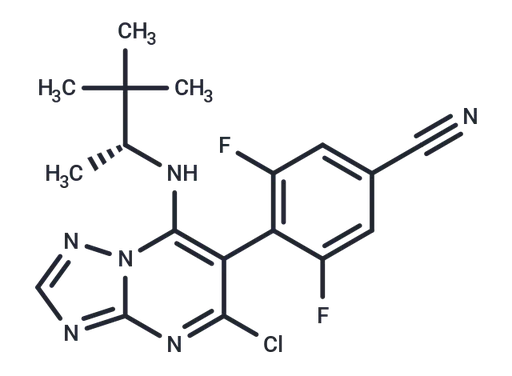
CAS:Microtubule stabilizer-1 (compound 69) is a microtubule (MT) stabilizer capable of crossing the blood-brain barrier. It increases the levels of acetylated α-tubulin (AcTub) and prevents the characteristic loss of neuronal microtubules observed after incubation with Okadaic acid. This compound is useful in researching Alzheimer's disease (AD) and related neurodegenerative tauopathies.Fórmula:C18H17ClF2N6Peso molecular:390.82Monomethyl auristatin E intermediate-17
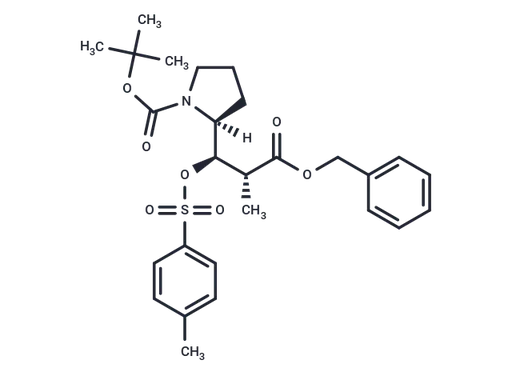
CAS:MonomethylauristatinE intermediate-17 is an intermediate compound used in the synthesis of MonomethylauristatinE. MonomethylauristatinE (MMAE) functions as a microtubule/tubulin inhibitor with anticancer properties. It is widely utilized as the cytotoxic component in antibody-drug conjugates (ADCs).Fórmula:C27H35NO7SCor e Forma:SolidPeso molecular:517.63PROTAC α-synuclein degrader 6
CAS:PROTACα-synuclein degrader 6 (compound T3) is a PROTAC degrader of α-synuclein and tau, with an EC50 of 1.57 μM and 4.09 μM, respectively. This compound plays a significant role in neurodegenerative disease (ND) research.Fórmula:C37H39N5O9SCor e Forma:SolidPeso molecular:729.80Tubulin inhibitor 19
Tubulin inhibitor 19 (9b), a potent indole chalcone, strongly blocks tubulin, valuable in cancer studies.Fórmula:C21H23NO5Cor e Forma:SolidPeso molecular:369.41DDL-357
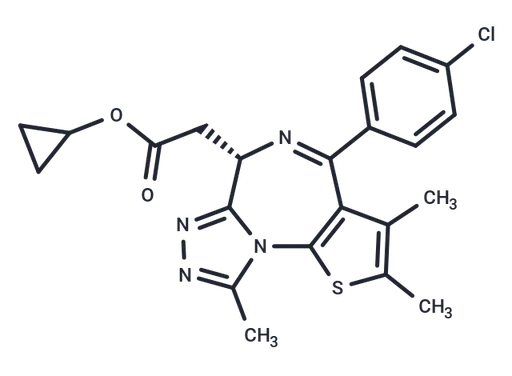
CAS:DDL-357 is a potent enhancer of secretory cluster proteins. It reduces phosphorylated tau protein levels in the brains of 3xTg-AD model mice and improves their memory.Fórmula:C22H21ClN4O2SPeso molecular:440.95Icafolin-methyl
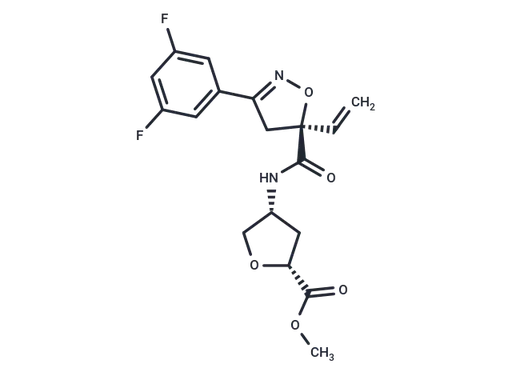
CAS:Icafolin-methyl is a plant-specific herbicide that acts as an inhibitor of tubulin polymerization. In plants, it metabolizes into the carboxylic acid icafolin, potentially inhibiting plant tubulin polymerization by binding to β-tubulin.Fórmula:C18H18F2N2O5Cor e Forma:SolidPeso molecular:380.343TTBK1/2-IN-3
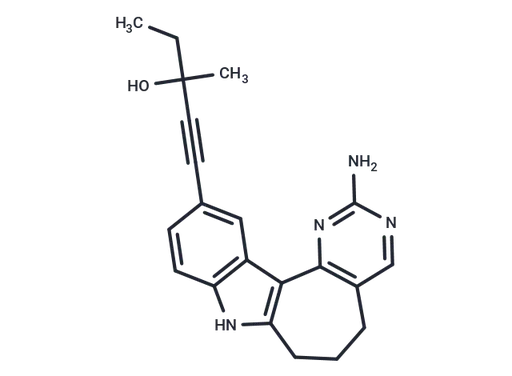
CAS:TTBK1/2-IN-3 (compound 10) is a potent inhibitor of Tau tubulin kinase 1 (TTBK1) and TTBK2, with IC50 values of 579 nM and 258 nM, respectively. TTBK1/2-IN-3 can reduce the expression of primary cilia on the surface of human induced pluripotent stem cells (iPSC).Fórmula:C21H22N4OCor e Forma:SolidPeso molecular:346.426Antitumor agent-200
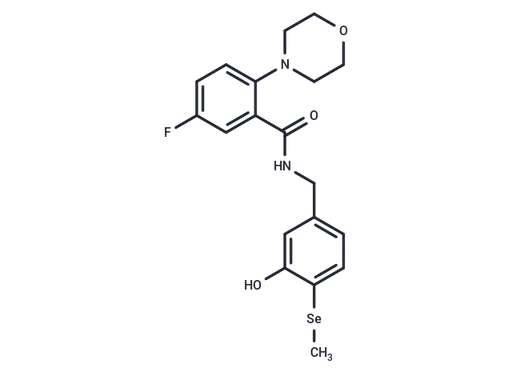
CAS:Antitumor agent-200 (Compound 2g) is a microtubule synthesis inhibitor that binds to the colchicine site on tubulin, causing G2/M cell cycle arrest and inducing reactive oxygen species (ROS) production. It demonstrates significant inhibitory activity against P-glycoprotein (P-gp) overexpressing cell lines MCF7/ADR and KBV200, with resistance indices (DRI) of 0.83 and 0.58, respectively. In an MCF-7 xenograft model, Antitumor agent-200 (at 25 mg/kg, administered intraperitoneally) achieves a 57.2% tumor growth inhibition rate. This compound is applicable for research in the field of cancer therapy.Fórmula:C19H21FN2O3SeCor e Forma:SolidPeso molecular:423.34OXS007417
OXS007417 induces AML cell differentiation at 48 nM EC50 and shows potent in vivo antitumor effects.Fórmula:C20H14F3N3OCor e Forma:SolidPeso molecular:369.34Auristatin S
CAS:AuristatinS is a potent anti-tumor agent that serves as an Auristatin payload. It effectively reduces the bystander effect and decreases off-target toxicity. In the Karpas/KarpasBVR cell model, AuristatinS exhibits excellent tolerability. It can be used as the cytotoxic component in antibody-drug conjugates (ADCs) for treating various types of cancer.Fórmula:C38H65N5O8Cor e Forma:SolidPeso molecular:719.95Tubulin inhibitor 22
Compound 4c: Strong tubulin inhibitor with anti-cancer & anti-angiogenic effects; halts MGC-803 cells in G2/M, triggers Caspase-mediated apoptosis.Fórmula:C20H17BrFNO4Cor e Forma:SolidPeso molecular:434.26Isodienestrol
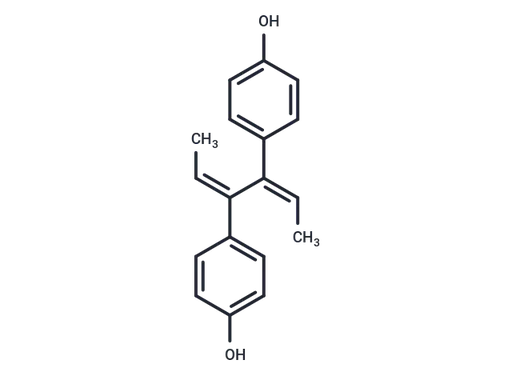
CAS:Isodienestrol, a derivative of Diethylstilbestrol, acts as a microtubule (Microtubule) inhibitor. It is utilized in cancer research.Fórmula:C18H18O2Cor e Forma:SolidPeso molecular:266.33Tubulin polymerization-IN-74
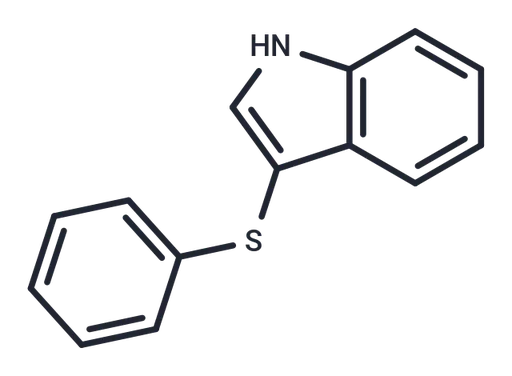
CAS:Tubulin polymerization-IN-74 (compound 11) is an inhibitor of tubulin polymerization, with an IC50 value of 15 μM. It is applicable to cancer research.Fórmula:C14H11NSCor e Forma:SolidPeso molecular:225.309N-Deacetyl-N-formylcolchicine
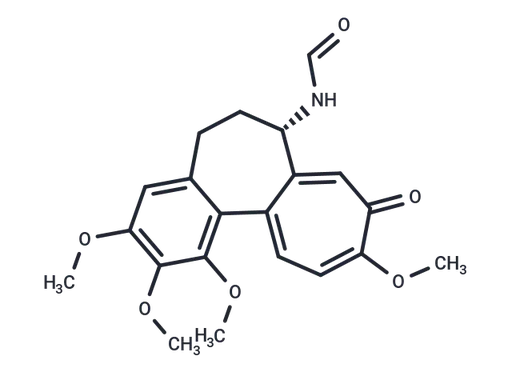
CAS:N-Deacetyl-N-formylcolchicine (N-Formyl-N-deacetylcolchicine, Compound 11) is a selective inhibitor targeting the colchicine binding site on tubulin. It exhibits antiproliferative activity against various cancer cell lines, with IC50 values ranging from 32.61 to 100.28 nM. This compound inhibits microtubule polymerization, blocking cell division, inducing apoptosis in cancer cells, and suppressing cellular migration. N-Deacetyl-N-formylcolchicine shows potential for research in lung cancer and other solid tumors.Fórmula:C21H23NO6Cor e Forma:SolidPeso molecular:385.41PM-060184
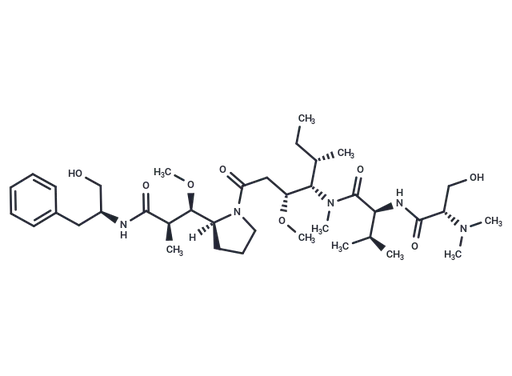
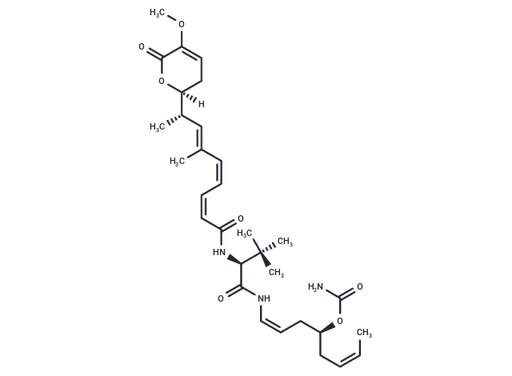
CAS:PM-060184, a tubulin polymerisation inhibitor, is used potentially for the treatment of solid tumours and breast cancer.Fórmula:C31H45N3O7Pureza:98%Cor e Forma:SolidPeso molecular:571.7Tubulin polymerization-IN-8
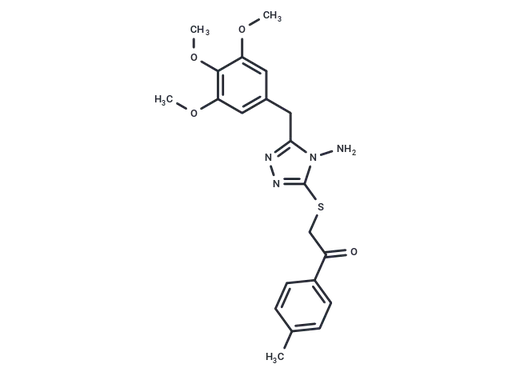
CAS:Compound IIc inhibits tubulin polymerization, arrests cell cycle at G2/M in HCT116 cells, IC50 12.7 μM, potential for cancer research.Fórmula:C21H24N4O4SCor e Forma:SolidPeso molecular:428.5JC168
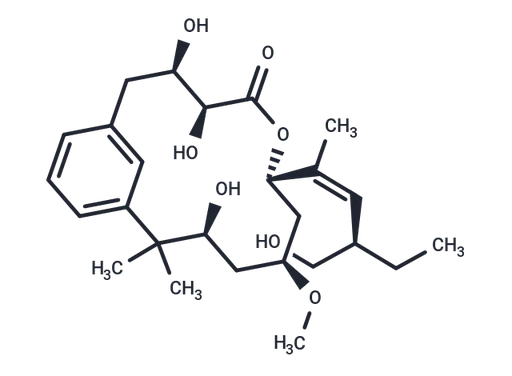
CAS:JC168 is a phenyl analog of peloruside and functions as a microtubule inhibitor with antiproliferative and anticancer properties. It enhances tubulin polymerization, thereby disrupting microtubule dynamics, making it a useful agent in the study of microtubule-associated diseases.Fórmula:C26H40O7Cor e Forma:SolidPeso molecular:464.592