STAT
As proteínas STAT são componentes críticos da via de sinalização JAK/STAT, que transmite sinais extracelulares de citocinas e fatores de crescimento para o núcleo da célula, influenciando a expressão gênica. As proteínas STAT estão envolvidas na regulação de respostas imunológicas, crescimento celular, diferenciação e sobrevivência. A desregulação da sinalização STAT está implicada em várias doenças, incluindo câncer, distúrbios autoimunes e inflamação crônica. Na CymitQuimica, oferecemos uma ampla gama de moduladores da via STAT para apoiar sua pesquisa em transdução de sinal, imunologia e desenvolvimento terapêutico.
Foram encontrados 105 produtos para "STAT".
Ordenar por
Pureza (%)
0
100
|
0
|
50
|
90
|
95
|
100
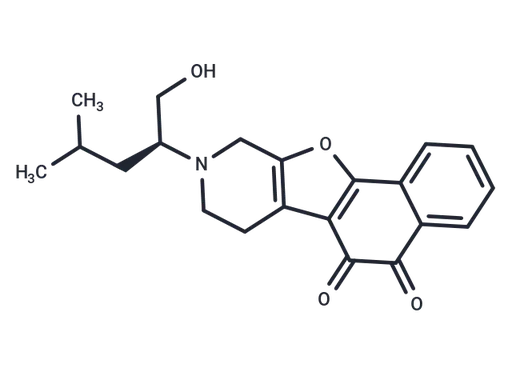
STAT3-IN-35
CAS:STAT3-IN-35 is a STAT3 inhibitor that binds to the SH2 domain. This compound inhibits the phosphorylation of STAT3 and exhibits antiproliferative activity in triple-negative breast cancer (TNBC) cell lines. Additionally, STAT3-IN-35 has demonstrated toxicity and potent antitumor activity in TNBC xenograft models.Fórmula:C21H23NO4Cor e Forma:SolidPeso molecular:353.41KT621 Analog 2
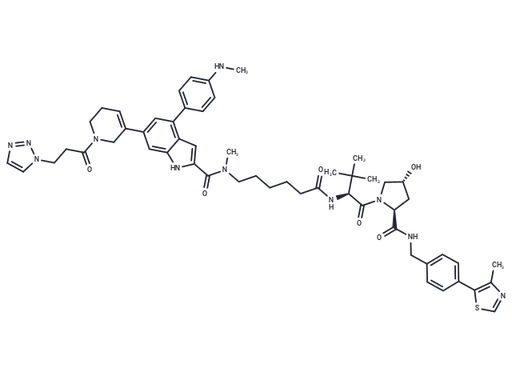
CAS:KT621 Analog 2 also measured the DC50 value of STAT6 to be > 1 µM through the Meso Scale Discovery Assay (MSDA) method. This detection was derived after culturing the human cell line A549 at 37°C for 24 hours.Fórmula:C55H67N11O6SCor e Forma:SolidPeso molecular:1010.26WZ-2-033
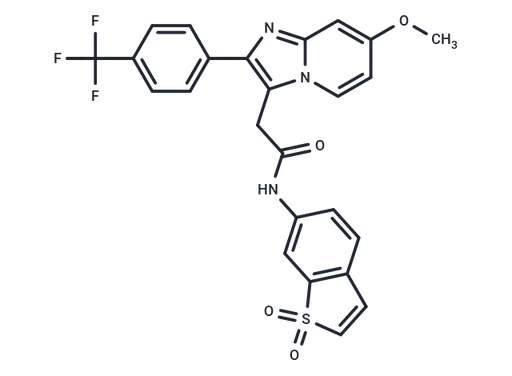
CAS:WZ-2-033 is a potent STAT3 inhibitor. It inhibits proliferation, colony survival, migration, and invasion of MDA-MB-231, HCC70, and MDA-MB231-4175 cells, with IC50 values of 0.7, 1.3, and 1.3 μM respectively.Fórmula:C25H18F3N3O4SCor e Forma:SolidPeso molecular:513.49STAT3-IN-8
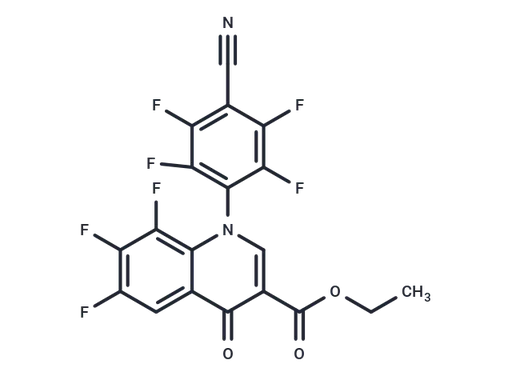
CAS:"STAT3-IN-8 (compound H172) is a potent inhibitor of STAT3 with potential applications in cancer research [1]."Fórmula:C19H7F7N2O3Pureza:98%Cor e Forma:SolidPeso molecular:444.26PMMB-187
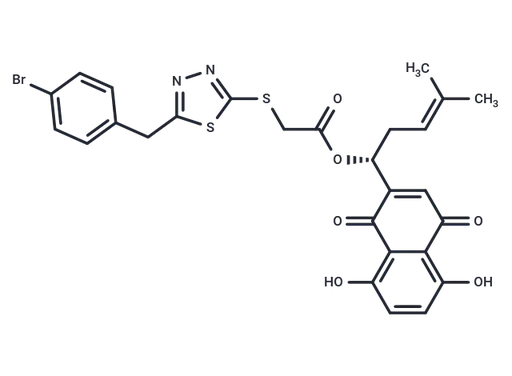
CAS:PMMB-187, a selective STAT3 inhibitor, exhibits an IC50 of 1.81 μM in MDA-MB-231 cells. This compound induces apoptosis in MDA-MB-231 cells by inhibiting STAT3 transcriptional activity and nuclear translocation, reducing mitochondrial membrane potential, increasing reactive oxygen species (ROS) production, and upregulating the expression of apoptosis-related proteins. PMMB-187 is useful for research in the field of cancer.Fórmula:C27H23BrN2O6S2Cor e Forma:SolidPeso molecular:615.52