Compostos Policiclícos
Os compostos policíclicos são moléculas orgânicas que contêm múltiplos anéis interconectados. Esses compostos incluem hidrocarbonetos aromáticos policíclicos e outros sistemas de anéis complexos. Eles são significativos na ciência dos materiais, produtos farmacêuticos e eletrônica orgânica. Na CymitQuimica, oferecemos compostos policíclicos de alta qualidade para apoiar suas pesquisas e aplicações industriais, garantindo resultados confiáveis e eficazes em seus projetos.
Subcategorias de "Compostos Policiclícos"
- Acridinas(97 produtos)
- Antraquinonas(533 produtos)
- Ácidos antraquinonasulfónicos(16 produtos)
- Azobenzenos(270 produtos)
- Azonaftalenos(98 produtos)
- Azoxibenzenos(12 produtos)
- Azulenos(11 produtos)
- Benzimidazóis(1.475 produtos)
- Benzodioxanos(27 produtos)
- Benzofuranos(924 produtos)
- Benzotiofenos(700 produtos)
- Benzotriazóis(438 produtos)
- Binaftil(133 produtos)
- Carbazóis(462 produtos)
- Cromanos, Cromenos(480 produtos)
- Cumarinas(1.122 produtos)
- Ciclofanos(11 produtos)
- Fluorenos e Fluorenonas(381 produtos)
- Imidazopiridinas(10 produtos)
- Indans(118 produtos)
- Indazóis(2.037 produtos)
- Indenos(22 produtos)
- Indóis(3.988 produtos)
- Indolinas(119 produtos)
- Isatinas(234 produtos)
- Isobenzofuranos(17 produtos)
- Ftalimidas N-Substituída(153 produtos)
- Naftalenos(2.436 produtos)
- Naftiridina(17 produtos)
- Naftoquinona(2 produtos)
- Perilenos(36 produtos)
- Fenazinas(25 produtos)
- Ftalazinas(33 produtos)
- Ftalimida(153 produtos)
- Hidrocarbonetos aromáticos policíclicos (PAHs)(270 produtos)
- Polifenol(261 produtos)
- Pteridinas(52 produtos)
- Pireno(87 produtos)
- Quinuclidina(1 produtos)
- Tetracenos(7 produtos)
Exibir 32 mais subcategorias
Foram encontrados 4574 produtos de "Compostos Policiclícos"
Ordenar por
Pureza (%)
0
100
|
0
|
50
|
90
|
95
|
100
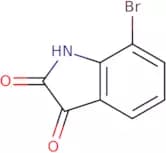
7-Bromo-2,3-dioxoindoline
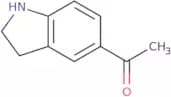
CAS:7-Bromo-2,3-dioxoindoline is a synthetic compound with a vibrational frequency of 249.2 cm−1. It is an inhibitor of the enzyme synthetase and has been shown to have an inhibitory effect on cancer cell viability in vitro. 7-Bromo-2,3-dioxoindoline inhibits the production of cancerous cells by interfering with their ability to synthesize DNA, which is necessary for cell division. This inhibition may be due to its ability to form intermolecular hydrogen bonding interactions with the amine group on the enzyme synthetase. 7-Bromo-2,3-dioxoindoline has also been shown to block the synthesis of 5-chloroisatin, one of its reaction products. The bioassay was carried out by measuring the amount of granulosa cells that were able to produce estrogen after treatment with this compound.Fórmula:C8H4BrNO2Pureza:Min. 98 Area-%Cor e Forma:PowderPeso molecular:226.03 g/mol5-Acetylindoline
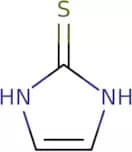
CAS:5-Acetylindoline is a tetracyclic compound that belongs to the family of phenanthridones. It has been synthesized by rationalizing the tetrahydropyridine, tetrahydroquinoline, and amine coupling reaction. The 5-acetylindoline molecule contains a phenolic group and is related to sulphones or diazonium salts. This compound can be made into a cyclization product by reacting with diazonium salts.Fórmula:C10H11NOPureza:Min. 95%Cor e Forma:PowderPeso molecular:161.2 g/mol2-Mercapto-1H-imidazole
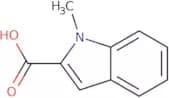
CAS:<p>2-Mercapto-1H-imidazole is an irreversible inhibitor of xanthine oxidase. It binds to the nitrogen atoms of the enzyme's active site and forms a strong hydrogen bond with the oxygen atom of the xanthine substrate. The steric interactions between 2-mercapto-1H-imidazole and the substrate prevent binding and catalysis. The crystal structures of 2-mercapto-1H-imidazole in complex with xanthine oxidase have been determined using X-ray crystallography. FTIR spectroscopy has shown that 2-mercapto-1H-imidazole coordinates in a geometry similar to that of the reactant, hydrochloric acid. Electrochemical impedance spectroscopy (EIS) has revealed that proton transfer takes place when 2-mercapto-1H imidazole binds to xanthine oxidase, which is consistent with reaction mechanism involving elect</p>Fórmula:C3H4N2SPureza:Min. 95%Cor e Forma:PowderPeso molecular:100.14 g/mol1-Methylindole-2-Carboxylic Acid
CAS:<p>1-Methylindole-2-Carboxylic Acid is a chemical that belongs to the group of phenylacetic acid compounds. It has been shown to inhibit lymphocyte activation and t-cell proliferation in vitro, which may be due to its ability to interfere with the production of interleukin. 1-Methylindole-2-Carboxylic Acid also has an antitumor effect on animals and can reduce the tumor burden by inhibiting DNA synthesis, protein synthesis, and mineralization. The molecular modeling studies have shown that 1-Methylindole-2-Carboxylic Acid binds in the active site of protein kinase C as a competitive inhibitor and prevents ATP from binding to the enzyme.</p>Fórmula:C10H9NO2Pureza:Min. 95%Cor e Forma:PowderPeso molecular:175.18 g/mol4-Chloro-6-methoxyquinolin-7-ol
CAS:4-Chloro-6-methoxyquinolin-7-ol (CMQ) is an alkali metal that inhibits the sodium/potassium ATPase pump, which is responsible for maintaining the cell's intracellular ion balance. It was discovered in a search for compounds that inhibit this enzyme and show promise in the treatment of heart diseases. CMQ has been shown to inhibit the sodium concentration in rat hearts with no effect on potassium concentrations, which may be due to its ability to bind to sodium ions but not potassium ions. The long-term effects of CMQ on human populations are unknown, as well as its effects on genotype and parameters. CMQ also has been shown to cause drug resistance mutations in bacteria, such as methicillin resistant Staphylococcus aureus (MRSA), by increasing the mutation rate. This is due to the fact that it inhibits DNA replication and protein synthesis in bacteria cells.Fórmula:C10H8ClNO2Pureza:Min. 95%Cor e Forma:Yellow PowderPeso molecular:209.63 g/mol2-Methylimidazole
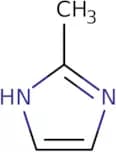
CAS:<p>2-Methylimidazole is a crystalline solid that has been used in the preparation of coordination compounds. The compound is prepared by reacting 2-methylimidazole with an appropriate metal cyanide, such as copper cyanide or nickel cyanide. The crystal structure of 2-methylimidazole shows strong hydrogen bonding interaction between the nitrogen atoms and the carboxylate groups. This compound has been used in clinical pathology to detect increased levels of ammonia, uric acid, and lactic acid in the blood. 2-Methylimidazole is not toxic to humans but has shown some toxicity to mice when injected intravenously at high concentrations. It can be used as an analytical method for determining trace amounts of chlorine in chemical compounds by way of electrochemical impedance spectroscopy (EIS).</p>Fórmula:C4H6N2Pureza:Min. 95%Cor e Forma:White Clear LiquidPeso molecular:82.1 g/mol3-Methyl-2-hydroxy-3H-imidazo[4,5-f]quinoline
CAS:3-Methyl-2-hydroxy-3H-imidazo[4,5-f]quinoline is a high quality reagent that can be used as an intermediate or building block in the synthesis of other compounds. It is a fine chemical with CAS No. 144486-08-8 and can be used as a speciality chemical in research. This compound has versatile building blocks that are useful in reactions and have been shown to be a reaction component in the synthesis of various compounds.Fórmula:C11H9N3OPureza:Min. 95%Cor e Forma:Yellow PowderPeso molecular:199.21 g/mol5-Amino-2-methylindole
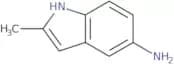
CAS:<p>5-Amino-2-methylindole is a hyaluronic acid inhibitor that has been shown to have an inhibitory effect on the growth of some bacteria. It inhibits the synthesis of bacterial enzymes and growth factors, which are required for bacterial cell division. 5-Amino-2-methylindole also inhibits the production of a number of important enzymes in bacteria, including benzofuran derivatives, as well as p. aeruginosa. This drug is used as a topical treatment in cases where there is tissue damage or inflammation. 5-Amino-2-methylindole has been shown to be effective against gram positive bacteria such as Streptococcus pyogenes and Enterococcus faecalis, but not against gram negative bacteria such as Pseudomonas aeruginosa or Escherichia coli.</p>Fórmula:C9H10N2Pureza:Min. 95%Cor e Forma:Yellow To Dark Brown SolidPeso molecular:146.19 g/molXanthotoxol
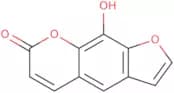
CAS:Xanthotoxol is a naturally occurring furanocoumarin, which is derived from various plant species, primarily within the Apiaceae family. This compound exhibits its biological activity through several mechanisms, including the inhibition of enzyme pathways, modulation of signaling pathways, and interaction with cellular proteins, impacting various physiological processes.Fórmula:C11H6O4Pureza:Min. 95%Cor e Forma:Brown PowderPeso molecular:202.16 g/mol2-Phenylindole-5-sulfonic acid monosodium salt
CAS:2-Phenylindole-5-sulfonic acid monosodium salt is a fine chemical that can be used as a building block for research chemicals, reagents, and speciality chemicals. It is also used as a reaction component for the synthesis of various complex compounds, such as pharmaceuticals and dyes. 2-Phenylindole-5-sulfonic acid monosodium salt is a versatile building block that can be used in the synthesis of useful scaffolds. The CAS number for this compound is 119205-39-9.Fórmula:C14H10NO3S·NaPureza:Min. 95%Cor e Forma:White PowderPeso molecular:295.29 g/molMethyl 5-methoxy-2-methylindole-3-acetate
CAS:Methyl 5-methoxy-2-methylindole-3-acetate is a versatile building block that can be used as a research chemical, reagent, or speciality chemical. It is also an intermediate in the synthesis of other compounds and has been shown to be useful in reactions involving nucleophilic substitution and electrophilic addition. This compound can be used as a scaffold for complex organic molecules. CAS No. 7588-36-5Fórmula:C13H15NO3Pureza:Min. 95%Cor e Forma:Beige SolidPeso molecular:233.26 g/mol2-Nitroimidazole
CAS:2-Nitroimidazole is a compound that has been shown to have significant cytotoxicity against tumor cells. It is also an anti-cancer drug with a matrix effect on solid tumours, and has been shown to inhibit the synthesis of DNA, RNA, and proteins in vitro. 2-Nitroimidazole is also active against infectious diseases such as HIV, herpes simplex virus type 1, and influenza A virus. The biological properties of this compound are currently being studied by analytical methods such as LC/MS and HPLC/UV.Fórmula:C3H3N3O2Pureza:Min. 95%Cor e Forma:PowderPeso molecular:113.07 g/mol5,6-Diaminobenzimidazole dihydrochloride
CAS:Please enquire for more information about 5,6-Diaminobenzimidazole dihydrochloride including the price, delivery time and more detailed product information at the technical inquiry form on this pageFórmula:C7H10Cl2N4Pureza:Min. 95%Cor e Forma:Off-white to pale brown solid.Peso molecular:221.09 g/mol6-Bromo-2,3-dihydro-1H-indole
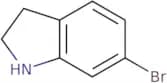
CAS:<p>6-Bromo-2,3-dihydro-1H-indole is a natural product that has been shown to inhibit cancer cell growth in vitro. In the presence of 6-bromoindole, cells are unable to proliferate and undergo apoptosis. This compound also shows anti-cancer activity against human leukemia cells. The mechanism of action for this molecule is not yet known but may be related to its ability to activate the caspase enzyme family or its ability to bind to DNA. 6-Bromoindole has been shown to have anti-inflammatory properties through inhibition of prostaglandin synthesis in animal models.</p>Fórmula:C8H8BrNPureza:Min. 95%Cor e Forma:Off-White PowderPeso molecular:198.06 g/molBoc-L-indoline-2-carboxylic acid
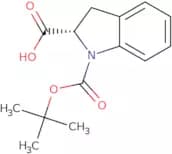
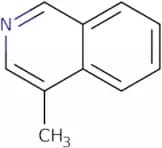
CAS:<p>Boc-L-indoline-2-carboxylic acid is a high quality, versatile building block that can be used as a reagent or intermediate in organic synthesis. It is used as a research chemical and has potential applications in the development of new drugs. Boc-L-indoline-2-carboxylic acid is a complex compound that reacts with nucleophiles to form valuable products. It also has the ability to bind to metal ions such as copper, zinc, and nickel. This product can be used in reactions involving amines, alcohols, amides, phenols, carboxylic acids, sulfonic acids, and other compounds.</p>Fórmula:C14H17NO4Pureza:Min. 95%Cor e Forma:White PowderPeso molecular:263.29 g/mol4-Methylisoquinoline
CAS:Isomeric 4-methylisoquinoline is a molecule that is structurally similar to protopine and berberine chloride. It has been shown to be an effective photosensitizer for the production of reactive oxygen species (ROS) in cells, which can lead to DNA damage and cell death. The functional groups on this molecule are the chloro group, which is a halogen, and the isoquinoline ring system with two methyl groups. The chemistry of this compound involves alkylation, yielding a new compound with one less methyl group than the original molecule. This process is called enamine formation.Fórmula:C10H9NPureza:Min. 95%Cor e Forma:Yellow PowderPeso molecular:143.19 g/mol6-Fluoroindole-3-acetic acid
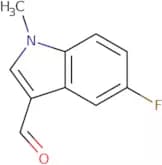
CAS:<p>6-Fluoroindole-3-acetic acid is a molecule that has been synthesized by the reaction of 6-fluoroindole with acetic anhydride. When mixed with acetonitrile, the fluorescence of 6-fluoroindole-3-acetic acid can be seen in the solution. The fluorescence intensity is proportional to the concentration of this molecule. 6-Fluoroindole-3-acetic acid is used as a template molecule for fluorescence labeling experiments. It interacts with hormones and can be used to identify their conformations and interactions. This compound has been shown to have anticancer properties in mice, and it may also be effective against cancer cells in humans. It has also been shown to inhibit the growth of pisum sativum (pea).</p>Fórmula:C10H8FNO2Pureza:Min. 95%Cor e Forma:PowderPeso molecular:193.17 g/mol5-Fluoro-1-Methyl-1H-Indole-3-Carbaldehyde
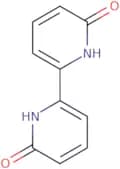
CAS:<p>5-Fluoro-1-Methyl-1H-Indole-3-Carbaldehyde is a high quality chemical that is used as a reagent, an intermediate for the synthesis of pharmaceuticals, and in the production of fine chemicals. 5FMICA is also a useful scaffold for developing valuable building blocks. This chemical has been shown to be a versatile building block for the synthesis of complex compounds. 5FMICA can be used as a reaction component for the preparation of speciality chemicals and research chemicals.</p>Fórmula:C10H8FNOPureza:Min. 95%Cor e Forma:PowderPeso molecular:177.18 g/mol2,2'-Bipyridine-6,6'-(1H,1'H)dione
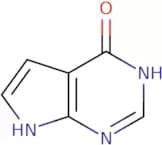
CAS:2,2'-Bipyridine-6,6'-(1H,1'H)dione is a high-quality compound that is used as a reagent to provide a variety of useful compounds. This compound can be used as a building block for various chemical syntheses or as a component in many reactions. It is also a versatile building block and can be used in the synthesis of other compounds. 2,2'-Bipyridine-6,6'-(1H,1'H)dione has been shown to be an effective intermediate for organic synthesis.Fórmula:C10H8N2O2Pureza:Min. 95%Cor e Forma:Off-White To Light Brown SolidPeso molecular:188.18 g/mol7-Deaza-6-hydroxypurine
CAS:7-Deaza-6-hydroxypurine is a skeleton of nucleosides that inhibits enzymes. It has been shown to inhibit the activity of hydrochloric acid, a tumor metastasis promoter. The constant for this drug was determined using molecular modeling and inhibition constants. 7-Deaza-6-hydroxypurine has anticancer activity and can be used for the treatment of cancer. This drug is used as a noncompetitive inhibitor in which it binds to two different sites on the enzyme. It has also been shown to bind to subunits, which are parts of a protein that make up its structure, in biological studies.br> 7-Deaza-6-hydroxypurine is an inhibitor that binds to two different sites on an enzyme. It has been shown to have anticancer activity and can be used for the treatment of cancer. This drug is used as a noncompetitive inhibitor in which it binds to two different sites on the enzyme. ItFórmula:C6H5N3OPureza:Min. 95%Cor e Forma:PowderPeso molecular:135.12 g/mol


![3-Methyl-2-hydroxy-3H-imidazo[4,5-f]quinoline](/_next/image/?url=https%3A%2Fstatic.cymitquimica.com%2Fproducts%2F3D%2Fthumb-webp%2FFM25639.webp&w=3840&q=75)