Compostos Policiclícos
Os compostos policíclicos são moléculas orgânicas que contêm múltiplos anéis interconectados. Esses compostos incluem hidrocarbonetos aromáticos policíclicos e outros sistemas de anéis complexos. Eles são significativos na ciência dos materiais, produtos farmacêuticos e eletrônica orgânica. Na CymitQuimica, oferecemos compostos policíclicos de alta qualidade para apoiar suas pesquisas e aplicações industriais, garantindo resultados confiáveis e eficazes em seus projetos.
Subcategorias de "Compostos Policiclícos"
- Acridinas(97 produtos)
- Antraquinonas(533 produtos)
- Ácidos antraquinonasulfónicos(16 produtos)
- Azobenzenos(270 produtos)
- Azonaftalenos(98 produtos)
- Azoxibenzenos(12 produtos)
- Azulenos(11 produtos)
- Benzimidazóis(1.475 produtos)
- Benzodioxanos(27 produtos)
- Benzofuranos(924 produtos)
- Benzotiofenos(700 produtos)
- Benzotriazóis(438 produtos)
- Binaftil(133 produtos)
- Carbazóis(462 produtos)
- Cromanos, Cromenos(480 produtos)
- Cumarinas(1.122 produtos)
- Ciclofanos(11 produtos)
- Fluorenos e Fluorenonas(381 produtos)
- Imidazopiridinas(10 produtos)
- Indans(118 produtos)
- Indazóis(2.037 produtos)
- Indenos(22 produtos)
- Indóis(3.988 produtos)
- Indolinas(119 produtos)
- Isatinas(234 produtos)
- Isobenzofuranos(17 produtos)
- Ftalimidas N-Substituída(153 produtos)
- Naftalenos(2.436 produtos)
- Naftiridina(17 produtos)
- Naftoquinona(2 produtos)
- Perilenos(36 produtos)
- Fenazinas(25 produtos)
- Ftalazinas(33 produtos)
- Ftalimida(153 produtos)
- Hidrocarbonetos aromáticos policíclicos (PAHs)(270 produtos)
- Polifenol(261 produtos)
- Pteridinas(52 produtos)
- Pireno(87 produtos)
- Quinuclidina(1 produtos)
- Tetracenos(7 produtos)
Exibir 32 mais subcategorias
Foram encontrados 4574 produtos de "Compostos Policiclícos"
Ordenar por
Pureza (%)
0
100
|
0
|
50
|
90
|
95
|
100
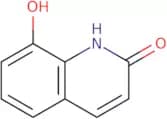
Quinoline-2,8-diol
CAS:<p>Quinoline-2,8-diol is a bacterial strain that can be used to remove fatty acids from wastewater. The recombinant cytochrome P450 in this strain can degrade fatty acids, which are carcinogenic and have been shown to cause hepatic steatosis. In addition, the quinoline-2,8-diol strain has shown an ability to inhibit xenograft tumor growth in mice by activating cytochrome P450 and inducing apoptosis. This bacterial strain also has the potential to produce xanthurenic acid from tyrosine. Xanthurenic acid is toxic and has been shown to inhibit polymerase chain reaction (PCR) amplification of DNA. Quinoline-2,8-diol may be used as a model for experimental studies of xanthurenic acid's effects on energy metabolism and DNA synthesis.</p>Fórmula:C9H7NO2Pureza:Min. 95 Area-%Cor e Forma:PowderPeso molecular:161.16 g/mol5-Methoxy-1-methyl-1H-indole-3-carbaldehyde
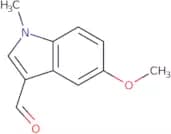
CAS:5-Methoxy-1-methyl-1H-indole-3-carbaldehyde is a synthetic compound that has been shown to inhibit the growth of human tumour cells in vitro. This compound is a regioisomeric mixture of two enantiomers, with the (S) isomer being the more potent inhibitor. The (R) isomer was found to be less active against human tumour cells and may have an antimicrobial activity. 5-Methoxy-1-methyl-1H-indole-3-carbaldehyde has been shown to be bioreductive towards electron donors such as NADPH and glutathione. It also inhibits dt diaphorase and aerobic metabolism in human tumour cells.Fórmula:C11H11NO2Pureza:Min. 95%Cor e Forma:Off-White PowderPeso molecular:189.21 g/mol5-Bromo-6-chloro-1H-indole
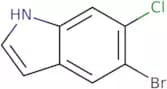
CAS:<p>5-Bromo-6-chloro-1H-indole is a fine chemical that is used as a building block for research chemicals, reagents, and speciality chemicals. It is soluble in chloroform and benzene, but insoluble in water. This product can be used as a reaction component or a useful intermediate in the production of complex compounds. 5-Bromo-6-chloro-1H-indole has been reported to be an effective scaffold for the synthesis of many novel compounds with potential applications such as pharmaceuticals, agrochemicals, and dyes.</p>Fórmula:C8H5BrClNPureza:Min. 95%Cor e Forma:PowderPeso molecular:230.49 g/mol(S,S,S)-2-Azabicyclo[3.3.0]octane-3-carboxylic acid benzyl ester hydrochloride
CAS:(S,S,S)-2-Azabicyclo[3.3.0]octane-3-carboxylic acid benzyl ester hydrochloride is a research chemical that can be used as a reaction component or reagent in organic synthesis. This compound is also useful in the construction of complex compounds and fine chemicals with applications including drug discovery, pharmaceuticals, agrochemicals, and polymer chemistry.Fórmula:C15H20ClNO2Pureza:Min. 95 Area-%Cor e Forma:White Off-White PowderPeso molecular:281.78 g/mol5-Methoxy-3(2-aminopropyl)indole hydrochloride
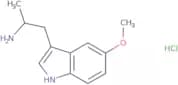
CAS:Produto Controlado5-Methoxy-3(2-aminopropyl)indole hydrochloride is a useful reagent for the synthesis of complex compounds and a versatile building block for the preparation of speciality chemicals. It is used in the production of fine chemicals, such as reagents and intermediates. This compound also has potential use as a research chemical or as a reaction component in organic syntheses.Fórmula:C12H16N2O·HClPureza:Min. 95%Peso molecular:240.73 g/mol6-Bromo-4-chloro-1H-indazole
CAS:<p>6-Bromo-4-chloro-1H-indazole is an organic compound that has been reported as a reaction component, reagent, and useful scaffold in the synthesis of complex compounds. It is also a speciality chemical with versatile building block and useful intermediate properties. 6-Bromo-4-chloro-1H-indazole is a fine chemical with complex structure and high purity.</p>Fórmula:C7H4BrClN2Pureza:Min. 95%Cor e Forma:Off-white to brown solid.Peso molecular:231.48 g/mol2,3,3-Trimethyl-3H-benzo[e]indole
CAS:<p>2,3,3-Trimethyl-3H-benzo[e]indole is a reactive molecule that has been shown to be an effective treatment for cervical cancer. It can be used in conjunction with monoclonal antibodies that have been designed to target the acidic protonation sites on the surface of cervical cancer cells. This active form binds to the site and emits fluorescence when illuminated with a laser, which can then be detected by a confocal microscope. This technique can also be used for the diagnosis of other cancers. 2,3,3-Trimethyl-3H-benzo[e]indole is not toxic to human serum as it does not react with this type of tissue.</p>Fórmula:C15H15NPureza:Min. 98 Area-%Cor e Forma:PowderPeso molecular:209.29 g/mol4-Chloro-1H-imidazole
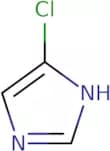
CAS:<p>4-Chloro-1H-imidazole is an organic chemical compound that contains a heterocyclic ring with one nitrogen and three carbons. It is classified as a weak acid. 4-Chloro-1H-imidazole can be found in hydrochloric acid, methyl ketones, and the acid conjugates of pyrazole rings. It has minimal toxicity. 4-Chloro-1H-imidazole binds to receptors in the body, which may account for its effects on blood pressure and heart rate. This drug also reacts with diazonium salts to form an intermediate that is then oxidized by chloride ions to form a reactive intermediate that can react with histidine or flavin (a type of vitamin B2) to form a fluorescent product that can be detected by light absorption or fluorescence emission spectroscopy.</p>Fórmula:C3H3ClN2Pureza:Min. 95%Cor e Forma:White PowderPeso molecular:102.52 g/mol3-(2-Chlorophenyl)-2-phenyl-3H-indole
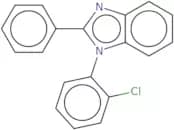
CAS:3-(2-Chlorophenyl)-2-phenyl-3H-indole is a versatile building block that can be used as a precursor in the synthesis of a wide range of complex compounds. 3-(2-Chlorophenyl)-2-phenyl-3H-indole has been shown to be an effective reagent for the synthesis of heterocycles and useful for the preparation of diverse speciality chemicals. 3-(2-Chlorophenyl)-2-phenyl-3H-indole is also an important intermediate in the synthesis of pharmaceuticals, agrochemicals, dyes, and perfumes. It is also a useful scaffold for organic chemistry reactions and can serve as a reaction component because it contains two reactive groups.Fórmula:C19H13ClN2Pureza:Min. 95%Peso molecular:304.77 g/molMethyl 3-cyano-1H-indole-7-carboxylate
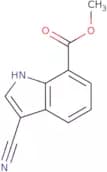
CAS:Methyl 3-cyano-1H-indole-7-carboxylate is a fine chemical that belongs to the class of useful scaffolds, versatile building blocks, and useful intermediates. It is used as a research chemical and a reaction component. Methyl 3-cyano-1H-indole-7-carboxylate is also a speciality chemical with high quality and can be used as a reagent in the production of other compounds.Fórmula:C11H8N2O2Pureza:Min. 95%Cor e Forma:White PowderPeso molecular:200.19 g/mol6-Nitroquinoline
CAS:<p>6-Nitroquinoline is a nucleophilic compound that reacts with nitroalkanes to form alkyl nitrites. It undergoes a bioreductive reaction, in which it is reduced to the corresponding amine by hydrogen peroxide and ammonia. 6-Nitroquinoline contains functional groups that can act as either electron donors or electron acceptors and is therefore reactive towards other compounds. The reaction mechanism involves nucleophilic attack at the carbon atom in the ring of the 6-nitroquinoline molecule, resulting in an addition product. 6-Nitroquinoline has been shown to react with fluorophores such as fluorescein, forming a fluorescent product that can be detected by spectroscopy. This chemical can also form hydrogen bonds with other molecules, which are important for its reactivity. The reaction products of this compound are nitrite and quinolines where one or more of the nitrogens have been oxidized to nitro groups.<br>END</p>Fórmula:C9H6N2O2Pureza:Min. 95%Cor e Forma:White PowderPeso molecular:174.16 g/mol7-Azaindole-3-carboxaldehyde
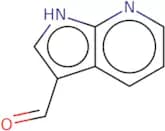
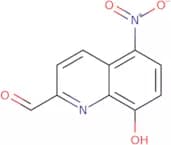
CAS:<p>7-Azaindole-3-carboxaldehyde is a molecule that belongs to the class of indoles. It has been shown to have cytotoxic activity in vitro against cancer cells and isomers have been identified. 7-Azaindole-3-carboxaldehyde has been investigated for its ability to bind to CB2 receptors, which are located on the surface of immune cells, and may be used as a lead compound for the development of novel anti-cancer drugs. 7-Azaindole-3-carboxaldehyde also binds to chloride ions, which may be important in understanding how it interacts with other compounds or proteins.</p>Fórmula:C8H6N2OPureza:Min. 95%Cor e Forma:PowderPeso molecular:146.15 g/mol8-Hydroxy-5-nitroquinoline-2-carbaldehyde
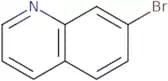
CAS:8-Hydroxy-5-nitroquinoline-2-carbaldehyde is a high quality, versatile building block that can be used as a reaction intermediate or to synthesize heterocycles. It is also a useful scaffold for the synthesis of complex compounds. The CAS number of this chemical is 884497-63-6.Fórmula:C10H6N2O4Pureza:Min. 95%Cor e Forma:PowderPeso molecular:218.17 g/mol7-Bromoquinoline
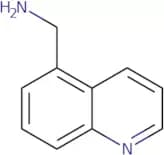
CAS:<p>7-Bromoquinoline is a synthetic molecule that was first synthesized in the early 1980s. It is an analog of 7-bromoquinoline, which has been shown to have cytotoxic properties against cancer cells. The synthesis of 7-bromoquinoline involves a cross-coupling reaction with chloroacetonitrile and N-methylformamide. The nmr spectra for this compound are very similar to those for 7-bromoquinoine, but it lacks the secondary amine peak at δ 10.7 ppm. Primary culture cells were used to test the bioactivity of 7-bromoquinoline, and these cells were disrupted by adding trypsin after incubation with various concentrations of 7-bromoquinoline. This study showed that the quinoline derivatives had cytotoxic effects on cultured cells at low concentrations, suggesting that they may be useful as anticancer agents. Molecular modeling studies show that</p>Fórmula:C9H6BrNPureza:Min. 95%Cor e Forma:PowderPeso molecular:208.05 g/molQuinolin-5-yl-methylamine
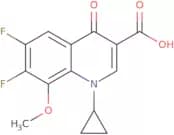
CAS:Quinolin-5-yl-methylamine is a fine chemical that is used as a research chemical. It can be used as a reagent and as a speciality chemical. This compound has a high quality and is versatile in its use. Quinolin-5-yl-methylamine can be used in the synthesis of complex compounds, such as pharmaceuticals, agrochemicals, and polymers. It is also an intermediate that can be used to create other useful compounds, such as building blocks or scaffolds. The CAS number for this compound is 58123-57-2.Fórmula:C10H10N2Pureza:Min. 95%Cor e Forma:SolidPeso molecular:158.2 g/mol1-Cyclopropyl-6,7-difluoro-1,4-dihydro-8-methoxy-4-oxo-3-quinolinecarboxylic acid
CAS:<p>Moxifloxacin is an analog of the antibiotic quinolone. It is a prodrug that is hydrolyzed in vivo to its active form, moxifloxacin. Moxifloxacin has been shown to be effective against a variety of bacteria, including methicillin-resistant Staphylococcus aureus (MRSA), Mycobacterium tuberculosis and Mycobacterium avium complex. The reaction yield for the synthesis of moxifloxacin is very high, with an industrial production capacity in excess of 500 tons per year. Impurities are not usually found in the final product due to the use of methyl alcohol as a solvent during the reaction process. The drug has discoloring properties and deuterium atoms are often substituted for hydrogen atoms on the molecule to make it more stable. Deuterium atoms can be easily identified by mass spectrometry analysis. Moxifloxac</p>Fórmula:C14H11F2NO4Pureza:Min. 95%Cor e Forma:PowderPeso molecular:295.24 g/mol1-Methyl-1H-indazole-5-carbaldehyde
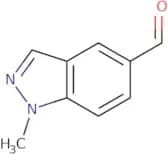
CAS:1-Methyl-1H-indazole-5-carbaldehyde is a selective inhibitor of the enzyme lysine acetyltransferase (KAT). KAT inhibitors are a new class of compounds that have been shown to be effective in inhibiting the growth of acute myeloid leukaemia cells, with little effect on other cells. 1-Methyl-1H-indazole-5-carbaldehyde has potent inhibitory activity against human myeloid leukemia cells and does not affect the viability of normal human erythrocytes or peripheral blood mononuclear cells. This compound is reversible, meaning it can be turned off when it is no longer needed. 1-Methyl-1H-indazole-5-carbaldehyde has also been shown to inhibit maoA and thymidine phosphorylase in vitro.Fórmula:C9H8N2OPureza:Min. 95%Cor e Forma:PowderPeso molecular:160.17 g/mol6'-Dehydromarmin
CAS:6'-Dehydromarmin is a natural product, classified as a coumarin derivative, which is primarily sourced from certain plant species, notably within the Rutaceae family. This compound arises through the biochemical transformation of secondary metabolites in plants, typically involving oxidation processes that occur under specific enzymatic conditions.Fórmula:C19H22O5Pureza:Min. 95%Peso molecular:330.37 g/mol2-Methyl-5-nitroimidazole-1-propanol
CAS:2-Methyl-5-nitroimidazole-1-propanol (2MI) is a matrix effect correction reagent that can be used to reconstitute the original concentrations of drugs in plasma and urine samples. It is also used for sample preparation, validation and quality control. 2MI has been shown to bind with cervical cancer cells, which may be due to its ability to bind with drug receptors on the surface of these cells. A liquid chromatography-mass spectrometry (LC-MS/MS) method was developed to measure 2MI in plasma and urine samples. The method was validated using test samples and showed good agreement with the target concentration.Fórmula:C7H11N3O3Pureza:Min. 95%Cor e Forma:PowderPeso molecular:185.18 g/mol5-(1,3-Benzodioxol-5-yl)-4,5-dihydro-1,3-diphenylpyrazole
CAS:<p>5-(1,3-Benzodioxol-5-yl)-4,5-dihydro-1,3-diphenylpyrazole is a chemical compound with the molecular formula C12H10O4. It is an aromatic compound that is used as a reagent and research chemical. This chemical is soluble in ethanol and ether, but insoluble in water. 5-(1,3-Benzodioxol-5-yl)-4,5-dihydro-1,3-diphenylpyrazole has been used as a building block for other organic compounds. It can be synthesized from benzaldehyde and phenylhydrazine by the method of condensation reaction.</p>Fórmula:C17H14N2O2Pureza:Min. 95%Cor e Forma:White to pale yellow solid.Peso molecular:278.31 g/mol

![(S,S,S)-2-Azabicyclo[3.3.0]octane-3-carboxylic acid benzyl ester hydrochloride](/_next/image/?url=https%3A%2Fstatic.cymitquimica.com%2Fproducts%2F3D%2Fthumb-webp%2FFA18053.webp&w=3840&q=75)

![2,3,3-Trimethyl-3H-benzo[e]indole](/_next/image/?url=https%3A%2Fstatic.cymitquimica.com%2Fproducts%2F3D%2Fthumb-webp%2FFT29018.webp&w=3840&q=75)