Síntese de Peptídeos
Foram encontrados 51 produtos para "Síntese de Peptídeos".
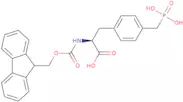
Fmoc-4-phosphomethyl-L-phenylalanine
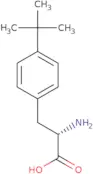
CAS:Fmoc-4-phosphomethyl-L-phenylalanine** is a specialized amino acid derivative used primarily in the field of peptide synthesis. It is a synthesized compound that serves as a building block for creating phosphorylated peptides. The compound is characterized by the presence of a phosphomethyl group attached to the phenylalanine side chain, along with a 9-fluorenylmethoxycarbonyl (Fmoc) group for temporary N-terminal protection during peptide assembly.This product plays a crucial role in the synthesis of peptides by allowing the incorporation of a phosphomethyl moiety, which is crucial for mimicking the phosphorylation of proteins—a key post-translational modification. Through its well-designed chemical structure, it facilitates the formation of peptide bonds while maintaining the integrity of sensitive side chain functionalities during synthesis.Fmoc-4-phosphomethyl-L-phenylalanine is widely used in biochemical and pharmaceutical research where the study of protein phosphorylation is paramount. It provides researchers with the means to construct peptides that closely resemble the natural phosphorylated proteins found within biological systems, thereby enabling more accurate studies of protein function and interaction. This makes it an invaluable tool in the exploration of cellular signaling pathways and protein regulation mechanisms.Fórmula:C25H24NO7PPureza:Min. 95%Peso molecular:481.43 g/mol4-tert-Butyl-L-phenylalanine
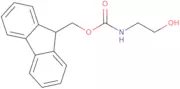
CAS:4-tert-Butyl-L-phenylalanine is a synthetically created antigen with the ability to interact with red blood cells. It has been shown to be a potent probe for the detection of P. falciparum, and can be used as an affinity reagent for the isolation and identification of mutations in the c-terminal region of this protein. 4-tert-Butyl-L-phenylalanine also interacts with P. falciparum apical membrane proteins, which are specific to this type of parasite. This interaction may play a role in its invasion into red blood cells, which is what causes malaria infection.Fórmula:C13H19NO2Pureza:Min. 95%Cor e Forma:White PowderPeso molecular:221.3 g/molFmoc-glycinol
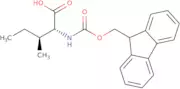
CAS:Fmoc-glycinol is a synthetase that is used to synthesize glycinol conjugates. It binds to the receptor on Gram-positive bacteria and blocks the synthesis of bacterial cell wall, leading to cell death. Fmoc-glycinol has been shown to have high binding constants with amines and an acyl chain, which allows it to bind with antigen. Fmoc-glycinol also has strong nucleophilic properties that allow it to react with chloride ions in water and other polar solvents. This reaction mechanism leads to the formation of a new bond between two molecules, which is called a glycinol linkage.Fórmula:C17H17NO3Pureza:Min. 95%Cor e Forma:White PowderPeso molecular:283.32 g/molFmoc-D-allo-isoleucine
CAS:Fmoc-D-allo-isoleucine is a β-amino acid that is used in the synthesis of calpinactam, a multidrug used to treat tuberculosis. The chemical structure of Fmoc-D-allo-isoleucine has been analyzed by spectroscopic methods and found to be labile. This product is susceptible to hydrolysis and can undergo modifications such as dehydration, oxidation, or racemization. Fmoc-D-allo-isoleucine has shown antimycobacterial activity when tested against M. tuberculosis.Fórmula:C21H23NO4Pureza:Min. 95%Cor e Forma:PowderPeso molecular:353.41 g/molRink amide-AM Resin
CAS:Rink amide-AM resin is a cation exchange resin that is used in peptide synthesis. It has an optimal pH range of 8-9. Rink amide-AM resin can be activated with trifluoroacetic acid or piperidine and washed with a mixture of water and methanol to remove the salt byproduct. The resin can then be used for peptide synthesis, which is typically done by adding the desired amino acids in sequence to the resin. The synthesis is stopped when the linear peptide reaches a desired length, typically 12-15 amino acids long. The linear peptides are then cleaved from the resin using trifluoroacetic acid or piperidine, depending on which activation reagent was used during synthesis. After cleavage, the linear peptides are precipitated from solution using ethanol or acetone and collected by filtration.Cor e Forma:Off-White Powder2-Amino-3-(4-bromobenzoyl)benzoic acid
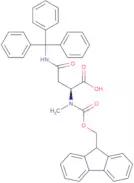
CAS:Please enquire for more information about 2-Amino-3-(4-bromobenzoyl)benzoic acid including the price, delivery time and more detailed product information at the technical inquiry form on this pageFórmula:C14H10BrNO3Pureza:Min. 95%Peso molecular:320.14 g/molFmoc-N-Me-Asn(Trt)-OH
CAS:Fmoc-N-Me-Asn(Trt)-OH is a peptidomimetic that mimics the sequence of the serine protease. The Fmoc group on the N-terminal amino acid is used to protect against proteolytic degradation and its methyl ester group confers stability in biological fluids. The Fmoc-N-Me-Asn(Trt)-OH has been shown to have minimal effects on endogenous protein synthesis, while also being quantified with high sensitivity and specificity. This compound has been shown to inhibit protein-protein interactions by acting as a competitive inhibitor of serine proteases.Fórmula:C39H34N2O5Pureza:Min. 95%Cor e Forma:PowderPeso molecular:610.7 g/molN6-(1-Deoxy-D-fructos-1-yl)-N2-[(phenylmethoxy)carbonyl]-L-lysine
CAS:Please enquire for more information about N6-(1-Deoxy-D-fructos-1-yl)-N2-[(phenylmethoxy)carbonyl]-L-lysine including the price, delivery time and more detailed product information at the technical inquiry form on this pageFórmula:C20H30N2O9Pureza:Min. 95%Peso molecular:442.46 g/molBoc-D-Tyr(tBu)-OH
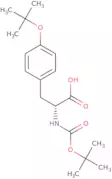
CAS:Boc-D-Tyr(tBu)-OH is a natural product that is an amphipathic molecule with a cyclic structure. It has been shown to be able to inhibit the growth of bacteria, such as Staphylococcus aureus and Escherichia coli, by acting as an antibiotic. Boc-D-Tyr(tBu)-OH inhibits the synthesis of peptides by binding to the ribosome and blocking peptide elongation. This molecule also inhibits peptide synthesis by interacting with the aminoacyl site on the ribosome and preventing it from binding with amino acids. Boc-D-Tyr(tBu)-OH is synthesized in two stages: solid phase peptide synthesis and nucleophilic activation. The decapeptides are then purified and characterized based on their function.Fórmula:C18H27NO5Pureza:Min. 95%Cor e Forma:PowderPeso molecular:337.41 g/molFmoc-N-methyl-O-tert-butyl-L-tyrosine
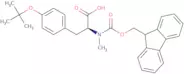
CAS:Fmoc-N-methyl-O-tert-butyl-L-tyrosine is a peptide that mimics the natural substrate serine protease. It has been used to study protein-protein interactions in proteases and their cleavage specificity. This peptide was designed as a peptidomimetic, which is an analog of a protein or peptide. The systematic synthesis of this molecule has been studied extensively and it has been shown that the maximum number of modifications occurs at the N terminus and the minimal number at the C terminus. The residue of this molecule is modified by proteolytic modification, which is a chemical modification that changes the amino acid sequence. Fmoc-N-methyl-O-tert-butyl-L-tyrosine has minimal quantified stability, which means that it can be quantified but not stable for long periods of time.Fórmula:C29H31NO5Pureza:Min. 95%Peso molecular:473.56 g/molBoc-glu(OBzl)-OH
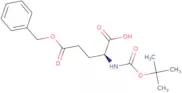
CAS:Boc-glu(OBzl)-OH is a small-molecule drug that binds to the glutamate receptor. It has been shown to have anticancer activity in vitro and in vivo, but does not affect normal cells. Boc-glu(OBzl)-OH has been used as a synthetic substrate for the preparation of conjugates containing an amide group. This chemical can also be used as an anticancer agent by inhibiting protease activity, which inhibits cancer cell growth. The uptake of Boc-glu(OBzl)-OH can be increased by making it more acidic or by using an efficient method such as ultrasound.Fórmula:C17H23NO6Pureza:Min. 98 Area-%Cor e Forma:PowderPeso molecular:337.37 g/molZ-Gly-Pro-pNA
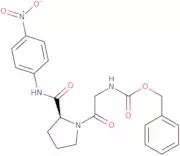
CAS:Z-Gly-Pro-pNA is a synthetic substrate that has been used in the development of polyclonal antibodies against the surface protein of Stenotrophomonas maltophilia. The antibody, when immobilized to an insoluble support, was able to detect the bacterial cells within 10 hours. Z-Gly-Pro-pNA is a cyclic peptide with a proteolytic activity and an acidic pH optimum. It has been shown that Z-Gly-Pro-pNA can be hydrolysed by serine proteases such as trypsin and chymotrypsin.Fórmula:C21H22N4O6Pureza:Min. 95%Peso molecular:426.42 g/molFmoc-rink amide resin
CAS:Fmoc-rink amide resin is a synthetic, radionuclide, and constant polymer. It is used in chemical ligation to produce peptides from amines and growth factors. Fmoc-rink amide resin also has antimicrobial properties due to its ability to inhibit the growth of bacteria and fungi by binding to their cell membranes. This polymer can be conjugated with growth factor or antimicrobial peptides for use as a therapeutic agent or used in the production of antibodies against a particular protein. Fmoc-rink amide resin has been shown to increase epidermal growth factor (EGF) uptake into cells by targeting EGF receptors on the cell surface.
Pureza:Min. 95%Fmoc-Val-Wang resin
CAS:Fmoc-Val-Wang resin is a versatile tool used in peptide synthesis. It is commonly employed in the production of peptides for various applications, including research and pharmaceutical development. This resin facilitates the attachment of amino acids to create peptide chains with high precision and efficiency.
Pureza:Min. 95%Cor e Forma:Yellow PowderSieber Amide Resin
CAS:Sieber Amide Resin is a glycopeptide that has been shown to inhibit the growth of prostate cancer cells. It inhibits the production of epidermal growth factor and amide, serine protease, and growth factors by binding to their receptors on the cell surface. This drug also has antimicrobial activity against gram-positive bacteria, such as Staphylococcus aureus, Streptococcus pyogenes, and Bacillus subtilis. The chemical diversity of Sieber Amide Resin allows it to be used as an intermediate in the synthesis of other pharmaceutically active compounds. The pharmacokinetic properties of this drug allow it to be administered orally or intravenously. The nmr spectra show that this drug is a cyclic peptide with an amide bond between amino acid residues Ser-11 and Gly-12.Pureza:Min. 95%H-Glu(Gly-OH)-OH trifluoroacetate
Please enquire for more information about H-Glu(Gly-OH)-OH trifluoroacetate including the price, delivery time and more detailed product information at the technical inquiry form on this page
Fórmula:C7H12N2O5•(C2HF3O2)xPureza:Min. 95%Cor e Forma:PowderN6-Glycyl-L-lysine trifluoroacetate
CAS:Please enquire for more information about N6-Glycyl-L-lysine trifluoroacetate including the price, delivery time and more detailed product information at the technical inquiry form on this page
Fórmula:C8H17N3O3•(C2HF3O2)xPureza:Min. 95%H-Asp-Phe-NH2 trifluoroacetate
CAS:Please enquire for more information about H-Asp-Phe-NH2 trifluoroacetate including the price, delivery time and more detailed product information at the technical inquiry form on this page
Fórmula:C13H17N3O4•(C2HF3O2)xPureza:Min. 95%Fmoc-SDMA(Boc)2-ONa
CAS:Please enquire for more information about Fmoc-SDMA(Boc)2-ONa including the price, delivery time and more detailed product information at the technical inquiry form on this page
Fórmula:C33H43N4O8NaPureza:Min. 95%Peso molecular:646.7 g/molDL-Dopaquinone
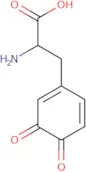
CAS:Please enquire for more information about DL-Dopaquinone including the price, delivery time and more detailed product information at the technical inquiry form on this pageFórmula:C9H9NO4Pureza:Min. 95%Peso molecular:195.17 g/mol


![N6-(1-Deoxy-D-fructos-1-yl)-N2-[(phenylmethoxy)carbonyl]-L-lysine](https://static.cymitquimica.com/products/3D/thumb-webp/FD184014.webp)