Síntese de Peptídeos
Foram encontrados 51 produtos para "Síntese de Peptídeos".
N,N-Diisopropylethylamine (ca. 10% in N,N-Dimethylformamide) [for Detection of Primary Amines]
CAS:Fórmula:C8H19NCor e Forma:Colorless to Light yellow clear liquidPeso molecular:129.25N,N-Dimethylacetamide
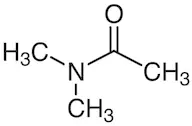
CAS:Produto ControladoFórmula:C4H9NOPureza:>99.0%(GC)Cor e Forma:Colorless to Almost colorless clear liquidPeso molecular:87.12N,N-Dimethylacetamide
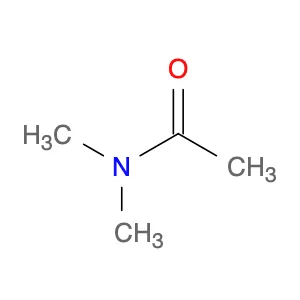
CAS:Produto ControladoFórmula:C4H9NOPureza:98%Cor e Forma:LiquidPeso molecular:87.1204Ref: IN-DA000WIF
100g20,00€250g24,00€500g24,00€1kg27,00€5kg57,00€10kg88,00€25kg165,00€50kg256,00€100kg549,00€Sulfo-SMCC sodium
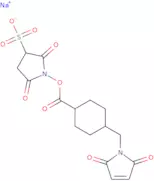
CAS:Crosslinker reacting rapidly with primary amines. It is used as a protein crosslinker where it reacts with cysteine to yield specific conjugates. The cyclohexane bridge confers added stability to the maleimide group making it ideal for maleimide activation of proteins. It is soluble in water and many other aqueous buffers although it is less stable then in DMSO or DMF.
Fórmula:C16H17N2O9SNaPureza:Min. 95 Area-%Cor e Forma:White Off-White PowderPeso molecular:436.37 g/mol(S)-2-Amino-3,3,3-trifluoropropanoic acid hydrochloride
CAS:Please enquire for more information about (S)-2-Amino-3,3,3-trifluoropropanoic acid hydrochloride including the price, delivery time and more detailed product information at the technical inquiry form on this pageFórmula:C3H4F3NO2•HCLPureza:Min. 95%Cor e Forma:PowderPeso molecular:179.52 g/mol4-Hydroxybenzenepropanoic acid 2,5-dioxo-1-pyrrolidinyl ester
CAS:4-Hydroxybenzenepropanoic acid 2,5-dioxo-1-pyrrolidinyl ester is a chemical reagent commonly employed in the field of peptide synthesis. This compound, often utilized as a coupling agent, is derived from the esterification of 4-hydroxybenzenepropanoic acid with N-hydroxysuccinimide (NHS).Fórmula:C13H13NO5Pureza:Min. 95 Area-%Peso molecular:263.25 g/molFmoc-L-Cys(StBu)-OH
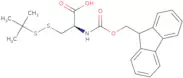
CAS:Fmoc-L-Cys(StBu)-OH is a synthetic molecule that is used in pharmaceutical formulations. It can be synthesized from Fmoc-L-Cys and L-serine methyl ester by the chemical ligation of the two molecules. The chloride group at the end of this molecule provides a functional group for conjugation with other biomolecules, such as fatty acids. This molecule has been shown to have high purity with an isolated yield of about 98%.
Fórmula:C22H25NO4S2Pureza:Min. 98 Area-%Cor e Forma:PowderPeso molecular:431.57 g/molCbz-L-glutamine
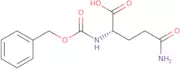
CAS:Cbz-L-glutamine is a water soluble compound that is used in the synthesis of pomalidomide. It is synthesized through a stepwise amide formation from methylamine and ethylene diamine. Cbz-L-glutamine has been shown to have an inhibitory effect on cancer cells, which may be due to its ability to break down hydroxamic acids. This chemical reaction causes the release of hydrogen ions, which leads to the disruption of various cellular processes, such as DNA replication and protein synthesis. The uptake of Cbz-L-glutamine by cancer cells has been shown in tissue culture experiments.
Fórmula:C13H16N2O5Pureza:Min. 95%Cor e Forma:PowderPeso molecular:280.28 g/molH-L-Cys(mdnpe)-OH
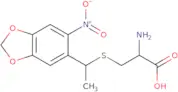
CAS:A novel protected cysteine that can be cleaved by photolysis.Fórmula:C12H14N2O6SPureza:Min. 95%Peso molecular:314.32 g/molPexiganan acetate
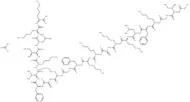
CAS:Produto ControladoPexiganan acetate is the acetate salt form of a polymyxin B derivative that has potent antimicrobial activity against both Gram-positive and Gram-negative bacteria. It has been shown to be effective in the treatment of tissue infections, especially those caused by human pathogens such as Staphylococcus aureus, Pseudomonas aeruginosa, and Escherichia coli. Pexiganan also has significant activity against Mycobacterium tuberculosis and other mycobacteria. The mechanism of action for pexiganan is not fully understood but it may involve the inhibition of bacterial cell wall synthesis, or the disruption of bacterial membranes. Pexiganan was originally isolated from a marine sponge off the coast of Australia in 1961. It had been classified as an antimicrobial peptide (AMP) because of its chemical structure, which includes a polymyxin B moiety. Pexiganan’s AMP classification was later challenged when researchers found that it did
Fórmula:C122H210N32O22•(C2H4O2)xPureza:Min. 95%Cor e Forma:PowderPeso molecular:2,477.18 g/molRamage linker
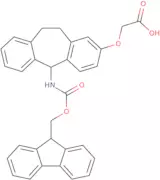
CAS:Ramage Linker,Fmoc-Suberol is a synthetic derivative of the antimicrobial peptide guanylate. It is used as an inhibitor of congestive heart failure. Ramage Linker,Fmoc-Suberol has been shown to be effective in reducing the severity of congestive heart failure by inhibiting the production of brain natriuretic peptides. The chemical structure and sequence have been determined using a combination of structural analysis and degradable linkers that are cleaved in vivo by hydrolysis or enzymatic degradation. Ramage Linker,Fmoc-Suberol has also been shown to reduce blood pressure and inhibit platelet aggregation.
Fórmula:C32H27NO5Pureza:Min. 95%Cor e Forma:PowderPeso molecular:505.56 g/molRink amide MBHA resin
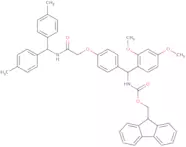
CAS:Solid phase peptide anchor; tool for the Fmoc solid phase synthesis of peptide amides.
100-200 mesh. 1% DVB, substitution range 0.3-0.6 meq/gPureza:Min. 95%Cor e Forma:PowderN-Boc-L-homoserine
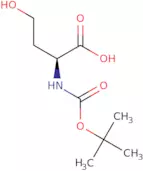
CAS:N-Boc-L-homoserine is a lactam with an alkyl group, which makes it a useful synthetic intermediate for the synthesis of various products. It has been used in the synthesis of β-unsaturated ketones and conjugates. N-Boc-L-homoserine is also found naturally in nature and can be found as its two isomers, L-homoserine and D-homoserine. This compound has been shown to have histone deacetylase inhibition activity, which may be due to its ability to inhibit histone acetyl transferase. N-Boc-L-homoserine is synthesized from butyric acid, which is a tetrapeptide that contains four amino acids: valine, leucine, proline, and hydroxyproline.Fórmula:C9H17NO5Pureza:Min. 95%Cor e Forma:PowderPeso molecular:219.24 g/molFmoc-Thr(tBu)-D-Ser(Psi(Me,Me)pro)-OH
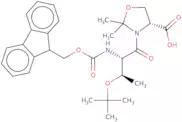
Fmoc-Thr(tBu)-D-Ser(Psi(Me,Me)pro)-OH is a speciality chemical that is used as a reagent for peptide synthesis. It is also useful in the synthesis of complex compounds and scaffolds. This compound has high quality with a CAS number of 56610-81-8. Fmoc-Thr(tBu)-D-Ser(Psi(Me,Me)pro)-OH is a versatile building block that can be used in reactions involving amines and carboxylic acids. Fmoc-Thr(tBu)-D-Ser(Psi(Me,Me)pro)-OH is an intermediate that can be used in the synthesis of many different compounds.
Fórmula:C29H36N2O7Pureza:Min. 95%Cor e Forma:PowderPeso molecular:524.61 g/molL-Lysyl-L-phenylalanyl-L-lysine trifluoroacetate
CAS:Please enquire for more information about L-Lysyl-L-phenylalanyl-L-lysine trifluoroacetate including the price, delivery time and more detailed product information at the technical inquiry form on this page
Fórmula:C21H35N5O4•(C2HF3O2)xPureza:Min. 95%Cor e Forma:PowderFmoc-N-Me-Asp(OtBu)-OH
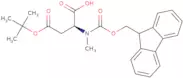
CAS:Fmoc-N-Me-Asp(OtBu)-OH is a synthetic peptide with potential immunosuppressive properties. It has been shown to inhibit the proliferation of human lymphocytes in response to lipopolysaccharides (LPS) and also to suppress the release of cytokines such as IL-1β, IL-6, and TNFα. The effects were dose dependent and could be reversed by the addition of a neutralizing antibody. This peptide can be used as an immunosuppressant in clinical trials that are investigating treatments for myasthenia gravis. Fmoc-N-Me-Asp(OtBu)-OH has been synthesised using chemical synthesis methods from commercially available reagents.Fórmula:C24H27NO6Pureza:Min. 98 Area-%Cor e Forma:PowderPeso molecular:425.47 g/molLL-37 TFA
LL-37 TFA is a reagent, complex compound and useful intermediate for the fine chemical and pharmaceutical industries. It is also an important building block for the synthesis of other chemicals. LL-37 TFA has CAS No. 71428-08-9, which is a speciality chemical that can be used in research as well as in many different reactions. The versatility of this compound makes it a very useful building block for the synthesis of other chemicals.Fórmula:C205H340N60O53•xC2HF3O2Pureza:Min. 95 Area-%Cor e Forma:PowderPeso molecular:4,493.25 g/molPoly-L-lysine hydrochloride, MW 10000 - 30000
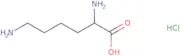
CAS:Poly-L-lysine hydrochloride, MW20000 is a water soluble polymer with an average molecular weight of 20000 Da. It is used in the synthesis of peptides and proteins due to its high purity, high quality, and low cost. Poly-L-lysine hydrochloride, MW20000 has been shown to bind to a wide range of surfaces such as glass, plastic, silicon dioxide, and stainless steel. This makes it useful for surface modification. Poly-L-lysine hydrochloride can be used as a scaffold for chemical reactions or as an intermediate in the synthesis of complex compounds.
Cor e Forma:PowderFmoc-glycinol
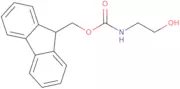
CAS:Fmoc-glycinol is a synthetase that is used to synthesize glycinol conjugates. It binds to the receptor on Gram-positive bacteria and blocks the synthesis of bacterial cell wall, leading to cell death. Fmoc-glycinol has been shown to have high binding constants with amines and an acyl chain, which allows it to bind with antigen. Fmoc-glycinol also has strong nucleophilic properties that allow it to react with chloride ions in water and other polar solvents. This reaction mechanism leads to the formation of a new bond between two molecules, which is called a glycinol linkage.Fórmula:C17H17NO3Pureza:Min. 95%Cor e Forma:White PowderPeso molecular:283.32 g/molFmoc-Asp(OtBu)-D-Ser(Psi(Me,Me)pro)-OH
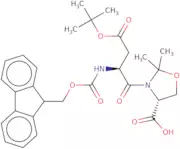
Fmoc-Asp(OtBu)-D-Ser(Psi(Me,,Me)pro)-OH is a high quality, reagent, complex compound, useful intermediate, fine chemical, useful scaffold, and speciality chemical that is used in the synthesis of peptides and other organic compounds. It can be used as a reaction component for the synthesis of peptides and other organic compounds. This building block is versatile with many different functional groups and can be used in a wide variety of reactions. Fmoc-Asp(OtBu)-D-Ser(Psi(Me,,Me)pro)-OH is also a reaction component that can be used to make various drugs or pharmaceuticals.Fórmula:C29H34N2O8Pureza:Min. 95%Cor e Forma:White PowderPeso molecular:538.59 g/mol
![N,N-Diisopropylethylamine (ca. 10% in N,N-Dimethylformamide) [for Detection of Primary Amines]](https://static.cymitquimica.com/products/3B/thumb-webp/D2937.webp)