Síntese de Peptídeos
Foram encontrados 51 produtos para "Síntese de Peptídeos".
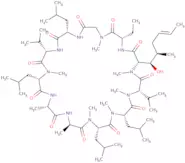
Cyclosporin AM 4N
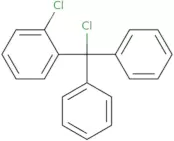
CAS:Please enquire for more information about Cyclosporin AM 4N including the price, delivery time and more detailed product information at the technical inquiry form on this pageFórmula:C61H109N11O12Pureza:Min. 95%Cor e Forma:PowderPeso molecular:1,188.59 g/mol2-Chlorotrityl chloride resin - (100-200mesh)
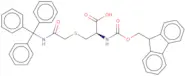
CAS:Please enquire for more information about 2-Chlorotrityl chloride resin - (100-200mesh) including the price, delivery time and more detailed product information at the technical inquiry form on this pageFórmula:C19H14Cl2Cor e Forma:Yellow PowderPeso molecular:313.22Fmoc-Cys-(CAMTrt)-OH
CAS:Fmoc-Cys-(CAMTrt)-OH is an amino acid derivative, which is a synthetic compound essential for peptide synthesis. It is derived from natural cysteine, an amino acid found in proteins, and is modified with an Fmoc (9-fluorenylmethoxycarbonyl) protective group and a CAMTrt (trityl sulfonium ion) moiety. This derivative is used primarily in solid-phase peptide synthesis, where the Fmoc group protects the amine during chain elongation, and the CAMTrt group safeguards the thiol function of cysteine, preventing unwanted side reactions during synthesis.
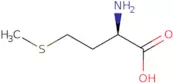
Fórmula:C39H34N2O5SPureza:Min. 98 Area-%Peso molecular:642.76 g/molD-Methionine
CAS:D-methionine is a form of the amino acid methionine that is synthesized in plants. It has been studied for its potential to help with various metabolic disorders, including osteoarthritis and primary sclerosing cholangitis. D-methionine provides methionine to the body, which is essential for the formation of collagen and elastin. In addition, it has been shown to have a protective effect against neuronal death in a model system. D-methionine may be beneficial for people with liver disease, but more research is needed.
Fórmula:C5H11NO2SPureza:Min. 95%Cor e Forma:White Off-White PowderPeso molecular:149.21 g/molRef: 3D-FM36951
Produto descontinuadoDL-Proline
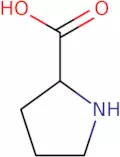
CAS:A useful as an intermediate in the synthesis of peptides, proteins, and other organic molecules. It can be used as a reagent or as an additive to other chemicals.Fórmula:C5H9NO2Pureza:Min. 99 Area-%Peso molecular:115.13 g/molN3-Orn(Boc) cyclohexylamine
CAS:N3-Orn(Boc) cyclohexylamine is a chemical intermediate that is used in the synthesis of complex compounds. It can be used as a building block or an intermediate in the synthesis of many fine chemicals, such as pharmaceuticals, agrochemicals, and fragrances. N3-Orn(Boc) cyclohexylamine is also used in reactions involving amines and alcohols to produce useful scaffolds. This chemical product has been shown to be safe for human use with no significant adverse side effects at doses up to 100mg/kg body weight.
Fórmula:C10H18N4O4•C6H13NPureza:Min. 95%Cor e Forma:PowderPeso molecular:357.4 g/molBoc-L-prolinal
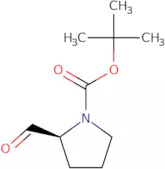
CAS:Boc-L-prolinal is a stereoselective enolate that has been used in the synthesis of organometallic compounds. It is also used in the preparation of monoclonal antibodies, which are proteins that are produced by the immune system to help fight off infections. Boc-L-prolinal has been shown to be an effective agent for treating many cancers, including breast cancer and melanoma. In addition, it has been shown to inhibit epidermal growth factor (EGF) and other growth factors, which may be due to its ability to induce apoptotic signaling. Boc-L-prolinal also contains a carbonyl group, which can undergo acidolysis reactions with nucleophiles such as water or alcohols.
Fórmula:C10H17NO3Pureza:Min. 95%Cor e Forma:Colorless Clear LiquidPeso molecular:199.25 g/molDL-3-(2-Furyl)serine
CAS:DL-3-(2-Furyl)serine is a versatile building block that can be used in the synthesis of complex compounds. It has been used as a reaction component and intermediate for research chemicals, speciality chemicals and fine chemicals. DL-3-(2-Furyl)serine has also been found to be useful in the synthesis of high quality reagents.Fórmula:C7H9NO4Pureza:Min. 95%Cor e Forma:PowderPeso molecular:171.15 g/molN-Cbz-L-homoserine
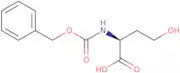
CAS:N-Cbz-L-homoserine is a synthetic amino acid that has been used in positron emission tomography (PET) studies to determine the uptake and utilisation of other amino acids by biological systems. It has also been used in biological studies to investigate the mechanism of nucleophilic attack by serine on Cbz-protected homoserine. N-Cbz-L-homoserine has been shown to have hepatotoxic effects and may be carcinogenic, but no evidence indicates it is mutagenic or teratogenic. It is highly reactive with acrylonitrile, which can cause it to produce hydrogen cyanide as a result of nitrile hydrolysis.
Fórmula:C12H15NO5Pureza:Min. 95%Cor e Forma:PowderPeso molecular:253.25 g/molRef: 3D-FC19701
Produto descontinuadoFmoc-D-allo-Thr(tBu)-L-Ser(Psi(Me,Me)pro)-OH
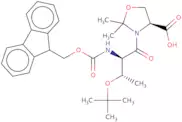
Fmoc-D-allo-Thr(tBu)-L-Ser(Psi(Me,Me)pro)-OH is a reagent that is used as an intermediate in the synthesis of complex compounds. It is also a fine chemical that can be used to prepare speciality chemicals. Fmoc-D-allo-Thr(tBu)-L-Ser(Psi(Me,Me)pro)-OH has CAS No. and can be used as a reaction component in various reactions. This compound is versatile and can be used as a building block for other compounds.Fórmula:C29H36N2O7Pureza:Min. 95%Cor e Forma:PowderPeso molecular:524.61 g/molBio acrylic resin
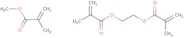
CAS:Bio acrylic resin is a dental material that is composed of a methacrylate-ethylene glycol dimethacrylate copolymer. It is used in the fabrication of dentures and other dental prosthetics. The resin particles are made up of a poly(ethylene glycol dimethacrylate-Methyl methacrylate) blend, which provides strength and durability to the final product. The particle size of the resin is approximately 50 micrometers, ensuring smooth and even application during the manufacturing process. Bio acrylic resin is commonly used in dental laboratories and research facilities for its reliable performance and consistent results.Fórmula:(C10H14O4)x(C5H8O2)yPureza:Min. 95%Cor e Forma:PowderPeso molecular:298.33 g/molRef: 3D-ABA77771
Produto descontinuado