


Heterociclos com Nitrogénio (N)
Subcategorias de "Heterociclos com Nitrogénio (N)"
- Azepano(436 produtos)
- Benzotriazóis(438 produtos)
- Diazepinas(335 produtos)
- Imidazóis(4.031 produtos)
- Imidazolinas(385 produtos)
- Isoxazol(1.088 produtos)
- Piperazinas(3.758 produtos)
- Piperidinas(8.443 produtos)
- Pirazinas(1.304 produtos)
- Pirazol(5.960 produtos)
- Pirazolidina(21 produtos)
- Pirazolina(143 produtos)
- Piridazina(860 produtos)
- Piridinas(22.007 produtos)
- Pirimidina(6.084 produtos)
- Pirróis(2.450 produtos)
- Pirrolidinas(5.840 produtos)
- Pirrolina(48 produtos)
- Pirrolo[1,2-b]piridazina(10 produtos)
- Tetrazola(531 produtos)
- Triazinas(466 produtos)
- Triazolas(1.689 produtos)
Foram encontrados 17863 produtos de "Heterociclos com Nitrogénio (N)"
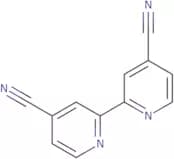
4,4'-Dicyano-2,2'-bipyridine
CAS:4,4'-Dicyano-2,2'-bipyridine is a ligand that binds to molybdenum and has been used in the diagnosis of mitochondrial DNA. It has been shown to be an effective treatment for tropical diseases such as malaria. This drug binds to the molybdenum cofactor in the enzyme ribonucleotide reductase, thereby inhibiting the production of ATP. 4,4'-Dicyano-2,2'-bipyridine also reacts with formic acid and ruthenium to produce a redshifted product that can be detected by electron paramagnetic resonance spectroscopy.
Fórmula:C12H6N4Pureza:Min. 98 Area-%Cor e Forma:PowderPeso molecular:206.2 g/molRef: 3D-FD04153
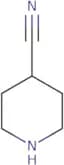
Produto descontinuado4-Cyanopiperidine
CAS:4-Cyanopiperidine is an organic compound that belongs to the class of medicines and has a cyclohexane ring with two functional groups. It is a part of the compound class of dehydrating agents. 4-Cyanopiperidine is most commonly used as an intermediate in the synthesis of other compounds, but can also be used as a medicine. 4-Cyanopiperidine has been shown to be effective against pain, cancer, and seizures. The inhibitory effect of 4-cyanopiperidine on cyclic AMP causes it to have potent inhibitory activity against cb1 receptor, which is responsible for the psychoactive effects caused by tetrahydrocannabinol (THC). This drug also has potent antagonistic effects on pethidine and related drugs such as fentanyl, morphine, and oxycodone.
Fórmula:C6H10N2Pureza:Min. 95%Cor e Forma:Colorless Clear LiquidPeso molecular:110.16 g/molRef: 3D-FC04742
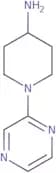
Produto descontinuado1-Pyrazin-2-ylpiperidin-4-amine dihydrochloride
CAS:1-Pyrazin-2-ylpiperidin-4-amine dihydrochloride is a fine chemical that is used as an intermediate for the synthesis of research chemicals, speciality chemicals and other complex compounds. This compound has been shown to be useful in the synthesis of a variety of building blocks, including pharmaceuticals and agrochemicals. It can be used in reactions with a wide range of reagents and catalysts, which makes it an excellent starting point for new product development.Fórmula:C9H14N4·2HClPureza:Min. 95%Cor e Forma:PowderPeso molecular:251.16 g/molRef: 3D-FP123937
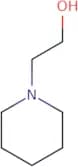
Produto descontinuado1-Piperidineethanol
CAS:1-Piperidineethanol is an active analogue of 1-piperidinepropanol. It has been shown to be a 5-HT4 receptor agonist that can inhibit the enzyme matrix polymerase, which is involved in the production of brain infarctions. The reaction mechanism for 1-piperidineethanol is not well understood, but it has been shown to react with hydrogen ions and amines to form a ternary complex. This complex reacts with hydrogen bond donors such as water or alcohols to form a reaction rate. The reaction rate depends on the concentration of hydrogen ions and amines in the solution.
Fórmula:C7H15NOPureza:Min. 99%Cor e Forma:Colorless Clear LiquidPeso molecular:129.2 g/mol5-Chloroindole
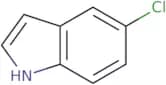
CAS:5-Chloroindole is a molecule that can bind to the CB2 cannabinoid receptor. It has been shown in experiments to be an allosteric modulator of this receptor. 5-Chloroindole has been found to have an inhibitory effect on degenerative diseases, such as Huntington's disease and Alzheimer's disease, and may have therapeutic potential for these disorders. 5-Chloroindole binds to a metal surface by forming hydrogen bonds with the oxygen atom of its carboxyl group and the metal surface. The nucleophilic nature of 5-chloroindole allows it to react with chloride ions present in solution. 5-Chloroindole reacts with the carbon source in tissue culture, which leads to receptor activity and inhibition of cell proliferation.
Fórmula:C8H6ClNCor e Forma:White PowderPeso molecular:151.59 g/molIndoline-2-carboxylic acid
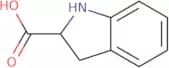
CAS:Indoline-2-carboxylic acid is a photophysical molecule with an absorption maximum at 518 nm. It has been shown to inhibit the activity of enzymes such as cyclooxygenase, lipoxygenase, and monoamine oxidases. This compound has been found to be effective in the treatment of cancer cells. Indoline-2-carboxylic acid is also used in pharmaceutical preparations, where it binds to enantiomers of other molecules and inhibits their biological activity. Indoline-2-carboxylic acid reacts with hydrochloric acid to form allyl carbonate and amide.
Fórmula:C9H9NO2Pureza:Min. 97 Area-%Cor e Forma:PowderPeso molecular:163.17 g/mol4-Chloropyrimidine
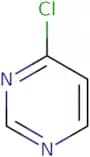
CAS:4-Chloropyrimidine is a nucleophilic compound that is synthesized by the reaction of acetone with hydrogen chloride. The proton NMR spectrum of 4-chloropyrimidine has been determined and it has been shown to be active against herpes simplex virus in clinical studies. The synthesis of this compound is accomplished using a flow system. It can be prepared from trifluoroacetic acid and carbon disulphide or from sodium hydroxide and amines. The structure of 4-chloropyrimidine was determined by X-ray crystallography. It reacts with organic compounds to form new compounds, such as fluorine, which are often toxic to humans or animals.
Fórmula:C4H3ClN2Pureza:90%MinCor e Forma:Off-White PowderPeso molecular:114.53 g/mol(1-Benzyl-4-piperidyl)methanol
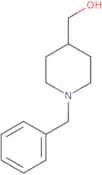
CAS:1-Benzyl-4-piperidyl)methanol is a linker molecule that can be used to connect a variety of heterocycles with the ability to modulate their biological activities. This molecule has been shown to be a potent inhibitor of 5-HT receptor activity and has been used in molecular modeling studies. 1-Benzyl-4-piperidyl)methanol also has the potential for use as an environmental pollutant, which may be due to its reactivity with naphthalene compounds. The modifications that are possible on this molecule include introducing substituents on the benzene ring or amide groups, which can provide potent inhibitory activity.
Fórmula:C13H19NOPureza:Min. 95 Area-%Cor e Forma:Clear LiquidPeso molecular:205.3 g/molRef: 3D-FB71821
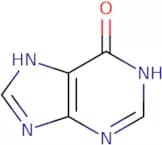
Produto descontinuadoHypoxanthine
CAS:Hypoxanthine is a nucleoside that is found in human cells. It is synthesized from guanine by the enzyme, xanthine oxidoreductase. Hypoxanthine is also produced from xanthine by adenosine deaminase and converted back to xanthine, which can then be reused for DNA synthesis. Hypoxanthine has been shown to inhibit the growth of photosynthetic bacteria, such as Rhodopseudomonas viridis and Rhodobacter sphaeroides. This inhibition may be due to an equilibrative nucleotide effect on the folate receptor. The x-ray diffraction data collected from the chrysanthemum flower (a source of hypoxanthine) showed that hypoxanthine has a calcium salt structure.
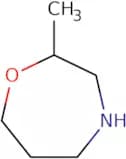
Fórmula:C5H4N4OPureza:Min. 95%Cor e Forma:White PowderPeso molecular:136.11 g/mol2-Methyl-1,4-oxazepane
CAS:2-Methyl-1,4-oxazepane is a fine chemical that can be used as a building block in organic synthesis. It is a versatile building block and can be used as a reaction component or intermediate. 2-Methyl-1,4-oxazepane has been used as an intermediate in the synthesis of various pharmaceutical drugs, including benzodiazepines and beta blockers. This compound is also used in the production of polyurethanes and other plastics.
2-Methyl-1,4-oxazepane has been classified by the Chemical Abstracts Service (CAS) as a speciality chemical with the number 1018614-41-9.Fórmula:C6H13NOPureza:Min. 95%Cor e Forma:Colorless PowderPeso molecular:115.17 g/molRef: 3D-FM133973
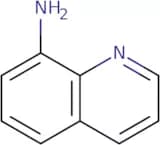
Produto descontinuado8-Aminoquinoline
CAS:8-Aminoquinoline is a fluorescent probe that is used to detect the presence of nitrite ions in biological samples. It is used in electron paramagnetic resonance (EPR) experiments and can be used as a chemical inhibitor of cytochrome P450 enzymes. 8-Aminoquinoline has been shown to have minimal toxicity in animal models. It has been shown to inhibit the growth of Leishmania, an organism that causes leishmaniasis, by arresting protein synthesis at the ribosome level. The drug interactions of 8-aminoquinoline have not been well studied, but it may be necessary for patients to avoid other drugs that are metabolized by cytochrome P450 enzymes when taking this agent.
Fórmula:C9H8N2Pureza:Min. 95%Cor e Forma:Slightly Yellow PowderPeso molecular:144.17 g/molAdenine
CAS:Purine nucleobase; component of nucleic acids and coenzymes
Fórmula:C5H5N5Pureza:Min. 98 Area-%Cor e Forma:White PowderPeso molecular:135.13 g/molPyridinoline
CAS:Please enquire for more information about Pyridinoline including the price, delivery time and more detailed product information at the technical inquiry form on this page
Fórmula:C18H28N4O8Pureza:Min. 95%Cor e Forma:PowderPeso molecular:428.44 g/molRef: 3D-FP182741
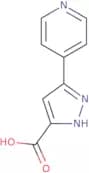
Produto descontinuado5-Pyridin-4-yl-1H-pyrazole-3-carboxylic acid
CAS:5-Pyridin-4-yl-1H-pyrazole-3-carboxylic acid is a white crystalline solid. It is soluble in water, methanol and ethanol. The molecular weight of 5-Pyridin-4-yl-1H-pyrazole-3 carboxylic acid is 177.17 g/mol. This compound has been found to have an elemental composition of C, H, N and O with a calculated density of 1.62 g/cm3 in the form of a single crystal x ray diffraction pattern. 5-Pyridin 4 yl 1H pyrazole 3 carboxylic acid has synergistic effects with other drugs used for chemotherapy such as cisplatin and doxorubicin against cancer cells.Fórmula:C9H7N3O2Pureza:Min. 95%Cor e Forma:PowderPeso molecular:189.17 g/molRef: 3D-FP56364
Produto descontinuado4-Nitroindole
CAS:4-Nitroindole is a versatile building block with a variety of applications. It can be used in the synthesis of complex compounds, research chemicals, and reagents. 4-Nitroindole is also useful in the synthesis of speciality chemicals and as an intermediate for the preparation of other compounds. This compound is high quality and has many uses as a reaction component or scaffold.
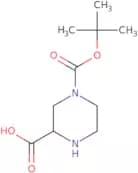
Fórmula:C8H6N2O2Peso molecular:162.15 g/molN-4-Boc-2-piperazine carboxylic acid
CAS:N-4-Boc-2-piperazine carboxylic acid is an organic acid that functions in the metabolism of purine and bile acids. It is also involved in the metabolic pathway of the kidney, which is important for the elimination of waste products from the body. N-4-Boc-2-piperazine carboxylic acid has been shown to be useful as a marker for distinguishing between different types of kidney disease. It is a metabolite found in urine and can be used as an analytical tool for detecting renal function. This compound has also been shown to have long term effects on bile acid metabolism.
Fórmula:C10H18N2O4Pureza:Min. 95%Cor e Forma:White PowderPeso molecular:230.26 g/molRef: 3D-FP30338
Produto descontinuadoFmoc-D-7-Aza-Trp-OH
CAS:Please enquire for more information about Fmoc-D-7-Aza-Trp-OH including the price, delivery time and more detailed product information at the technical inquiry form on this page
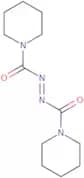
Fórmula:C25H21N3O4Pureza:Min. 95%Peso molecular:427.45 g/mol1,1'-(Azodicarbonyl)dipiperidine
CAS:1,1'-(Azodicarbonyl)dipiperidine is an organic compound that has been shown to be a radiosensitizing agent. It is used in the treatment of ovarian cancer and inhibits cell growth by inducing apoptosis. 1,1'-(Azodicarbonyl)dipiperidine modifies the cellular response to ionizing radiation by sensitizing cells to radiation and increasing the amount of DNA damage caused by radiation. This compound was found to increase the radiosensitivity of cells in vitro; however, it does not induce apoptosis in non-malignant cells. The effects are observed at low doses and are more pronounced when combined with other agents such as 3-aminobenzamide (3AB).
Fórmula:C12H20N4O2Pureza:Min. 95%Cor e Forma:Yellow PowderPeso molecular:252.31 g/molRef: 3D-FA45869
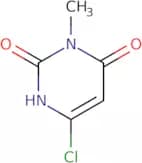
Produto descontinuado6-Chloro-3-methyluracil
CAS:Intermediate in the synthesis of alogliptin
Fórmula:C5H5ClN2O2Pureza:Min. 98 Area-%Cor e Forma:Off-White PowderPeso molecular:160.56 g/molRef: 3D-FC03857
Produto descontinuado2,4-Diiodo-6-{[methyl(1-methylpiperidin-4-yl)amino]methyl}phenol oxalate
CAS:2,4-Diiodo-6-[(methyl(1-methylpiperidin-4-yl)amino]methyl}phenol oxalate is a high quality chemical reagent. It is a useful intermediate for the preparation of complex compounds and has been used as a fine chemical. 2,4-Diiodo-6-[(methyl(1-methylpiperidin-4-yl)amino]methyl}phenol oxalate can be used as a building block for the synthesis of speciality chemicals. This compound can also be used as a reaction component in the synthesis of versatile chemicals.
Fórmula:C14H20I2N2O•C2H2O4Pureza:Min. 95%Cor e Forma:PowderPeso molecular:574.16 g/mol





![2,4-Diiodo-6-{[methyl(1-methylpiperidin-4-yl)amino]methyl}phenol oxalate](/_next/image/?url=https%3A%2Fstatic.cymitquimica.com%2Fproducts%2F3D%2Fthumb-webp%2FFD181210.webp&w=3840&q=75)