Building Blocks
Esta seção contém produtos fundamentais para a síntese de compostos orgânicos e biológicos. Building blocks são os materiais de partida essenciais usados para construir moléculas complexas através de várias reações químicas. Eles desempenham um papel crítico na descoberta de medicamentos, ciência dos materiais e pesquisa química. Na CymitQuimica, oferecemos uma ampla gama de building blocks de alta qualidade para apoiar suas pesquisas inovadoras e projetos industriais, garantindo que você tenha os componentes essenciais para uma síntese bem-sucedida.
Subcategorias de "Building Blocks"
- Ácidos Borónicos e Derivados de Ácido Borónico(5.756 produtos)
- Building Blocks Quirais(1.242 produtos)
- Building Blocks Hidrocarbonetos(6.093 produtos)
- Building Blocks orgânicos(60.522 produtos)
Foram encontrados 195533 produtos de "Building Blocks"
Ordenar por
Pureza (%)
0
100
|
0
|
50
|
90
|
95
|
100
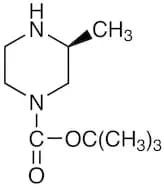
(S)-1-Boc-3-methylpiperazine
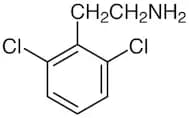
CAS:Fórmula:C10H20N2O2Pureza:>98.0%(GC)(T)Cor e Forma:White to Light yellow powder to lumpPeso molecular:200.282-(2,6-Dichlorophenyl)ethylamine
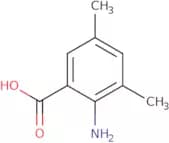
CAS:Fórmula:C8H9Cl2NPureza:>98.0%(GC)(T)Cor e Forma:Colorless to Light orange to Yellow clear liquidPeso molecular:190.073,5-Dimethylanthranilic acid
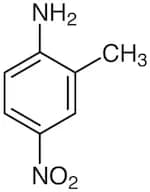
CAS:<p>3,5-Dimethylanthranilic acid is an acridone that has significant effects on the topoisomerase enzymes. It is a reactive compound and can cause sensitivity to light and heat, as well as irritation in the respiratory tract. 3,5-Dimethylanthranilic acid has been shown to have antitumour activity in mice. 3,5-Dimethylanthranilic acid also has cytotoxic potency against cancer cells and can be used to evaluate the sensitivity of tumours to anticancer drugs. This compound may also have mutagenic properties. The dehalogenation of 3,5-dimethylanthranilic acid is not yet fully understood.</p>Fórmula:C9H11NO2Pureza:Min. 95%Cor e Forma:Off-White PowderPeso molecular:165.19 g/mol2-Methyl-4-nitroaniline
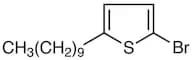
CAS:Fórmula:C7H8N2O2Pureza:>98.0%(GC)Cor e Forma:White to Yellow to Green powder to crystalPeso molecular:152.152-Bromo-5-decylthiophene
CAS:Fórmula:C14H23BrSPureza:>97.0%(GC)Cor e Forma:White - Yellow LiquidPeso molecular:303.30Neu5Ac[1Me,4789Ac]α(2-6)Gal[24Bz,3Bn]-β-MP
CAS:Fórmula:C54H59NO21Pureza:>95.0%(HPLC)Cor e Forma:White to Almost white powder to crystalPeso molecular:1,058.051,4-Diphenyl-2-butyne-1,4-dione
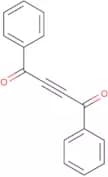
CAS:<p>1,4-Diphenyl-2-butyne-1,4-dione is a reactive compound that reacts with nucleophiles (such as hydroxide) to form an oxime. It is a chiral compound that has been shown to react with amines and hydrogen chloride in the presence of UV light. The UV absorption spectrum of 1,4-diphenyl-2-butyne-1,4-dione has been measured at wavelengths from 190 nm to 400 nm. The x-ray diffraction data showed the molecular structure of the molecule and revealed a very short bond length between the carbonyl group and hydrogen chloride.</p>Fórmula:C16H10O2Pureza:Min. 95%Cor e Forma:White To Yellow SolidPeso molecular:234.25 g/mol4,4'-Dipyridyl Disulfide
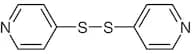
CAS:Fórmula:C10H8N2S2Pureza:>97.0%(GC)(T)Cor e Forma:White to Light yellow to Light red powder to crystalPeso molecular:220.314-Heptylbenzoyl Chloride
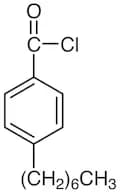
CAS:Fórmula:C14H19ClOPureza:>98.0%(T)Cor e Forma:Colorless to Yellow clear liquidPeso molecular:238.76Diethylisopropylsilyl Trifluoromethanesulfonate
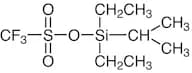
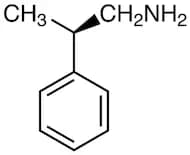
CAS:Fórmula:C8H17F3O3SSiPureza:>98.0%(T)Cor e Forma:Colorless to Light yellow to Light orange clear liquidPeso molecular:278.36(R)-(+)-β-Methylphenethylamine
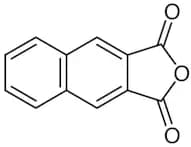
CAS:Fórmula:C9H13NPureza:>98.0%(GC)(T)Cor e Forma:Colorless to Almost colorless clear liquidPeso molecular:135.212,3-Naphthalenedicarboxylic Anhydride
CAS:Fórmula:C12H6O3Pureza:>95.0%(GC)(T)Cor e Forma:White to Gray to Brown powder to crystalPeso molecular:198.18Pentadecane
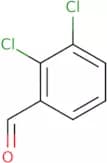
CAS:Fórmula:C15H32Pureza:>99.0%(GC)Cor e Forma:Colorless clear liquidPeso molecular:212.422,3-Dichlorobenzaldehyde
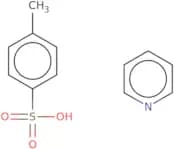
CAS:<p>2,3-Dichlorobenzaldehyde (2,3-DBA) is an organic compound that is used as a synthetic intermediate in the preparation of other chemicals. It is prepared by reacting 2-chloroacetophenone with hydrochloric acid and sodium carbonate in a reaction vessel. The product can be purified through fractional distillation or crystallization. The optical properties of 2,3-DBA are determined by its dipole moment and the substituents attached to the methylene group. Molecular modeling studies have shown that felodipine can bind to 2,3-DBA through its active methylene group. The reaction products between sulfadiazine and 2,3-DBA are pyridinedicarboxylic acid and 3-chlorobenzaldehyde.</p>Fórmula:C7H4Cl2OPureza:Min. 95%Cor e Forma:White PowderPeso molecular:175.01 g/molPyridinium p-Toluenesulfonate
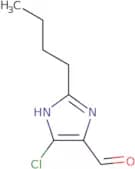
CAS:<p>Pyridinium p-toluenesulfonate is a reagent that can be used in the reduction of chloride to produce chloride ions. This process is called desulfurization. Pyridinium p-toluenesulfonate also reacts with cyclodepsipeptides, and can be used to recrystallize them. The main use for this reagent is in organic synthesis, where it can be used as an acid catalyst to synthesize polyene compounds or as a stereoselective agent for the preparation of dye cations.</p>Fórmula:C7H8O3S·C5H5NPureza:Min. 95%Cor e Forma:White PowderPeso molecular:251.3 g/mol2-Butyl-4-chloro-1H-imidazole-5-carboxaldehyde
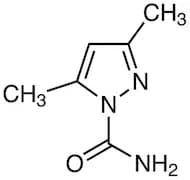
CAS:<p>Glyoxal is a chemical compound that has shown to have bactericidal activity against human pathogens such as Mycobacterium tuberculosis, Helicobacter pylori, and Staphylococcus aureus. It is used in the synthesis of heterocyclic amines and can be found as an impurity in imidazole derivatives. Glyoxal is a broad-spectrum antimicrobial that has been shown to inhibit the growth of fungi and bacteria by reacting with functional groups on the microorganisms' cell walls. It reacts with bacterial cell walls by forming an intermediate molecule, which reacts with other molecules present in the microorganism's environment to form carbon dioxide, water, and glyoxal. The reaction time for glyoxal depends on temperature; higher temperatures will result in faster reactions. Techniques used to synthesize glyoxal include dehydration of oximes or by reaction with phosphorus oxychloride.</p>Fórmula:C8H11ClN2OPureza:Min. 95%Cor e Forma:PowderPeso molecular:186.64 g/mol3,5-Dimethylpyrazole-1-carboxamide
CAS:Fórmula:C6H9N3OPureza:>98.0%(GC)(T)Cor e Forma:White to Almost white powder to crystalPeso molecular:139.16Fmoc-D-Asp(OtBu)-Opfp
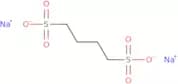
CAS:<p>Fmoc-D-Asp(OtBu)-Opfp is a high quality, complex compound that is used as a building block for the synthesis of various drugs and pharmaceuticals. It has been shown to be an excellent reaction component in the synthesis of various drugs and pharmaceuticals. The versatility of this chemical makes it a useful scaffold for generating complex molecules. It has been shown to be a useful intermediate for the synthesis of peptides, oligonucleotides, and small organic molecules. Fmoc-D-Asp(OtBu)-Opfp can also be used as a reagent in biochemical research.<br>Fmoc-D-Asp(OtBu)-Opfp can be synthesized by reacting 2-(2'-aminoethoxy)propionic acid with N,N'-dimethylformamide dimethyl acetal in the presence of sodium hydride at 0°C. This reaction produces an amide bond between the N termin</p>Fórmula:C29H24NO6F5Pureza:Min. 95%Cor e Forma:PowderPeso molecular:577.5 g/mol1,4-Butanedisulfonic acid disodium salt
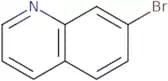
CAS:<p>1,4-Butanedisulfonic acid disodium salt is a calcium chelator that is used in the treatment of hypercalcemia and chronic renal failure. It binds to the calcium ion and prevents it from binding to bone, thus lowering the level of calcium in the blood. This drug has been shown to be effective against hepatitis when given orally and also has been shown to be safe for people with liver diseases. 1,4-Butanedisulfonic acid disodium salt also has transport properties and can be administered orally or intravenously.</p>Fórmula:C4H10Na2O6S2Pureza:Min. 95%Cor e Forma:PowderPeso molecular:264.23 g/mol7-Bromoquinoline
CAS:<p>7-Bromoquinoline is a synthetic molecule that was first synthesized in the early 1980s. It is an analog of 7-bromoquinoline, which has been shown to have cytotoxic properties against cancer cells. The synthesis of 7-bromoquinoline involves a cross-coupling reaction with chloroacetonitrile and N-methylformamide. The nmr spectra for this compound are very similar to those for 7-bromoquinoine, but it lacks the secondary amine peak at δ 10.7 ppm. Primary culture cells were used to test the bioactivity of 7-bromoquinoline, and these cells were disrupted by adding trypsin after incubation with various concentrations of 7-bromoquinoline. This study showed that the quinoline derivatives had cytotoxic effects on cultured cells at low concentrations, suggesting that they may be useful as anticancer agents. Molecular modeling studies show that</p>Fórmula:C9H6BrNPureza:Min. 95%Cor e Forma:PowderPeso molecular:208.05 g/mol


![Neu5Ac[1Me,4789Ac]α(2-6)Gal[24Bz,3Bn]-β-MP](/_next/image/?url=https%3A%2Fstatic.cymitquimica.com%2Fproducts%2F3B%2Fthumb-webp%2FM1761.webp&w=3840&q=75)