Building Blocks
Subcategorias de "Building Blocks"
- Ácidos Borónicos e Derivados de Ácido Borónico(5.783 produtos)
- Building Blocks Quirais(1.242 produtos)
- Building Blocks Hidrocarbonetos(6.105 produtos)
- Building Blocks orgânicos(61.055 produtos)
Foram encontrados 205383 produtos de "Building Blocks"
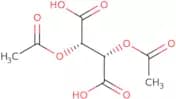
(+)-Diacetyl-D-tartaric acid
CAS:(+)-Diacetyl-D-tartaric acid is a chiral organic compound that is soluble in organic solvents. It can be used as a catalyst for the asymmetric synthesis of organic compounds and has been shown to cleave bonds with high stereoselectivity. (+)-Diacetyl-D-tartaric acid also exhibits mesomorphic properties, meaning it changes from liquid to solid and vice versa at certain temperatures. The optical activity of this compound can be seen by its magnetic resonance spectrum, which displays two peaks at different wavelengths. This molecule has been shown to have potential uses in microscopy, as well as for the preparation of monomers for magnetic materials.Fórmula:C8H10O8Pureza:Min. 95%Cor e Forma:White PowderPeso molecular:234.16 g/mol4,4'-Dimethoxybenzophenone
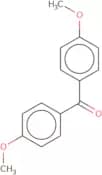
CAS:4,4'-Dimethoxybenzophenone is a process optimization agent that can be used to measure the concentration of basic proteins in human serum. It is also used as a chemical intermediate in the production of polymers. In this application, 4,4'-dimethoxybenzophenone undergoes an irreversible oxidation reaction with trifluoroacetic acid to form 4-methoxybenzoic acid and hydrogen peroxide. The linear model for this reaction has been shown to be: The rate of the reaction depends on the concentration of homogeneous catalysts, such as metal surfaces or hydrogen bonds.Fórmula:C15H14O3Pureza:Min. 95%Cor e Forma:PowderPeso molecular:242.27 g/mol1,4-Diisopropenylbenzene
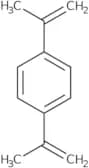
CAS:1,4-Diisopropenylbenzene is a hydrocarbon solvent that is used as a reagent in organic synthesis. It is reactive and can react with an inorganic acid such as hydrochloric acid to form an ester. The reaction time of 1,4-diisopropenylbenzene with an alkali metal hydroxide such as magnesium hydroxide is about one hour at room temperature. The product of this reaction is the magnesium salt of the corresponding carboxylic acid. 1,4-Diisopropenylbenzene has been shown to be toxic to mouse melanoma cells and has been used for cationic polymerization reactions. It has also been shown to be reactive with vinylene and other monomers, forming gels that are useful in making rubber products.
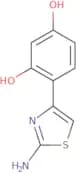
Fórmula:C12H14Pureza:Min. 95%Cor e Forma:PowderPeso molecular:158.24 g/mol4-(2-Amino-1,3-thiazol-4-yl)benzene-1,3-diol
CAS:Versatile small molecule scaffoldFórmula:C9H8N2O2SPureza:Min. 95%Cor e Forma:PowderPeso molecular:208.24 g/molAtranol
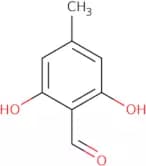
CAS:Atranol is a phenolic compound that is found in plants such as the leaves of the white willow tree. It has been shown to have anti-inflammatory properties and is being researched for its potential use in treatment of inflammatory bowel disease. Atranol has been shown to inhibit the production of inflammatory cytokines such as tumor necrosis factor-α (TNF-α) and interleukin-1β (IL-1β), which are key mediators of inflammation, by inhibiting NFκB activation. The reaction mechanism for atranol's inhibition of IL-1β production involves atranol binding with the cystein residue on IκB kinase β, which prevents phosphorylation and thus activation.
Fórmula:C8H8O3Pureza:Min. 95%Cor e Forma:Brown Yellow PowderPeso molecular:152.15 g/mol3,5-Difluoro-4-hydroxybenzaldehyde
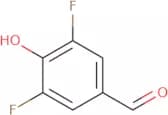
CAS:3,5-Difluoro-4-hydroxybenzaldehyde is a biochemical that belongs to the group of anticancer agents. It is activated by hydroxyl radicals and inhibits cancer cells. 3,5-Difluoro-4-hydroxybenzaldehyde inhibits protein synthesis in the cell by binding to messenger RNA and preventing its translation into protein. This compound also has inhibitory properties against DNA polymerase, which prevents DNA replication and transcription. 3,5-Difluoro-4-hydroxybenzaldehyde can be used as a template for oligodeoxynucleotides (ODN) to enhance photochemical properties.
Fórmula:C7H4F2O2Pureza:Min. 95%Cor e Forma:Off-White PowderPeso molecular:158.1 g/mol3,4-Dihydroxybenzylamine hydrobromide
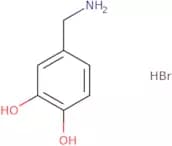
CAS:3,4-Dihydroxybenzylamine hydrobromide is a chemical that reacts with hydrogen peroxide to produce light. It is used as a nutrient for the chemiluminescent reaction in a nutrient solution to detect dopamine, chlorogenic acids, and trifluoroacetic acid. 3,4-Dihydroxybenzylamine hydrobromide can also be used as an analytical method for the measurement of cortisol concentration in plasma and saliva samples. This chemical analogically reacts with monoamine neurotransmitters such as dopamine and gamma-aminobutyric acid (GABA) to form fluorescent probes. 3,4-Dihydroxybenzylamine hydrobromide is not toxic or mutagenic and has been shown to be safe for use in humans.Fórmula:C7H10BrNO2Pureza:Min. 95%Cor e Forma:PowderPeso molecular:220.06 g/molFmoc-D-Asp(OtBu)-L-Ser(Psi(Me,Me)pro)-OH
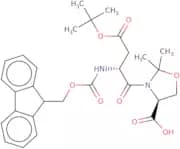
Fmoc-D-Asp(OtBu)-L-Ser(Psi(Me,Me)pro)-OH is a high quality reagent that can be used as an intermediate in the synthesis of complex compounds. It is a useful building block for the synthesis of speciality chemicals and research chemicals. Fmoc-D-Asp(OtBu)-L-Ser(Psi(Me,Me)pro)-OH is also a versatile building block that can be used to synthesize different types of compounds.Fórmula:C29H34N2O8Pureza:Min. 95%Cor e Forma:PowderPeso molecular:538.59 g/molFmoc-Leu-OH
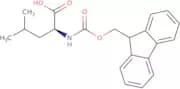
CAS:Fmoc-Leu-OH is a fatty acid that contains a hydroxyl group. It is used in the synthesis of polymer drugs, especially sodium salt polymers. The activity of Fmoc-Leu-OH can be reversed with degarelix acetate, an irreversible inhibitor of ns3 protease. In addition to its use as an antidiabetic agent, Fmoc-Leu-OH has been shown to have immunomodulatory effects and antiinflammatory activity. In tumor treatment, Fmoc-Leu-OH has been shown to inhibit the growth of fat cells without affecting normal cells or causing any toxic side effects.Fórmula:C21H23NO4Pureza:Min. 98 Area-%Cor e Forma:White PowderPeso molecular:353.41 g/molFmoc-Thr(tBu)-OH
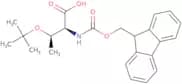
CAS:Fmoc-Thr(tBu)-OH is an ester hydrochloride that is synthesized by reacting the amino acid, Fmoc-Thr(tBu) with trifluoroacetic acid. It has been used to synthesize a cyclic peptide with a protonated amide group, which allows for stereoselective synthesis of the chloride. This product has shown to be resistant to hydrolysis by atosiban and carbonyl oxygens, and also binds to mammalian cell receptors.Fórmula:C23H27NO5Pureza:Min. 98 Area-%Cor e Forma:White PowderPeso molecular:397.46 g/molFmoc-Arg(Pbf)-OH
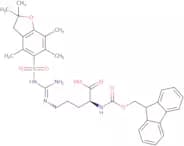
CAS:The Fmoc-Arg(Pbf)-OH is a cyclic peptide that has been shown to have significant cytotoxicity against human tumor cells. It binds to integrin receptors, which are involved in transcriptional regulation and cellular proliferation. The Fmoc-Arg(Pbf)-OH has been shown to be hypoglycemic and it also possesses redox potential. The chemical biology of this compound is not yet known, but toxicity studies have shown that it is nontoxic in mice.Fórmula:C34H40N4O7SPureza:Min. 98 Area-%Cor e Forma:White Off-White PowderPeso molecular:648.77 g/molFmoc-Gly-OH
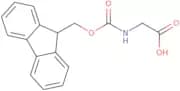
CAS:Fmoc-Gly-OH is a peptide that has been shown to have anti-inflammatory properties. It inhibits the production of inflammatory cytokines by binding to the receptor for IL-1β on du145 cells, which are prostate cancer cells. The synthesis of Fmoc-Gly-OH is achieved through an ester hydrochloride and amide bond formation. This synthesis method is not efficient and requires high amounts of reagents and solvents. Fmoc-Gly-OH has been shown to be effective in inhibiting the inflammatory response in human serum with a dose of 10 μM, but it does not inhibit inflammation in chronic exposure studies with rats or mice.!--Fórmula:C17H15NO4Pureza:Min. 98 Area-%Cor e Forma:White Off-White PowderPeso molecular:297.31 g/mol4-Nitrobenzenesulfonyl chloride
CAS:4-Nitrobenzenesulfonyl chloride is a versatile chemical compound. As a reagent in organic synthesis, it plays a crucial role in the preparation of pharmaceuticals, iminosugars, and oligosaccharides. Its ability to facilitate alpha-glucosylation makes it an essential component in the synthesis of complex carbohydrates. 4-Nitrobenzenesulfonyl chloride is also utilized in the preparation of N-nosyl-alpha-amino acids, which are essential building blocks in peptide synthesis. Additionally, it is widely used in the production of dyes and pigments.
Fórmula:C6H4ClNO4SPureza:Min. 98 Area-%Cor e Forma:PowderPeso molecular:221.62 g/mol5-Fluoroorotic acid potassium salt
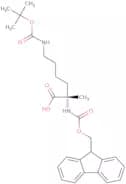
CAS:Please enquire for more information about 5-Fluoroorotic acid potassium salt including the price, delivery time and more detailed product information at the technical inquiry form on this pageFórmula:C5H2FN2O4KPureza:(Free Base) Min. 98.0 Area-%Cor e Forma:White PowderPeso molecular:212.18 g/molFmoc-α-Me-Lys(Boc)-OH
CAS:Fmoc-a-Me-Lys(Boc)-OH is a versatile building block that can be used in the synthesis of complex compounds. It is a reagent and speciality chemical, which are substances used in research laboratories. Fmoc-a-Me-Lys(Boc)-OH has been used as an intermediate in the synthesis of drugs such as antihypertensive agents, anticonvulsants, and antibiotics. It has also been used as a reaction component in organic syntheses to produce peptides, polymers, and other compounds with biologically active properties.
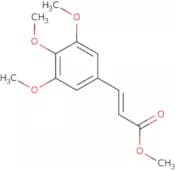
Fórmula:C27H34N2O6Pureza:Min. 95%Cor e Forma:White PowderPeso molecular:482.57 g/molMethyl 3,4,5-trimethoxycinnamate
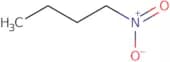
CAS:Methyl 3,4,5-trimethoxycinnamate (MTMC) is a compound that has been used as the active ingredient in traditional Chinese medicine for the treatment of cardiac disease. It has been shown to have an inhibitory effect on ventricular myocytes and to induce apoptosis in rat heart cells. MTMC also inhibits neutrophil recruitment and reduces the expression of pro-apoptotic proteins. It has also been shown to be effective in treating congestive heart failure by blocking cardiac hypertrophy and myocardial apoptosis. Methyl 3,4,5-trimethoxycinnamate has not been tested on humans or animals for safety or efficacy in treating depression.Fórmula:C13H16O5Pureza:Min. 95%Cor e Forma:White PowderPeso molecular:252.26 g/mol1-Nitrobutane
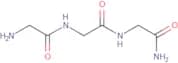
CAS:1-Nitrobutane is an organic compound with the chemical formula CH3NO2. It is a colorless liquid that is soluble in water and insoluble in ether. 1-Nitrobutane can react with hydroxyl groups to form nitroalkanes and it has been used as a reaction product for kinetic measurements of hydroxyl group concentration. The reaction mechanism of 1-nitrobutane is not completely known, but it has been proposed that the hydroxyl group reacts with the nitro group by nucleophilic substitution. 1-Nitrobutane can be used as a reagent for chromatography because it absorbs ultraviolet radiation and emits photoelectrons, which can be detected by covid-19 detectors. 1-Nitrobutane also has been shown to have antiviral properties against pandemic influenza A virus (H1N1) in cultured cells and rat liver microsomes.Fórmula:C4H9NO2Pureza:Min. 95%Cor e Forma:PowderPeso molecular:103.12 g/molH-Gly-Gly-Gly-NH2·HCl
CAS:Glycine is a non-essential amino acid with a pKa of 9.3. It is a building block of proteins and can be used to synthesize polypeptides. Glycine has been shown to function as an antigen in humans and has been used in pharmaceutical preparations and clinical studies as an immunological agent, such as in the treatment of hepatitis B virus infection. Glycine is also a component of protonated glycoconjugates, which are found in human serum. In addition to its role as an important amino acid, glycine is also an important molecule for kinetic studies because it has a high transfer rate between molecules and macrocyclic structures. This transfer rate can be used to study the conjugation reactions that occur with fluorescent compounds, like fluorescein, which can be used for labeling antibodies.
Fórmula:C6H12N4O3·HClPureza:Min. 95%Cor e Forma:PowderPeso molecular:224.65 g/molGallic acid anhydrous
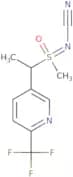
CAS:Gallic acid anhydrous is a compound that is found in plants and has antioxidant properties. Gallic acid anhydrous can be used as a model system for the study of electrochemical impedance spectroscopy. It has shown to have anti-cancer activity in vitro, but not in vivo, against squamous carcinoma cells. In addition, gallic acid anhydrous has been shown to inhibit oral pathogens and to scavenge anion radicals. Gallic acid anhydrous may have structural similarities to procyanidin B4, which is important for its antioxidant activity.Fórmula:C7H6O5Pureza:Min. 99 Area-%Cor e Forma:White PowderPeso molecular:170.12 g/molSulfoxaflor
CAS:Sulfoxaflor is a novel insecticide that belongs to the group of neonicotinoids. It has been shown to have synergic effects with other insecticides, such as piperonyl butoxide and pyrethrum, which are also neonicotinoids. Sulfoxaflor inhibits the enzyme acetylcholinesterase in insects, leading to paralysis and death. The analytical method for sulfoxaflor is based on the determination of terminal residues in honeybees using gas chromatography with mass spectrometry detection (GC-MS). This product is not toxic to mammals or birds at low doses, but has carcinogenic potential. Sulfoxaflor has been shown to cause high resistance levels in insects.Fórmula:C10H10F3N3OSPureza:Min. 95%Cor e Forma:PowderPeso molecular:277.27 g/mol