Building Blocks
Esta seção contém produtos fundamentais para a síntese de compostos orgânicos e biológicos. Building blocks são os materiais de partida essenciais usados para construir moléculas complexas através de várias reações químicas. Eles desempenham um papel crítico na descoberta de medicamentos, ciência dos materiais e pesquisa química. Na CymitQuimica, oferecemos uma ampla gama de building blocks de alta qualidade para apoiar suas pesquisas inovadoras e projetos industriais, garantindo que você tenha os componentes essenciais para uma síntese bem-sucedida.
Subcategorias de "Building Blocks"
- Ácidos Borónicos e Derivados de Ácido Borónico(5.778 produtos)
- Building Blocks Quirais(1.243 produtos)
- Building Blocks Hidrocarbonetos(6.097 produtos)
- Building Blocks orgânicos(61.045 produtos)
Foram encontrados 203842 produtos de "Building Blocks"
Ordenar por
Pureza (%)
0
100
|
0
|
50
|
90
|
95
|
100
3,5-Dimethyl-4H-1,2,4-triazol-4-amine
CAS:<p>3,5-Dimethyl-4H-1,2,4-triazol-4-amine is a crystalline compound with antiproliferative and anti-inflammatory properties. It has been shown to inhibit the growth of cancer cells in vitro and in vivo. The mechanism of action is not fully understood but may be due to inhibition of DNA synthesis or by inhibiting the activity of topoisomerase II. 3,5-Dimethyl-4H-1,2,4-triazol-4-amine can also act as an antioxidant by scavenging reactive oxygen species (ROS). 3,5-Dimethyl-4H-1,2,4-triazol-4-amine has been shown to have a low toxicity in animals and humans.</p>Fórmula:C4H8N4Pureza:Min. 95%Peso molecular:112.13 g/mol2-(4,4-Difluorocyclohex-1-en-1-yl)-4,4,5,5-tetramethyl-1,3,2-dioxaborolane
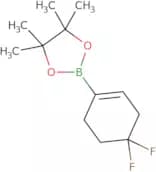
CAS:Please enquire for more information about 2-(4,4-Difluorocyclohex-1-en-1-yl)-4,4,5,5-tetramethyl-1,3,2-dioxaborolane including the price, delivery time and more detailed product information at the technical inquiry form on this pageFórmula:C12H19BF2O2Pureza:Min. 95%Peso molecular:244.09 g/mol2,2'-Dithiodianiline
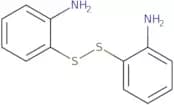
CAS:<p>2,2'-Dithiodianiline is a redox-active molecule with a redox potential of -0.08 V. It has been shown to inhibit the polymerase chain reaction by binding to DNA and inhibiting the enzyme DNA polymerase. 2,2'-Dithiodianiline is a potent inhibitor of bacterial growth in vitro, and has been shown to be cytotoxic in vivo. 2,2'-Dithiodianiline inhibits the growth of resistant mutants that are resistant to other antibiotics such as penicillin and ampicillin. This compound binds to molybdenum at an optimum concentration of 0.5 mM and coordinates through electrostatic interactions with the molybdenum atom. Structural analysis reveals that 2,2'-dithiodianiline forms hydrogen bonds with adenine residues in DNA and interacts with guanine residues in RNA through π-π stacking interactions. This interaction prevents transcription by blocking the binding</p>Fórmula:C12H12N2S2Pureza:Min. 98 Area-%Cor e Forma:PowderPeso molecular:248.37 g/molrac-Demiditraz
CAS:<p>Please enquire for more information about rac-Demiditraz including the price, delivery time and more detailed product information at the technical inquiry form on this page</p>Fórmula:C13H16N2Pureza:Min. 95%Peso molecular:200.28 g/molDeschloro amlodipine maleate
CAS:Please enquire for more information about Deschloro amlodipine maleate including the price, delivery time and more detailed product information at the technical inquiry form on this pageFórmula:C20H26N2O5•C4H4O4Pureza:Min. 95%Peso molecular:490.5 g/mol3-(cis-4-(2-(4-(2,3-Dichlorophenyl)piperazin-1-yl)ethyl)cyclohexyl)-1,1-dimethylurea
CAS:Please enquire for more information about 3-(cis-4-(2-(4-(2,3-Dichlorophenyl)piperazin-1-yl)ethyl)cyclohexyl)-1,1-dimethylurea including the price, delivery time and more detailed product information at the technical inquiry form on this pageFórmula:C21H32Cl2N4OPureza:Min. 95%Peso molecular:427.41 g/mol4,5-Dihydro-2-methyl-4-thiazolecarboxylic acid trifluoroacetate
CAS:Please enquire for more information about 4,5-Dihydro-2-methyl-4-thiazolecarboxylic acid trifluoroacetate including the price, delivery time and more detailed product information at the technical inquiry form on this pageFórmula:C5H7NO2S•(C2HF3O2)xPureza:Min. 95%6,7-Dichloro-1-cyclopropyl-1,4-dihydro-4-oxo-3-quinolinecarboxylic acid
CAS:Please enquire for more information about 6,7-Dichloro-1-cyclopropyl-1,4-dihydro-4-oxo-3-quinolinecarboxylic acid including the price, delivery time and more detailed product information at the technical inquiry form on this pageFórmula:C13H9Cl2NO3Pureza:Min. 95%Peso molecular:298.12 g/mol4,5-Dihydro-1H-imidazol-2-amine hydrochloride
CAS:<p>Please enquire for more information about 4,5-Dihydro-1H-imidazol-2-amine hydrochloride including the price, delivery time and more detailed product information at the technical inquiry form on this page</p>Fórmula:C3H7N3•HClPureza:Min. 95%Peso molecular:121.57 g/mol4-Desmethyl-2-methyl celecoxib
CAS:<p>Please enquire for more information about 4-Desmethyl-2-methyl celecoxib including the price, delivery time and more detailed product information at the technical inquiry form on this page</p>Fórmula:C17H14F3N3O2SPureza:Min. 95%Peso molecular:381.4 g/molDomperidone N-oxide
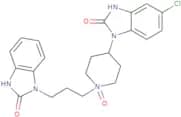
CAS:Please enquire for more information about Domperidone N-oxide including the price, delivery time and more detailed product information at the technical inquiry form on this pageFórmula:C22H24ClN5O3Pureza:Min. 95%Peso molecular:441.91 g/molDepropyl rotigotine hydrochloride
CAS:Please enquire for more information about Depropyl rotigotine hydrochloride including the price, delivery time and more detailed product information at the technical inquiry form on this pageFórmula:C16H19NOS•(HCl)xPureza:Min. 95%3,4-Diaminobenzophenone
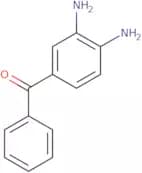
CAS:3,4-Diaminobenzophenone is an unsymmetrical compound and a derivative of benzophenone. It is used in the synthesis of other organic compounds, such as pharmaceuticals. 3,4-Diaminobenzophenone is also used as a solubilizing agent for drugs that are insoluble in water. The molecular weight of 3,4-Diaminobenzophenone can be determined by gravimetric analysis or FTIR methods. 3,4-Diaminobenzophenone has been shown to have antioxidative properties. This molecule can bind to hydroxyl groups on biomolecules and protect them from oxidation by reactive oxygen species (ROS).Fórmula:C13H12N2OPureza:Min 98.5%Cor e Forma:PowderPeso molecular:212.25 g/mol7-Oxa-2-azaspiro[3.5]nonane hydrochloride
CAS:Versatile small molecule scaffoldFórmula:C7H14ClNOPureza:Min. 95%Peso molecular:163.6 g/mol2-(Morpholin-4-yl)acetyl chloride hydrochloride
CAS:2-(Morpholin-4-yl)acetyl chloride hydrochloride is a fine chemical that is used as a building block for the synthesis of other compounds. It can be used in research and development, or as a reagent. 2-(Morpholin-4-yl)acetyl chloride hydrochloride has high purity and is easily soluble in water. This compound can be used as an intermediate to synthesize other compounds, or it can be used as a scaffold for the formation of complex structures.Fórmula:C6H11Cl2NO2Pureza:Min. 95%Cor e Forma:PowderPeso molecular:200.06 g/mol3,5-Dihydroxy-4-methylbenzoic acid
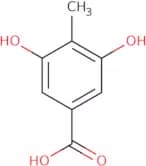
CAS:3,5-Dihydroxy-4-methylbenzoic acid is an efficient synthesis of the natural product lucidin. It is a quinone that is found in citrifolia and morindone, compounds which are used as analgesics and antipyretics. This compound has been shown to inhibit the growth of fungi by inhibition of protein synthesis. 3,5-Dihydroxy-4-methylbenzoic acid also inhibits the production of citric acid cycle intermediates such as succinic acid and fumaric acid.Fórmula:C8H8O4Pureza:Min. 80%Cor e Forma:PowderPeso molecular:168.15 g/mol3,5-Dihydroxybenzaldehyde
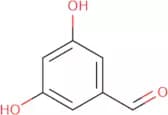
CAS:<p>3,5-Dihydroxybenzaldehyde (DHBA) is a plant metabolite that is classified as a phenolic compound. It is found in many plants and has important biological functions such as the production of carotenoids or the cleavage of carotenoid to form other compounds. DHBA can be extracted from plant tissue with hydrochloric acid or carbon sources. It has been shown that DHBA inhibits the growth of soil bacteria by binding to amines and thus preventing them from reacting with substrates. This may be due to its ability to act as an electron donor, which could also explain its inhibitory activity on carotenoid cleavage.</p>Fórmula:C7H6O3Pureza:Min. 98 Area-%Cor e Forma:Off-White To Beige To Brown SolidPeso molecular:138.12 g/mol1H,1H,7H-Dodecafluoroheptanol
CAS:<p>1H,1H,7H-Dodecafluoroheptanol is a perfluorinated compound. It has been shown to be an efficient scavenger of reactive oxygen species (ROS) and to have a protective effect on collagen. The reaction mechanism of 1H,1H,7H-dodecafluoroheptanol is not fully understood. However, it has been shown that the chloride ion plays a key role in the formation of this product from 1H,1H,7F-dodecafluoroheptane. The reaction vessel used in this synthesis is critical because it must be anhydrous to prevent the formation of 1HF3OCl. Magnetic resonance spectroscopy has been used to study the chemical structures of this compound.</p>Fórmula:C7H4F12OPureza:Min. 95%Cor e Forma:Colorless PowderPeso molecular:332.09 g/mol3,5-Diiodo-L-tyrosine
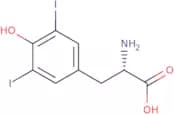
CAS:3,5-Diiodo-L-tyrosine (3DILT) is an iodinated amino acid that can be used as a marker for human immunodeficiency virus (HIV) infection. It is synthesized by the reaction of 3,5-diiodotyrosine with L-tyrosine in the presence of a metal chelate and dinucleotide phosphate. This reaction proceeds via nucleophilic substitution on the aromatic ring with an iodide ion. The product is then purified to remove unreacted 3,5-diiodotyrosine and the metal chelate. 3DILT reacts with antibodies in a luminescence immunoassay to produce light that can be detected. The detection limit of this assay is 10 pg/mL.Fórmula:C9H9I2NO3Pureza:Min. 95%Peso molecular:432.98 g/mol2-(Chloromethyl)-4H,6H,7H-pyrano[4,3-d][1,3]thiazole
CAS:Versatile small molecule scaffoldFórmula:C7H8ClNOSPureza:Min. 95%Peso molecular:189.66 g/molMethyl 2-(5-bromothiophen-2-yl)acetate
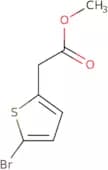
CAS:<p>Versatile small molecule scaffold</p>Fórmula:C7H7BrO2SPureza:Min. 95%Peso molecular:235.1 g/mol3,5-Dimethylbenzaldehyde
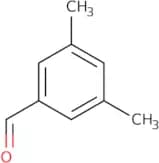
CAS:<p>3,5-Dimethylbenzaldehyde is an organic compound that is a colorless liquid. It has a chemical formula of C9H12O2 and is classified as an aldehyde. 3,5-Dimethylbenzaldehyde can be synthesized by the reaction of isopropyl palmitate with xylene in the presence of carbon as a source. The reaction time required for this synthesis is approximately one day. The major products of this reaction are 3,5-dimethylbenzaldehyde and 2-methylbutanal. This reaction mechanism can also be used to determine the concentration of urinary metabolites in human urine samples. Analysis of these samples requires an organic solvent such as hexane or dichloromethane. Kinetic data was collected from the rate at which zinc powder reacts with 3,5-dimethylbenzaldehyde over time at different concentrations. A kinetic experiment was conducted using c–h bond activation to produce 3,5-dimethoxy</p>Fórmula:C9H10OPureza:Min. 95%Cor e Forma:Colorless Clear LiquidPeso molecular:134.18 g/mol3,4-Difluoro-1H-Pyrrole
CAS:<p>3,4-Difluoro-1H-Pyrrole is a neutral compound with a molecular weight of 136.17 g/mol. It has the chemical formula C6H3F2N and it can be found in reactions involving the congener and coordination chemistry. 3,4-Difluoro-1H-Pyrrole is an intermediate in organic synthesis that is used as starting material for other organic compounds such as pharmaceuticals and agrochemicals. The redox potential of 3,4-Difluoro-1H-Pyrrole is -0.42 V for the reaction with chloride solution and its basicity is 0.89 mM at 25°C. This molecule has been studied by X-ray crystallography and by titration calorimetry for hydrogen bonding interactions.</p>Fórmula:C4H3F2NPureza:Min. 95%Peso molecular:103.07 g/mol1-(Difluoromethyl)-1H-pyrazole-4-carbaldehyde
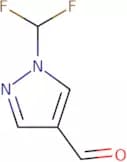
CAS:Versatile small molecule scaffoldFórmula:C5H4F2N2OPureza:Min. 95%Peso molecular:146.09 g/molMethyl 2-(2-chloropyrimidin-4-yl)acetate
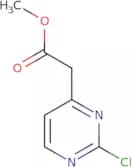
CAS:<p>Versatile small molecule scaffold</p>Fórmula:C7H7ClN2O2Pureza:Min. 95%Peso molecular:186.59 g/mol5-Chloro-1-methyl-1H-pyrazol-3-amine
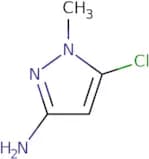
CAS:<p>Versatile small molecule scaffold</p>Fórmula:C4H6N3ClPureza:Min. 95%Peso molecular:131.56 g/mol5-Bromo-1,3-oxazole hydrochloride
CAS:Versatile small molecule scaffoldFórmula:C3H3BrClNOPureza:Min. 95%Peso molecular:184.42 g/mol5-Boc-4H,5H,6H,7H,8H-pyrazolo[1,5-a][1,4]diazepine-2-carboxylic acid
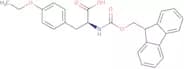
CAS:Versatile small molecule scaffoldFórmula:C13H19N3O4Pureza:Min. 95%Peso molecular:281.31 g/molFmoc-Tyr(Et)-OH
CAS:<p>Please enquire for more information about Fmoc-Tyr(Et)-OH including the price, delivery time and more detailed product information at the technical inquiry form on this page</p>Fórmula:C26H25NO5Pureza:Min. 95%Peso molecular:431.48 g/molFmoc-b-Ala-Ala-Pro-OH
CAS:Fmoc-b-Ala-Ala-Pro-OH is a reaction component that can be used in the synthesis of peptides and other compounds. It is a building block for the preparation of complex compounds, such as small molecules, polymers and natural products. Fmoc-b-Ala-Ala-Pro-OH has been shown to be useful in the synthesis of various types of reagents, including antibiotics and pharmaceuticals. This chemical has been reported as a useful scaffold for the preparation of high quality research chemicals. Fmoc-b-Ala-Ala-Pro is also an intermediate in the synthesis of speciality chemicals and fine chemicals.Fórmula:C26H29N3O6Pureza:Min. 95%Cor e Forma:White PowderPeso molecular:479.53 g/mol4-Formylbenzoic acid
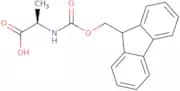
CAS:<p>4-Formylbenzoic acid is an organic compound with the molecular formula CH2=C(O)CH=CHCO2H. It is a white solid that is soluble in water and has a strong, unpleasant odor. 4-Formylbenzoic acid has been shown to have affinity for binding to odorous molecules such as sulfur compounds, amines, and mercaptans. The binding of these molecules to the 4-formylbenzoic acid leads to a decrease in their odor concentration. This process can be done using electrochemical impedance spectroscopy or optical sensors. The oxidation of 4-formylbenzoic acid by trifluoroacetic acid produces 2-formylphenol and formaldehyde, which are themselves volatile compounds with an unpleasant odor. These reactions may be used as wastewater treatment methods. Langmuir adsorption isotherm may be used as an analytical method for measuring the concentration of 4-formylbenzoic acid</p>Fórmula:C8H6O3Pureza:Min. 98 Area-%Cor e Forma:White Yellow PowderPeso molecular:150.13 g/molFmoc-D-Ala-OH
CAS:Fmoc-D-Ala-OH is a synthetic cyclic peptide that has been shown to have anticancer properties. This compound was synthesized by solid-phase chemistry and exhibits an inhibitory effect on cancer cells. Fmoc-D-Ala-OH blocks the synthesis of proteins in cancer cells, leading to cell death. It also inhibits the activity of serine proteases such as degarelix acetate, which are important for cancer cell growth and metastasis.Fórmula:C18H17NO4Pureza:Min. 95%Cor e Forma:PowderPeso molecular:311.33 g/mol4-Fluoro-2-methoxy-5-nitroaniline
CAS:Intermediate in the synthesis of osimertinib (AZD9291)Fórmula:C7H7FN2O3Pureza:Min. 95%Peso molecular:186.14 g/molN-Fluorobenzenesulfonimide
CAS:<p>N-Fluorobenzenesulfonimide is an organic compound with the molecular formula CHFNS. It is a fluorinating agent that can be used for the synthesis of organic compounds. N-Fluorobenzenesulfonimide has been shown to have anti-inflammatory properties and has shown promising results in animal studies for the treatment of hepatitis. The mechanism of action is not fully understood, but it may involve the formation of hydrogen bonds between N-fluorobenzenesulfonimide and amino acid residues in proteins, leading to inhibition of protein synthesis.</p>Fórmula:C12H10FNO4S2Pureza:Min. 95%Cor e Forma:White PowderPeso molecular:315.34 g/mol5-(Methylamino)nicotinic acid
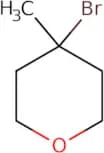
CAS:<p>Versatile small molecule scaffold</p>Fórmula:C7H8N2O2Pureza:Min. 95%Peso molecular:152.15 g/mol4-Bromo-4-methyltetrahydropyran
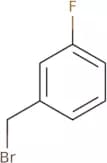
CAS:<p>Versatile small molecule scaffold</p>Fórmula:C6H11BrOPureza:Min. 95%Peso molecular:179.06 g/mol3-Fluorobenzyl bromide
CAS:3-Fluorobenzyl bromide is a fluorinated benzyl derivative that can be used as a fluorescent probe for the study of cellular uptake and metabolism. 3-Fluorobenzyl bromide has been shown to have potent inhibitory activity against the growth of cancer cells in culture. It has also been shown to reduce ischemia reperfusion injury in cardiac tissue. The pharmacokinetic properties of 3-fluorobenzyl bromide have been studied in detail, revealing a rapid uptake into cells and elimination by renal excretion. This compound also inhibits the growth of P. aeruginosa in an animal model, with no effect on other bacterial strains or mammalian cells.Pureza:Min. 95%Fmoc-D-proline
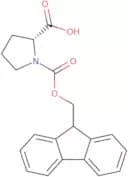
CAS:Please enquire for more information about Fmoc-D-proline including the price, delivery time and more detailed product information at the technical inquiry form on this pageFórmula:C20H19NO4Pureza:Min. 95%Peso molecular:337.37 g/molFmoc-α-methyl-L-phenylalanine
CAS:Please enquire for more information about Fmoc-α-methyl-L-phenylalanine including the price, delivery time and more detailed product information at the technical inquiry form on this pageFórmula:C25H23NO4Pureza:Min. 95%Cor e Forma:PowderPeso molecular:401.45 g/molFmoc-Dap(Ac)-OH
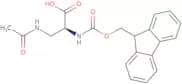
CAS:Fmoc-Dap(Ac)-OH is a fine chemical that is used as a building block in the synthesis of complex compounds. It reacts with various nucleophiles to form an amide bond, and has been shown to be useful for both research and industrial applications. Fmoc-Dap(Ac)-OH can also be used as a reagent to synthesize peptides, which are biologically active compounds that form the basis of many drugs. This versatile intermediate is also used as a scaffold in the construction of more complex molecules. Fmoc-Dap(Ac)-OH has CAS No. 181952-29-4 and is classified as a speciality chemical by the International Union of Pure and Applied Chemistry (IUPAC).Fórmula:C20H20N2O5Pureza:Min. 95%Cor e Forma:PowderPeso molecular:368.38 g/mol5-Fluoro-2-hydrazinopyridine
CAS:Please enquire for more information about 5-Fluoro-2-hydrazinopyridine including the price, delivery time and more detailed product information at the technical inquiry form on this pageFórmula:C5H6FN3Pureza:Min. 95%Peso molecular:127.12 g/molThiophen-3-ylmethanamine hydrochloride
CAS:<p>Versatile small molecule scaffold</p>Fórmula:C5H8ClNSPureza:Min. 95%Peso molecular:149.64 g/molGlycine - EP
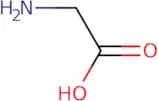
CAS:<p>Glycine is a buffering agent that can be used in electrophoresis for protein samples. It has an optimal pH range of 2.2-3.6 and a pKa of 2.35.</p>Fórmula:NH2CH2COOHPureza:Min. 95%Peso molecular:75.07 g/molGSK3008348 monohydrochloride
CAS:Please enquire for more information about GSK3008348 monohydrochloride including the price, delivery time and more detailed product information at the technical inquiry form on this pageFórmula:C29H37N5O2•HClPureza:Min. 95%Peso molecular:524.1 g/molGly-Gly-OMe·HCl
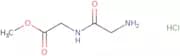
CAS:Gly-Gly-OMe·HCl is a diagnostic agent that can be used to diagnose atherosclerotic lesions. It is conjugated to an organic molecule and then radiolabeled. The conjugate can be detected by cyclopentadienyl, which emits gamma rays when it decays. This conjugate has been shown to selectively accumulate in atherosclerotic lesions of the coronary arteries, where it accumulates with a higher concentration than in the surrounding tissue. This product also has gastroprotective effects on the stomach and liver and can reduce lipid levels in hyperlipidaemic patients.Fórmula:C5H10N2O3•HClPureza:Min. 95 Area-%Cor e Forma:Slightly Rose PowderPeso molecular:182.61 g/mol4-Hydrazinobenzoic acid hydrochloride
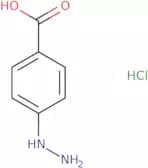
CAS:<p>4-Hydrazinobenzoic acid hydrochloride is a chemical species that has an oxidative effect on DNA. It is a reactive oxygen species (ROS) that changes the hydrogen spectrum of water. The hydrogen bond is broken and the electrons in the molecule are excited to a higher energy level, which results in ROS formation. 4-Hydrazinobenzoic acid hydrochloride also inhibits mitochondrial function and causes heart disease by increasing blood pressure and weakening the heart muscle. This compound can be used as a cancer treatment for human cells, because it suppresses genes that promote cell growth. In addition, 4-hydrazinobenzoic acid hydrochloride may inhibit endothelial cell proliferation in animal experiments.</p>Fórmula:C7H8N2O2•HClPureza:Min. 95%Cor e Forma:PowderPeso molecular:188.61 g/mol3-Hydroxy-5-methylpyridine
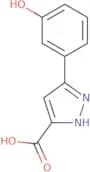
CAS:<p>3-Hydroxy-5-methylpyridine (3HMP) is a chemical substance that has been classified as an amine. It is a product of the metabolism of purines, which are nitrogenous bases found in DNA and RNA. 3HMP is produced by aerogenic bacteria (such as Enterobacter), and can be used to estimate the number of these bacteria present in water samples. 3HMP has been shown to have antiviral properties against influenza virus, and can be used as a biomarker for the presence of other viruses in animals. 3HMP also has mineralization properties, which have been studied extensively, particularly with regards to pancreatic disease.</p>Fórmula:C6H7NOPureza:Min. 95%Cor e Forma:PowderPeso molecular:109.13 g/mol5-(3-Hydroxyphenyl)-1H-pyrazole-3-carboxylic acid
CAS:<p>Versatile small molecule scaffold</p>Fórmula:C10H8N2O3Pureza:Min. 95%Peso molecular:204.18 g/molH-D-ASN-L-ASP-OH
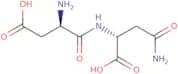
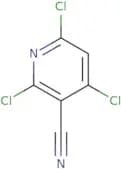
<p>Please enquire for more information about H-D-ASN-L-ASP-OH including the price, delivery time and more detailed product information at the technical inquiry form on this page</p>Pureza:Min. 95%Cor e Forma:Powder2,4,6-trichloropyridine-3-carbonitrile
CAS:Versatile small molecule scaffoldFórmula:C6HCl3N2Pureza:Min. 95%Peso molecular:207.4 g/mol



![7-Oxa-2-azaspiro[3.5]nonane hydrochloride](/_next/image/?url=https%3A%2Fstatic.cymitquimica.com%2Fproducts%2F3D%2Fthumb-webp%2FSGC63309.webp&w=3840&q=75)


![2-(Chloromethyl)-4H,6H,7H-pyrano[4,3-d][1,3]thiazole](/_next/image/?url=https%3A%2Fstatic.cymitquimica.com%2Fproducts%2F3D%2Fthumb-webp%2FSDC46081.webp&w=3840&q=75)


![5-Boc-4H,5H,6H,7H,8H-pyrazolo[1,5-a][1,4]diazepine-2-carboxylic acid](/_next/image/?url=https%3A%2Fstatic.cymitquimica.com%2Fproducts%2F3D%2Fthumb-webp%2FFEC17097.webp&w=3840&q=75)