Building Blocks
Subcategorias de "Building Blocks"
- Ácidos Borónicos e Derivados de Ácido Borónico(5.774 produtos)
- Building Blocks Quirais(1.237 produtos)
- Building Blocks Hidrocarbonetos(6.098 produtos)
- Building Blocks orgânicos(60.980 produtos)
Foram encontrados 205158 produtos de "Building Blocks"
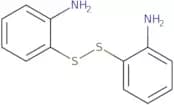
2,2'-Dithiodianiline
CAS:2,2'-Dithiodianiline is a redox-active molecule with a redox potential of -0.08 V. It has been shown to inhibit the polymerase chain reaction by binding to DNA and inhibiting the enzyme DNA polymerase. 2,2'-Dithiodianiline is a potent inhibitor of bacterial growth in vitro, and has been shown to be cytotoxic in vivo. 2,2'-Dithiodianiline inhibits the growth of resistant mutants that are resistant to other antibiotics such as penicillin and ampicillin. This compound binds to molybdenum at an optimum concentration of 0.5 mM and coordinates through electrostatic interactions with the molybdenum atom. Structural analysis reveals that 2,2'-dithiodianiline forms hydrogen bonds with adenine residues in DNA and interacts with guanine residues in RNA through π-π stacking interactions. This interaction prevents transcription by blocking the binding
Fórmula:C12H12N2S2Pureza:Min. 98 Area-%Cor e Forma:PowderPeso molecular:248.37 g/molRef: 3D-FD16035
Produto descontinuado1H,1H,7H-Dodecafluoroheptanol
CAS:1H,1H,7H-Dodecafluoroheptanol is a perfluorinated compound. It has been shown to be an efficient scavenger of reactive oxygen species (ROS) and to have a protective effect on collagen. The reaction mechanism of 1H,1H,7H-dodecafluoroheptanol is not fully understood. However, it has been shown that the chloride ion plays a key role in the formation of this product from 1H,1H,7F-dodecafluoroheptane. The reaction vessel used in this synthesis is critical because it must be anhydrous to prevent the formation of 1HF3OCl. Magnetic resonance spectroscopy has been used to study the chemical structures of this compound.
Fórmula:C7H4F12OPureza:Min. 95%Cor e Forma:Colorless PowderPeso molecular:332.09 g/molRef: 3D-FD37544
Produto descontinuadoInosine 5'-monophosphate disodium hydrate
CAS:Please enquire for more information about Inosine 5'-monophosphate disodium hydrate including the price, delivery time and more detailed product information at the technical inquiry form on this page
Fórmula:C10H13N4O8P•Na2•(H2O)xPureza:Min. 95%Ref: 3D-FI183272
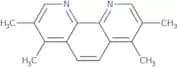
Produto descontinuado3,4,7,8-Tetramethyl-1,10-phenanthroline
CAS:Metal-chelating agent
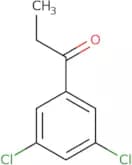
Fórmula:C16H16N2Pureza:Min. 98 Area-%Cor e Forma:White PowderPeso molecular:236.31 g/mol1-(3,5-Dichloro-phenyl)-propan-1-one
CAS:Versatile small molecule scaffold
Fórmula:C9H8Cl2OPureza:Min. 95%Peso molecular:203.07 g/mol2-Amino-6-chloropurine
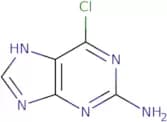
CAS:2-Amino-6-chloropurine is a nucleophilic substituent that is used in the synthesis of 2-amino-6-chloropurine. It reacts with hydroxyl groups to form a palladium-catalyzed coupling reaction solution, which is then treated with hydrochloric acid and trifluoroacetic acid. The product is purified by crystallization and recrystallization. This compound has potent antitumor activity against carcinoma cell lines, but it has not been shown to have any effect against Mycobacterium tuberculosis.
Fórmula:C5H4ClN5Pureza:Min. 95%Cor e Forma:Off-White PowderPeso molecular:169.57 g/mol4-Bromo-2,5-dimethoxybenzaldehyde
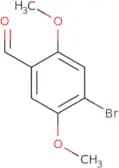
CAS:4-Bromo-2,5-dimethoxybenzaldehyde is a nucleophilic compound that can act as an iminium. It is used in the synthesis of chalcones, which are aromatic compounds that have been found to have anticancer properties. 4-Bromo-2,5-dimethoxybenzaldehyde has two isomers: 2,4-dimethoxybenzaldehyde and 2,5-dimethoxybenzaldehyde. The separation of these compounds can be achieved using chromatography with a silica gel column. This process can be done on both the mixture of the two isomers or on one specific isomer. The synthetic pathway for this product begins with benzylpiperazine and piperazine. These two molecules react to form 3,4-dichlorobenzylpiperazine, which reacts with dimethoxybenzyl chloride to form 4-bromo-2,5-dim
Fórmula:C9H9BrO3Pureza:Min. 95%Peso molecular:245.07 g/mol(e)-(2-(1-(tert-butoxycarbonyl)piperidin-4-yl)vinyl)boronic acid pinacol ester
CAS:Versatile small molecule scaffold
Fórmula:C18H32BNO4Pureza:Min. 95%Peso molecular:337.27 g/molMethyl 3-bromopyrrole-2-carboxylate
CAS:Versatile small molecule scaffoldFórmula:C6H6BrNO2Pureza:Min. 95%Peso molecular:204.02 g/mol4(4,4,5,5-Tetramethyl-1,3,2-dioxaborolan-2-yl)-2,3-dihydro-1H-inden-1-one
CAS:Versatile small molecule scaffold
Fórmula:C15H19BO3Pureza:Min. 95%Peso molecular:258.12 g/mol4-Bromo-2-ethyliodobenzene
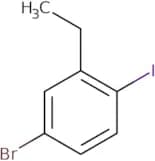
CAS:Versatile small molecule scaffold
Fórmula:C8H8BrIPureza:Min. 95%Peso molecular:310.96 g/mol2-Hydroxyethyl benzoate
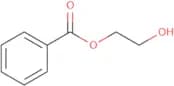
CAS:2-Hydroxyethyl benzoate is a model system that has been used to study the mechanism of hydrolysis of an ester with a hydroxyl group. The reaction products are a metal hydroxide and a chloride ion. 2-Hydroxyethyl benzoate is an antimicrobial agent that has shown activity against bacteria, fungi, and protozoa. It is thought to work by reacting with fatty acids in the cell membrane, leading to disruption of the membrane and leakage of cellular contents. It also reacts with chloride ions to form hydroxybenzoic acid and water molecules. The activation energy for this reaction was found to be around 19 kJ mol−1.
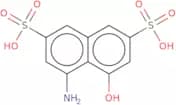
Fórmula:C9H10O3Pureza:Min. 95%Peso molecular:166.17 g/mol4-Amino-5-hydroxy-2,7-naphthalenedisulfonic acid
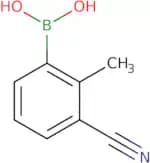
CAS:4-Amino-5-hydroxy-2,7-naphthalenedisulfonic acid (4-AHNDS) is a hydroxyl group and nitrogen containing molecule. It is a reactive compound that can be used to extract anions from water. 4-AHNDS has been shown to react with sodium ions in the presence of water, forming a salt that is soluble in water. This chemical also reacts with organic molecules and forms stable complexes. The reaction mechanism of 4-AHNDS has been studied by kinetic analysis and surface methodology measurements.Fórmula:C10H9NO7S2Pureza:Min. 95%Cor e Forma:PowderPeso molecular:319.31 g/mol3-Cyano-2-methylphenylboronic acid
CAS:3-Cyano-2-methylphenylboronic acid is a high quality compound that can be used as a reagent, intermediate, or building block in the synthesis of complex compounds. This chemical is also useful as a speciality chemical and research chemical. 3-Cyano-2-methylphenylboronic acid has versatile uses in organic synthesis due to its versatility in reactions and building blocks.
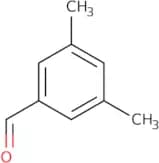
Fórmula:C8H8BNO2Pureza:Min. 95%Cor e Forma:PowderPeso molecular:160.97 g/mol3,5-Dimethylbenzaldehyde
CAS:3,5-Dimethylbenzaldehyde is an organic compound that is a colorless liquid. It has a chemical formula of C9H12O2 and is classified as an aldehyde. 3,5-Dimethylbenzaldehyde can be synthesized by the reaction of isopropyl palmitate with xylene in the presence of carbon as a source. The reaction time required for this synthesis is approximately one day. The major products of this reaction are 3,5-dimethylbenzaldehyde and 2-methylbutanal. This reaction mechanism can also be used to determine the concentration of urinary metabolites in human urine samples. Analysis of these samples requires an organic solvent such as hexane or dichloromethane. Kinetic data was collected from the rate at which zinc powder reacts with 3,5-dimethylbenzaldehyde over time at different concentrations. A kinetic experiment was conducted using c–h bond activation to produce 3,5-dimethoxy
Fórmula:C9H10OPureza:Min. 95%Cor e Forma:Colorless Clear LiquidPeso molecular:134.18 g/mol2-Hydroxyethyl octacosanoate
CAS:Please enquire for more information about 2-Hydroxyethyl octacosanoate including the price, delivery time and more detailed product information at the technical inquiry form on this page
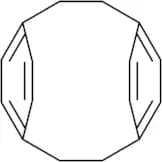
Pureza:Min. 95%2,2-Paracyclophane
CAS:2,2-Paracyclophane is a high-sensitivity c-reactive protein (hsCRP) that has been isolated from the fungus Cryptococcus neoformans. This compound has shown to have anti-cancer properties in animal studies. 2,2-Paracyclophane binds to fatty acids and is soluble in water, which may be due to its hydrogen bonding with the hydroxyl group at C1. The crystal structure of this compound reveals that it has a cyclohexane ring and two fatty acids. The thermal expansion coefficient of this molecule is also high, which suggests that it may be suitable for use as a solid lubricant.
Fórmula:C16H16Pureza:Min. 98.5 Area-%Cor e Forma:White PowderPeso molecular:208.3 g/molPolycarbosilane
CAS:Polycarbosilane is a cross-linking agent that can be used to modify the surface properties of polymers. It reacts with the hydroxyl groups on the polymer to form carbosilane bonds, which lead to a change in the viscosity and other physical properties of the material. Polycarbosilane is insoluble in water and has an absorption peak at 350 nm. When reacted with argon gas, polycarbosilane reacts with oxygen or nitrogen to produce carbonyls or amines, respectively. Polycarbosilane can react with x-rays or magnetic resonance spectroscopy to produce elemental analysis data for a variety of elements. This chemical also has optical properties that make it useful as an organic solution for optical devices such as lenses and mirrors. Polycarbosilane is stable under most conditions and can be used as an efficient method for environmental pollution control by removing heavy metals from wastewater streams.
Fórmula:(C2H6Si)nPureza:Min. 95%Cor e Forma:PowderMethyl 3-bromo-1-methyl-1H-pyrazole-5-carboxylate
CAS:Versatile small molecule scaffold
Fórmula:C6H7BrN2O2Pureza:Min. 95%Peso molecular:219.04 g/mol2,4,6-Trichloronicotinaldehyde
CAS:Versatile small molecule scaffold
Fórmula:C6H2Cl3NOPureza:Min. 95%Peso molecular:210.45 g/mol