Álcoois
Subcategorias de "Álcoois"
Foram encontrados 5818 produtos de "Álcoois"
4-Methoxyresorcinol
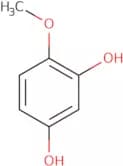
CAS:4-Methoxyresorcinol is a chemical compound that has the molecular formula CHNO. It has a hydroxyl group in the 4-position and a methyl group on the 8-position. The intramolecular hydrogen of this molecule is denatured by heating to about 220°C. This process converts it into resorcinol, which is structurally similar but has different properties. 4-Methoxyresorcinol can be used as a polymerization initiator for polycarboxylic acid or quinoline derivatives, and its analytical methods are used in determining its structure.Fórmula:C7H8O3Pureza:Min. 95%Cor e Forma:PowderPeso molecular:140.14 g/mol2,6-Dimethylbenzyl alcohol
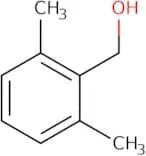
CAS:2,6-Dimethylbenzyl alcohol is a carboxylic acid that can be found in nature. It is a synthetic compound that has been shown to have stereoselective properties. The mechanism of 2,6-Dimethylbenzyl alcohol is not well known, but it has been hypothesized to react with amines and form an imine intermediate. This mechanism is supported by the presence of an alkene and primary alcohol on its structure. Some functional groups include chloride and benzoate, which are both anions. This compound has been shown to have echolocation capabilities in bats.Fórmula:C9H12OPureza:Min. 95%Cor e Forma:SolidPeso molecular:136.19 g/mol4-Chloro-2-methylbenzyl alcohol
CAS:4-Chloro-2-methylbenzyl alcohol is an organic compound that has a sensor and hydroxyl group. It is used in pest control as an insecticide. 4-Chloro-2-methylbenzyl alcohol has been shown to be effective against ants, cockroaches, and other insects. There are multiple instabilities of this compound, including low oxygen stability when exposed to air, which may lead to the degradation of this chemical. Impurities in 4-chloro-2-methylbenzyl alcohol may also lead to its instability as it reacts with alkali metals at high temperatures. The instability of 4-chloro-2-methylbenzyl alcohol can be reduced by storing it at low temperatures or by adding cryogenic substances such as liquid nitrogen or carbon dioxide gas.Fórmula:C8H9ClOPureza:Min. 95%Peso molecular:156.61 g/mol4-(Trifluoromethylthio)benzyl alcohol
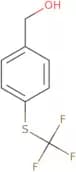
CAS:4-(Trifluoromethylthio)benzyl alcohol (4TFABA) is a chemical that is used as a reagent in organic synthesis. It can be used to synthesize a variety of compounds, including pharmaceuticals and agrochemicals. 4TFABA has been found to be an excellent building block for the synthesis of complex molecules. It is also widely used as a reaction component in high-quality research chemicals, such as chiral ligands and heteroaryl ligands.
Fórmula:C8H7F3OSPureza:Min. 95%Cor e Forma:PowderPeso molecular:208.2 g/mol2-Tributyltin-allyl-1-ol
CAS:Produto Controlado2-Tributyltin-allyl-1-ol is a research chemical that has shown potential in various areas of study. It has been found to interact with epidermal growth factor (EGF) and may have implications in the development of new therapies targeting EGF receptors. Additionally, 2-Tributyltin-allyl-1-ol has been studied for its potential interactions with drugs such as afatinib and paroxetine, indicating its possible role in drug metabolism and pharmacokinetics.
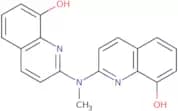
Fórmula:C15H32OSnPureza:Min. 95%Cor e Forma:Colorless Clear LiquidPeso molecular:347.12 g/mol2,2'-(Methylimino)diquinolin-8-ol
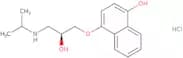
CAS:Please enquire for more information about 2,2'-(Methylimino)diquinolin-8-ol including the price, delivery time and more detailed product information at the technical inquiry form on this pageFórmula:C19H15N3O2Pureza:Min. 95%Peso molecular:317.34 g/mol(S)-4-Hydroxy propranolol hydrobromide
CAS:(S)-4-Hydroxy propranolol hydrobromide is an enantiomer of propranolol. It is a beta blocker that blocks the action of the neurotransmitter noradrenaline. The (S)-enantiomer of propranolol has been shown to be more potent in inhibiting the release of noradrenaline from nerve endings than the (R)-enantiomer and also to have a longer duration of action. This product is used as an antihypertensive agent and for beta-blockade during myocardial infarction. It can be used in assays to assess drug metabolism, quantify alprenolol, or assess the effects on carbon source, ionic environment, and fluorescence by measuring changes in pH.Fórmula:C16H22BrNO3Pureza:Min. 95 Area-%Cor e Forma:PowderPeso molecular:356.25 g/mol1H,1H,2H,2H-Heptadecafluoro-1-decanol
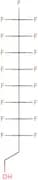
CAS:Produto ControladoHeptadecafluoro-1-decanol is a chemical substance that has been used in wastewater treatment and as an odorant. It is also found naturally in human liver, heart tissue, and adrenocortical carcinoma. Heptadecafluoro-1-decanol can be chemically synthesized by the reaction of 1H,1H,2H,2H-heptadecafluorodecane with hydrogen fluoride. This chemical substance is known for its ability to bind to fatty acids and other organic compounds on the surface of water droplets. The hydroxyl groups on this molecule are able to form hydrogen bonds with water molecules, which may lead to increased surface tension. Heptadecafluoro-1-decanol has been shown to have anti-inflammatory properties in humans.
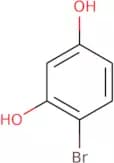
Fórmula:C10H5F17OPureza:Min. 95%Cor e Forma:White To Light (Or Pale) Yellow SolidPeso molecular:464.12 g/mol4-Bromoresorcinol
CAS:4-Bromoresorcinol is a synthetic compound that belongs to the group of sulfonamides. It is used in the production of dyes, pharmaceuticals, and agricultural chemicals. 4-Bromoresorcinol is synthesized by sulfonation with trifluoroacetic acid followed by hydrolysis with hydrochloric acid. The polymerization kinetics of this compound have been studied using azobenzene as a model substrate. The reaction products are vignafuran and an organic solvent (e.g., methanol). In addition, 4-bromoresorcinol has potent antibacterial activity against bacteria such as Staphylococcus aureus and Mycobacterium tuberculosis. This drug has minimal inhibitory concentrations (MICs) less than 0.01 ppm for most strains of bacteria tested, including those resistant to penicillin G or erythromycin. The drug also inhibits hydroxylase enzymesFórmula:C6H5BrO2Pureza:Min. 95%Cor e Forma:White PowderPeso molecular:189.01 g/molStyrenated phenol
CAS:2,4,6-Tris-(1-phenyl-ethyl)phenol is a phenolic compound that is used to manufacture polyvinyl chloride. It has been shown to be an effective antioxidant and can be used in treatments of polyvinyl chloride products. 2,4,6-Tris-(1-phenyl-ethyl)phenol is hydrophobic and can be used as a coating agent for surfaces that are exposed to water or moisture. 2,4,6-Tris-(1-phenyl-ethyl)phenol has been shown to inhibit the enzymatic reaction between chlorine and hydrophobic compounds. This chemical also has optical properties that are sensitive to changes in pH levels and temperature.
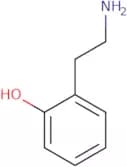
Fórmula:C30H30OPureza:Min. 95%Peso molecular:406.56 g/mol2-(2-Aminoethyl)phenol
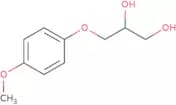
CAS:2-(2-Aminoethyl)phenol is a monoamine oxidase inhibitor. It is a biogenic amine that is found in animals and plants. 2-(2-Aminoethyl)phenol has been found to have anti-inflammatory properties and can be used to treat mongolism.Fórmula:C8H11NOPureza:Min. 95 Area-%Cor e Forma:PowderPeso molecular:137.18 g/mol3-(4-Methoxyphenoxy)-1,2-propanediol
CAS:3-(4-Methoxyphenoxy)-1,2-propanediol is a chiral molecule that can be found in various products. It has been used in the synthesis of a variety of drugs and other organic compounds. 3-(4-Methoxyphenoxy)-1,2-propanediol is an intermediate for the synthesis of natural products such as benzofuran and benzothiophene. This compound is also used as a reagent in the asymmetric dihydroxylation of epoxides. The rate at which this reaction proceeds depends on the kinetic parameters, such as the concentration of reactant and transition state analogues, and on the reaction conditions, such as temperature and pH. The product of this reaction is an epoxide hydrolase inhibitor with a reactive anion that can be used to synthesize pharmaceuticals.
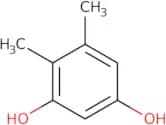
Fórmula:C10H14O4Pureza:Min. 95%Cor e Forma:White PowderPeso molecular:198.22 g/mol4,5-Dimethylresorcinol
CAS:4,5-Dimethylresorcinol is a decarboxylated form of resorcinol that has been extracted from the acetate extract of an endophytic fungus. It has been shown to have anti-inflammatory properties and can be used for the treatment of symptoms such as diarrhea. 4,5-Dimethylresorcinol is produced by a series of enzymatic reactions in which resorcinol is first decarboxylated and then hydroxylated to produce 4,5-dimethylresorcinol. There are two isomers of this compound: the alpha-isomer and beta-isomer. The alpha-isomer has been shown to have more potent anti-inflammatory activity than the beta-isomer. 4,5-Dimethylresorcinol has also been found to be effective in treating intestinal disorders such as Crohn's disease and ulcerative colitis in clinical trials.
Fórmula:C8H10O2Pureza:Min. 95%Cor e Forma:PowderPeso molecular:138.16 g/mol2-Methoxyresorcinol
CAS:2-Methoxyresorcinol is a metabolite that is formed by the oxidation of resorcinol. It has two methoxy groups, which are functional groups that are usually found in organic compounds. 2-Methoxyresorcinol has been shown to inhibit the growth of tumour cells in vitro and in vivo. It also inhibits cell growth by decreasing protein synthesis and cell division. This compound is an analytical method for measuring hematocrit levels and can be used as a natural compound for the treatment of chronic kidney disease.
Fórmula:C7H8O3Pureza:Min. 95%Cor e Forma:PowderPeso molecular:140.14 g/molFmoc-Cysteinol(Trt)
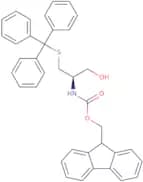
CAS:Fmoc-Cysteinol(Trt) is a versatile building block that can be used in the production of complex compounds and research chemicals. This compound is a high quality, useful building block that is used to synthesize many other compounds. It can also be used as a reagent or speciality chemical. Fmoc-Cysteinol(Trt) has been classified as a CAS No. 215954-72-6 and is a useful scaffold for chemical reactions.Fórmula:C37H33NO3SPureza:Min. 95%Cor e Forma:PowderPeso molecular:571.73 g/mol4-Acetamidobenzyl alcohol
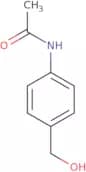
CAS:4-Acetamidobenzyl alcohol is a white crystalline solid that is soluble in water. It is used as a reagent in organic synthesis, and also as a chemical intermediate. 4-Acetamidobenzyl alcohol has been shown to catalyze the oxidation of potassium with liquid phase oxygen. The mechanism of this reaction may be due to an amidation followed by an oxidative deamination or an oxidative decarboxylation of the amide. 4-Acetamidobenzyl alcohol has been shown to oxidize primary alcohols in the presence of hydrogen peroxide, yielding an acetaldehyde and a ketone.Fórmula:C9H11NO2Pureza:Min. 95%Cor e Forma:PowderPeso molecular:165.19 g/mol11-Oxo etiocholanolone
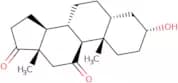
CAS:Produto Controlado11-Oxo etiocholanolone is a steroid hormone that is produced in the adrenal gland. It is a precursor of cortisol and has been shown to have an anti-inflammatory effect, which may be due to its ability to block pro-inflammatory cytokines. 11-Oxo etiocholanolone has also been shown to increase the concentration of cortisol in the blood, which can help treat stress and promote muscle growth. The measurement of 11-oxo etiocholanolone levels in urine and saliva samples may be used as an experimental infection or dietary supplement for women.
Fórmula:C19H28O3Pureza:Min. 95%Cor e Forma:PowderPeso molecular:304.42 g/mol4-(2-(Dimethylamino)-1-(1-hydroxycyclohexyl)ethyl)phenol
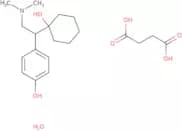
CAS:Produto ControladoVenlafaxine is a selective serotonin and norepinephrine reuptake inhibitor (SNRI) that is used to treat depression. Venlafaxine inhibits the reuptake of serotonin and norepinephrine into the presynaptic neuron, increasing their availability in the synaptic cleft. Venlafaxine has been shown to be effective in treating major depressive disorder and other depressive disorders, such as dysthymia and post-partum depression. The antidepressant effects of venlafaxine are believed to be due to its ability to block the uptake of serotonin and norepinephrine in the brain, resulting in an increased concentration of these neurotransmitters. Venlafaxine is metabolized by CYP2D6, CYP3A4, CYP1A2 and CYP2C19 enzymes, which may result in drug interactions with other drugs metabolized by these enzymes. To control for this effect, venlafaxine bloodFórmula:C16H25NO2Pureza:Min. 97 Area-%Cor e Forma:PowderPeso molecular:263.38 g/mol(R)-1-[3,5-Bis(trifluoromethyl)phenyl]ethan-1-ol
CAS:(R)-1-[3,5-Bis(trifluoromethyl)phenyl]ethan-1-ol is a triazolinone that has been shown to be an efficient contactor for the removal of organic pollutants from water. It is activated by potassium t-butoxide and immobilized on silicone gels. This compound is also active against a broad range of bacteria and fungi.Fórmula:C10H8F6OPureza:Min. 98%Cor e Forma:White PowderPeso molecular:258.16 g/mol16-Fluoroestradiol
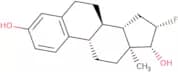
CAS:Produto Controlado16-Fluoroestradiol is a fluorinated form of estradiol that binds to the estrogen receptor. It has been shown to have high affinity for the receptor and is found in tissues such as breast, uterus, and vagina. 16-Fluoroestradiol has been used in cancer research to study uptake and metabolism of estrogens. The drug is metabolized by hydroxylation via cytochrome P450 enzymes and through the action of nucleophilic enzymes such as carboxylesterases. 16-Fluoroestradiol has also been shown to bind to muscle tissue, which may be due to its ability to inhibit uptake of glucose into cells.Fórmula:C18H23FO2Pureza:Min. 95%Peso molecular:290.37 g/mol




![(R)-1-[3,5-Bis(trifluoromethyl)phenyl]ethan-1-ol](/_next/image/?url=https%3A%2Fstatic.cymitquimica.com%2Fproducts%2F3D%2Fthumb-webp%2FFB43523.webp&w=3840&q=75)