Álcoois
Subcategorias de "Álcoois"
Foram encontrados 5818 produtos de "Álcoois"
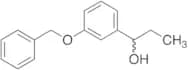
rac-1-(3-Benzyloxyphenyl)-1-propanol
CAS:Produto ControladoApplications An intermediate used in the production of various ectoparasiticides, drug metabolites and analgesic agents.
References Rastogi, S., et al.: J. Med. Chem., 16, 797 (1973), Maguire, J., et al.: Drug Metab. Disposition, 9, 393 (1981),Fórmula:C16H18O2Cor e Forma:NeatPeso molecular:242.31(±)-3-Heptanol
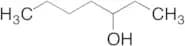
CAS:Produto ControladoApplications (±)-3-Heptanol, is a volatile components of various plants, and can be used as flavor and fragrance ingredients. It is also used as building block used for the synthesis of various chemicals. It is used for the preparation of biologically active ester derivatives as potent inhibitors of the soluble epoxide hydrolase.
Not a dangerous good if item is equal to or less than 1g/ml and there is less than 100g/ml in the package
References Kim, I., et al.: Bioorg. Med. Chem. Lett., 55 (18), 5889 (2012); Gibka, J., et al.: Zeszyty Naukowe - Politechnika Lodzka, 60, 65 (1998);Fórmula:C7H16OCor e Forma:NeatPeso molecular:116.21-Butanol-d
CAS:Produto ControladoApplications Labelled form of 1-Butanol, which is used for the production of dimethylfuran for liquid fuels.
References Roman-Leshkov, Y. et al.: Nature, 447, 982 (2007);Fórmula:C4DH9OCor e Forma:NeatPeso molecular:75.132-Heptyn-1-ol
CAS:Produto ControladoApplications 2-HEPTYN-1-OL (cas# 1002-36-4) is a useful research chemical.
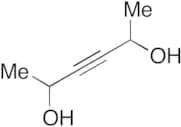
Fórmula:C7H12OCor e Forma:NeatPeso molecular:112.173-Hexyne-2,5-diol
CAS:Produto ControladoApplications 3-Hexyne-2,5-diol is used in the synthesis of hyperbrancehed poly([1,2,3]-triazoles. Also used in the synthesis of pyrazoles and thiopyrazoles.
References Scheel, A. et al.: Macro. Rapid Comm., 25, 1175 (2004); Payne, A. et al.: Tetrahedron, 69, 9316 (2013);Fórmula:C6H10O2Cor e Forma:NeatPeso molecular:114.143-(3-(3-(Benzyloxy)propoxy)propoxy)propan-1-ol
Produto ControladoApplications 3-(3-(3-(Benzyloxy)propoxy)propoxy)propan-1-ol is an intermediate in the synthesis of 3,3'-[Oxybis(3,1-propanediyloxy)]bis[1-propanol] (O870290). 3,3'-[Oxybis(3,1-propanediyloxy)]bis[1-propanol] is derived from 3-(Benzyloxy)propyl 4-Toluenesulfonate (B288830), which is used as a reagent in the synthesis of Silodosin (S465000); an antidysuria drug. 3-(Benzyloxy)propyl 4-Toluenesulfonate is also used as a reagent in the preparation of aryloxyalkyl derivatives of adenine which have antiviral activity.
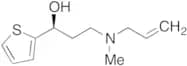
References Calogero, F., et al.: Eur. J. Org. Chem., 2015, 6011 (2015); Petrov, V.I., et al.: Chem. Heterocyc. Compd., 39, 1218 (2003)Fórmula:C16H26O4Cor e Forma:NeatPeso molecular:282.375(S)-3-(Allyl(methyl)amino)-1-(thiophen-2-yl)propan-1-ol
Produto ControladoApplications (S)-3-(Allyl(methyl)amino)-1-(thiophen-2-yl)propan-1-ol is an intermediate in the syntehsis of 4-Hydroxy Duloxetine β-D-Glucuronide Sodium Salt (H941805), which is a metabolite of Duloxetine.
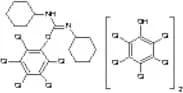
References Lantz, R.J., et al.: Drug Dispos. Metab., 31, 1142 (2003); Detke, M., et al.: J. Clin Psy., 63, 308 (2002); Bymaster, F.P., et al.: Bioorg. Med., Chem. Lett., 13, 4477 (2003);Fórmula:C11H17NOSCor e Forma:NeatPeso molecular:211.324N,N'-Dicyclohexylcarbodiimide Pentachlorophenol Complex
CAS:Produto ControladoStability -20°C Freezer
Applications Useful reagent for preparing amino acid pentachlorophenol active esters.
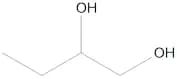
References Kovacs, J., et al.: J. Am. Chem. Soc., 89, 183 (1967)Fórmula:C19H23Cl5N2O·2C6HCl5OCor e Forma:NeatPeso molecular:1005.341,2-Butanediol
CAS:Produto ControladoApplications 1,2-Butanediol is a glycol in human serum.
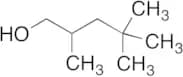
References Imbert, L., et al.: J. Anal. Toxicol., 38, 676 (2014)Fórmula:C4H10O2Cor e Forma:NeatPeso molecular:90.122,4,4-Trimethyl-1-pentanol
CAS:Produto ControladoApplications 2,4,4-Trimethyl-1-pentanol is the principal metabolite of 2,2,4-trimethylpentane (T796535), a general solvent used in organic synthesis..
Not a dangerous good if item is equal to or less than 1g/ml and there is less than 100g/ml in the package
References Gaur, R. et al.: Asian J. Biochem., 10, 52 (2015);Fórmula:C8H18OCor e Forma:NeatPeso molecular:130.232-Bromomethylquinoline
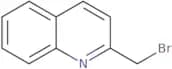
CAS:2-Bromomethylquinoline is a quinoline derivative that has been synthesized to study the interaction between metal ions, such as copper and zinc, and chelate rings. The reaction products formed by 2-bromomethylquinoline have been shown to have antifungal activity in vitro. It has been found that the addition of a fluorescent probe can be used to detect quinoline derivatives, which fluoresce when excited with light. This makes them useful as fluorescent probes for reactions involving metal ions.Fórmula:C10H8BrNPureza:Min. 95%Cor e Forma:SolidPeso molecular:222.08 g/mol1-Amino-2-methyl-propan-2-ol
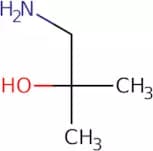
CAS:1-Amino-2-methyl-propan-2-ol is a cytotoxic molecule that has been shown to inhibit the growth of cancer cells. It is synthesized by converting 1,4-benzenediamine and cyclopentanol into the corresponding amines. The amines are then condensed with an alkanolamine in a kinetic reaction to form 1-amino-2-methylpropan-2-ol. This product's anticancer activity may be due to its ability to induce nucleophilic attack on DNA, leading to DNA strand breakage. 1AMPP has also been shown to have antiviral properties against HIV infection.Fórmula:C4H11NOPureza:Min. 95%Cor e Forma:Colorless Clear LiquidPeso molecular:89.14 g/mol1-O-Hexadecyl-2-O-methyl-rac-glycerol
CAS:1-O-Hexadecyl-2-O-methyl-rac-glycerol is a metabolite of phosphatidylethanolamine that is structurally related to the neurotransmitter serotonin. It binds to the 5HT7 receptor, which is involved in the regulation of infectious diseases and cytokine production. 1-O-Hexadecyl-2-O-methyl-racglycerol has been shown to stimulate growth factor production and protein synthesis, as well as inhibit serotonin reuptake. This compound also activates phosphorylation of PKC, which leads to an increase in cytosolic calcium levels and activation of PKC. As a result, diacylglycerol levels are increased, leading to an increase in mitochondrial membrane potential and camp levels.Fórmula:C20H42O3Pureza:Min. 95%Peso molecular:330.55 g/mol7-Methyloctanol
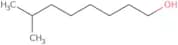
CAS:7-Methyloctanol is a polycarboxylic acid that is structurally similar to hydrochloric acid. It has been shown to have specific treatment effects on skin cells and light exposure, as well as an anti-inflammatory effect. 7-Methyloctanol is able to produce fatty acids by the hydroxylation of unsaturated alkyl chains, which are often used as plasticizers. The hydrophobic effect of 7-methyloctanol has also been shown to increase the permeability of liposomes.Fórmula:C9H20OPureza:Min. 95%Cor e Forma:Colorless Clear LiquidPeso molecular:144.25 g/mol(S)-3-Methylamino-1-(2-thienyl)-1-propanol
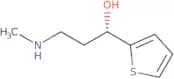
CAS:(S)-3-Methylamino-1-(2-thienyl)-1-propanol is a chiral molecule with two stereogenic centers. It is synthesized by the demethylation of acetylthiophene and the crystallization of the reaction mixture. The class of compounds to which (S)-3-Methylamino-1-(2-thienyl)-1-propanol belongs includes those that have hydroxy groups or diastereomeric salts. The hydroxy group on (S)-3-Methylamino-1-(2-thienyl)-1-propanol can be removed by demethylation, which leads to a mixture of products, including hydroxy and demethylated compounds.Fórmula:C8H13NOSPureza:Min. 95%Cor e Forma:White PowderPeso molecular:171.26 g/mol[3-Methyl-4-(2,2,2-trifluoro-ethoxy)-pyridin-2-yl]-methanol
CAS:[3-Methyl-4-(2,2,2-trifluoro-ethoxy)-pyridin-2-yl]-methanol is a synthetic organic compound that is used in the synthesis of other organic compounds. It can be purified by filtration or gasification and recrystallization.Pureza:Min. 95%Cor e Forma:Powder4-Phenoxybenzyl alcohol
CAS:4-Phenoxybenzyl alcohol is an organic compound that is used as a reagent in the introduction of fatty acids. It has been used to study the fluidity, disulfides, and amide bonds of fatty acid chains. 4-Phenoxybenzyl alcohol also has been shown to inhibit lipase activity. In vitro assays have demonstrated that it can inhibit monoacylglycerol lipase, which is a key enzyme for the hydrolysis of endocannabinoids such as 2-arachidonoylglycerol. 4-Phenoxybenzyl alcohol has also been shown to be a potent inhibitor of potassium phosphate esterase and monoacylglycerol lipase in vitro.Fórmula:C13H12O2Pureza:Min. 95%Cor e Forma:PowderPeso molecular:200.23 g/mol3-Methyl-2-hydroxy-3H-imidazo[4,5-f]quinoline
CAS:3-Methyl-2-hydroxy-3H-imidazo[4,5-f]quinoline is a high quality reagent that can be used as an intermediate or building block in the synthesis of other compounds. It is a fine chemical with CAS No. 144486-08-8 and can be used as a speciality chemical in research. This compound has versatile building blocks that are useful in reactions and have been shown to be a reaction component in the synthesis of various compounds.Fórmula:C11H9N3OPureza:Min. 95%Cor e Forma:Yellow PowderPeso molecular:199.21 g/mol2,4-Dichloroquinoline
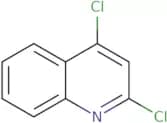
CAS:2,4-Dichloroquinoline is a chlorinated heterocyclic chemical compound. This drug is used as a monosubstituted palladium complex in organic synthesis. It can be obtained by refluxing 2,4-dichloroquinoline with hydrochloric acid, phosphorus oxychloride, and a terminal alkene in the presence of an excess of dichloromethane. The resulting chloroquine can be converted to the corresponding dichloroquinolines by treatment with acetonitrile in the presence of malonic acid. The final step is the demethylation of the quinoline ring using sodium methoxide in methanol. 2,4-Dichloroquinoline has been shown to exhibit antibacterial activity against gram-negative organisms such as Escherichia coli and Pseudomonas aeruginosa. Magnetic resonance analysis (NMR) has also been used to study its properties.Fórmula:C9H5Cl2NPureza:Min. 95%Cor e Forma:SolidPeso molecular:198.05 g/mol3-(1,1,2,2-Tetrafluoroethoxy)phenol
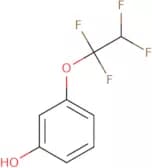
CAS:3-(1,1,2,2-Tetrafluoroethoxy)phenol is a versatile building block that can be used in the synthesis of complex compounds. It is also a reagent and speciality chemical and has CAS No. 53997-99-2. 3-(1,1,2,2-Tetrafluoroethoxy)phenol is a useful building block for organic synthesis and has been used as a reaction component or scaffold.
Fórmula:C8H6F4O2Pureza:Min. 95%Peso molecular:210.13 g/mol






![[3-Methyl-4-(2,2,2-trifluoro-ethoxy)-pyridin-2-yl]-methanol](/_next/image/?url=https%3A%2Fstatic.cymitquimica.com%2Fproducts%2F3D%2Fthumb-webp%2FFM38829.webp&w=3840&q=75)

![3-Methyl-2-hydroxy-3H-imidazo[4,5-f]quinoline](/_next/image/?url=https%3A%2Fstatic.cymitquimica.com%2Fproducts%2F3D%2Fthumb-webp%2FFM25639.webp&w=3840&q=75)