Glicociência
Subcategorias de "Glicociência"
- Amino açúcares(108 produtos)
- Anticorpos Glico-Relacionados(284 produtos)
- Glicolípidos(46 produtos)
- Glicosaminoglicanos (GAGs)(55 produtos)
- Glicosídeos(419 produtos)
- Monossacáridos(6.622 produtos)
- Oligossacarídeos(3.699 produtos)
- Polissacáridos(506 produtos)
Foram encontrados 11035 produtos de "Glicociência"
2-Azido-2-deoxy-3,5-O-benzylidene-D-lyxono-1,4-lactone
2-Azido-2-deoxy-3,5-O-benzylidene-D-lyxono-1,4-lactone is a custom synthesis that is methylated with an azide group. It has been modified with a click reaction to attach an oligosaccharide or polysaccharide and then fluorinated. The modification of this product is not limited to methylation, but includes many other modifications such as fluoroquinolone resistance. 2-Azido-2-deoxy-3,5-O-benzylidene -D-lyxono--1,4--lactone can be used for the preparation of complex carbohydrates. This product can also be used in the synthesis of monosaccharides and sugars.
Pureza:Min. 95%2-Acetamido-2-deoxy-4-O-(β-D-mannopyranosyl)-D-glucopyranose
CAS:2-Acetamido-2-deoxy-4-O-(b-D-mannopyranosyl)-D-glucopyranose (MDP) is a complex carbohydrate that has been modified by methylation, glycosylation, and carbocation. MDP is a saccharide that can be used in the synthesis of polysaccharides or as an intermediate for other chemical syntheses. It is also possible to modify MDP with fluorination, which may be useful in the synthesis of new types of pharmaceuticals.Fórmula:C14H25NO11Pureza:Min. 95 Area-%Cor e Forma:PowderPeso molecular:383.35 g/molCyanidin-3-O-lathyroside chloride
CAS:Cyanidin-3-O-lathyroside chloride is a synthetic compound with antioxidant and anti-inflammatory effects. It is activated by the chloride ion, leading to increased bioavailability of the molecule. Cyanidin-3-O-lathyroside chloride has been shown to have anticancer properties, as well as an ability to activate calcium metabolism in cells. This compound also has a low bioavailability, which may be due to its hydrophobic nature and the fact that it is not orally active. This compound has been shown to be beneficial for cancer therapy because of its ability to inhibit cancer growth, induce apoptosis in cancer cells, and reduce tumor size. Cyanidin-3-O-lathyroside chloride has also been shown to have positive effects on fertility when taken at high doses orally.Fórmula:C26H29O15•ClPureza:Min. 95%Cor e Forma:PowderPeso molecular:616.95 g/mol3-Azido-3-deoxy-1,2-O-isopropylidene-a-D-xylofuranose
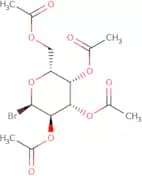
3-Azido-3-deoxy-1,2-O-isopropylidene-a-D-xylofuranose is a synthetic sugar that can be used for glycosylation, methylation and modification. This product has CAS number 68438-65-6 and molecular weight of 229.33. The product has a purity of greater than 99%. It is a white powder that can be dissolved in water or ethanol. 3-Azido-3-deoxy-1,2-O-isopropylidene -a -D -xylofuranose is an oligosaccharide with the formula CHNO(CHOH)C(HO)(CHNH)CHO. 3AODXF is a monosaccharide with the formula CHNO(CHOH)C(HO)(CHNH)COOH. Monosaccharides are carbohydrates that contain only one sugar unit (monoPureza:Min. 95%1-Bromo-2,3,4,6-tetra-O-acetyl-alpha-D-galactopyranoside
CAS:Donor for Koenigs-Knorr type galactosylation and other anomeric substitutionsFórmula:C14H19BrO9Pureza:Min. 95%Cor e Forma:White PowderPeso molecular:411.2 g/molFucoidan, ecklonia
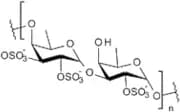
CAS:A fucan sulphate found in brown marine algae (Phaeophyta-typically Fucus vesiculotus, Ecklonia (illustrated), Alaria and Cladosiphon) and has been shown to have anticoagulant activity. The main constituents are α-1,4 and α-1,2 linked L-fucose sulphates although galactose also occurs and there are many variations of the basic structure found in different species of Phaeophyta. The image was kindly provided by Prof Mike Guiry from Cork who runs ‘The Seaweed Site’.Pureza:Min. 95%Cor e Forma:White Powder(2S, 3R, 4R, 5R, 6R) -6- (Hydroxymethyl) -2-phenyl-3, 4, 5- piperidinetriol
(2S, 3R, 4R, 5R, 6R) -6- (Hydroxymethyl) -2-phenyl-3, 4, 5- piperidinetriol is a synthetic glycosylate monosaccharide that has been modified with fluorine and methyl groups. This compound is used as a building block in the synthesis of complex carbohydrates. It is also an important intermediate for the synthesis of oligosaccharides and saccharides.Pureza:Min. 95%4-Aminophenyl 3-O-(a-D-mannopyranosyl)-a-D-mannopyranoside
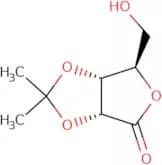
4-Aminophenyl 3-O-(a-D-mannopyranosyl)-a-D-mannopyranoside is a synthetic, high purity, custom synthesis carbohydrate that is modified with fluorination and glycosylation. It is a sugar that has a molecular weight of 578.5, and its CAS Number is 68856-68-2. 4-Aminophenyl 3-O-(a-D-mannopyranosyl)-a-D-mannopyranoside can be used in applications such as Click modification, fluorination, glycosylation, and methylation. This carbohydrate has many uses including being an intermediate for saccharide or complex carbohydrate synthesis.Pureza:Min. 95%2,3-O-Isopropylidene-D-ribonic acid-1,4-lactone
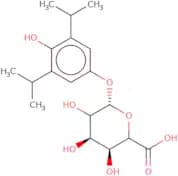
CAS:2,3-O-Isopropylidene-D-ribonic acid-1,4-lactone is an organic compound that belongs to the class of lactones. It is a chiral molecule with two asymmetric carbons and four stereogenic atoms. This compound can be used for the synthesis of optically active compounds. It is also a precursor for the synthesis of morpholines and phosphonates. 2,3-O-Isopropylidene-D-ribonic acid-1,4-lactone can be synthesized by reacting an enolate with an aldehyde in the presence of a base and acid catalyst. The acid catalyst causes elimination of water from the enolate to produce the desired product.Fórmula:C8H12O5Pureza:Min. 97 Area-%Cor e Forma:White PowderPeso molecular:188.18 g/molPropofol-4-Hydroxy-4-D-glucuronide
Propofol-4-Hydroxy-4-D-glucuronide is a fluorinated monosaccharide that has been synthesized using the glycosylation, polysaccharide and modification methods. This compound is a custom synthesis that has been modified with methylation and click chemistry. The CAS number for this product is 54910-87-6. This product is a complex carbohydrate with high purity.
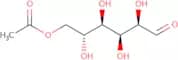
Fórmula:C18H26O8Pureza:Min. 95%Peso molecular:370.39 g/mol6-O-Acetyl-D-glucose
CAS:6-O-Acetyl-D-glucose is a natural sugar that is found in Holothuria, a sea cucumber. It has been shown to have anti-cancer and anti-inflammatory properties. 6-O-Acetyl-D-glucose inhibits the production of extracellular Ca2+ and has shown therapeutic effects against colorectal carcinoma. This active substance also exhibits allergenic reactions, which may be due to its ability to bind to IgE antibodies on mast cells and basophils. 6-O-Acetyl-D-glucose is a glycoside that contains an acetate group linked by an O atom to the hydroxyl residue of glucose. The glycosidic bond can be hydrolyzed with the enzyme β glucosidase, releasing the aglycone (sugar) and β glucosidase.Fórmula:C8H14O7Pureza:Min. 95%Cor e Forma:PowderPeso molecular:222.19 g/molMethyl 3-deoxy-3-fluoro-b-D-allopyranoside
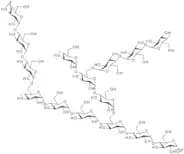
Methyl 3-deoxy-3-fluoro-b-D-allopyranoside is a modification of the carbohydrate. This product is an oligosaccharide, which is a complex carbohydrate consisting of two or more sugar molecules. Methyl 3-deoxy-3-fluoro-b-D allopyranoside has high purity and is synthetically produced. It can be used in the synthesis of glycosylated polysaccharides. This product can be modified with fluorination to generate saccharides that are not found in nature. Methyl 3-deoxy-3-fluoro b -D allopyranoside has CAS No.Fórmula:C7H13FO5Pureza:Min. 95%Peso molecular:196.18 g/molAmylopectin - from potato starch
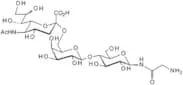
CAS:Starch component; highly branched glucanCor e Forma:White Off-White PowderGlycyl-6'-sialyllactose
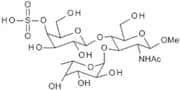
Glycyl-6'-sialyllactose is a custom synthesis that modifies glycyl 6'-sialyllactose. It has been fluorinated, methylated and then monosaccharide and synthetic. This product has been Click modified, which is an oligosaccharide. The CAS number for this product is 1040391-14-8. Glycyl-6'-sialyllactose is a saccharide with a complex carbohydrate structure. It is a sugar that contains the carbohydrates glucose, galactose and sialic acid.Fórmula:C25H43N3O19Pureza:Min. 95%Peso molecular:689.62 g/mol4'-Sulfated Lewis X methyl glycoside sodium
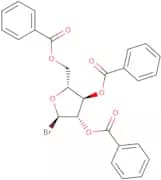
CAS:4'-Sulfated Lewis X methyl glycoside sodium is a synthetic monosaccharide. It is used in the synthesis of oligosaccharides and polysaccharides. This compound can be fluorinated to produce 4'-fluoro-4'-sulfated Lewis X methyl glycoside sodium. The sulfate group on this compound can be replaced with other groups such as carboxyl, cyano, nitro, and acetyl.Fórmula:C21H36NO18SNaPureza:Min. 95%Cor e Forma:PowderPeso molecular:645.58 g/mol2,3,5-Tri-O-benzoyl-a-D-arabinofuranosyl bromide
CAS:2,3,5-Tri-O-benzoyl-a-D-arabinofuranosyl bromide is a glycosylation reagent that can be used in the synthesis of polysaccharides and oligosaccharides. It is also used to modify sugars with methyl and fluorination reagents. 2,3,5-Tri-O-benzoyl-a-D-arabinofuranosyl bromide has CAS number 434868 9.Fórmula:C26H21BrO7Pureza:Min. 95%Cor e Forma:PowderPeso molecular:525.34 g/mol2,6-Di-tert-butyldimethylsilyl-γ-cyclodextrin
This gamma-cyclodextrin (γ-CD) derivative is a modified cyclic oligosaccharide composed of eight glucose units, featuring a larger cavity size than α- and β-cyclodextrins. This structural characteristic allows γ-CDs to form inclusion complexes with a wider range of guest molecules, making it particularly versatile in various industries. In the food sector, it is used as a carrier and stabilizer for flavors, fat-soluble vitamins, and polyunsaturated fatty acids, protecting volatile compounds from evaporation. In pharmaceuticals, it enhances the solubility and bioavailability of poorly water-soluble drugs and, thanks to its larger ring size, allows for the encapsulation of larger molecules or even entire drug molecules. γ-CDs and derivatives are also used for environmental remediation and, in analytical chemistry, for the extraction and concentration of target substances.Fórmula:C144H304O40Si16Pureza:Min. 95%Peso molecular:3,125.3 g/mol1-O-Benzyl-2N, 3-O-carbonyl-β-D-fructofuranosylamine
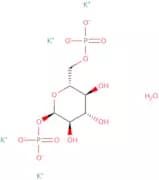
CAS:The molecule is a complex carbohydrate with a glycosylation site and the following modifications: methylation, click modification, fluorination, saccharide and modification. The molecule was synthesized using custom synthesis methods. The 1-O-benzyl-2N, 3-O-carbonyl-b-D-fructofuranosylamine is available in high purity and CAS No. of 98996-97-3.Fórmula:C14H17NO6Pureza:Min. 95%Cor e Forma:White To Off-White Viscous LiquidPeso molecular:295.29 g/molα-D-Glucose-1,6-diphosphate tetrapotassium hydrate
CAS:Inhibitor of hexokinase; activator of phosphofructokinase-1Fórmula:C6H14O12P2•4K•(H2O)nPureza:Min. 95%Cor e Forma:PowderPeso molecular:496.51 g/mol2-Deoxy-D-ribose
CAS:High purity grade. Used in synthetic organic chemistry and natural product synthesis. Induces apoptosis by inhibiting the synthesis and increasing the efflux of glutathione. It is used for synthesis of optically active dipyrrolyl alkanols from pyrroles on the surface of montmorillonite KSF clay.Due to its integral role in the formation of DNA, 2-Deoxy-D-ribose is critical in studies of genetic expression, DNA repair mechanisms, and the synthesis of nucleotides. Researchers utilize it extensively in molecular biology and biochemistry to understand cell replication and gene function, and it serves as a standard in research pertaining to oxidative stress, where its degradation may indicate the presence of reactive oxygen species. Additionally, it is involved in the development of various pharmacological agents, particularly those targeting cancer and viral infections, where the synthesis and function of DNA are pivotal aspects of pathogenesis and treatment response.Fórmula:C5H10O4Pureza:Min. 99.0 Area-%Peso molecular:134.13 g/mol