Glicociência
A glicociência é o estudo dos carboidratos e seus derivados, bem como das interações e funções biológicas em que participam. Este campo de pesquisa é crucial para compreender uma ampla variedade de processos biológicos, incluindo o reconhecimento celular, a sinalização, a resposta imune e o desenvolvimento de doenças. A glicociência tem aplicações importantes na biotecnologia, na medicina e no desenvolvimento de novos medicamentos e terapias. Na CymitQuimica, oferecemos uma ampla seleção de produtos de alta qualidade e pureza para pesquisa em glicociência. Nosso catálogo inclui monossacarídeos, oligossacarídeos, polissacarídeos, glicoconjugados e reagentes específicos, projetados para apoiar os pesquisadores em seus estudos sobre a estrutura, função e aplicações dos carboidratos em sistemas biológicos. Esses recursos são destinados a facilitar descobertas científicas e aplicações práticas em diversas áreas das biociências e da medicina.
Subcategorias de "Glicociência"
- Amino açúcares(108 produtos)
- Anticorpos Glico-Relacionados(282 produtos)
- Glicolípidos(46 produtos)
- Glicosaminoglicanos (GAGs)(55 produtos)
- Glicosídeos(419 produtos)
- Monossacáridos(6.622 produtos)
- Oligossacarídeos(3.682 produtos)
- Polissacáridos(503 produtos)
Foram encontrados 11041 produtos de "Glicociência"
Ordenar por
Pureza (%)
0
100
|
0
|
50
|
90
|
95
|
100
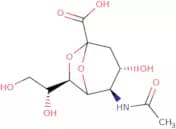
N-Acetyl-2,7-anhydro-a-neuraminic acid
CAS:<p>N-Acetyl-2,7-anhydro-a-neuraminic acid is a synthetic derivative of a naturally occurring sugar that is found in the human brain and other tissues. It has been proposed as a potential drug for the treatment of inflammatory bowel disease due to its ability to inhibit the growth of cells in the colon and prevent inflammation. N-Acetyl-2,7-anhydro-a-neuraminic acid has been shown to have antiinflammatory properties by inhibiting the synthesis of proinflammatory cytokines. This compound binds to an enzyme called galactosamine kinase, which is involved in making certain proteins that are necessary for inflammation. The chemical structure of N-Acetyl-2,7-anhydro-a-neuraminic acid was determined through structural analysis and carbon source titration calorimetry. Magnetic resonance spectroscopy showed that this compound reacts with water molecules and chemical ionization revealed that it</p>Fórmula:C11H17NO8Pureza:Min. 95%Peso molecular:291.25 g/molMethyl 1-C-[4-chloro-3-[[4-[[(3S)-tetrahydro-3-furanyl]oxy]phenyl]methyl]phenyl]-a-D-glucopyranoside
CAS:<p>Intermediate in the synthesis of empagliflozin</p>Fórmula:C24H29ClO8Pureza:Min. 95%Peso molecular:480.94 g/mol2,3,4,6-Tetra-O-benzoyl-a-D-mannopyranosyl trichloroacetimidate
CAS:<p>Glycosyl-donor for syntheses of mannosyl-glycoconjugates</p>Fórmula:C36H28Cl3NO10Pureza:Min. 95%Cor e Forma:White PowderPeso molecular:740.98 g/mol6'-Sialyllactose-BSA
<p>Sialyllactose-BSA is a complex carbohydrate that is used in the synthesis of saccharides. It has been modified with fluorination to create a 6'-sialyllactose-BSA, which is a monosaccharide. This product can be custom synthesized and it's purity is high. The product can be methylated or glycosylated, and it has been click-modified for fluorescence labeling.</p>Pureza:Min. 95%Cor e Forma:PowderPeso molecular:72,318 g/mol1,2,3,4-Tetra-O-acetyl-D-glucuronide methyl ester
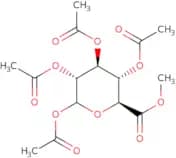
CAS:<p>1,2,3,4-Tetra-O-acetyl-D-glucuronide methyl ester is a lactone that can be used as a precursor for the synthesis of various types of compounds. The chemical structure was determined by high-resolution x-ray diffraction to be a planar molecule with two conformations: one where the four acetyl groups are on different sides and another where they are all on the same side. The latter conformation is more stable due to the dihedral angle between the hydroxyl group and carbonyl group. This compound is an intermediate in synthesizing 2-(4'-hydroxybenzoyl)-1,2,3,4-tetra-O-acetyl-.alpha.-D-.beta.-D glucopyranoside methyl ester by reacting with 3-(3'-azido)benzaldehyde. The single crystal x-ray diffraction study revealed that this compound has a conformation</p>Fórmula:C15H20O11Pureza:Min. 97 Area-%Cor e Forma:White PowderPeso molecular:376.31 g/mol1-Oxododecyl β-D-glucopyranoside
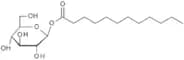
CAS:<p>1-Oxododecyl β-D-glucopyranoside is a synthetic compound that is used as an intermediate in the synthesis of oligosaccharides, monosaccharides, saccharides, and other carbohydrates. It has a purity of >98% and can be custom synthesized to meet your specifications. 1-Oxododecyl β-D-glucopyranoside is also available for purchase with fluorination, glycosylation, and methylation modifications. The CAS number for this product is 64395-92-2.</p>Fórmula:C18H34O7Pureza:Min. 95 Area-%Cor e Forma:PowderPeso molecular:362.46 g/molD-Gluconic acid sodium salt
CAS:<p>D-Gluconic acid sodium salt is a glycol ether that is used as an injection solution. It has been shown to have antibacterial efficacy against wild-type strains of bacteria such as Escherichia coli, Pseudomonas aeruginosa, and Staphylococcus aureus. The in vitro antimicrobial action of D-gluconic acid sodium salt was found to be due to its ability to inhibit bacterial growth by interfering with the synthesis of DNA. D-Gluconic acid sodium salt also has been shown to have antihypertensive effects in rats through the inhibition of angiotensin II type 1 receptor (AT1) signaling pathway and erythrocyte proliferation. This drug also has been shown to bind benzalkonium chloride and x-ray diffraction data show that it is crystalline in nature. The analytical method for determining the concentration of D-gluconic acid sodium salt is by electrochemical impedance</p>Fórmula:C6H11NaO7Pureza:Min. 95%Cor e Forma:White PowderPeso molecular:218.14 g/molMethyl 2-deoxy-L-ribofuranoside
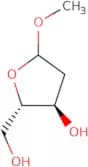
CAS:<p>Methyl 2-deoxy-L-ribofuranoside is an intermediate in the synthesis of l-arabinose. It can be obtained by the reaction of methyl 2,3-dideoxy-D-ribofuranoside with pivaloyl chloride. The antiviral activity of this compound has been shown by its ability to inhibit the replication of influenza A virus. Methyl 2-deoxy-L-ribofuranoside is a fluorinating agent that can be used for the synthesis of oligosaccharides and nucleosides. This intermediate also serves as a substrate for a number of organic reactions, including regioselective and stereoselective chlorination.</p>Fórmula:C6H12O4Pureza:Min. 95%Cor e Forma:PowderPeso molecular:148.16 g/mol2-Deoxy-D-glucono-1,5-lactone
CAS:<p>2-Deoxy-D-glucono-1,5-lactone is a crystalline compound that is isolated from the hydrolysis of D-gluconic acid. This compound has been found to be a diastereoisomeric product with a lactone ring and an epimerization process. It can also be synthesized by reacting epichlorohydrin with potassium hydroxide in the presence of a hydroxy group. 2DG is an elimination product of 2-deoxyglucose and has been shown to have antihyperglycemic effects due to its ability to inhibit glucose synthesis in the liver and muscle cells. This compound also inhibits protein synthesis in bacteria, which may lead to cell death.</p>Fórmula:C6H10O5Pureza:Min. 95%Peso molecular:162.14 g/mol2,5-Dideoxy-2,5-imino-D-glucitol
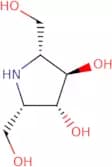
CAS:<p>2,5-Dideoxy-2,5-imino-D-glucitol is a potent inhibitor of glycosidases. It has been shown to have significant antifungal activity against Candida albicans in the caco-2 cell model system. 2,5-Dideoxy-2,5-imino-D-glucitol inhibits β-(1→3)-glycosidase activity by binding to the active site of the enzyme and preventing substrate hydrolysis. The compound is also an enantiopure and asymmetric synthesis. This drug has been shown to be a model system for studying glycosidase inhibition.</p>Fórmula:C6H13NO4Pureza:Min. 95%Peso molecular:163.17 g/mol2-Acetamido-2-deoxy-D-glucopyranosyl serine
CAS:<p>2-Acetamido-2-deoxy-D-glucopyranosyl serine is a compound that belongs to the class of coumarins and monosaccharides. It contains a nitro group and a heterocycle, making it a unique and versatile molecule. This compound has been studied for its various properties, including its interaction with liver microsomes and its ability to undergo crystallization. Additionally, 2-Acetamido-2-deoxy-D-glucopyranosyl serine has shown promising effects on TGF-beta activation and has been found to inhibit aldehyde formation in trichloroacetic acid solutions. This compound also exhibits interactions with other molecules such as pyrazine, ofloxacin, and famotidine. Its diverse characteristics make it an intriguing compound for further research and potential applications in various fields.</p>Fórmula:C11H20N2O8Pureza:Min. 95%Cor e Forma:White PowderPeso molecular:308.29 g/mol2-Aminophenyl β-D-glucuronide hydrochloride
CAS:<p>2-Aminophenyl b-D-glucuronide HCl is a custom synthesis chemical. It is a white to pale yellow crystalline powder. This compound has a molecular weight of 363.2 and it's chemical formula is C8H10N2O7Glucuronic acid. 2-Aminophenyl b-D-glucuronide HCl is used in the modification of oligosaccharides, polysaccharides, saccharides, carbohydrates, fluorination and complex carbohydrate. The purity of this chemical is high and it can be modified with monosaccharide or sugar.</p>Fórmula:C12H15NO7•HClPureza:Min. 95%Peso molecular:321.71 g/molκ-Carrageenan
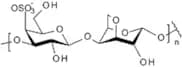
CAS:<p>Kappa-Carrageenan is a gelling sulphated galactan extracted from red seaweed (typically Mastocarpus stellata and Chondrus crispus). The structure of all carrageenans consists of a strictly alternating masked repeating unit of 1,3-linked α-D-galactose and 1,4-linked β-D-galactose. The α-linked galactose occurs as α-3-6-anhydro unit and the β-linked sugar occurs as the 4-sulphate.<br>The image was kindly provided by Prof Mike Guiry from Cork who runs ‘The Seaweed Site’.</p>Cor e Forma:White PowderPhenethyl glucosinolate potassium salt
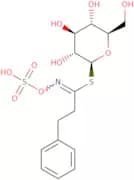
CAS:<p>Phenethyl glucosinolate potassium salt is a compound found in plants belonging to the Brassicaceae family. It has been shown to be highly toxic to larvae of the cabbage butterfly and other insects that feed on brassica plants. Phenethyl glucosinolate potassium salt has been shown to inhibit the development of these insects, probably by inhibiting protein synthesis in the insect's gut. The major sulfur-containing compound in this product is gluconasturtiin, which has been shown to inhibit growth of pekinensis at high temperatures. This compound also inhibits radiation-induced DNA damage and does not show significant effects on nonsignificant organisms such as yeast and mold.</p>Fórmula:C15H20NO9S2KPureza:Min. 95%Cor e Forma:PowderPeso molecular:461.55 g/molCornuside
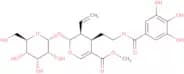
CAS:<p>Cornuside is a natural compound that is found in the fruits of Cornus. It is a dihydrochalcone, which has been shown to have hypoglycemic effects and inhibit the activity of 5-hmf. Cornuside also inhibits the enzyme activities involved in energy metabolism, such as glucose-6-phosphate dehydrogenase and hexokinase. It has also been shown to have genotoxic properties and induce DNA damage. Cornuside may be useful for treating diabetes or cancer, but further research needs to be done before this can be confirmed.</p>Fórmula:C24H30O14Pureza:Min. 95%Cor e Forma:PowderPeso molecular:542.49 g/molNeoagarooctaose
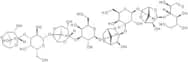
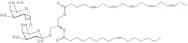
CAS:<p>Agarose is a polysaccharide found in red algae, typically Gelidium and Gracilaria. It is a strictly alternating polysaccharide of α-1,3 linked D-galactose and β-1,4 linked L-3,6 anhydrogalactose with occasional sulfation at position 6 of the anhydrogalactose residue. Agaro-oligosaccharides result from cleavage at galactose residues and neoagaro-oligosaccharides from cleavage at 3,6-anhydro residues. Neoagarooctaose is reported to have potential for novel cosmeceuticals.</p>Fórmula:C48H74O37Pureza:Min. 98 Area-%Cor e Forma:White PowderPeso molecular:1,243.08 g/molDigalactosyldiacylglycerol - 10mg/ml in Chloroform-Methanol
CAS:<p>In plants and algae, the two main galactolipids, monogalactosyldiacyglycerol (MGDG) and digalactosyldiacyglycerol (DGDG), are synthesized by galactosyltransferases in the plastid envelope. They have been linked to the anti-inflammatory and cancer benefits of a green leafy vegetable diet in humans due to their ability to regulate the levels of free radicals like nitric oxide (NO)</p>Fórmula:C51H84O15Pureza:Min. 95%Cor e Forma:PowderPeso molecular:937.2 g/mol1,2,3-Tri-O-benzoyl-α-L-fucopyranose
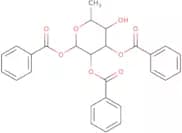
CAS:<p>1,2,3-Tri-O-benzoyl-a-L-fucopyranose is a synthetic, fluorinated monosaccharide that can be synthesized from D-glucose in two steps. It is a useful building block for the synthesis of oligosaccharides and polysaccharides with different glycosylation patterns. This compound has been shown to react with methyl iodide to form 1,2,3-triiodo-a-L-fucopyranose. It has also been used as a click modification reagent for carbohydrates.</p>Fórmula:C27H24O8Pureza:Min. 95%Peso molecular:476.47 g/molTween 65
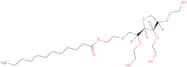
CAS:<p>Tween 65 is a polyoxyethylene sorbitan monooleate (polysorbate) surfactant that is used as a film-forming polymer and dispersing agent in solid preparations. Tween 65 has been shown to inhibit the proliferation of prostate cancer cells, which may be due to its ability to bind to anti-prostate specific antigen (anti-pcsk9) antibody causing the antibody to aggregate and form a particle. This process inhibits the interaction between the antibody and its target, preventing it from binding with PCSK9 protein. The addition of propranolol hydrochloride has been shown to increase the effectiveness of Tween 65.</p>Methyl 5-acetamido-4,7,8,9-tetra-O-acetyl-2,6-anhydro-3,5-dideoxy-D-glycero-D-galacto-non-2-enonate
CAS:<p>Methyl 5-acetamido-4,7,8,9-tetra-O-acetyl-2,6-anhydro-3,5-dideoxy-D-glycero-D-galacto-non-2-enonate is a synthetic oligosaccharide that is used in the synthesis of glycosides. The carbohydrate has been modified to include fluorination and glycosylation. This product can be custom synthesized to meet your specifications.</p>Fórmula:C20H27NO12Pureza:Min. 95%Cor e Forma:White To Off-White SolidPeso molecular:473.43 g/mol

![Methyl 1-C-[4-chloro-3-[[4-[[(3S)-tetrahydro-3-furanyl]oxy]phenyl]methyl]phenyl]-a-D-glucopyranosi…](/_next/image/?url=https%3A%2Fstatic.cymitquimica.com%2Fproducts%2F3D%2Fthumb-webp%2FMM137435.webp&w=3840&q=75)