Glicociência
A glicociência é o estudo dos carboidratos e seus derivados, bem como das interações e funções biológicas em que participam. Este campo de pesquisa é crucial para compreender uma ampla variedade de processos biológicos, incluindo o reconhecimento celular, a sinalização, a resposta imune e o desenvolvimento de doenças. A glicociência tem aplicações importantes na biotecnologia, na medicina e no desenvolvimento de novos medicamentos e terapias. Na CymitQuimica, oferecemos uma ampla seleção de produtos de alta qualidade e pureza para pesquisa em glicociência. Nosso catálogo inclui monossacarídeos, oligossacarídeos, polissacarídeos, glicoconjugados e reagentes específicos, projetados para apoiar os pesquisadores em seus estudos sobre a estrutura, função e aplicações dos carboidratos em sistemas biológicos. Esses recursos são destinados a facilitar descobertas científicas e aplicações práticas em diversas áreas das biociências e da medicina.
Subcategorias de "Glicociência"
- Amino açúcares(108 produtos)
- Anticorpos Glico-Relacionados(282 produtos)
- Glicolípidos(46 produtos)
- Glicosaminoglicanos (GAGs)(55 produtos)
- Glicosídeos(419 produtos)
- Monossacáridos(6.624 produtos)
- Oligossacarídeos(3.682 produtos)
- Polissacáridos(503 produtos)
Foram encontrados 11046 produtos de "Glicociência"
Ordenar por
Pureza (%)
0
100
|
0
|
50
|
90
|
95
|
100
(2S,3R,4R,5S)-5-Acetylamino-3,4-dihydroxy-2-formylpiperidine
<p>(2S,3R,4R,5S)-5-Acetylamino-3,4-dihydroxy-2-formylpiperidine is a custom synthesis that can be modified to meet your needs. It is a fluorinated complex carbohydrate and has been shown to have high purity. The modification process of this chemical is simple and can be done in either the lab or in the field. (2S,3R,4R,5S)-5-Acetylamino-3,4-dihydroxy-2-formylpiperidine is synthesized by methylation of 5-(acetylamino)piperidinone with diazomethane followed by protection of the amine group with an acetyl group. This chemical also has Oligosaccharide and Polysaccharide properties.</p>Pureza:Min. 95%2-Deoxy-2-trifluoroacetamido-D-glucose
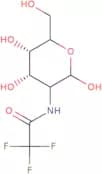
CAS:<p>2-Deoxy-2-trifluoroacetamido-D-glucose (dTFA) is an acetal that is formed from the reaction of trifluoroacetic acid with 2-deoxy-2-trifluoroacetamido-D-glucose. This compound yields aldehydes, and can be used to form glycosidic bonds. It also has the ability to react with amino groups on peptides and proteins, forming acetals. 2-Deoxy-2-trifluoroacetamido-D-glucose has been shown to have a variety of functions including being a carbohydrate, an acetal, and an inhibitor of peptide bond formation.</p>Fórmula:C8H12F3NO6Pureza:Min. 95%Cor e Forma:PowderPeso molecular:275.18 g/mol(2-Carboxyethyl)-b-cyclodextrin sodium
<p>This beta-cyclodextrin (β-CD) derivative is a functionalized cyclic oligosaccharide composed of seven glucose units, characterized by a hydrophilic exterior and a lipophilic cavity (bigger than α-CD and smaller than γ-CDs), which allows it to encapsulate various guest molecules. This structural feature facilitates its use in multiple applications, including pharmaceuticals, food enhancement, and cosmetics. In the pharmaceutical industry, it enhances the solubility and stability of poorly water-soluble drugs, improving their bioavailability and efficacy while also masking unpleasant tastes. The food sector utilizes it as a stabilizer for flavors, colors, and nutrients, extending shelf life by protecting sensitive ingredients from degradation. In cosmetics, it serves as a complexing agent for fragrances and active components, ensuring their stability and controlled release. Its use expands to many other fields, including nanotechnology for drug delivery systems, environmental remediation for extracting organic pollutants, textiles for slow-release fragrances, and analytical chemistry for chiral separation.</p>Fórmula:C42H70nO35•(C3H4O2Na)nPureza:Min. 95%Cor e Forma:White to pale yellowsolid.Peso molecular:1,135 g/molTetra- O- benzoyl- b- D- xylofuranose
CAS:<p>Tetra-O-benzoyl-b-D-xylofuranose is a custom synthesis. It is an oligosaccharide with a saccharide chain of four sugar units that are linked by glycosylation. The first and third sugars have a benzoyl group, while the second and fourth sugars are xylopyranosyl residues. The molecule has been modified with fluorination, methylation, and click chemistry. Tetra-O-benzoyl-b-D-xylofuranose is soluble in water, methanol, acetone, chloroform, ethanol, ethylene glycol ethers, and acetonitrile.<br>Tetra-O-benzoyl-b-D-xylofuranose has CAS number 18530–90–0.</p>Fórmula:C33H26O9Pureza:Min. 95%Peso molecular:566.55 g/molN-Acetyl-D-mannosamine - low endotoxin grade
CAS:<p>Please enquire for more information about N-Acetyl-D-mannosamine - low endotoxin grade including the price, delivery time and more detailed product information at the technical inquiry form on this page</p>Fórmula:C8H15NO6Peso molecular:221.21 g/molMannan (ex Saccharomyces cerevisiae)
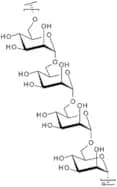
CAS:<p>The main cell-wall components of baker’s yeast (Saccharomyces cerevisiae) as well as β-glucan are mannans with an α-1,6 mannose backbone and α-1,2 and α-1,3 mannose branches.<br>The image was kindly provided by Dr. Chris Lawson.</p>Cor e Forma:White Slightly Brown PowderDermatan sulphate sodium salt,average MW 92000
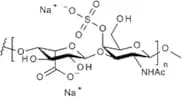
CAS:Dermatan sulphate is a glycosaminoglycan found in skin, blood vessels, heart valves, tendons, aorta, spleen and brain and is usually isolated from pig skin or beef lung tissue. The disaccharide repeat unit is composed of L-iduronic acid and N-acetyl-galactosamine-4-sulphate linked β-(1,3) and β-(1,4). There are also small amounts of D-glucuronic acid.Cor e Forma:Powder3,5-Di-O-benzoyl-2-deoxy-2-fluoro-α-D-arabinofuranosyl bromide
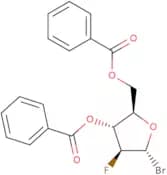
CAS:<p>Intermediate in the synthesis of clofarabine</p>Fórmula:C19H16BrFO5Pureza:Min. 95%Cor e Forma:PowderPeso molecular:423.24 g/molN-Glycolylneuraminic acid
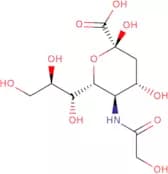
CAS:Regulates N-glycolylneuraminic acid biosynthesis in murine liverFórmula:C11H19NO10Pureza:Min. 95 Area-%Cor e Forma:White Off-White PowderPeso molecular:325.27 g/mol2,3,4,6-Tetra-O-acetyl-b-D-thiogalactopyranose
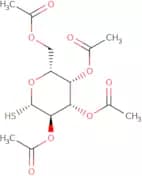
CAS:<p>2,3,4,6-Tetra-O-acetyl-b-D-thiogalactopyranose is a synthetic sugar that is prepared by the fluorination of D-galactopyranose and subsequent acetylation. This compound can be used for glycosylation reactions and as a substrate for click chemistry. It is an oligosaccharide with four monosaccharides in its backbone. The CAS number of 2,3,4,6-Tetra-O-acetyl-b-D-thiogalactopyranose is 50615-66-2.</p>Fórmula:C14H20O9SPureza:Min. 95%Cor e Forma:PowderPeso molecular:364.37 g/molε-Cyclodextrin
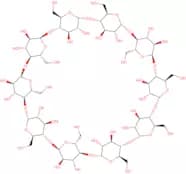
CAS:<p>Epsilon-cyclodextrin (ε-CD) consists of 10 glucose units. Its larger cavity size offers potential for encapsulating larger guest molecules or forming more complex inclusion compounds.</p>Fórmula:C60H100O50Pureza:Min. 95%Peso molecular:1,621.41 g/mol2-Acetamido-2-deoxy-L-lyxojirimycin
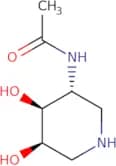
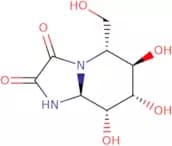
CAS:<p>2-Acetamido-2-deoxy-L-lyxojirimycin is a custom synthesis of a complex carbohydrate. It is an Oligosaccharide and Polysaccharide. This compound is modification, saccharide, Methylation, Glycosylation, Carbohydrate, Click modification, sugar, High purity, Fluorination, Synthetic.</p>Fórmula:C7H14N2O3Pureza:Min. 95%Peso molecular:174.2 g/molPhenyl-beta-D-glucopyranoside
CAS:<p>Phenyl-beta-D-glucopyranoside is a phenolic compound that can be found in plant cell walls. It is a monosaccharide with an ester linkage, which is hydrolyzed by esterases to yield protocatechuic acid. Phenyl-beta-D-glucopyranoside is an inhibitor of sugar transport and has been shown to have protective effects on the liver when it is exposed to toxic substances. This sugar also binds to proteins, which may alter the function of these proteins. Phenyl-beta-D-glucopyranoside has been shown to inhibit glycolysis in hepatic tissues and tannins are released from erythrocytes treated with this substance. Phenyl-beta-D-glucopyranoside has been shown to be chemically stable under acidic conditions.</p>Fórmula:C12H16O6Peso molecular:256.26 g/mola-L-Galactose-1-phosphate dipotassium salt
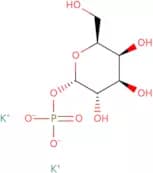
CAS:a-L-Galactose-1-phosphate dipotassium salt is an oligosaccharide that can be prepared by the methylation of a galactose molecule. It is a synthetic compound that has been shown to have antiviral properties. The modification of the sugar structure with fluorine atoms increases the stability of the molecule and prevents its degradation. This product is soluble in water and can be used as a pharmaceutical intermediate for other compounds.Fórmula:C6H11K2O9PPureza:Min. 95%Cor e Forma:PowderPeso molecular:336.33 g/molUDP-β-D-glucopyranoside
<p>UDP-beta-D-glucopyranoside is a novel, synthetic nucleotide analogue that has antiviral and anticancer activities. It is a nucleoside that inhibits DNA synthesis and may be useful as an antitumor agent. UDP-beta-D-glucopyranoside can also be used to synthesize DNA and RNA. In addition, it can be used in the synthesis of phosphoramidites, which are used to modify DNA or to synthesize oligonucleotides. UDP-beta-D-glucopyranoside is available in high purity with CAS No., which makes it a high quality product.</p>Fórmula:C15H24N2O17P2Pureza:(Nmr) Min. 95.0%Peso molecular:566.3 g/molMethyl 6-O-tert-butyldiphenylsilyl-2,3,4-tri-O-pivaloyl-a-D-glucopyranoside
Methyl 6-O-tert-butyldiphenylsilyl-2,3,4-tri-O-pivaloyl-a-D-glucopyranoside is an Oligosaccharide that is a complex carbohydrate. It has CAS number and it is synthesized using the Modification and Glycosylation techniques. This product is highly pure, fluorinated, and synthetic.Fórmula:C38H56O9SiPureza:Min. 95%Peso molecular:684.95 g/mol6-Deoxy-D-psicose
6-Deoxy-D-psicose is a sugar molecule that is made up of six carbon atoms. It is one of the two possible epimers of D-psicose, and it can be used as an alkaline equilibrating agent for the conversion of D-fructose to 1-deoxy-D-fructose. 6-Deoxy-D-psicose can also be used as a substrate in reactions with other sugars to form new compounds. 6DPSC can be transformed into rhamnose by heating it at 100°C in alkaline solution, or into l-rhamnose by heating it at 120°C in alkaline solution. The transformation process converts 6DPSC into its epimer, which is stable at high temperatures without decomposing. 6DPSC has been shown to have efficient properties for use in research and for the production of various substances.Pureza:Min. 95%2,3,4-Tri-O-acetyl-1-O-azido-1-deoxy-b-D-arabinopyranoside
CAS:2,3,4-Tri-O-acetyl-1-O-azido-1-deoxy-b-D-arabinopyranoside is a methylated sugar that can be used to modify oligosaccharides. It has an acetyl functional group on the 2' position of the ribose moiety. This product is a white crystalline powder and it is soluble in water and methanol.Fórmula:C11H15N3O7Pureza:Min. 95%Peso molecular:301.25 g/mol3-O-Benzyl-2-deoxy-D-arabinopyranose
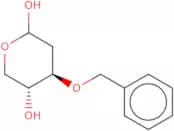
<p>3-O-Benzyl-2-deoxy-D-arabinopyranose is a modified sugar that can be used in the synthesis of oligosaccharides. It is a white powder that has a purity level of more than 99%. The CAS number for 3-O-Benzyl-2-deoxy-D-arabinopyranose is 52397-07-8. This product can be custom synthesized to meet your specific needs. It can also be methylated, glycosylated, or modified with a click chemistry reaction.</p>Fórmula:C12H16O4Pureza:Min. 95%Peso molecular:224.25 g/mol(3b,14a)-3-O-b-D-glucopyranosyl-(1,2)-[b-D-xylopyranosyl-(1,3)]-b-D-glucopyranosyl-(1,4)-b-D-galacopyranosyl-(25S)-spirost-5-ene
<p>A custom synthesis of a complex carbohydrate. It is a synthetic, modified and fluorinated saccharide with a methylated monosaccharide.</p>Pureza:Min. 95%4-Methoxyphenyl 2,4,6-tri-O-acetyl-b-D-galactopyranoside
CAS:4-Methoxyphenyl 2,4,6-tri-O-acetyl-b-D-galactopyranoside is a synthetic carbohydrate that can be modified to meet your requirements. It is also known as Glycosylation, Oligosaccharide, sugar, Synthetic, Fluorination, Custom synthesis, Methylation, CAS No. 383905-62-2 and Monosaccharide Polysaccharide Saccharide. This product has been Click modification and complex carbohydrate. We offer this product at high purity and with modification.Fórmula:C19H24O10Pureza:Min. 95%Peso molecular:412.39 g/molLacto-N-fucopentaose III
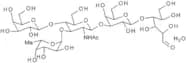
CAS:<p>Neutral pentasaccharide naturally present in human breast milk</p>Fórmula:C32H55NO25Pureza:Min. 95%Cor e Forma:White PowderPeso molecular:853.77 g/molIsopropyl beta-D-glucopyranoside
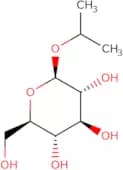
CAS:<p>Isopropylbeta-D-glucopyranoside is a chemical compound that has been studied for its antibacterial activity. It has been shown to inhibit the growth of bacteria by reacting with fatty acids in the cell membrane, which leads to the disruption of the cell membrane and death. Isopropylbeta-D-glucopyranoside is a member of the sugar alcohols class, and it can be synthesized from glucose, fatty acid, and hydrochloric acid using an acid catalyst. The reaction system is typically carried out in microcapsules.</p>Fórmula:C9H18O6Pureza:Min. 95%Cor e Forma:PowderPeso molecular:222.24 g/mol6-O-Malonylglycitin
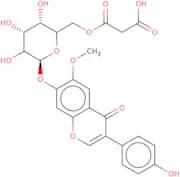
CAS:<p>6-O-Malonylglycitin is a glycosylated flavonoid that belongs to the group of isoflavones. It is found in a variety of plants, including soybeans and fava beans. 6-O-Malonylglycitin has been shown to be an effective inhibitor of β-glucosidase activity at temperatures below 37°C, which overlaps with the range of temperatures where it inhibits glycitein production. This inhibition may be due to its pleiotropic effects on various treatments, such as its ability to inhibit cancer cell growth by inhibiting protein synthesis and inducing apoptosis. 6-O-Malonylglycitin also has synergistic effects when used concomitantly with chromatographic markers, such as high performance liquid chromatography (HPLC), which can be used to analyze the levels of endogenous compounds in human blood samples.</p>Fórmula:C25H24O13Pureza:Min. 95%Cor e Forma:PowderPeso molecular:532.45 g/mol(5R, 6R, 7S, 8R) -5, 6, 7, 8-Tetrahydro- 5- methyl- tetrazolo[1, 5- a] pyridine- 6, 7, 8- triol
CAS:<p>Tetrahydro-5-methyl-tetrazolo[1,5-a]pyridine-6,7,8-triol is an organic compound that has been synthesized from a sugar. Tetrahydro-5-methyl-tetrazolo[1,5-a]pyridine-6,7,8-triol is soluble in water and formic acid. It is used as a synthetic intermediate for the production of oligosaccharides and saccharides. Tetrahydro-5-methyl-tetrazolo[1,5-a]pyridine-6,7,8-triol can be used to produce glycosylation or methylation in the laboratory. It is also used as a chemical reagent in complex carbohydrate synthesis.</p>Fórmula:C6H10N4O3Pureza:Min. 95%Peso molecular:186.17 g/mol(1R,4R,5S)-4-tert-Butyldimethylsiloxymethyl-5-tert-butyldimethylsilyloxycyclohex-2en-1-ol
<p>(1R,4R,5S)-4-tert-Butyldimethylsiloxymethyl-5-tert-butyldimethylsilyloxycyclohex-2en-1-ol is a custom synthesis of a monosaccharide with a fluorine atom at the 4 position. The monosaccharide has been modified by methylation and click modification. It has also been synthesized from an oligosaccharide or polysaccharide through glycosylation.</p>Pureza:Min. 95%1-(Piperidine-2,6-dione-4-yl) - 4-([2-nitro] phenyl)-3- buten- 2- one
Piperidine-2,6-dione-4-yl) - 4-[2-nitrophenyl]-3-buten-2-one is a custom synthesis of a high purity, methylated, glycosylated, and click modified carbohydrate. It is an oligosaccharide with a complex structure that includes saccharide units linked by glycosidic bonds. The saccharide units are made up of monosaccharides that are modified with fluorine atoms. This product is available through Custom Synthesis and can be ordered in bulk quantities.Pureza:Min. 95%(2S, 3S, 4R) -2- ((Diphenylmethyloxy)methyl) -3,4,-O-isopropylidene- 3, 4- pyrrolidinediol
(2S, 3S, 4R) -2- ((Diphenylmethyloxy)methyl) -3,4,-O-isopropylidene- 3, 4- pyrrolidinediol is a custom synthesis at high purity. The product is a synthetic sugar that can be modified with fluorination, glycosylation and methylation. This product has CAS No. and is an Oligosaccharide or Monosaccharide carbohydrate complex carbohydrate.Pureza:Min. 95%Xanthan gum
CAS:<p>Xanthan gum is a polysaccharide produced by the Gram negative bacteria Xanthomonas campestris. It has unique rheological and gel forming properties and finds many applications particularly in the food and oil industries. Recently, it has been shown that ternary mixtures of konjac glucomannan, xanthan gum and sodium alginate can form a non-covalently linked complex which exhibits enhanced rheological properties of value in, for example, functional foods. The structure of xanthan is based on a cellulosic backbone of β-(1,4)-linked glucose units which have a trisaccharide side chain of mannose-glucuronic acid-mannose linked to every second glucose unit in the main chain. Some terminal mannose units are pyruvylated and some of the inner mannose units are acetylated.</p>Pureza:Min. 95%Cor e Forma:Powder1,2,3,4-Tetra-O-acetyl-6-O-triisopropylsilyl-b-D-glucopyranose
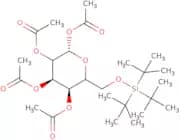
<p>1,2,3,4-Tetra-O-acetyl-6-O-triisopropylsilyl-b-D-glucopyranose is a carbohydrate molecule that can be synthesized to order. It is a synthetic compound that can be fluorinated and glycosylated. This product is a key intermediate for the synthesis of oligosaccharides and monosaccharides. 1,2,3,4-Tetra-O-acetyl-6-O-triisopropylsilyl-b-D glucopyranose has CAS No. 61453–07–5 and molecular weight of 496.07 g/mol.</p>Fórmula:C23H40O10SiPureza:Min. 95%Peso molecular:504.64 g/molk-Carradiitol sulfate sodium salt
<p>k-carrageenan derived disaccharide alcohol sulfate</p>Fórmula:C12H21O13S1NaPureza:Min. 95%Peso molecular:428.34 g/molPropranolol D-glucuronide D6
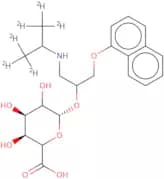
Produto Controlado<p>Propranolol D-glucuronide D6 is a synthetic, fluorinated, saccharide that is a modification of propranolol. It has high purity and can be custom synthesized to meet specific requirements. Propranolol D-glucuronide D6 has been shown to inhibit the growth of bacteria by binding to the 50S ribosomal subunit. It is used in veterinary medicine to treat respiratory infections caused by Clostridium perfringens and other bacteria. The drug also has a toxic effect on respiratory system cells, which may be due to its ability to induce apoptosis.</p>Fórmula:C22H23NO8D6Pureza:Min. 95%Peso molecular:441.5 g/molSialyllacto-N-fucopentaose I
<p>Sialyllacto-N-fucopentaose I is a high purity, custom synthesis, fluorinated carbohydrate that has been modified by methylation and click chemistry. This oligosaccharide is composed of a saccharide with a molecular weight of 908.5 g/mol and an enantiomeric purity of 99%. Sialyllacto-N-fucopentaose I is an Oligosaccharide with a CAS number of 61497-04-8. It is used in the synthesis of polysaccharides or as a monosaccharide or sugar substitute to produce high purity products.</p>Fórmula:C43H72N2O33Pureza:Min. 95%Peso molecular:1,145.03 g/molKifunensine
CAS:<p>Kifunensine is a potent and specific inhibitor of plant and animal α-mannosidase I with IC50 in nanomolar range. It inhibits the enzyme isoforms in Golgi apparatus (GMI) and endoplasmatic reticulum (ERMI). The compound prevents mannose trimming on glycoproteins and shifts the glycoform content from complex to oligomannose type. It's used for the production of recombinant therapeutic glycoproteins with mannose rich N-linked glycans.</p>Fórmula:C8H12N2O6Pureza:Min. 99 Area-%Cor e Forma:PowderPeso molecular:232.19 g/molDimethyl (2S)-2-((4R)-3-O-benzyl-1,2-O-isopropylidene-D-threos-4-yl)succinate
<p>Dimethyl 2-((4R)-3-O-benzyl-1,2-O-isopropylidene-D-threos--4-yl)succinate is a glycosylate compound that is used in the synthesis of saccharides and oligosaccharides. This product can be custom synthesized to order as a monosaccharide or oligosaccharide and can be fluorinated or methylated. Dimethyl (2S)-2-(4R)-3-O-benzyl-1,2--O--isopropylidene D--threo--4--yl)succinate has CAS number 49627–08–0 and molecular weight of 334.24 g/mol. This product is not intended for therapeutic use.</p>Pureza:Min. 95%4-Aminobutyl 6-O-(a-D-mannopyranosyl)-a-D-mannopyranoside
<p>4-Aminobutyl 6-O-(a-D-mannopyranosyl)-a-D-mannopyranoside is a synthetic saccharide that can be used as a substituent in the synthesis of complex carbohydrates. It is an aminobutyric acid methyl ester derivative of D-mannose with a pyranose ring. 4-Aminobutyl 6-O-(a-D-mannopyranosyl)-a-D-mannopyranoside has been shown to react with acetic anhydride and diazomethane to yield methylated derivatives of D-glucal, D-sorbitol, and DMPG. It is also used for the synthesis of oligosaccharides, glycosylations, and fluorinations.</p>Pureza:Min. 95%1,3,4,6-Tetra-O-acetyl-2-[(2-aminoacetyl)amino]-2-deoxy-a-D-glucopyranose
CAS:<p>1,3,4,6-Tetra-O-acetyl-2-[(2-aminoacetyl)amino]-2-deoxy-a-D-glucopyranose is an example of a sugar that has been modified by fluorination. This modification takes place at the 2 position of the sugar's aldehyde group. It is also an example of a monosaccharide with a glycosylation site at C1' and an acetylated hydroxyl group on C6'. The chemical name for this sugar is 1,3,4,6-Tetra-O-(2-(N-[2-(glycolyl)amino]acetyl)-N-[3-(glycolyl)amino]propionyl)-2-[(2-(N-[2-(glycolyl)amino]acetyl)amino]-2-deoxy--aD--glucop</p>Fórmula:C16H24N2O10Pureza:Min. 95%Peso molecular:404.37 g/molCalcium lactobionate dihydrate
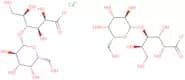
CAS:<p>Food additive; stabilizer</p>Fórmula:C12H22O12•Ca0•H2OPureza:Min. 96.0%Cor e Forma:White PowderPeso molecular:754.66 g/molXylan from beechwood
CAS:<p>Xylan is the most abundant noncellulosic polysaccharide present in both hardwoods and annual plants. Xylan is found mainly in the secondary cell wall as part of the hemicellulose complex and forms an interface between lignin and other polysaccharides. In their simplest forms, xylans are linear polysaccharides of β-1,4-xylose residues but can also form complex heterogenous and polydispersed glycans.</p>Pureza:(Pcr) Min. 98.0000000%Isosaccharinic acid-1,4-lactone
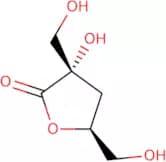
CAS:Isosaccharinic acid-1,4-lactone is an organic compound that is found in human urine. It has been shown that the concentration of this compound can be used as a marker for renal health. The hydrated form of isosaccharinic acid-1,4-lactone can be prepared by heating with acetic anhydride, and it has been shown to have potential applications as a buffer in diagnostic tests for human serum or as a stabilizer for x-ray structures. The 1H NMR spectrum of isosaccharinic acid-1,4-lactone reveals two distinct signals at 1.6 and 2.0 ppm, which are assigned to the two isomers of this compound. The second order rate constant was measured to be 0.025 s−1 at pH 7 and 22 °C using acetate extract from human urine. This technique was also applied to measure rates constant for other organic acids such as formic acidFórmula:C6H10O5Pureza:Min. 98 Area-%Cor e Forma:White PowderPeso molecular:162.14 g/mol4-Methoxyphenyl 4-O-{2-O-acetyl-3-O-[2,4-di-O-(3,4,6-tri-O-acetyl-2-deoxy-2-phthalimido-β-D-glucopyranosyl)-3,6-di-O-benzyl-β-D-mann opyranosyl]-6-O-tert-butyldimethylsilyl-β-D-mannopyranosyl}-3,6-di-O-benzyl-2-deoxy-2-phthalimido-β-D-glucopyranoside
4-Methoxyphenyl 4-O-{2-O-acetyl-3-O-[2,4-di-O-(3,4,6-tri-O-acetyl-2,6 glycoside)-bDglucopyranosyl]-3,6 di -Obenzyl - bDmannopyranosyl} - 3,6 di -Obenzyl 2 deoxy 2 phthalimido bDglucopyranoside is a synthetic compound that belongs to the group of oligosaccharides. It is a modification of a monosaccharide with methylation and fluorination. The synthesis of this compound includes the use of Click chemistry for glycosylation. The CAS number is 766913–30–8.Fórmula:C109H119N3O37SiPureza:Min. 95%Peso molecular:2,091.19 g/molGT1b-Oligosaccharide
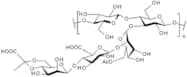
CAS:GT1b oligosaccharide (sodium salt) has a core tetrasaccharide structure (Galβ1,3GalNAcβ1,4Galβ1,4Glc) with two sialic acids (NeuAc) linked α2,3/α2,8 to the inner galactose residue, and sialic acid (NeuAc) linked α2,3 to the terminal galactose residue (Ledeen, 2009). The GT1b ganglioside is one of the major gangliosides in neuronal and glial membranes; it interacts with myelin-associated glycoprotein (MAG) and is essential for long-term axon-myelin stability. GT1b ganglioside also acts as receptor for bacterial toxins, such as, tetanus and botulinum toxins (Nishiki, 1996), as well as for viruses. A few examples of which include: Merkel cell polyomavirus, JC virus, BK virus, norovirus and others (Low, 2006).Fórmula:C59H96N4O45Pureza:(%) Min. 98%Cor e Forma:PowderPeso molecular:1,581.39 g/mol4-O-(α-L-Fucopyranosyl)-D-galactopyranose
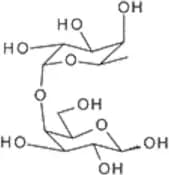
CAS:<p>4-O-(a-L-Fucopyranosyl)-D-galactopyranose is a glycosidic sugar that has an alpha-1,3 linkage and a galactose residue. The sequence of this sugar is the same as that of D-galactose. 4-O-(a-L-Fucopyranosyl)-D-galactopyranose belongs to the group of carbohydrates. It is found in plants, animals, or fungi and can be used as a precursor for the synthesis of many other compounds.</p>Fórmula:C12H22O10Pureza:Min. 95%Cor e Forma:PowderPeso molecular:326.3 g/mol1,2,3,4,6-Penta-O-benzoyl-α-D-mannopyranose
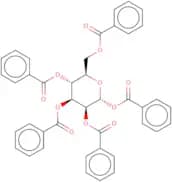
CAS:1,2,3,4,6-Penta-O-benzoyl-alpha-D-mannopyranose is a monosaccharide that can be synthesized by modification of the corresponding mannose. This sugar has been shown to form a complex carbohydrate with an oligosaccharide or saccharide. It can also be used in click chemistry as a linker between two amino acids or peptides. The chemical name for 1,2,3,4,6-Penta-O-benzoyl-alpha-D-mannopyranose is 1,2:3,4:6:1′′′′′′′″:5′″:8:1″″″″″″"’5″'8″1 (2R)-2-(3'-chloroacetyl)pentaerythritol 2,4'-diyl dianhydride.Fórmula:C41H32O11Peso molecular:700.69 g/mol8-Methoxycarbonyloctyl 2-acetamido-2-deoxy-4-(a-L-fucopyranosyl)-3-O-(b-D-galactopyranosyl)-b-D-glucopyranoside
CAS:8-Methoxycarbonyloctyl 2-acetamido-2-deoxy-4-(a-L-fucopyranosyl)-3-O-(b-D-galactopyranosyl)-b-D-glucopyranoside is a custom synthetic compound that was created using click chemistry. It is an oligosaccharide, polysaccharide, saccharide, and carbohydrate. It is fluorinated and has been modified with methyl groups.Pureza:Min. 95%2-Acetamido-2-deoxy-4-O-(b-D-galactopyranosyl)-6-sulfo-b-D-glucopyranose
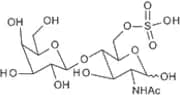
CAS:2-Acetamido-2-deoxy-4-O-(b-D-galactopyranosyl)-6-sulfo-b-D-glucopyranose is a glycosaminoglycan that can be used as an immunomodulator. It has been shown to inhibit the production of tumor necrosis factor alpha (TNFα) in experimental cancer tissues and to stimulate the activity of lymphocytes, which may be due to its ability to regulate camp levels. 2A2D4OSBG also has regulatory effects on monoclonal antibodies and inhibits the immune reaction caused by autoimmune diseases.Fórmula:C14H25NO14SPureza:Min. 95%Cor e Forma:White PowderPeso molecular:463.41 g/mola-Cyclodextrin
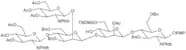
CAS:α-Cyclodextrin is a cyclic oligosaccharide with 6 D-glucose residues which are α-1,4-linked. α-cyclodextrin is used in the food industry to encapsulate flavours and fragrances. α-cyclodextrin is also an effective inhibitor of the upstream inflammatory response induced by cholesterol crystals. Cholesterol crystal-induced complement activation is a critical step in the development of atherosclerosis, thus inhibition of complement with α-cyclodextrin has the potential to be used in the treatment of atherosclerosis.Fórmula:C36H60O30Pureza:Min. 98 Area-%Cor e Forma:White Off-White PowderPeso molecular:972.84 g/molBenzyl 2-acetamido-4-O-{2-acetamido-4-O-[[2,4-Di-O-acetyl-3-O-[2,4-di-O-(2-acetamido-3,4,6-tri-O-acetyl-2-deoxy-b-D-glucopyranosyl)- 3,6-di-O-benzyl-a-D-mannopyranosyl]-6-O-[3,4-di-O-acetyl-2,6-di-O-(2-acetamido-3,4,6-tri-O-acetyl-2-deoxy-b-D-glucopyr
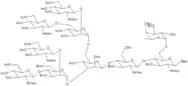
CAS:<p>The carbohydrate is a saccharide that is a modification of the monosaccharide. It is synthesized from D-mannose and D-glucose and has a fluorination at the C4 position. The carbohydrate has been custom synthesized for high purity, methylation, glycosylation, and click modification.</p>Fórmula:C167H206N6O65SPureza:Min. 95%Peso molecular:3,369.49 g/mol4-Deoxy-4-fluoro-D-glucopyranose
CAS:<p>4-Deoxy-4-fluoro-D-glucopyranose is a fluorinated sugar that is found in the roots of Glycyrrhiza uralensis. It can inhibit glycosylation by blocking the stepwise addition of glucose to the growing oligosaccharide chain. 4-Deoxy-4-fluoro-D-glucopyranose also has biological activities, such as antiinflammatory and antitumor properties. This compound is an analog of D-arabinose and D-xylulose, which are found in many plants. 4DFG can be used to synthesize glycosides with various substituents on the hydroxyl group.</p>Pureza:Min. 95%1,2-O-Isopropylidene-a-D-xylofuranose
CAS:Chiral building block for synthesis of carbohydrate and nucleoside derivativesFórmula:C8H14O5Pureza:(%) Min. 98%Cor e Forma:White PowderPeso molecular:190.19 g/mol






![(3b,14a)-3-O-b-D-glucopyranosyl-(1,2)-[b-D-xylopyranosyl-(1,3)]-b-D-glucopyranosyl-(1,4)-b-D-galac…](/_next/image/?url=https%3A%2Fstatic.cymitquimica.com%2Fproducts%2F3D%2Fthumb-webp%2FOG74568.webp&w=3840&q=75)

![(5R, 6R, 7S, 8R) -5, 6, 7, 8-Tetrahydro- 5- methyl- tetrazolo[1, 5- a] pyridine- 6, 7, 8- triol](/_next/image/?url=https%3A%2Fstatic.cymitquimica.com%2Fproducts%2F3D%2Fthumb-webp%2FMT163943.webp&w=3840&q=75)
![1-(Piperidine-2,6-dione-4-yl) - 4-([2-nitro] phenyl)-3- buten- 2- one](/_next/image/?url=https%3A%2Fstatic.cymitquimica.com%2Fproducts%2F3D%2Fthumb-webp%2FMP170734.webp&w=3840&q=75)
![1,3,4,6-Tetra-O-acetyl-2-[(2-aminoacetyl)amino]-2-deoxy-a-D-glucopyranose](/_next/image/?url=https%3A%2Fstatic.cymitquimica.com%2Fproducts%2F3D%2Fthumb-webp%2FMT145108.webp&w=3840&q=75)