Glicociência
Subcategorias de "Glicociência"
- Amino açúcares(108 produtos)
- Anticorpos Glico-Relacionados(283 produtos)
- Glicolípidos(46 produtos)
- Glicosaminoglicanos (GAGs)(55 produtos)
- Glicosídeos(419 produtos)
- Monossacáridos(6.617 produtos)
- Oligossacarídeos(3.718 produtos)
- Polissacáridos(505 produtos)
Foram encontrados 11021 produtos de "Glicociência"
a-D-Glucopyranosyl azide
CAS:Please enquire for more information about a-D-Glucopyranosyl azide including the price, delivery time and more detailed product information at the technical inquiry form on this page
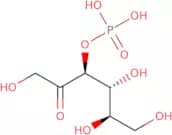
Fórmula:C6H11N3O5Peso molecular:205.17 g/molFructose-3-phosphate sodium salt
CAS:Fructose-3-phosphate sodium salt is a reactive sugar molecule that belongs to the group of monosaccharides. It can be used as a cross-linking agent in polymerization reactions, such as those used in sample preparation for animal experiments or for magnetic resonance spectroscopy. Fructose-3-phosphate sodium salt is also used as a reactant in nephrology dialysis and has been shown to have beneficial effects on diabetic patients. This compound has the ability to increase the concentration of galactitol, a nonmetabolized form of glucose that can only be obtained from the diet. Galactitol is produced by the liver when blood glucose levels are high and helps to lower blood glucose levels through its action on insulin secretion and peripheral tissue sensitivity. Fructose-3-phosphate sodium salt may also act as an anti-inflammatory agent by inhibiting prostaglandin synthesis, which may be due to its inhibition of prostaglandin synthesis
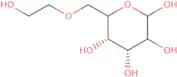
Pureza:Min. 95%6-O-Hydroxyethyl-D-glucose
CAS:6-O-Hydroxyethyl-D-glucose (6OHEDG) is a homologue of glucose that has been synthesized by reacting paraformaldehyde with ethylene in the presence of a glucofuranose. It is used as a solute for uptake studies, hydrolyzates for ion-exchanges, and glucoses for preparative chromatographic techniques. 6OHEDG is also used as an analog to glucose in polyethylene glycols and anhydroglucoses.Fórmula:C8H16O7Pureza:Min. 95%Peso molecular:224.21 g/mol2-Deoxy-2-[(7-nitro-2,1,3-benzoxadiazol-4-yl)amino]-L-glucose
CAS:2-Deoxy-2-[(7-nitro-2,1,3-benzoxadiazol-4-yl)amino]-L-glucose is a fluorophore that is used in biological imaging. It has been shown to have tumor vasculature targeting properties and can be used to diagnose cancer. The optimal reaction for 2DG is aerobic glycolysis, which occurs when the glucose concentration is high enough. This compound can be used as a carbon source for mammalian cells and has been shown to inhibit the growth of cells from tumors.Fórmula:C12H14N4O8Pureza:Min. 95%Peso molecular:342.26 g/molNeolactotetraosylceramide
CAS:Neolactotetraosylceramide (NT4) is a glycoconjugate that is found in human serum. It has been shown to bind to the receptor site of monoclonal antibodies and inhibit the binding of tumor necrosis factor-α (TNF-α), which is involved in immune system regulation. NT4 has also been shown to block the activity of receptors on human neutrophils, which may be due to its structural similarity to lactotetraosylceramide. NT4 has been implicated as a potential cause for autoimmune diseases and cancer tissues, due to its structural similarity with glycoproteins that are found on cell surfaces. The optimum pH for NT4 is 7.5 and its glycan structure consists of two mannose residues linked by an alpha-1,6 linkage. This glycoconjugate binds well with blood group A and B antigens, but not with blood group O antigen. NT4 elicits antibody responseFórmula:C62H114N2O23Pureza:Min. 95%Peso molecular:1,255.57 g/mol2-Amino-2-deoxy-L-fucose
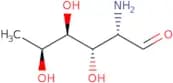
CAS:2-Amino-2-deoxy-L-fucose is a fatty acid that is structurally similar to galacturonic acid. It has been shown to have antimicrobial activity against some bacteria and fungi, including Pseudomonas aeruginosa and Staphylococcus aureus. 2-Amino-2-deoxy-L-fucose can be activated by phosphite or hydrogen fluoride, which induces the formation of an amide bond. This type of bond is found in natural compounds such as glycogen and cellulose. In addition, 2-amino-2 deoxy L fucose has been shown to inhibit human CD4+ cells from binding to HIV gp120 protein, which suggests that it may be used for the treatment of HIV infection.
Fórmula:C6H13NO4Pureza:Min. 95%Peso molecular:163.17 g/molMethyl a-L-arabinofuranoside
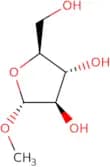
CAS:Methyl a-L-arabinofuranoside is a microbial feed additive that is used to improve the quality of ruminal cellulose. This product has been shown to inhibit the activity of esterases and polysaccharides, which would otherwise break down cellulose so it can be digested by bacteria in the rumen. This supplement also inhibits microbial growth and has been shown to be an effective treatment for infectious diseases. Methyl a-L-arabinofuranoside is detectable in urine, feces, and milk one day after administration. It is broken down by uronic acid esterases into arabinose and methyl alcohol.Fórmula:C6H12O5Pureza:Min. 95%Peso molecular:164.16 g/molα-D-Galactose-1-phosphate
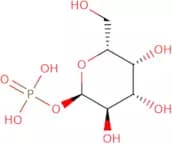
CAS:α-D-Galactose-1-phosphate is a model organism for the study of galactose metabolism. It is an intermediate in the galactose pathway and provides a new approach to understanding the pathogenesis of metabolic disorders. α-D-Galactose-1-phosphate is involved in many enzymatic reactions, including the conversion of uridine diphosphoglucose (UDPG) to UDP glucose, which is a key step in glycolysis. The enzyme that catalyzes this reaction, UDP glucuronosyltransferase (UGT), has been shown to be defective in patients with galactosemia. α-D-Galactose 1 phosphate has also been used as a model for studying human gene expression, specifically protein genes. This molecule has been found to bind DNA polymerase II and inhibit transcriptional elongation at specific sites on DNA called RNA polymerase II pause sites.
Fórmula:C6H13O9PPureza:Min. 95%Cor e Forma:PowderPeso molecular:260.14 g/mol1,2,3,4,6-Penta-O-acetyl-5-thio-D-glucose
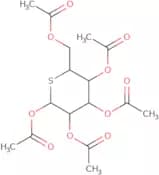
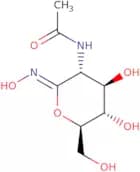
CAS:1,2,3,4,6-Penta-O-acetyl-5-thio-D-glucose is a synthetic sugar that can be used as a building block in the synthesis of glycosides and oligosaccharides.Fórmula:C16H22O10SPureza:Min. 95%Peso molecular:406.41 g/mol2-Acetamido-2-deoxy-D-gluconhydroximo-1,5-lactone
CAS:2-Acetamido-2-deoxy-D-gluconhydroximo-1,5-lactone is a farnesyltransferase inhibitor that belongs to the group of techniques. It is used in the diagnosis of relapsed and resistant multiple myeloma. This drug has been shown to be a potent inductor of apoptosis in vitro and in vivo through inhibition of protein synthesis. 2-Acetamido-2-deoxy-D-gluconhydroximo-1,5-lactone also inhibits the growth of tumor cells and can be used as a potential chemotherapeutic agent for pediatric patients with relapsed or resistant myeloma.Fórmula:C8H14N2O6Pureza:Min. 95%Peso molecular:234.21 g/molNA3F N-Glycan
CAS:NA3F is a N-glycan that is found on various glycoproteins and glycolipids. It consists of sialic acid, galactose, and fucose sugars in the ratio 3:2:1. NA3F N-glycans are synthesized by the removal of the terminal sialic acid residue from an Asn-linked oligosaccharide precursor. These types of glycans are found on high mannose (HMan) and hybrid (HHyb) glycans. The synthesis of NA3F N-glycan requires the activity of two enzymes: peptidase and sialyltransferase. The enzyme peptidase cleaves an α(1,4)-linked oligosaccharide at the nonreducing end to form a free α(1,6) linked oligosaccharide with a terminal α(1,2) linked mannose residue. This process releases the terminal
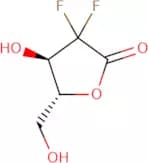
Fórmula:C82H137N5O60Pureza:Min. 95%Peso molecular:2,152.96 g/mol2-deoxy-2,2-difluoro-D-ribonic acid-1,4-lactone
CAS:2-Deoxy-2,2-difluoro-D-erythro-pentonic acid gamma-lactone is a modification of the natural pentose sugar erythrose. It is a white crystalline powder that can be used for the synthesis of oligosaccharides, polysaccharides, and other complex carbohydrates. 2DFPGL can be found in various glycosylation and methylation reactions in the synthesis of saccharides. It has been shown to act as a competitive inhibitor of glucose uptake by cells.Fórmula:C5H6F2O4Pureza:Min. 95%Peso molecular:168.1 g/mola-D-Galactosyl-mannotriose
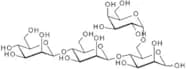
CAS:a-D-Galactosyl-mannotriose is a complex oligosaccharide, which is derived from plant materials such as leguminous seeds. Its mode of action involves selectively promoting the growth of beneficial gut bacteria, particularly bifidobacteria and lactobacilli, through its structural composition that resists hydrolysis by human digestive enzymes. This non-digestibility allows it to reach the colon intact, where it can exert its prebiotic effects.
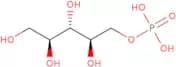
Fórmula:C24H42O21Pureza:Min. 95 Area-%Cor e Forma:White PowderPeso molecular:666.58 g/molD-Ribitol-5-phosphate
CAS:Ribitol is a sugar alcohol that is found in all living organisms. It is also used as a source of carbon and energy in the form of D-ribitol-5-phosphate, which can be synthesized from ribose 5-phosphate by means of an enzymatic reaction. Ribitol 5 phosphate is used for the synthesis of monoclonal antibodies, which are useful for studying enzyme activities, immunoassays, and cell surface receptors. This compound has been shown to have regulatory effects on the expression of genes encoding fatty acid biosynthesis enzymes. Ribitol 5 phosphate has been detected using magnetic resonance spectroscopy techniques in glycan structures and galacturonic acid residues.
Fórmula:C5H13O8PPureza:Min. 95%Peso molecular:232.13 g/molAmmonium 8-azido-3,8-dideoxy-D-manno-octulosonate
Ammonium 8-azido-3,8-dideoxy-D-manno-octulosonate is an oligosaccharide that is a modification of the natural polysaccharide mannoheptulose. It has been shown to be highly soluble in water and can be easily synthesized. Ammonium 8-azido-3,8-dideoxy-D-manno-octulosonate has been shown to inhibit the activity of glycosyltransferases and methyltransferases. This compound also has a high degree of purity, with minimal impurities or degradation products.Pureza:Min. 95%2,3,5-Tri-O-benzyl-D-arabinofuranose
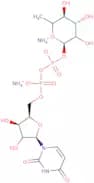
CAS:2,3,5-Tri-O-benzyl-D-arabinofuranose is a phosphorane that has been synthesised by the reaction of 2,3,5-trihydroxypentanoic acid and benzaldehyde. The synthesis of this compound involves the use of a stereoselective process to produce the desired product. This compound is able to inhibit both bacterial and fungal growth in vitro. Inhibition of bacterial growth is due to its ability to disrupt the synthesis of proteins and nucleic acids while the inhibition of fungal growth is due to its ability to interfere with chitin production.Fórmula:C26H28O5Pureza:Min. 95%Cor e Forma:White PowderPeso molecular:420.5 g/molUDP-b-L-fucose diammonium salt
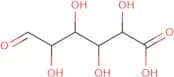
Synthetically produced sugar nucleotideFórmula:C15H22N2O16P2·N2H8Pureza:Min. 95%Peso molecular:584.37 g/molL-Glucuronic acid sodium salt
CAS:L-Glucuronic acid sodium salt is a natural product that is used as an excipient and additive in pharmaceuticals. L-Glucuronic acid sodium salt is the sodium salt of L-glucuronic acid, which is a natural compound found in plants, animals and humans. It is used as a protective agent for drugs because it can be easily metabolized by the liver and has low toxicity. L-Glucuronic acid sodium salt inhibits the uptake of radioactive isotopes into cells, which may be due to its ability to bind to cytosolic proteins. The binding of L-glucuronic acid sodium salt to these proteins blocks the binding sites for radioactive isotopes on these proteins. This inhibition leads to reduced uptake of radioactive isotopes by cells.
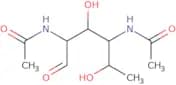
Fórmula:C6H9NaO7Pureza:Min. 95%Peso molecular:216.12 g/mol2,4-Bis(acetylamino)-2,4,6-trideoxy-D-galactose
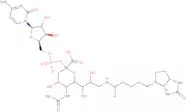
CAS:2,4-Bis(acetylamino)-2,4,6-trideoxy-D-galactose (BTDG) is a nitro derivative of L-threonine that has been derivatized with an acetyl group and a molecule of 2,4,6-trideoxygalactose. BTDG has been shown to be safe in clinical trials for vaccine development against life-threatening diseases. It is the first glycopolymer approved by the FDA for clinical use in humans. This drug has been shown to increase the antibody response and improve protection against influenza virus infection. BTDG also inhibits bacterial replication by blocking protein synthesis in some bacteria and inhibiting glycolysis in others.Fórmula:C10H18N2O5Pureza:Min. 95%Cor e Forma:PowderPeso molecular:246.26 g/molCMP-N-acetylneuraminic acid 9-sp-biotin
CMP-N-acetylneuraminic acid 9-sp-biotin is a biotinylated sugar nucleotidePureza:Min. 95%

![2-Deoxy-2-[(7-nitro-2,1,3-benzoxadiazol-4-yl)amino]-L-glucose](/_next/image/?url=https%3A%2Fstatic.cymitquimica.com%2Fproducts%2F3D%2Fthumb-webp%2FMD58731.webp&w=3840&q=75)