Glicociência
Subcategorias de "Glicociência"
- Amino açúcares(108 produtos)
- Anticorpos Glico-Relacionados(283 produtos)
- Glicolípidos(46 produtos)
- Glicosaminoglicanos (GAGs)(55 produtos)
- Glicosídeos(419 produtos)
- Monossacáridos(6.617 produtos)
- Oligossacarídeos(3.718 produtos)
- Polissacáridos(505 produtos)
Foram encontrados 11021 produtos de "Glicociência"
Porphyran
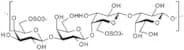
CAS:Porphyran is an agar-like polysaccharide with a linear backbone consisting of 3 linked β-D-galactosyl units alternating with either 4-linked α-L-galactosyl 6-sulphate or 3-6-anhydro-α-L-galactosyl units.The composition includes 6-O-sulphated L-galactose, 6-O-methylated D-galactose, L-galactose, 3,6-anhydro-L-galactose, 6-O-methyl D-galactose and ester sulphate. Some of the ester is present as 1,4-linked L-galactose 6-sulphate. The precise composition of porphyran shows seasonal and environmental variations. Porphyran is not used commercially, but the seaweed, Porphyra umbilicalis, is edible and is consumed in Wales (Laver). It is also made into a delicacy called Laverbread. The image was kindly provided by Prof Mike Guiry from Cork who runs ‘The Seaweed Site’.Pureza:(%) Min. 80%Cor e Forma:PowderL-Glucuronic acid sodium salt
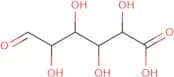
CAS:L-Glucuronic acid sodium salt is a natural product that is used as an excipient and additive in pharmaceuticals. L-Glucuronic acid sodium salt is the sodium salt of L-glucuronic acid, which is a natural compound found in plants, animals and humans. It is used as a protective agent for drugs because it can be easily metabolized by the liver and has low toxicity. L-Glucuronic acid sodium salt inhibits the uptake of radioactive isotopes into cells, which may be due to its ability to bind to cytosolic proteins. The binding of L-glucuronic acid sodium salt to these proteins blocks the binding sites for radioactive isotopes on these proteins. This inhibition leads to reduced uptake of radioactive isotopes by cells.
Fórmula:C6H9NaO7Pureza:Min. 95%Peso molecular:216.12 g/mol2,3,5-Tri-O-benzyl-1-a-D-arabinofuranosyl chloride
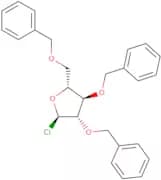
CAS:2,3,5-Tri-O-benzyl-1-a-D-arabinofuranosyl chloride is a patent antibiotic produced by Streptomyces antibioticus. It has potent anticancer activity and is being developed as an antitumor agent. 2,3,5-Tri-O-benzyl-1-a-D-arabinofuranosyl chloride inhibits cell proliferation by inhibiting DNA synthesis and protein synthesis. This compound also induces programmed cell death (apoptosis) in tumor cells. Vidarabine is a nucleoside analog that can be used to treat herpes virus infections of the eye or genital tract. Vidarabine is chemically synthesized from 2,3,5 tri O benzyl d arabinofuranosyl chloride and has been shown to have potential antitumor activity.Fórmula:C26H27ClO4Pureza:Min. 95%Peso molecular:438.94 g/molLaminariheptaose
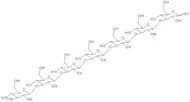
CAS:Ex algal/bacterial polysaccharides-value in b1-3 glucanase assays & diagnosticsFórmula:C42H72O36Pureza:Min. 95%Cor e Forma:PowderPeso molecular:1,153 g/molD-Glycero-D-manno-heptose
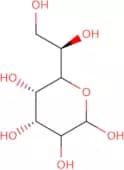
CAS:A seven carbon sugarFórmula:C7H14O7Pureza:Min. 98 Area-%Cor e Forma:Colorless Clear LiquidPeso molecular:210.2 g/mol2-Acetamido-2-deoxy-alpha-D-galactopyranosyl L-threonine hydrochloride
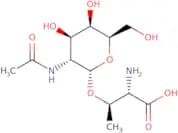
CAS:2-Acetamido-2-deoxy-alpha- D-galactopyranosyl L-threonine is a synthetic sugar. It has a CAS number of 67315-18-8 and a molecular weight of 289.05 g/mol. This sugar is synthesized by the Click modification, fluorination, glycosylation, and methylation methods. The synthesis can be modified to produce 2-acetamido-2,3,4,5,-tetra deoxygalactose or 2 acetamido 4,6 deoxy galactose. This sugar also has saccharide properties as it is classified as an oligosaccharide or monosaccharide.
Fórmula:C12H22N2O8•HClPureza:Min. 95%Cor e Forma:PowderPeso molecular:358.77 g/molβ-D-Galactopyranosyl-(1-4)-β-D-galactopyranosyl-(1-4)-D-galactose
CAS:b-D-Galactopyranosyl-(1-4)-b-D-galactopyranosyl-(1-4)-D-galactose is a fluorinated saccharide that contains three fluorine atoms. The chemical formula for this product is C8H12F3O11. It is a white powder and the molecular weight of the compound is 514.06 g/mol. b-D-Galactopyranosyl-(1-4)-b-D-galactopyranosyl-(1-4)-D-galactose can be custom synthesized to meet your desired specifications, such as modification, purity, and other criteria. This product has been shown to be useful in glycosylation reactions and click chemistry applications.
Fórmula:C18H32O16Pureza:Min. 95%Peso molecular:504.44 g/mol1,3-Di-O-acetyl-5-O-benzoyl-2-deoxy-D-xylofuranose
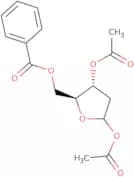
CAS:1,3-Di-O-acetyl-5-O-benzoyl-2-deoxy-D-xylofuranose is a complex carbohydrate that has been custom synthesized. It is a monosaccharide with a methyl group at the C1 position and an acetyl group at the C3 position. The chemical formula for 1,3 Di-O-acetyl 5 O benzoyl 2 deoxy D xylofuranose is C11H21NO6. The molecular weight of 1,3 Di O acetyl 5 O benzoyl 2 deoxy D xylofuranose is 277.27 g/mol. 1,3 Di O acetyl 5 O benzoyl 2 deoxy D xylofuranose may have glycosidic bonds and be used in the synthesis of other carbohydrates or as a reagent in organic chemistry reactions.Fórmula:C16H18O7Pureza:Min. 95%Peso molecular:322.31 g/molD-Idonic acid-1,4-lactone
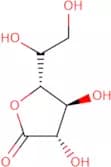
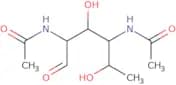
CAS:D-Idonic acid-1,4-lactone is a modification of a carbohydrate which can be custom synthesized. The product is an oligosaccharide that has a high purity and is synthetically produced. This product is composed of monosaccharides, methylation, glycosylation, polysaccharides and sugar. It also contains fluorination and saccharide.Fórmula:C6H10O6Pureza:Min. 95%Cor e Forma:Colorless PowderPeso molecular:178.14 g/mol2,4-Bis(acetylamino)-2,4,6-trideoxy-D-galactose
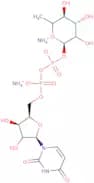
CAS:2,4-Bis(acetylamino)-2,4,6-trideoxy-D-galactose (BTDG) is a nitro derivative of L-threonine that has been derivatized with an acetyl group and a molecule of 2,4,6-trideoxygalactose. BTDG has been shown to be safe in clinical trials for vaccine development against life-threatening diseases. It is the first glycopolymer approved by the FDA for clinical use in humans. This drug has been shown to increase the antibody response and improve protection against influenza virus infection. BTDG also inhibits bacterial replication by blocking protein synthesis in some bacteria and inhibiting glycolysis in others.Fórmula:C10H18N2O5Pureza:Min. 95%Cor e Forma:PowderPeso molecular:246.26 g/molUDP-b-L-fucose diammonium salt
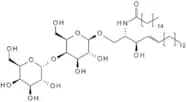
Synthetically produced sugar nucleotideFórmula:C15H22N2O16P2·N2H8Pureza:Min. 95%Peso molecular:584.37 g/molDigalactosylceramide
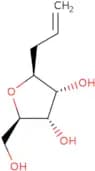
CAS:Digalactosylceramide is a bioactive glycosphingolipid, which is derived from the cellular membranes of certain bacteria and plants. This compound plays a significant role in modulating immune responses through its interaction with the immune system. Its mode of action involves binding to specific receptors on immune cells, influencing cell signaling pathways that are crucial for the regulation of the immune response, including the modulation of cytokine production and immune cell activation.Fórmula:C46H87NO13Pureza:Min. 95%Cor e Forma:PowderPeso molecular:862.18 g/mol4,7-Anhydro-1,2,3-trideoxy-D-allo-oct-1-enitol
CAS:4,7-Anhydro-1,2,3-trideoxy-D-allo-oct-1-enitol is a modified sugar that has been synthesized for use in glycosylation reactions. It is a high purity product with no detectable impurities. Click modification of this product has been shown to be useful for glycosylation reactions. 4,7-Anhydro-1,2,3-trideoxy-D-allo-oct-1-enitol is also fluorinated and glycosylated. This product can be used in the synthesis of oligosaccharides and monosaccharides.Fórmula:C8H14O4Pureza:Min. 95%Peso molecular:174.19 g/molD-Glucose ethylenedithioacetal
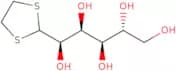
CAS:D-Glucose ethylenedithioacetal is a biological agent. It is a white to off-white crystalline powder that has a molecular weight of 204.3. D-Glucose ethylenedithioacetal is soluble in water and ethanol, but not in ether or chloroform. It is stable in air, but will react with alkali to form the corresponding salt of D-glucose.Fórmula:C8H16O5S2Pureza:Min. 95%Peso molecular:256.34 g/mol2-Acetamido-6-O-(2-acetamido-2-deoxy-b-D-galactopyranosyl)-2-deoxy-3-O-(b-D-galactopyranosyl)-D-glucopyranose
A GalNAc trisaccharidePureza:Min. 95%CMP-N-acetylneuraminic acid 9-sp-biotin
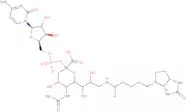
CMP-N-acetylneuraminic acid 9-sp-biotin is a biotinylated sugar nucleotidePureza:Min. 95%Chondroitin disaccharide di-triS tetrasodium salt
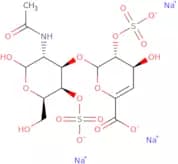
Chondroitin disaccharide di-triS tetrasodium salt is a synthetic, custom synthesis, and a glycosylation of chondroitin disaccharide. It is an oligosaccharide that has been modified with fluorination, monosaccharide, methylation, and click modification. The CAS No. for this compound isFórmula:C14H17NNa4O20S3Pureza:Min. 95%Cor e Forma:PowderPeso molecular:707.44 g/molChondroitin disaccharide di-diSB trisodium salt
CAS:Chondroitin disaccharide di-diSB trisodium salt is a chondroitin sulfate binding agent that can be used in the diagnosis of subcutaneous tumors. It binds to the chondroitin sulfate component of proteoglycans and stains these proteins under light microscopy. This agent can also be used to detect monoclonal antibodies that bind to the chondroitin sulfate component of proteoglycans. The detection of this agent may be done by enzyme-linked immunosorbent assay or fluorescence microscopy.Fórmula:C14H18NNa3O17S2Pureza:Min. 95%Cor e Forma:PowderPeso molecular:605.39 g/mol6-Deoxy-L-glucose
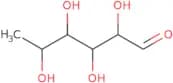
CAS:6-Deoxy-L-glucose (6DG) is a glucose analogue that has been extensively studied for its effect on the metabolism of other sugars. It is an inhibitor of glycolysis and the pentose phosphate pathway in both wild-type and mutant strains of yeast, as well as in mammalian cells. 6DG inhibits the activity of enzymes such as gamma-aminobutyric acid (GABA) transaminase and phosphoglycerate kinase, which are involved in the synthesis of GABA and glycogen respectively. 6DG also inhibits the transport of sugar molecules into cells. The hydrochloric acid (HCl) concentration required to activate 6DG varies with pH, with a pKa near 7.5 at physiological pH. 6DG is activated by HCl when the pH falls below this value. The hydroxyl group on 6DG can react with HCl to form a chlorohydrin intermediate, which reacts further to yieldFórmula:C6H12O5Pureza:Min. 95%Peso molecular:164.16 g/molDihydrozeatin-7-glucoside
CAS:Dihydrozeatin-7-glucoside (DZG) is a plant hormone that belongs to the group of abscisic acid. It is biosynthesized from zeatin, an intermediate in the synthesis of the plant hormone gibberellin. DZG has been shown to regulate water loss in plants and plays a role in the regulation of photosynthesis and seed germination. The uptake of DZG by plant cells is complex and can be influenced by both physiological and environmental factors. It can be conjugated with small molecules such as typhasterol, which is found in tobacco leaves, or tabacum l., which is found in certain species of tobacco plants. Dihydrozeatin-7-glucoside also interacts with other hormones such as 24-epibrassinolide and regulates various biochemical processes such as protein synthesis and cell growth.Fórmula:C16H25N5O6Pureza:Min. 95%Peso molecular:383.4 g/mol