Nucleotídeos
Os nucleotídeos são compostos orgânicos que servem como building blocks dos ácidos nucleicos, essenciais para a formação de DNA e RNA. Cada nucleotídeo é composto por uma base nitrogenada, uma molécula de açúcar e um ou mais grupos fosfato. Esses nucleotídeos se unem para formar longas cadeias, criando o material genético que carrega e transmite informações genéticas em todos os organismos vivos. Nesta seção, você encontrará uma ampla variedade de nucleotídeos cruciais para pesquisas em genética, biologia molecular e bioquímica. Eles são fundamentais para estudar processos genéticos, sintetizar ácidos nucleicos e desenvolver ferramentas diagnósticas e terapêuticas. Na CymitQuimica, oferecemos nucleotídeos de alta qualidade para apoiar suas pesquisas científicas e aplicações, garantindo precisão e confiabilidade em seus experimentos.
Subcategorias de "Nucleotídeos"
Foram encontrados 2637 produtos de "Nucleotídeos"
Ordenar por
Pureza (%)
0
100
|
0
|
50
|
90
|
95
|
100
N4-Benzoylcytidine
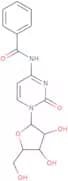
CAS:N4-Benzoylcytidine is a nucleoside that is used as part of the synthesis of the antiviral drug acyclovir. It is synthesized by reacting uridine with benzoyl chloride in a solid-phase synthesis. N4-Benzoylcytidine has shown to inhibit the growth of virus type-1 and other viruses, including those that cause herpes simplex and varicella zoster. This nucleoside also inhibits epidermal growth factor (EGF) and is a hybridization probe for human immunodeficiency virus (HIV). The benzoate group on this compound reacts with hydroxyl groups on proteins, which may be why it has been shown to stimulate epidermal growth in mammalian cells.Fórmula:C16H17N3O6Pureza:Min. 98 Area-%Cor e Forma:White PowderPeso molecular:347.32 g/mol5'-Ethylcarboxamidoadenosine
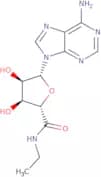
CAS:5'-Ethylcarboxamidoadenosine (5-ECA) is an adenosine receptor antagonist that is used as a radioligand to study the binding of adenosine and other nucleotides to their receptors. 5-ECA binds to the A3 receptor, which is a member of the G protein-coupled receptor family. This compound also inhibits platelet aggregation and has been shown to have anti-inflammatory effects in mice with colon cancer. 5-ECA was found to inhibit tumor growth in a mouse model system by suppressing IL-2 production and reducing levels of PGE2, an effect that may be due to inhibition of cyclase activity. 5-ECA can be used in vitro for studies on pluripotent cells because it does not affect their ability to differentiate.Fórmula:C12H16N6O4Pureza:Min. 95%Cor e Forma:White PowderPeso molecular:308.29 g/mol5-Iodo-2'-O-methyluridine
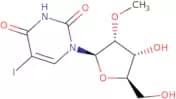
CAS:5-Iodo-2'-O-methyluridine is a novel antiviral drug that inhibits replication of DNA and RNA viruses. It is chemically synthesized from 2' deoxyuridine monophosphate, which is modified to create the 5-iodo derivative. The modification at the 5th position of the uracil ring prevents the incorporation of methylation into DNA and RNA, which can lead to cancerous growths. This compound has been shown to be an excellent activator for DNA synthesis in vitro. It has also been shown to have anticancer properties in vitro and in vivo.Fórmula:C10H13IN2O6Pureza:Min. 95%Cor e Forma:PowderPeso molecular:384.12 g/molAcetyl coenzyme A trilithium
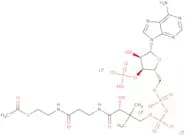
CAS:Acetyl coenzyme A trilithium salt (ACAT) is a prodrug that is metabolized in vivo to the active form, acetyl coenzyme A. Acetyl coenzyme A has been shown to inhibit the growth of human carcinoma cells and some typhimurium strains. It binds to cytochrome P450, which is involved in the oxidation of acetate and other organic substrates. ACAT has also been shown to be effective against squamous cell carcinoma by inhibiting the production of reactive oxygen species (ROS) in these cells. The anticancer activity of ACAT may be due to its ability to inhibit the conversion of amines into heterocyclic amines, which are known carcinogens.Fórmula:C23H35Li3N7O17P3SPureza:Min. 95%Cor e Forma:White PowderPeso molecular:827.37 g/mol5'-Deoxy-5'-(methylthio)adenosine
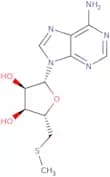
CAS:5'-Deoxy-5'-(methylthio)adenosine is a nucleoside that has been shown to inhibit the growth of bowel cancer cells. 5'-Deoxy-5'-(methylthio)adenosine blocks the synthesis of DNA and RNA by inhibiting the action of enzymes involved in DNA metabolism. It also inhibits methionine synthase and phosphorylase, which are involved in protein synthesis. This compound has been shown to be effective in treating cancer tissues due to its ability to inhibit polymerase chain reactions and prevent the formation of cancerous cells.Fórmula:C11H15N5O3SPureza:(Hplc-Ms) Min. 98 Area-%Cor e Forma:White PowderPeso molecular:297.34 g/mol2-Iodoadenosine
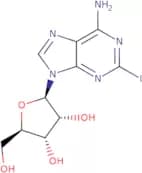
CAS:2-Iodoadenosine is a chemical compound that is produced from the oxidation of uridine. It is used in the synthesis of peptides, which are important for biological processes like signal transduction and cell growth. 2-Iodoadenosine can be made by coupling other molecules to an adenosine molecule. This process involves a cross-coupling reaction with palladium catalysts or hydroxylation reactions with sodium borohydride. The resulting product has been shown to have anticancer and anti-microbial activities against protozoan parasites and cyclic peptide structures.Fórmula:C10H12IN5O4Pureza:Min. 97 Area-%Cor e Forma:PowderPeso molecular:393.14 g/mol3'-Amino-3'-deoxycytidine
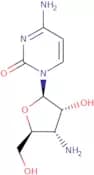
CAS:It is an antiviral agent that inhibits the replication of RNA viruses by acting as a chain terminator during RNA synthesis. It is also a valuable research tool for studying viral replication mechanisms and is being explored for potential anticancer properties.Fórmula:C9H14N4O4Pureza:Min. 95%Cor e Forma:PowderPeso molecular:242.23 g/mol3'-O-Acetylthymidine
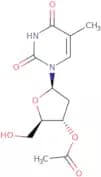
CAS:3'-O-Acetylthymidine is a dinucleoside analogue of thymidine. It has been used as a model for human immunodeficiency virus (HIV) and has been shown to be resistant to HIV infection in vitro. 3'-O-Acetylthymidine inhibits the synthesis of protein by binding to the ribosomal RNA of the host cell, preventing the formation of an aminoacyl-tRNA synthetase complex with tRNA. This prevents the incorporation of amino acids into proteins, leading to inhibition of protein synthesis and cell death. 3'-O-Acetylthymidine also inhibits HIV replication by competing with deoxycytidine triphosphate for incorporation into DNA, preventing the synthesis of viral DNA. 3'-O-Acetylthymidine is hydrolyzed by esterases or glucuronidases, oxidized by cytochrome P450 enzymes, reduced by glutathione reductaseFórmula:C12H16N2O6Pureza:Min. 98 Area-%Cor e Forma:White PowderPeso molecular:284.27 g/molN4-Methyl-2'-O-methyl-cytidine
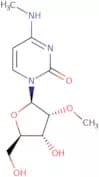
CAS:N4-Methyl-2'-O-methyl-cytidine is a nucleoside analog that is used as an antibiotic. The ribosomal RNA in prokaryotes has been found to be sensitive to this drug, which inhibits protein synthesis by reversibly binding to the 50S subunit of the ribosome and inhibiting translocation. N4-Methyl-2'-O-methyl-cytidine also binds to the ribonucleoprotein in eukaryotic cells, blocking translation of mRNA into proteins. N4-Methyl-2'-O-methyl-cytidine is effective against Gram positive bacteria, such as Staphylococcus aureus and Clostridium perfringens, while being inactive against Gram negative bacteria. This drug has a molecular weight of 197 and can be broken down into low molecular weight fragments or high molecular weight fragments.Fórmula:C11H17N3O5Pureza:Min. 95%Cor e Forma:White PowderPeso molecular:271.27 g/mol3'-Azido-3'-deoxycytidine
CAS:3'-Azido-3'-deoxycytidine is a nucleoside analogue that is used in research. It is an analog of cytosine, with an azido group at the 3' position. 3'-Azido-3'-deoxycytidine has been shown to be effective against HIV-1 and HIV-2, although it has not been approved for use in humans. Research into the effects of this drug has demonstrated that it inhibits both DNA and RNA synthesis by interacting with nucleic acid polymerases. This leads to cell death by inhibiting the production of proteins vital for cell division.Fórmula:C9H12N6O4Pureza:Min. 95%Peso molecular:268.23 g/mol6-Azauridine-5'-monophosphate
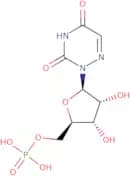
CAS:6-Azauridine-5'-monophosphate (6-AU) is a compound that is synthesized by the enzyme Azoarcus sp. 6-AU synthetase and is a precursor to azauridine, an intermediate in the biosynthesis of purines. It has been shown to inhibit bacterial growth in tissue culture and depression in mice. The kinetic data were obtained using a titration calorimetry assay at 25 degrees Celsius using subtilis. This drug also has convulsant effects on animals and can cause orotic aciduria when administered orally in high doses. 6-AU has been shown to be effective against cancer cells as well as infectious diseases such as tuberculosis and malaria.
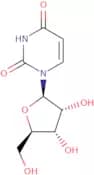
Fórmula:C8H12N3O9PPureza:Min. 95%Cor e Forma:PowderPeso molecular:325.17 g/molUridine
CAS:Glycosylated pyrimidine analog; RNA componentFórmula:C9H12N2O6Pureza:Min. 98 Area-%Cor e Forma:White PowderPeso molecular:244.2 g/mol3'-O-(t-Butyldimethylsilyl)-2'-O-(2-methoxyethyl)-5-methyluridine
CAS:3'-O-(t-Butyldimethylsilyl)-2'-O-(2-methoxyethyl)-5-methyluridine is a novel, modified monophosphate nucleoside that can be activated to the corresponding diphosphate by adenosine kinase. The antiviral activity of 3'-O-(t-Butyldimethylsilyl)-2'-O-(2-methoxyethyl)-5-methyluridine has been demonstrated in vitro and in vivo against various viruses including HIV. In addition, this nucleoside phosphoramidite is used for synthesizing DNA and RNA. This product is CAS No. 1221967-92-5, Phosphoramidites, High purity and has a high quality.Fórmula:C19H34N2O7SiPureza:Min. 95%Cor e Forma:PowderPeso molecular:430.57 g/molTenofovir disoproxil
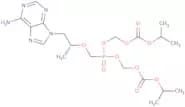
CAS:Anti-viral; reverse transcriptase inhibitor
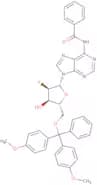
Fórmula:C19H30N5O10PPureza:Min. 95%Cor e Forma:White PowderPeso molecular:519.44 g/molN6-Benzoyl-2'-deoxy-5'-O-DMT-2'-fluoroadenosine
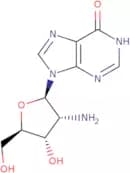
CAS:N6-Benzoyl-2'-deoxy-5'-O-DMT-2'-fluoroadenosine is a sulfur containing compound that is an antibiotic. It has been shown to inhibit the growth of bacteria by binding to their ribosomes, which prevents protein synthesis and cell division. N6-Benzoyl-2'-deoxy-5'-O-DMT-2'-fluoroadenosine also inhibits chemotaxis in roseobacters, which is the movement of cells or organisms in response to certain factors. This antibiotic may be useful for preventing symbiosis between marine bacteria and other organisms, as it inhibits the motility of these bacteria and their cycling. N6-Benzoyl-2'-deoxy-5'-O-DMT-2'-fluoroadenosine also has a genetic determinant that regulates enteric bacteria and clades of ocean bacteria.Fórmula:C38H34FN5O6Pureza:Min. 95%Cor e Forma:White PowderPeso molecular:675.72 g/mol2'-Amino-2'-deoxyinosine
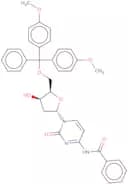
CAS:2'-Amino-2'-deoxyinosine is a modified nucleoside, based on inosine. This compound has a 2'-amino substitution instead of a 2'-hydroxyl group, which has the potential to make the nucleoside more resistant to enzymatic degradation and enhance or alter base-pairing properties.Fórmula:C10H13N5O4Pureza:Min. 95%Cor e Forma:PowderPeso molecular:267.24 g/molN4-Benzoyl-2'-deoxy-5'-O-DMT-a-cytidine
CAS:N4-Benzoyl-2'-deoxy-5'-O-DMT-a-cytidine is a modified nucleoside that is synthesized by the reaction of the 2'-deoxyribonucleoside with 4-benzoylchloroformate and dimethoxytrityl. It has antiviral activity against a variety of DNA viruses, including herpes simplex virus type 1 (HSV), herpes simplex virus type 2 (HSV), varicella zoster virus, human cytomegalovirus, Epstein Barr virus, and human immunodeficiency virus. N4-Benzoyl-2'-deoxy-5'-O-DMT-a-cytidine also has anticancer properties and may be used for the treatment of melanoma. This compound shows good results in animal models and clinical trials.Fórmula:C37H35N3O7Pureza:Min. 95%Cor e Forma:PowderPeso molecular:633.71 g/molCytidine 3'(2’)-monophosphate
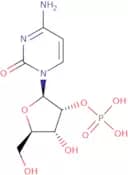
CAS:Cytidine 3’(2’)-monophosphate (CMP) is a biochemical substance that is found in the nucleic acids of cells. It is an equilibrative nucleoside and a precursor to the biosynthesis of uridine and cytidine. CMP is also an intermediate in the synthesis of the coenzyme tetrahydrofolate, which has been shown to inhibit the growth of antibiotic-resistant strains such as Escherichia coli, Pseudomonas aeruginosa, Klebsiella pneumoniae, Staphylococcus aureus, and Enterobacter cloacae. Cytidine 3’(2’)-monophosphate can be converted into cytidine by phosphorylation with ATP or by methylation with S-adenosylmethionine. Cytidine 3’(2’)-monophosphate has been shown to have polymerase chain reaction activityFórmula:C9H14N3O8PPureza:Min. 95%Cor e Forma:White PowderPeso molecular:323.2 g/mol2'-C-Methylguanosine
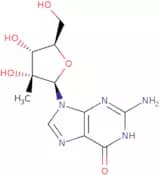
CAS:2'-C-Methylguanosine is a synthetic nucleoside analog of guanosine, modified at the 2'-carbon of the ribose sugar with a methyl group. This modification changes the molecule's biological behavior, making it potential useful in antiviral research and biochemical studies, especially those involving RNA synthesis.Fórmula:C11H15N5O5Pureza:Min. 95%Cor e Forma:PowderPeso molecular:297.27 g/mol5'-O-Benzoyl-2'-deoxy-N2-isobutyrylguanosine
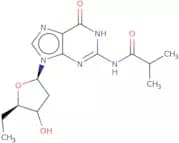
CAS:5'-O-Benzoyl-2'-deoxy-N2-isobutyrylguanosine is a novel nucleoside that is synthesized by the modification of 5'-O-benzoyl-2'-deoxyguanosine with 2',3' -diisobutyrylaminopropylidene. It has shown anticancer, antiviral, and antiretroviral properties in vitro. In addition, this compound has been shown to inhibit the growth of human leukemia cells in vivo in a dose dependent manner. The structure of 5'-O-benzoyl-2'-deoxy-N2-isobutyrylguanosine is similar to that of the natural nucleosides adenosine and guanosine.Fórmula:C21H23N5O6Pureza:Min. 97 Area-%Cor e Forma:Off-White PowderPeso molecular:441.45 g/mol