Nucleotídeos
Subcategorias de "Nucleotídeos"
Foram encontrados 2637 produtos de "Nucleotídeos"
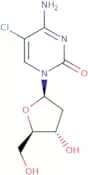
5-Chloro-2'-deoxycytidine
CAS:5-Chloro-2'-deoxycytidine (5-Cl-dC) is a nucleoside analog that inhibits DNA synthesis by blocking the action of thymidylate synthase. It can be used in animal models to study bowel diseases, such as ulcerative colitis and Crohn's disease. 5-Cl-dC has been shown to be effective in treating the effects of radiation and chemical toxicity in HL60 cells, a type of human leukemia cell line. 5-Cl-dC has also been shown to enhance the cytotoxicity of eosinophil peroxidase, which is an enzyme that may be involved in the pathogenesis of asthma. This drug is currently being evaluated for its safety and efficacy in clinical trials involving patients with myelodysplastic syndrome or acute myeloid leukemia who are at risk for developing leukemia.
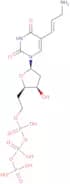
Fórmula:C9H12CIN3O4Pureza:Min. 95%Cor e Forma:PowderPeso molecular:261.67 g/mol5-Aminoallyl 2'-deoxyuridine 5'-triphosphate lithium salt - 100mM aqueous solution
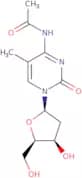
CAS:5-Aminoallyl 2'-deoxyuridine 5'-triphosphate lithium salt - 100mM aqueous solution is a novel nucleoside analog with antiviral and anticancer activity. It has been shown to inhibit the replication of HIV-1 in human peripheral blood mononuclear cells and to inhibit tumor growth in mice. This drug also inhibits DNA synthesis, which may be due to its ability to inhibit ribonucleotide reductase and deoxynucleotide reductase, enzymes that are necessary for DNA synthesis.Fórmula:C12H20N3O14P3·xLiPureza:Min. 95%Cor e Forma:Colorless PowderPeso molecular:523.22 g/molN4-Acetyl-2'-deoxy-5-methylcytidine
N4-Acetyl-2'-deoxy-5-methylcytidine is a novel nucleoside analog of cytidine. It has been shown to be an activator of the immune system, and has antiviral and anticancer properties. This synthetic nucleoside is phosphorylated by kinases in cells to form N4-acetyl-2'-deoxy-5'-methyluridine monophosphate. The phosphate group can be removed by phosphatases in cells to yield N4-acetyl-2'-deoxycytidine, which is a precursor for DNA synthesis.
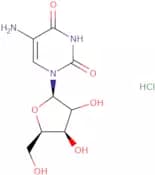
Fórmula:C12H17N3O5Pureza:Min. 95%Cor e Forma:PowderPeso molecular:283.28 g/mol5-Aminouridine hydrochloride
CAS:5-Aminouridine hydrochloride is a novel nucleoside that is an inhibitor of RNA polymerase. It has been shown to be active against cancer cells, and is also effective in the treatment of viral infections such as HIV and hepatitis B. 5-Aminouridine hydrochloride is synthesized by reacting uracil with ammonia and hydrogen chloride. The product can be used as a building block for monophosphate or diphosphate analogs, which are important components in the synthesis of DNA and RNA. This product is available at high purity with low impurity levels.Fórmula:C9H14ClN3O6Pureza:(%) Min. 95%Cor e Forma:PowderPeso molecular:295.68 g/mol2'-O-tert-Butyldimethylsilyl-5'-O-DMT-1-methylguanosine 3'-CE phosphoramidite
CAS:2'-O-tert-Butyldimethylsilyl-5'-O-DMT-1-methylguanosine 3'-CE phosphoramidite is a synthetic, antiviral monophosphate nucleoside. It is an activator that increases the activity of other nucleosides and can be used in DNA synthesis by incorporation into DNA molecules. 2'-O-tert-Butyldimethylsilyl-5'-O-DMT-1-methylguanosine 3'-CE phosphoramidite has been shown to be effective against Hepatitis C virus, Human Immunodeficiency Virus 1 (HIV), and Herpes Simplex Virus 1.Fórmula:C47H64N7O8PSiPureza:Min. 95%Cor e Forma:PowderPeso molecular:914.11 g/mol5'-Amino-5'-deoxyguanosine
CAS:5'-Amino-5'-deoxyguanosine (5-ADG) is an intermediate in the de novo synthesis of guanine nucleotides. It can be synthesized from 5-aminoimidazole ribonucleotide and guanosine monophosphate (GMP). 5-ADG is a substrate for the enzyme GTP cyclohydrolase, which converts it to GMP. This intermediate can also be formed by the action of phosphoryl chloride on 5-aminoimidazole ribonucleotide. The reaction of 5-ADG with malonic acid leads to the formation of inosinic acid, which has been postulated to be a precursor of purines. This conversion is catalyzed by adenylosuccinate synthetase and the enzyme adenylosuccinase.Fórmula:C10H14N6O4Pureza:Min. 95 Area-%Cor e Forma:PowderPeso molecular:282.26 g/molN6,2'-O-Dibutyryladenosine-3',5'-cyclic monophosphate sodium
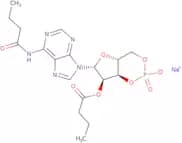
CAS:N6,2'-O-Dibutyryladenosine-3',5'-cyclic monophosphate sodium (DB-cAMP) is a cyclic nucleoside that has been shown to promote dopaminergic neuron differentiation. It is commonly used in research studies involving the differentiation of induced pluripotent stem cell (iPSC)-derived neurons. This compound acts by activating intracellular signaling pathways that are involved in neuronal development and function. Its ability to enhance dopaminergic neuron differentiation makes it a valuable tool for researchers studying neurodegenerative diseases and exploring potential treatments.Fórmula:C18H23N5O8PNaPureza:Min. 95 Area-%Cor e Forma:Off-White PowderPeso molecular:491.38 g/mol2'-Deoxy-5'-O-DMT-2'-fluoro-N2-isobutyrylguanosine
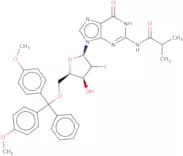
CAS:2'-Deoxy-5'-O-DMT-2'-fluoro-N2-isobutyrylguanosine is a synthetic nucleoside. It is an activator for DNA synthesis and has anticancer, antiviral and antifungal properties. This product can be used as a reagent in the synthesis of DNA or RNA. This compound also has high purity and high quality.Fórmula:C35H36FN5O7Pureza:Min. 95%Cor e Forma:Off-White PowderPeso molecular:657.7 g/molZidovudine
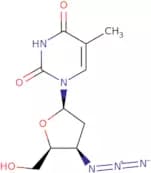
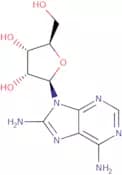
CAS:Inhibitor of reverse transcriptaseFórmula:C10H13N5O4Pureza:Min. 95%Cor e Forma:Off-White PowderPeso molecular:267.24 g/mol8-Aminoadenosine
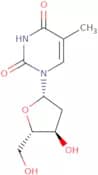
CAS:8-Aminoadenosine can be used to study the mitochondrial membrane potential, a critical cellular function in which ATP levels are maintained by oxidative phosphorylation. 8-Aminoadenosine is one of the few drugs that have been shown to increase ATP levels in cells. It does this by increasing the permeability of mitochondria membranes and the rate of electron transport from complex I to complex II. The reaction mechanism is thought to involve an intramolecular hydrogen transfer from NADH to 8-aminoadenosine, forming an unstable intermediate that undergoes a conformational change that enables it to react with oxygen. 8-Aminoadenosine has been shown as an effective treatment for certain autoimmune diseases and resistant breast cancer. It also has anti-inflammatory effects, as well as receptor activity against HIV infection and Toll-like receptors.Fórmula:C10H14N6O4Pureza:Min. 95%Cor e Forma:PowderPeso molecular:282.26 g/molL-Thymidine
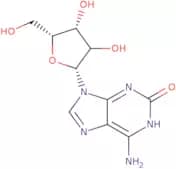
CAS:L-Thymidine is an antiviral drug that is used in the treatment of chronic hepatitis. It has been shown to be active against a range of viruses, including HIV, HSV, and HBV. L-Thymidine can also be used to treat patients with cancer as an anti-cancer agent. L-Thymidine is a prodrug that is converted into thymidine triphosphate (TTP), which inhibits viral DNA polymerase by competitive inhibition. The antiviral activity of L-Thymidine may be due to its ability to inhibit the synthesis of viral proteins required for viral replication by interfering with the protein production process or by inhibiting the formation of dsDNA during reverse transcription.Fórmula:C10H14N2O5Pureza:Min. 95%Cor e Forma:PowderPeso molecular:242.23 g/mol9-(b-D-Arabinofuranosyl)isoguanine
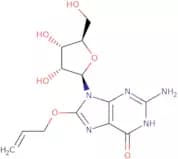
CAS:9-(b-D-Arabinofuranosyl)isoguanine is a modified nucleoside that has antiviral activity. It is synthesized by substituting the 2'-hydroxyl group of deoxyribose with an arabinofuranose, which can be phosphorylated to form 9-(b-D-arabinofuranosyl)isoguanine 5'-monophosphate. This novel antiviral agent inhibits the synthesis of viral DNA and RNA, and is effective against a wide range of viruses in vitro. The drug was shown to have anticancer activities in animal models and has been patented for use as a chemotherapeutic agent against leukemia, lymphoma, and other cancers.Fórmula:C10H13N5O5Pureza:Min. 95%Cor e Forma:White PowderPeso molecular:283.25 g/mol8-(Allyloxy)guanosine
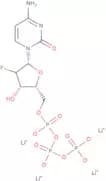
CAS:8-(Allyloxy)guanosine is a nucleoside analog. It is an antiviral and anticancer drug that inhibits DNA synthesis by inhibiting the enzyme DNA polymerase. 8-AOG also inhibits the expression of genes involved in inflammatory responses, such as lipoxygenase, cyclooxygenase 2, and 5-lipoxygenase. This compound has been shown to be effective against herpes simplex virus types 1 and 2, cytomegalovirus, Epstein-Barr virus, adenovirus type 3, and human immunodeficiency virus type 1 (HIV-1). 8-(Allyloxy)guanosine can be used to inhibit the tumor growth of human cancer cells in vitro. 8-(Allyloxy)guanosine has been shown to have a low toxicity to healthy cells in vitro and when administered in vivo.Fórmula:C13H17N5O6Pureza:Min. 95%Cor e Forma:PowderPeso molecular:339.3 g/mol2'-Deoxy-2'-fluorocytidine-5'-triphosphate tetralithium
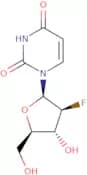
CAS:2'-Deoxy-2'-fluorocytidine-5'-triphosphate tetralithium is a modified nucleoside analog where the base is cytosine, the sugar is deoxyribose with a fluoro modification at the 2' position, and the molecule is phosphorylated at the 5' position with a triphosphate group.Fórmula:C9H11FLi4N3O13P3Pureza:Min. 95%Cor e Forma:White Off-White PowderPeso molecular:508.88 g/mol1-(2'-Deoxy-2'-fluoro-β-D-arabinofuranosyl)uracil
CAS:Antineoplastic prodrugFórmula:C9H11FN2O5Pureza:Min. 95%Cor e Forma:PowderPeso molecular:246.2 g/mol3'-O-Benzoyl-2'-deoxy-N2-isobutyrylguanosine
CAS:3'-O-Benzoyl-2'-deoxy-N2-isobutyrylguanosine is a new antiviral nucleoside, which has been synthesized by reacting benzoyl chloride with 2'-deoxy-N2-isobutyrylguanosine monophosphate. It is also a novel DNA and RNA phosphoramidite monomer that can be used for the synthesis of oligonucleotides and oligoribonucleotides. 3'-O-Benzoyl-2'-deoxy-N2-isobutyrylguanosine is an activator of HIV reverse transcriptase, which leads to inhibition of viral replication.Fórmula:C21H23N5O6Pureza:Min. 95%Cor e Forma:White PowderPeso molecular:441.44 g/molAdenosine-2'-monophosphate
CAS:Adenosine-2'-monophosphate is a nucleotide that contains two adenine bases. It is an important precursor in the synthesis of ATP, which is the main source of energy for cells. Adenosine-2'-monophosphate has been shown to inhibit phosphatase and lysine residues, as well as GSH-Px activities in kidney cells, leading to increased glomerular filtration rate. It also activates microglia cells and induces oxidative injury in rat brain tissue. The kinetic data for this molecule suggests that it binds to the enzyme ternary complex formation with a neutral pH optimum.
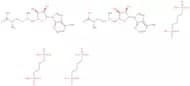
Fórmula:C10H14N5O7PPureza:Min. 95%Cor e Forma:PowderPeso molecular:347.22 g/molS-Adenosylmethione-1,4-butanedisulfonate
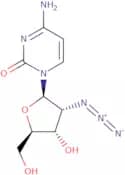
CAS:S-adenosylmethionine is a compound that is naturally produced in the body and has been shown to be involved in many biochemical reactions. It can be found as a supplement at health food stores, but also is available as a prescription for the treatment of certain liver diseases such as hepatitis. S-adenosylmethionine may have some drug transporter function and can affect the metabolism of other drugs.Fórmula:C42H74N12O28S8Pureza:Min. 95 Area-%Cor e Forma:White PowderPeso molecular:1,451.63 g/mol2'-Azido-2'-deoxycytidine
CAS:2'-Azido-2'-deoxycytidine is a nucleoside analog derived from cytidine, in which the 2'-hydroxyl group of the ribose is replaced by an azido group (–N₃), while the cytosine base and remaining sugar structure are preserved. This substitution imparts the molecule with bioorthogonal reactivity, enabling its use in chemical biology applications such as nucleic acid labeling via azide-alkyne "click" chemistry. The azido group also sterically and electronically alters sugar conformation and enzymatic recognition, which can affect its incorporation into DNA or RNA by polymerases. Consequently, 2'-azido-2'-deoxycytidine is a useful research tool.
Fórmula:C9H12N6O4Pureza:Min. 95 Area-%Cor e Forma:Slightly Yellow PowderPeso molecular:268.2 g/molGuanosine 5'-triphosphate disodium salt
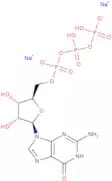
CAS:Guanosine 5'-triphosphate disodium salt is a nucleotide that is involved in energy metabolism and intracellular Ca2+ levels. It also has been shown to be an important regulator of guanine nucleotide-binding, enzyme activities, and receptor activity. This compound is a substrate for the polymerase chain reaction, which can be used to amplify DNA sequences. Guanosine 5'-triphosphate disodium salt has been shown to inhibit the growth of bacterial cells by binding to the antibiotic thiostrepton. The inhibition of bacterial growth is due to the prevention of antibiotic binding to bacterial ribosomes.Fórmula:C10H14N5O14P3Na2Pureza:Min. 85 Area-%Cor e Forma:White Off-White PowderPeso molecular:567.14 g/mol