Nucleotídeos
Subcategorias de "Nucleotídeos"
Foram encontrados 2636 produtos de "Nucleotídeos"
4-Chloro-5-iodo-pyrrolo[2,3-d]pyriMidine-7-carboxylic acid tert-butyl ester
CAS:Focuses is a chemical compound that does not have any known commercial or industrial uses.Pureza:Min. 95%4'-α-C-Methylcytidine
CAS:4'-a-C-Methylcytidine is a nucleoside that is synthesized from 4'-a-C-methyluridine. It has antiviral and anticancer properties, and has been shown to be a potent activator of the immune system. The modified nucleosides in this compound are thought to be less toxic than other cytotoxic agents. 4'-a-C-Methylcytidine is also used as a building block for the synthesis of DNA, RNA and phosphoramidites.Pureza:Min. 95%Cor e Forma:PowderPeso molecular:257.24 g/mol2-Fluoroadenosine
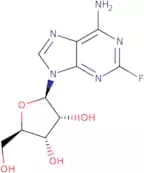
CAS:2-Fluoroadenosine is a nucleoside that has shown high resistance to the enzyme cyclase. This property may be due to its structural and conformational properties, which are different from those of adenosine. 2-Fluoroadenosine has been shown to inhibit the synthesis of ATP in ventricular myocardium and fat cells, as well as increase levels of adenylate kinase in blood. It has also been shown to have potential as a drug target for autoimmune diseases, such as multiple sclerosis. 2-Fluoroadenosine can be used for biochemical and pharmacokinetic studies because it is rapidly metabolized by the liver and excreted in urine.
2-Fluoroadenosine can also be used to measure changes in the ratio of adenylate kinase:adenylate kinase reductase (AKAR) in blood plasma.Fórmula:C10H12FN5O4Pureza:Min. 95%Cor e Forma:White Slightly Yellow PowderPeso molecular:285.23 g/mol2'-Amino-2'-deoxycytidine
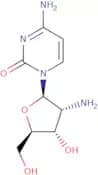
CAS:2'-Amino-2'-deoxycytidine is a modified nucleoside, based on cytidine. In this compound 2'-hydroxyl group has been replaced by an amino group, which can change hydrogen bonding patterns potentially affecting how it interacts with biomolecules.Fórmula:C9H14N4O4Pureza:Min. 95%Cor e Forma:PowderPeso molecular:242.24 g/mol2',3'-Dideoxy-2',3'-didehydro-2'-fluorocytidine
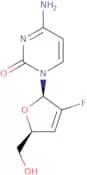
CAS:2',3'-Dideoxy-2',3'-didehydro-2'-fluorocytidine (ddC) is a nucleoside with antiviral activity. The mechanism of action is not well understood, but ddC has been shown to inhibit the proliferation of human immunodeficiency virus (HIV). It is also active against isolates of herpes simplex virus and vesicular stomatitis virus. The elimination half-life of ddC in humans is about 8 hours. In humans, this drug is eliminated by methylation and glucuronidation reactions. The pharmacokinetics of ddC have been studied in animals, including rats and rabbits, with preliminary indications that the elimination half-life may be longer than in humans.Fórmula:C9H10FN3O3Pureza:Min. 95%Peso molecular:227.19 g/molALS-8176
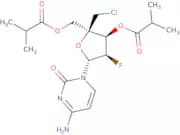
CAS:ALS-8176 is a benzimidazole compound that has been shown to be effective against both wild-type and syncytial viruses. It is also active against the hepatitis B virus, which causes fulminant hepatitis in humans and death in 30% of cases. The antiviral activity of ALS-8176 was demonstrated by its ability to inhibit viral DNA synthesis and to prevent the release of new viral particles. ALS-8176 has also been shown to have a broad spectrum of activity against paramyxoviruses, including mumps, measles, and respiratory syncytial virus (RSV). This drug can be used for the treatment of influenza A and B when administered during the early stages of infection. ALS-8176 blocks the antibody response to influenza virus infection as well as monoclonal antibody binding sites on the hemagglutinin protein, preventing fusion between infected cells.Fórmula:C18H25ClFN3O6Pureza:Min. 95%Cor e Forma:PowderPeso molecular:433.86 g/molThymidine-5'-triphosphate sodium salt - 100mM aqueous solution
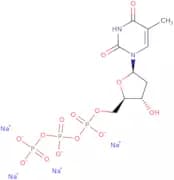
CAS:Thymidine-5'-triphosphate sodium salt is a modified nucleoside with anticancer properties. It is a high-quality, high-purity ribonucleoside that can be used as an activator for the synthesis of deoxyribonucleosides and phosphoramidites. Thymidine-5'-triphosphate sodium salt has antiviral activity, which is due to its ability to inhibit viral DNA replication and transcription. This compound also has the potential to be used in the treatment of cancer cells by inhibiting DNA synthesis and cell division.Fórmula:C10H17N2O14P3·xNaPureza:Min. 95%Cor e Forma:PowderPeso molecular:482.17 g/molCaffeoyl-coenzym A
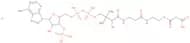
CAS:Please enquire for more information about Caffeoyl-coenzym A including the price, delivery time and more detailed product information at the technical inquiry form on this pageFórmula:C30H42N7O19P3SPureza:Min. 95%Peso molecular:929.68 g/molMalonyl coenzyme A lithium salt - 90%
CAS:Malonyl coenzyme A lithium salt - 90% is a fatty acid that is involved in the biosynthesis of fats. It is also involved in the synthesis of prostaglandins, which are hormone-like substances that have a wide variety of effects on many different tissues. Malonyl coenzyme A lithium salt - 90% may be useful for the treatment of insulin resistance and obesity due to its ability to stimulate glucose uptake by fat cells and increase insulin sensitivity. The following product details are for a supplement:Fórmula:C24H38N7O19P3S·xLiPureza:Min. 95%Peso molecular:853.58 g/mol2'-Deoxyinosine-5'-triphosphate sodium,100mM aqueous solution
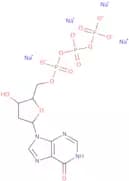
CAS:2'-Deoxyinosine-5'-triphosphate sodium (2'-dITP) is a modified nucleotide that has antiviral and anticancer properties. It has been shown to be an activator for ribonucleosides, deoxyribonucleosides, and DNA. 2'-DITP has also been shown to inhibit the growth of human breast cancer cells in vitro.
Fórmula:C10H11N4Na4O13P3Pureza:Min. 95%Cor e Forma:Clear LiquidPeso molecular:580.09 g/mol2-Phenylaminoadenosine
CAS:2-Phenylaminoadenosine (2-PA) is a potent and selective inhibitor of the P2Y receptor. 2-PA has been shown to reduce myocardial infarct size in vivo in mice, which may be due to its ability to inhibit the release of dopamine from the brain. In addition, 2-PA binds to LPS receptors on endothelial cells, reducing the production of proinflammatory cytokines and preventing platelet aggregation. 2-PA also inhibits the activation of toll-like receptor 4 (TLR4) in human monocytes, leading to reduced expression of proinflammatory cytokines and increased expression of anti-inflammatory cytokines. 2-PA is an agonist that binds with high affinity to P2Y receptors on erythrocytes. This binding results in decreased adenosine triphosphate (ATP) production by adenosine deaminase, which leads to decreased intracellular calcium levels and inhibition of neutrophFórmula:C16H18N6O4Pureza:Min. 95%Cor e Forma:PowderPeso molecular:358.35 g/mol2-Chloroadenosine
CAS:2-Chloroinosine is an adenosine receptor agonist; metabolically stable analog of adenosineFórmula:C10H12ClN5O4Pureza:Min. 95%Cor e Forma:PowderPeso molecular:301.69 g/mol2'-Deoxy-3',5'-O-(1,1,3,3-tetraisopropyl-1,3-disiloxanediyl)uridine
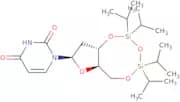
CAS:2'-Deoxy-3',5'-O-(1,1,3,3-tetraisopropyl-1,3-disiloxanediyl)uridine is a novel and synthetic nucleoside analog with antiviral activity. It inhibits the synthesis of DNA by binding to the enzyme ribonucleotide reductase. This compound has been shown to be an activator of PPARs in vitro.Fórmula:C21H38N2O6Si2Pureza:Min. 95%Peso molecular:470.72 g/mol5-Bromo-2'-deoxycytidine
CAS:5-Bromo-2'-deoxycytidine is a synthetic nucleoside analogue that is used to treat diabetic neuropathy. It is structurally similar to cytidine, and inhibits the enzyme DNA polymerase by intramolecular catalysis. This causes deamination of the 5-bromo group, which prevents further synthesis of DNA. 5-Bromo-2'-deoxycytidine has been shown to be effective in vivo in a mouse model for inflammatory bowel diseases, including colitis and eosinophilic enteritis. The drug was also found to inhibit the production of Eosinophil peroxidase from HL-60 cells in vitro.Fórmula:C9H12BrN3O4Pureza:Min. 95%Cor e Forma:Off-White PowderPeso molecular:306.11 g/molThymidine-3',5'-diphosphate disodium salt
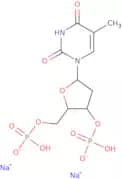
CAS:Thymidine-3',5'-diphosphate disodium salt is an antiviral and anticancer drug. It is a modified nucleoside which is synthesized from thymidine-3',5'-diphosphate and sodium bicarbonate (NaHCO3). This drug inhibits the synthesis of DNA and RNA, thereby inhibiting viral replication. Thymidine-3',5'-diphosphate disodium salt also has an antitumor effect by preventing the production of DNA in tumor cells.Fórmula:C10H14N2Na2O11P2Pureza:Min. 95%Cor e Forma:PowderPeso molecular:446.15 g/mol8-Aza-7-deaza-2'-deoxyguanosine
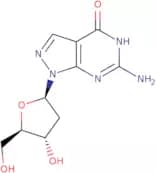
CAS:8-Aza-7-deaza-2'-deoxyguanosine is an alkynylated, cross-linked, single stranded nucleic acid. It has been shown to be effective at cross-linking and cross-linking nucleic acids. 8-Aza-7-deaza-2'-deoxyguanosine binds to the 7 deazapurine residues in DNA, forming a covalent bond between the two strands of the helix. This binding prevents the strand from unwinding and prevents the replication of DNA. The thermodynamic data for this compound shows that it is stable in both hot and cold water, which makes it a good candidate for use in research as well as in clinical settings.Fórmula:C10H13N5O4Pureza:Min. 95%Cor e Forma:PowderPeso molecular:267.24 g/mol5′-O-DMT-LNA N-Bz 5-Me cytidine
CAS:5′-O-DMT-LNA N-Bz 5-Me cytidine is a protected LNA cytidine nucleoside.Fórmula:C39H37N3O8Pureza:Min. 95%Peso molecular:675.73 g/molAdenosine 3'-monophosphate sodium
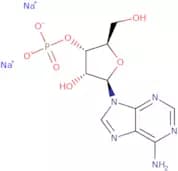
CAS:Adenosine 3'-monophosphate sodium is a nucleotide that is used as a substrate for enzymes. It has been shown to increase the enzymatic activity of papaverine, litoralis, subtilis, and histidine phosphatase. Adenosine 3'-monophosphate sodium also has protease activity, which can be activated by adding an enzyme preparation containing subtilisin and trypsin. This compound also has a pH optimum of 8.0-9.5 and is active at an alkaline pH of 9.5-10.5. The specific strain of bacteria will determine the optimal pH range for activity, with enterobacter bacterial strains having a maximum range of 6-7 and brevibacterium bacteria strains having a range of 4-6.Fórmula:C10H12N5O7PNa2Pureza:Min. 95%Cor e Forma:White To Off-White SolidPeso molecular:391.19 g/molKinetin riboside-5'-monophosphate sodium salt
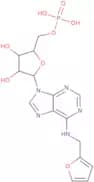
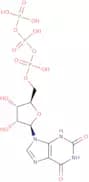
CAS:Kinetin riboside-5'-monophosphate sodium salt is a synthetic nucleotide that has been modified to include a phosphate group at the 5' position. Kinetin riboside-5'-monophosphate sodium salt is an activator of DNA synthesis and can be used for the treatment of viral infections. It also shows anticancer activity and is effective against cancer cells that are resistant to other cancer drugs.Fórmula:C15H16N5Na2O8P·H2OPureza:Min. 95%Cor e Forma:PowderPeso molecular:489.29 g/molXanthosine-5'-triphosphate triethylammonium salt - 100 mM aqueous solution
CAS:Inhibitor of adenylyl and guanylyl cyclaseFórmula:C10H15N4O15P3·xC6H15NPureza:Min. 95%Cor e Forma:Colorless PowderPeso molecular:524.17 g/mol
![4-Chloro-5-iodo-pyrrolo[2,3-d]pyriMidine-7-carboxylic acid tert-butyl ester](/_next/image/?url=https%3A%2Fstatic.cymitquimica.com%2Fproducts%2F3D%2Fthumb-webp%2FNC44293.webp&w=3840&q=75)