


Nucleosídeos
Foram encontrados 3573 produtos de "Nucleosídeos"
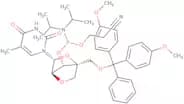
5’-O-DMT-LNA-thymidine 3’-O-CE amidite
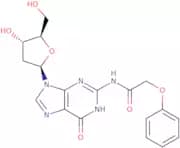
CAS:5'-O-DMT-2'-O,4'-C-methylene-5-methyluridine 3'-CE-phosphoramidite is a high purity, novel DNA monophosphate that is synthesized from 2',4'-diaminotoluene and 5'-O-dimethoxytritylthymidine. It has antiviral and anticancer properties and has shown to be an activator of RNA polymerase II in vitro. This product is used in many applications such as the synthesis of oligonucleotide probes for DNA sequencing, the synthesis of RNA for gene expression studies, and for the production of oligonucleotides for therapeutic purposes.Fórmula:C41H49N4O9PPureza:Min. 95%Peso molecular:772.82 g/mol2'-Deoxy-N2-phenoxyacetylguanosine
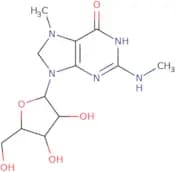
CAS:2'-deoxy-N2-phenoxyacetylguanosine is a synthetic nucleoside that is used as a substrate in experiments to study the properties of guanine. The compound can be synthesized by the reaction of 2'-deoxy-N2-phenoxyacetaldehyde with guanine. The synthesis starts with the condensation of 2'-deoxyribose and N2-phenoxyacetaldehyde, followed by the oxidation of the resulting anhydride to give aldehyde, which reacts with guanine to form a Schiff base. This then undergoes hydrolysis to yield 2'-deoxy-N2-phenoxyacetylguanosine.Fórmula:C18H19N5O6Pureza:Min. 95%Peso molecular:401.38 g/molN2,7-Dimethylguanosine
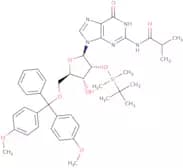
CAS:N2,7-Dimethylguanosine is a modified nucleotide that is an intermediate in the biosynthesis of guanine. This modification is catalyzed by an enzyme called methyltransferase, which transfers a methyl group from S-adenosylmethionine to the guanine base. N2,7-dimethylguanosine has been shown to be involved in epigenetic regulation and translation regulation as well as having a biological function as an acceptor for aminoacylation. N2,7-dimethylguanosine can be detected with mass spectrometry and can also be immobilized onto solid supports for use in biochemical pathways. br> N2,7-dimethylguanosine is synthesized from S-adenosylmethionine (SAM) and 5'-methylthioadenosine (MTA) by a series of reactions involving methyltetrahydrofolate reductase and methyFórmula:C12H18N5O5Pureza:Min. 95%Cor e Forma:White PowderPeso molecular:312.3 g/mol2'-O-(tert-Butyldimethylsilyl)-5'-O-DMT-N2-isobutyryl-guanosine
CAS:2'-O-(tert-Butyldimethylsilyl)-5'-O-DMT-N2-isobutyryl-guanosine is a synthetic nucleoside that has been modified with a tert-butyldimethylsilyl group. This modification is used to improve the efficiency of coupling reactions between nucleosides and phosphoramidites in oligonucleotide synthesis. The 2'-O-(tert-Butyldimethylsilyl)-5'-O-DMT-N2-isobutyryl guanosine is also used as a chromophore in spectroscopy experiments and as a ligand in metal coordination chemistry.Fórmula:C41H51N5O8SiPureza:Min. 98 Area-%Cor e Forma:Off-White PowderPeso molecular:769.96 g/mol2'-Deoxyxanthosine
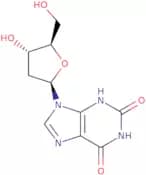
CAS:Produto Controlado2'-Deoxyxanthosine is a chemical compound with biochemical properties that can be used as a pharmaceutical drug. It is a nucleoside analogue that interferes with DNA synthesis. 2'-Deoxyxanthosine inhibits the enzyme ribonucleotide reductase, which converts ribonucleotides to deoxyribonucleotides, and prevents the formation of DNA in cells. This drug is also known to have anti-tumor effects, including angiogenesis inhibition and cytostatic activity. The reaction mechanism of 2'-deoxyxanthosine involves nitrous acid, which reacts with the 2' hydroxyl group of xanthosine to form the nitroso intermediate and then reacts with oxygen to produce nitrite and hydrogen peroxide. The final step in this process is the cleavage of xanthosine by nitrite into xanthine and oxalate. This drug has been shown to be reactive at neutral pH conditionsFórmula:C10H12N4O5Pureza:Min. 95%Cor e Forma:White Off-White PowderPeso molecular:268.23 g/molSapacitabine
CAS:Sapacitabine is an oral prodrug that is converted to its active form, the cytotoxic agent 9-β-D-arabinofuranosyladenine (araA), by cellular enzymes. It has potent antitumor activity against solid tumours and has been shown to be effective in a variety of human cancer cell lines. Sapacitabine targets intracellular targets, including DNA methyltransferases and other enzymes involved in the synthesis of RNA and DNA. The drug has been shown to have synergistic effects when used with other cytotoxic agents such as 5-fluorouracil and gemcitabine, which are also inhibitors of DNA methyltransferase.
Fórmula:C26H42N4O5Pureza:Min. 95%Peso molecular:490.64 g/molN¹-Methylpseudouridine-5'-triphosphate sodium,100 mM aqueous solution
N¹-methylpseudouridine-5'-triphosphate sodium, 100 mM aqueous solution (NMP) is an activator of deoxyribonucleosides that is synthesized in the laboratory. It has antiviral and anticancer activity and can be used to treat influenza A virus. NMP has been shown to inhibit the growth of cancer cells by inhibiting DNA synthesis and inducing apoptosis.Fórmula:C10H17N2O15P3•xNaPureza:Min. 95%Peso molecular:498.17 g/mol5-(Isopentenylaminomethyl)uridine
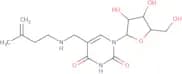
CAS:5-(Isopentenylaminomethyl)uridine is a modified uridine nucleoside that is used in biochemical research. It is the precursor to 5-amino-2'-deoxyuridine, which is converted to 5-iodo-2'-deoxyuridine. This modified uridine nucleoside can be used as a linker molecule for DNA and RNA ligation reactions and for analysis of biological samples. 5-(Isopentenylaminomethyl)uridine has been shown to inhibit the expression of genes in eukaryotes and prokaryotes. It also has been shown to inhibit the ribosome by binding to the peptidyl transferase center (PTC).Fórmula:C15H23N3O6Pureza:Min. 95%Peso molecular:341.36 g/molRiboflavin 5'-(trihydrogen diphosphate) P'5'-ester with N-(2-Aminoethyl)adenosine
CAS:Riboflavin 5'-(trihydrogen diphosphate) P'5'-ester with N-(2-Aminoethyl)adenosine is a nucleoside that is an active form of riboflavin. It is a monophosphate that is synthesized from riboflavin and adenosine. Riboflavin 5'-(trihydrogen diphosphate) P'5'-ester with N-(2-Aminoethyl)adenosine has been shown to have anticancer, antiviral, and antitumor properties in vitro and in vivo. In addition, this compound has been shown to inhibit the growth of various tumor cells by inhibiting DNA synthesis.Fórmula:C29H38N10O15P2Pureza:Min. 95%Peso molecular:828.62 g/molN3-Methyl-2'-O-methyluridine
CAS:2'-O-methyluridine is an antiviral nucleoside that is used as a phosphoramidite in the synthesis of oligonucleotides. It has been shown to inhibit viral replication, and has been found to be effective in treating HIV-1 by inhibiting reverse transcriptase. N3-Methyl-2'-O-methyluridine also inhibits DNA synthesis and cell proliferation, and may be useful for the treatment of cancer. This modified nucleoside has been synthesized from uracil and contains a methyl group at the 3' position. The methyl group prevents 2'-O-methyluridine from being activated by cellular thymidylate synthase, which normally converts deoxyribonucleotides into ribonucleotides. This novel nucleotide has not yet been used in clinical trials but it may provide an alternative to other drugs used for cancer treatments.
Fórmula:C11H16N2O6Pureza:Min. 95 Area-%Cor e Forma:White Off-White PowderPeso molecular:272.25 g/molβ-Nicotinamide adenine dinucleotide, reduced form, disodium
CAS:β-Nicotinamide adenine dinucleotide reduced form, most commonly known as NADH, is a cofactor involved in the electron transport chain, in the metabolism of amino acids and many other cellular processes such as the synthesis of ATP. It is also a substrate for glutathione peroxidase and superoxide dismutase. The reduced form of NADH can be used as an indicator for glutathione peroxidase activity. In addition, it has been shown to have antioxidant properties by reducing reactive oxygen species (ROS) and inhibiting lipid peroxidation. This product has been used in formulations of synthetic drugs for the treatment of women with long-term effects of menopause, such as osteoporosis and cardiovascular disease. It has also been used in the production of alginate gel, which can be used to create scaffolds for tissue engineering applications. Lately, in bioorganic chemistry, NADH has been used as a source of hydride species for reduction reactions.
Fórmula:C21H29N7O14P2•Na2Pureza:Min. 95%Peso molecular:711.42 g/mol4-Bromo-3,5-dichloropyridine
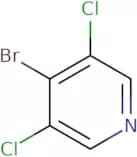
CAS:4-Bromo-3,5-dichloropyridine is a reactive intermediate that is used as a reagent in organic synthesis. It has low basicity and reacts with lithium to form the lithium salt. The salt can be deprotonated to form the bromide anion, which is more reactive than the chloride anion. 4-Bromo-3,5-dichloropyridine can also be used for the selective isomerization of ketones and related compounds. Bromine is added to prevent side reactions with oxygen. The intermediates are generated at the site of reaction by using an excess of diisopropylamide over bromination agent.
Fórmula:C5H2BrCl2NPureza:Min. 95%Peso molecular:226.89 g/mol2'-O-Methyluridine
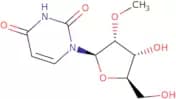
CAS:2'-O-Methyluridine is a chemical compound that is used in the synthesis of RNA. It is an analog of uridine and has been shown to have antiviral and anticancer properties. 2'-O-Methyluridine inhibits protein synthesis by competing with uridine for the active site of the enzyme ribonucleotide reductase, which converts ribonucleotides to dNMPs. This compound also inhibits RNA synthesis by disrupting the pairing of adenine and cytosine residues in RNA strands. 2'-O-Methyluridine has been shown to inhibit growth in some types of cancer cells, including colorectal adenocarcinoma cells. It may also be useful as a chemotherapeutic agent against HIV, as it inhibits virus replication by inhibiting reverse transcription and DNA synthesis.
Fórmula:C10H14N2O6Pureza:Min. 98 Area-%Cor e Forma:White Off-White PowderPeso molecular:258.23 g/mol2',3'-O-Isopropylidenecytidine
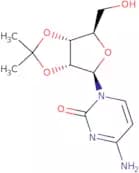
CAS:2',3'-O-Isopropylidenecytidine is a nucleoside for use in research applications
Fórmula:C12H17N3O5Pureza:Min. 95%Cor e Forma:PowderPeso molecular:283.28 g/mol2'-Amino-2'-deoxyadenosine-5'-triphosphate sodium salt - aqueous solution
CAS:2'-Amino-2'-deoxyadenosine-5'-triphosphate sodium salt - aqueous solution is a modified ATP analog, where the ribose has a 2'-amino substitution. This compound has potential research applicationsFórmula:C10H17N6O12P3·xNaPureza:Min. 95 Area-%Cor e Forma:PowderPeso molecular:506.2 g/mol8-Methyladenosine
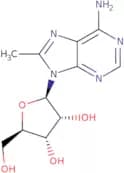
CAS:8-Methyladenosine is an acid conjugate that can be found in the urine of healthy people. It is a protonated molecule that binds to a p2 subtype of the G protein-coupled receptor, which is activated by adenosine and 8-methyladenosine. This drug has been used in clinical trials for the treatment of herpes simplex virus and cervical cancer. The intramolecular hydrogen bond between the methyl group and the adenosine ring is responsible for its high binding affinity for this receptor. The glycosidic bond is formed when an 8-methyladenosine molecule attaches to a receptor on a cell surface, forming an intramolecular hydrogen bond with the receptor's amino acid side chain. This bond is broken when a protonated molecule of 8-methyladenosine enters the cell and interacts with the receptor, resulting in activation of this receptor.
Fórmula:C11H15N5O4Pureza:Min. 95%Cor e Forma:White PowderPeso molecular:281.27 g/mol5'-O-DMT-N2-isobutyrylguanosine
CAS:5'-O-DMT-N2-isobutyrylguanosine is a novel phosphoramidite monophosphate, which has been modified with an isobutyryl group. This compound was synthesized in order to be used as a nucleoside analogue and antimetabolite for the treatment of cancer. It also has antiviral properties and inhibits the replication of DNA by inhibiting transcription. 5'-O-DMT-N2-isobutyrylguanosine is an anticancer agent that can be used to treat tumors that are resistant to other chemotherapy drugs. It also inhibits the growth of cells by preventing the synthesis of proteins needed for cell division.
Fórmula:C35H37N5O8Pureza:Min. 95%Cor e Forma:White PowderPeso molecular:655.7 g/mol5-Carboxymethylaminomethyluridine
CAS:5-Carboxymethylaminomethyluridine is a nucleoside analogue that is used in molecular modeling studies to investigate the role and interactions of uridine in the mitochondrial ribosome. It has been shown to bind to the mitochondrial ribosome, which may be due to hydrogen bonding interactions with adenine. 5-Carboxymethylaminomethyluridine also inhibits protein synthesis at the level of translation by inhibiting group P2 of eukaryotic cytosolic ribosomes. This inhibition results in decreased production of proteins necessary for mitochondrial biogenesis.Fórmula:C12H17N3O8Pureza:Min. 95 Area-%Cor e Forma:White Off-White PowderPeso molecular:331.28 g/mol2'-O-Methylinosine
CAS:2'-O-Methylinosine is a nucleoside that is structurally related to inosine. It has been shown to induce apoptotic cell death in HIV-infected cells by inhibiting the synthesis of rRNA and by inhibiting the activity of the transcriptase enzyme. 2'-O-Methylinosine has also been shown to inhibit the replication of RNA viruses, such as herpes simplex virus and cytomegalovirus, and it can be used as an experimental model for studying apoptosis. 2'-O-Methylinosine can be synthesized from inosine using a chromatographic method that utilizes hydroxylamine. The chemical structure of this nucleoside is amphipathic, which allows it to bind both DNA and RNA strands.Fórmula:C11H14N4O5Pureza:Min. 99 Area-%Cor e Forma:White PowderPeso molecular:282.25 g/mol4-[(1Z)-2-(4-Chlorophenyl)vinyl]pyridine
CAS:4-[(1Z)-2-(4-Chlorophenyl)vinyl]pyridine is a modified nucleoside that is used in anticancer drugs. It has shown antiviral and antitumor effects. 4-[(1Z)-2-(4-Chlorophenyl)vinyl]pyridine is synthesized by condensing 4-chlorobenzaldehyde and 2,3-dichloropyridine. The nucleoside has been modified to be phosphorylated at the 5′ position and contains a ribonucleotide moiety and a deoxyribonucleotide moiety. This product is of high purity and quality, with an activator group at the 5′ position.
Fórmula:C13H10ClNPureza:Min. 95%Peso molecular:215.68 g/mol









![4-[(1Z)-2-(4-Chlorophenyl)vinyl]pyridine](/_next/image/?url=https%3A%2Fstatic.cymitquimica.com%2Fproducts%2F3D%2Fthumb-webp%2FNC65881.webp&w=3840&q=75)