Polissacáridos
Foram encontrados 506 produtos de "Polissacáridos"
Chitosan (100 - 300 cps); low molecular weight, non-animal from fermentation, suitable for biotechnology
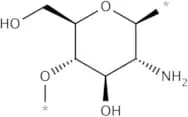
CAS:Fórmula:C6H11NO4nCor e Forma:White powderChitosan (2000 - 3500 cps); very high molecular weight
CAS:Fórmula:C6H11NO4nPureza:≥ 90.0%Cor e Forma:White to light-tan powderPeso molecular:1,800,000 (avg.)Alginic acid sodium salt
CAS:Pureza:≥ 99.0%Cor e Forma:White to off-white powder or beige powderPeso molecular:-Polygalacturonic acid
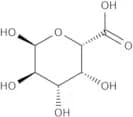
CAS:Fórmula:(C6H8O6)nPureza:≥ 85.0%Cor e Forma:Off-white to beige or yellow powderPeso molecular:-1V209
CAS:1V209 (TLR7 agonist T7) is a Toll-like receptor 7 (TLR7) agonist and has anti-tumor effects.Fórmula:C16H17N5O5Pureza:99.61%Cor e Forma:SolidPeso molecular:359.34Chitosan (5 cps); ultra low molecular weight, non-animal from fermentation, suitable for biotechnology
CAS:Fórmula:C6H11NO4nCor e Forma:White powderChitosan (30 - 100 cps); low molecular weight, non-animal from fermentation, suitable for biotechnology
CAS:Fórmula:C6H11NO4nCor e Forma:White powderChitosan (300 - 1000 cps); medium molecular weight, non-animal from fermentation, suitable for biotechnology
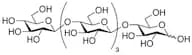
CAS:Fórmula:C6H11NO4nCor e Forma:White powderD-(+)-Cellopentaose
CAS:Produto ControladoApplications D-(+)-Cellopentaose (cas# 2240-27-9) is a compound useful in organic synthesis.
Fórmula:C30H52O26Cor e Forma:NeatPeso molecular:828.72Scleroglucan (Technical Grade)
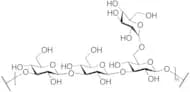
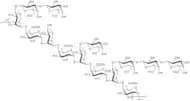
CAS:Produto ControladoApplications Scleroglucan is a natural polymer produced by fungi, especially those of the genus Sclerotium. Scleroglucan fluids have been used to trap and treat Cr(VI) in environmental applications.
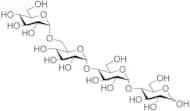
References Brigand, G.: Industrial Gums (Third Edition), pp. 461 (1993); Pensini, E.; et al.: Colloids Surf., A, 559, 191 (2018);Fórmula:C24H40O21Cor e Forma:NeatPeso molecular:664.566-α-D-Glucopyranosyl Maltotriose
CAS:Stability Hygroscopic
Applications Sugar composition of sake.
References Giri, N.Y., et al.: Arch. Biochem. Biophysics, 145, 505 (1971aFórmula:C24H42O21Cor e Forma:NeatPeso molecular:666.58Fucoidan, ecklonia
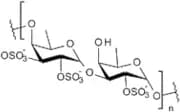
CAS:A fucan sulphate found in brown marine algae (Phaeophyta-typically Fucus vesiculotus, Ecklonia (illustrated), Alaria and Cladosiphon) and has been shown to have anticoagulant activity. The main constituents are α-1,4 and α-1,2 linked L-fucose sulphates although galactose also occurs and there are many variations of the basic structure found in different species of Phaeophyta. The image was kindly provided by Prof Mike Guiry from Cork who runs ‘The Seaweed Site’.Pureza:Min. 95%Cor e Forma:White PowderColominic acid sodium salt
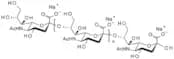
CAS:Colominic acid (polysialic acid) is a linear small polysaccharide containing α-2,8-linked sialic acid (neurominic acid) with (n = 8 to >100) residues. Polysialic acid is an unusual post translational modification polysaccharide that is widely expressed in nature in bacterial capsules, fish, sea urchin eggs, embryonic tissues, amphibians, animal and human brains, and in a various cancers. The major carrier of polysialic acids in mammals is the neural cell adhesion molecule (a glycoprotein that belongs to the immunoglobulin superfamily).Average molecular weight for this product is :50000-60000
Pureza:Min. 98 Area-%Cor e Forma:White Off-White PowderRhamnogalacturonan - from soy bean
CAS:Pectin is a highly complex polysaccharide matrix that is found in the primary walls of dicotyledenous and monocotyledenous plants and gymnosperms, including soy plants. A key fragment of this complex is rhamnogalacturonan I, containing a backbone of the repeating disaccharide [-4)-α-D-GalpA-(1,2)-α-L-Rhap-(1,]. Several applications for RG1 have been described including drug targeting to the colon via the oral administration route for local treatment of e.g. inflammatory bowel disease and colonic cancer. This has several advantages such as needle-free administration and low infection risk and in the gastro-intestinal tract RG-I is only degraded by the action of the colonic microflora. High purity rhamnogalacturonan I is also used in research, biochemical enzyme assays and in vitro diagnostic analysis.Pureza:Min. 95%Cor e Forma:SolidFucoidan - Ascophyllum nodosum, analytical grade
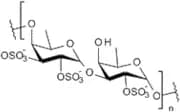
CAS:A fucan sulphate found in brown marine algae (Phaeophyta-typically Fucus vesiculotus, Ascophyllum nodosum (illustrated), Alaria and Cladosiphon) and has been shown to have anticoagulant activity. The main constituents are α-1,4 and α-1,2 linked L-fucose sulphates although galactose also occurs and there are many variations of the basic structure found in different species of Phaeophyta.Molecular weight cut off at 300kDa.The image was kindly provided by Prof Mike Guiry from Cork who runs ‘The Seaweed Site’.Cor e Forma:PowderPolyglycoplex
PolyGlycopleX (PGX) is produced from a mixture containing proprietary proportions of three polysaccharides, konjac glucomannan, xanthan gum and sodium alginate. Recent hydrodynamic, rheological and analytical studies have shown that the unexpectedly high viscosity of solutions of PGX is consistent with an interaction between a konjac glucomannan, xanthan gum complex and sodium alginate to form a new, ternary complex in solution. Human and animal feeding studies have shown that PGX can be used to control weight, lower the glycaemic index of foods and postprandial glycaemia.
Pureza:Min. 95%Cor e Forma:Powder