Polissacáridos
Foram encontrados 505 produtos de "Polissacáridos"
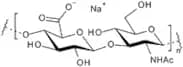
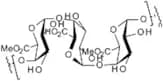
Teichuronic acid
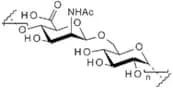
CAS:Teichuronic acid is isolated from the cell walls of Micrococcus luteus. The structure has been elucidated as [ManNAcUAp-(β-1,6)-Glcp-(α -1,4)]n.Pureza:Min. 95%Arthrobacter stabilis exopolysaccharide
The extracellular polysaccharide produced by Arthrobacter stabilis NRRL B-3225 contains D-glucose, D-galactose, pyruvic acid, O-succinyl, and O-acetyl in the approximate molar ratio of 6:3:1:1:1.5. Succinyl is linked as its half-ester, making it readily removable. The viscosity of aqueous, salt-free solutions of both native and deacylated polymer is relatively low, but atypical of anionic polysaccharides, increases rapidly in the presence of salts, acids, or alkali.
Pureza:Min. 95%Low-Substituted hydroxypropylcellulose
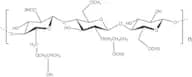
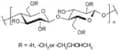
CAS:LH 21 is a low-substituted hydroxypropylcellulose. It is produced by the fluorination of cellulose, followed by substitution with a variety of monosaccharides and oligosaccharides to produce a complex carbohydrate. LH 21 is synthesized for custom needs, glycosylated, methylated, and modified at the sugar level with click chemistry. It has a CAS No. 9004-64-2 and is Carbohydrate in nature. LH 21 has high purity and can be used in many applications including as an excipient or additive in pharmaceutical formulations.Pureza:Min. 95%Cor e Forma:PowderDiethylaminoethyl-dextran HCl
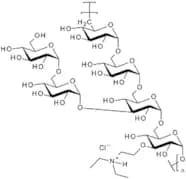
CAS:DEAE-Dextran hydrochloride (DEAE-D) is a positively-charged dextran derivative that can be used for vaccine production, gene therapy, protein stabilisation, dyslipidemia prevention, as flocculating agent, and many other applications. DEAE-D is also used for transfecting animal cells with foreign DNA. DEAE-Sepharose, DEAE-650 and DEAE-Sephadex are commonly used in chromatography for the separation of biological molecules such as proteins and carbohydrates.
Pureza:Min. 95%Cor e Forma:White Off-White PowderFluorescein isothiocyanate-carboxymethyl-dextran - Average MW 20,000
Fluorescein isothiocyanate carboxymethyl dextran (FITC-CM Dextran) has been reported to provide a valuable carrier for nanoparticles of iron oxide. These products provide a potent tool for contrast enhancement in magnetic resonance imaging.Pureza:Min. 95%Chondroitin sulfate A sodium from bovine trachea
CAS:Chondroitin sulfate A sodium from bovine trachea is a natural substance that has been found to have potential anticancer properties. It has been shown to inhibit the growth of cancer cells in Chinese hamster ovary cells and human urine tumor cell lines. Chondroitin sulfate A sodium from bovine trachea works by inhibiting kinases, which are proteins that play a key role in cell growth and division. This inhibition leads to apoptosis, or programmed cell death, in cancer cells. Additionally, chondroitin sulfate A sodium from bovine trachea has been found to enhance the anticancer activity of artesunate analogs, making it a promising candidate for combination therapy in cancer treatment.Pureza:Min. 95%Cor e Forma:Powder(Hydroxypropyl)methyl cellulose - Viscocity 75000-140000 cP, 2 % in H2O
CAS:Viscoelastic polymer; excipient; food additivePureza:Min. 95%kappa-Carrageenan
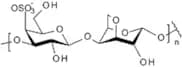
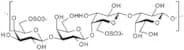
CAS:Kappa-Carrageenan is a gelling sulphated galactan extracted from red seaweed (typically Mastocarpus stellata and Chondrus crispus). The structure of all carrageenans consists of a strictly alternating masked repeating unit of 1,3-linked α-D-galactose and 1,4-linked β-D-galactose. The α-linked galactose occurs as α-3-6-anhydro unit and the β-linked sugar occurs as the 4-sulphate.
The image was kindly provided by Prof Mike Guiry from Cork who runs ‘The Seaweed Site’.Cor e Forma:White PowderPachyman - from Poria cocos
CAS:Poria cocos is an edible medicinal fungus known as “Fuling” in Chinese that has been used as a Chinese traditional medicine for more than two thousand years. Polysaccharide material is the most abundant organic substance in the fungus, accounting for about 85% of the total and is a mixture of polysaccharides with the major component being Pachyman, a β-glucan with a 1,3 backbone and 1,6 side chains. It is reported that Pachyman has a wide range of biological activities including antitumour, immunomodulatory, anti-inflammatory and antioxidative properties. Pachyman is a beta-glucan with a 1,3 backbone and 1,6 side chains of fungal origin (Poria cocos). The image was kindly provided by Dr. Chris Lawson.Pureza:Min. 95%Cor e Forma:White Powder(Hydroxypropyl)methyl cellulose, viscosity 5 cP 80%-120%, 2% aqueous solution
CAS:Please enquire for more information about (Hydroxypropyl)methyl cellulose, viscosity 5 cP 80%-120%, 2% aqueous solution including the price, delivery time and more detailed product information at the technical inquiry form on this page
Pureza:Min. 95%Cellulose acetate - MW 30,000
CAS:Cellulose acetate fiber is one of the earliest synthetic fibers and is based on cotton or tree pulp cellulose. Cellulose acetate is used as a film base in photography, as a component in some coatings, and as a frame material for eyeglasses. It is also used as a synthetic fiber in the manufacture of cigarette filters and playing cards. In photographic film, cellulose acetate replaced nitrate film in the 1950s, being far less flammable and cheaper to produce but in recent years has been rendered obsolete by the advent of digital cameras.Cor e Forma:Powderβ-1,3-Glucan
CAS:β-1,3-Glucan is a bioactive polysaccharide, which is located predominantly in the cell walls of yeast, fungi, and certain cereals. This compound is characterized by its unique branched structure, which is crucial for its biological function. The mode of action of β-1,3-Glucan involves the binding to specific receptors on immune cells, such as dectin-1, which triggers a cascade of immune responses. This interaction enhances the activity of macrophages, neutrophils, and natural killer cells, thus bolstering the body's innate immune defenses.The uses and applications of β-1,3-Glucan are broad, primarily focused on immunological research and potential therapeutic strategies. It is extensively utilized in studies examining its effects as an immunomodulator, leveraging its ability to potentiate immune system function and examining its role in adjunctive cancer therapies, where it may enhance the efficacy of certain treatments. Additionally, β-1,3-Glucan is investigated for its potential benefits in reducing infection rates and improving recovery times in clinical settings. Moreover, its applications in dietary supplements and functional foods continue to be a subject of scientific inquiry, aiming to harness its health-promoting properties within nutrition science.Pureza:Min. 95%Cor e Forma:PowderN-Trimethylchitosan
CAS:Quaternization of the primary amine in N-Trimethylchitosan increases the water solubility of chitosan and keeps chitosan soluble over a wide pH range. N-Trimethylchitosan is soluble in water and ethanol, making it ideal for use in biotechnology applications.The degree of quaternization is 30-70%Pureza:Min. 90%Welan gum
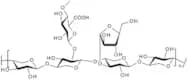
CAS:Welan gum is a microbial polysaccharide produced by a species of Alcaligenes and shows interesting rheological properties of use in the oil and agricultural industries. The structure is similar to gellan based on repeating glucose, rhamnose and glucuronic acid units but with a single side chain of either an α-L-rhamnopyranosyl or an α-L-mannopyranosyl unit linked (1,3) to the 4-O-substituted β-D-glucopyranosyl unit in the backbone.Pureza:Viscosity >1700 CpCor e Forma:PowderFucoidan, Lessonia nigrescens
CAS:A fucan sulphate found in brown marine algae (Phaeophyta-typically Fucus vesiculotus, Ascophyllum nodosum, Alaria and Lessonia nigrescens (illustrated) and has been shown to have anticoagulant activity. The main constituents are α-1,4 and α-1,2 linked L-fucose sulphates although galactose also occurs and there are many variations of the basic structure found in different species of Phaeophyta. The image was kindly provided by Prof Mike Guiry from Cork who runs ‘The Seaweed Site’.Pureza:Min. 95%Cor e Forma:White PowderDiethylaminoethyl-dextran
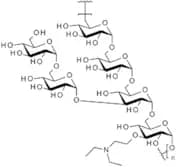
CAS:DEAE-Dextran (DEAE-D) is a positively-charged dextran derivative that can be used for vaccine production, gene therapy, protein stabilisation, dyslipidemia prevention, flocculating agents, and many other applications. DEAE-D is also used for transfecting animal cells with foreign DNA. DEAE-Sepharose, DEAE-650 and DEAE-Sephadex are commonly used in chromatography for the separation of biological molecules such as proteins and carbohydrates.Pureza:Min. 95%(Hydroxypropyl)methyl cellulose - USP, substitution type 2910 (viscosity 3000-5600mpa.s)
CAS:Viscoelastic polymer; excipient; food additiveDextran 20, MW: 17,000 to 23,000
CAS:Complex glucan (a 1-6) from Leuconostoc spp.; extender in blood transfusions
Cor e Forma:PowderLaminariheptaose
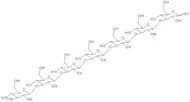
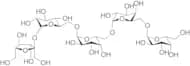
CAS:Ex algal/bacterial polysaccharides-value in b1-3 glucanase assays & diagnosticsFórmula:C42H72O36Pureza:Min. 95%Cor e Forma:PowderPeso molecular:1,153 g/molPorphyran
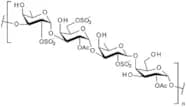
CAS:Porphyran is an agar-like polysaccharide with a linear backbone consisting of 3 linked β-D-galactosyl units alternating with either 4-linked α-L-galactosyl 6-sulphate or 3-6-anhydro-α-L-galactosyl units.The composition includes 6-O-sulphated L-galactose, 6-O-methylated D-galactose, L-galactose, 3,6-anhydro-L-galactose, 6-O-methyl D-galactose and ester sulphate. Some of the ester is present as 1,4-linked L-galactose 6-sulphate. The precise composition of porphyran shows seasonal and environmental variations. Porphyran is not used commercially, but the seaweed, Porphyra umbilicalis, is edible and is consumed in Wales (Laver). It is also made into a delicacy called Laverbread. The image was kindly provided by Prof Mike Guiry from Cork who runs ‘The Seaweed Site’.Pureza:(%) Min. 80%Cor e Forma:PowderCellulose, carboxymethyl ether, sodium salt
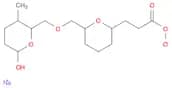
CAS:Fórmula:C16H27NaO7Cor e Forma:SolidPeso molecular:354.3712Ref: IN-DA00ILJ6
Produto descontinuadoVerbascose
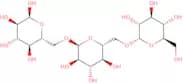
CAS:Produto ControladoApplications Verbascose (CAS# 546-62-3) is an α-galactooligosaccharide with immunomodulatory activity in mouse macrophage RAW264.7 cells.
References Dai, Z.; et al.: J. Agric. Food. Chem., 66, 9070 (2018);Fórmula:C30H52O26Cor e Forma:NeatPeso molecular:828.72Xylan - from beechwood
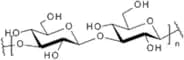
CAS:Xylan is the most abundant noncellulosic polysaccharide present in both hardwoods and annual plants. Xylan is found mainly in the secondary cell wall as part of the hemicellulose fraction and is considered to form an interface between lignin and other polysaccharides. In their simplest forms, xylans are linear homopolymers of β-1,4-xylose residues but can also form complex heterogenous and polydispersed glycans.
Cor e Forma:Brown Slightly Brown PowderFucoidan, fucus serratus
CAS:A fucan sulphate found in brown marine algae (Phaeophyta-typically Fucus serratus, Ascophyllum nodosum (illustrated), Laminaria japonica and Macrocystis pyrifyra) and has been shown to have anticoagulant activity. The main constituents are α-1,4 and α-1,2 linked L-fucose sulphates although galactose also occurs and there are many variations of the basic structure found in different species of Phaeophyta.
The image was kindly provided by Prof Mike Guiry from Cork who runs ‘The Seaweed Site’.Pureza:Min. 95%Cor e Forma:White PowderRef: 3D-YF09360
Produto descontinuadoDextran sulfate potassium salt
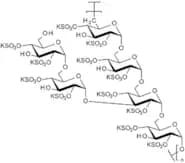
CAS:Dextran sulphate is a dextran derivative whose ulcer (colitis) -causing properties were first reported in hamsters and extrapolated a few years later to mice and rats. The exact mechanisms through which dextran sulphate induces intestinal inflammation are unclear but may be the result of direct damage of the monolayer of epithelial cells in the colon, leading to the crossing of intestinal contents (for e.g. commensal bacteria and their products) into underlying tissue and therefore induction of inflammation. The dextran sulphate sodium-induced ulceration model in laboratory animals has some advantages when compared to other animal models of colitis due to its simplicity and similarities to human inflammatory bowel disease.
MW is in the range of 40,000DaPureza:Min. 95%Cor e Forma:White PowderRef: 3D-YD31035
Produto descontinuadoChitin
CAS:Chitin forms the tough fibrous exoskeletons of insects, crustaceans and other arthropods, and, in addition to its presence in some fungi, it occurs in at least one alga. The structure of chitin is similar to that of cellulose but with glucose replaced with N-acetyl-D-glucosaminyl units linked β-D-(1,4) in a linear chain. Chitin is normally produced from the shells of lobster, crab or shrimp.
Fórmula:(C8H13NO5)nCor e Forma:PowderDextran sulfate sodium - MW 8,000
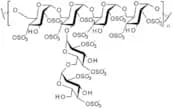
CAS:Dextran sulphate is a dextran derivative whose ulcer (colitis) -causing properties were first reported in hamsters and extrapolated a few years later to mice and rats. The exact mechanisms through which dextran sulphate induces intestinal inflammation are unclear but may be the result of direct damage of the monolayer of epithelial cells in the colon, leading to the crossing of intestinal contents (for e.g. commensal bacteria and their products) into underlying tissue and therefore induction of inflammation. The dextran sulphate sodium induced ulceration model in laboratory animals has some advantages, when compared to other animal models of colitis, due to its simplicity and similarities to human inflammatory bowel disease.
Cor e Forma:White PowderPeso molecular:8000.0Ref: 3D-YD59550
Produto descontinuadoFucoidan, laminaria digitata
CAS:A fucan sulphate found in brown marine algae (Phaeophyta-typically Fucus serratus, Ascophyllum nodosum, Laminaria digitata (illustrated) and Macrocystis pyrifyra) and has been shown to have anticoagulant activity. The main constituents are α-1,4 and α-1,2 linked L-fucose sulphates although galactose also occurs and there are many variations of the basic structure found in different species of Phaeophyta.
The image was kindly provided by Prof Mike Guiry from Cork who runs ‘The Seaweed Site’.Cor e Forma:PowderLichenan - from Cetraria islandica
CAS:Lichenin, the poly β-D-Glucan of Cetraria islandica (Iceland moss), is found by enzymic degradation to differ in fine structure from the poly β-D-glucans of cereal grains. Thus, the basic structure of lichenin is a tetrameric unit in which two adjacent 1,4 linkages alternate with an isolated 1,3 linkage; occasionally four consecutive monomers are linked by 1,4 bonds. The immunomodulatory activity of isolichenan was tested in in vitro phagocytosis and anti-complementary assays, and proved to be active in both cases.
The image was kindly provided by Prof Mike Guiry from Cork who runs ‘The Seaweed Site’.Fórmula:C6H10O5Pureza:(Β-Linked Polysaccharide. 1H-Nmr) Min. 85%Cor e Forma:White PowderPeso molecular:162.14Glycogen - from oyster
CAS:Glycogen is a highly branched polysaccharide of glucose that serves as a form of energy storage in animals and fungi. It is the main storage form of glucose in the body. In humans, glycogen is made and stored primarily in liver and muscle cells and functions as the second most important energy storage molecule to fat which is held in adipose tissue. Glycogen is analogous to starch and has a structure similar to amylopectin, but is more extensively branched and compact than starch. It occurs as granules in the cytosol/cytoplasm in many cell types, and plays an important role in the glucose cycle.
Fórmula:C24H42O21Cor e Forma:PowderPeso molecular:666.58 g/molRef: 3D-YG40133
Produto descontinuadoArabinoxylan
CAS:Arabinoxylans consist of α-L-arabinofuranose residues attached as branch-points to β-(1,4)-linked D-xylopyranose main chains. These may be 2- or 3-substituted or 2- and 3- di-substituted. The arabinose residues may also be linked to other groups attached such as glucuronic acid residues, ferulic acid cross links and acetyl groups. Arabinoxylans generally consist of between 1500 - 5000 residues.
Pureza:Min. 95%Cor e Forma:PowderGum karaya
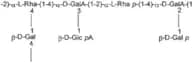
CAS:Gum karaya is exuded from Sterculia urens, a bushy tree found in dry regions of North India. Due to its extensive swelling capacity in water it is used as a laxative and as a denture adhesive. The structure consists of D-galactose, D-glucuronic acid and L-rhamnose but the detailed molecular structure is still incompletely known.
Pureza:Min. 95%Cor e Forma:PowderDextran 3 - MW 2500 - 4000
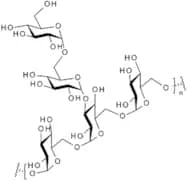
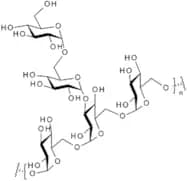
CAS:Dextran is α-(1,6)-linked α-D-glucan produced by fermentation of Leuconostoc mesenteroides via the action of the enzyme dextransucrase on sucrose. The main use for native dextran is as a blood plasma extender in blood transfusions. A complex of iron with dextran, known as iron dextran, is used as a source of iron to baby piglets which are often anaemic at birth.
Cor e Forma:White Off-White PowderRef: 3D-YD00049
Produto descontinuadoHydroxyethyl cellulose - Viscosity 2400 to 2800(1% aqueous solution)
CAS:Water thickener; rheological control additive; has industrial appplications
Pureza:Min. 95%Larch arabinogalactan
CAS:Larch arabinogalactan is extracted from the heartwood of the western larch Larix occidentalis. This compound has a backbone of 1,3-linked β-D-galactopyranosyl units each of which contains a side chain at position C-6. Arabinogalactans are used as emulsifiers, stabilizers and binders in the food, pharmaceutical and cosmetic industries, as low viscosity dietary fibres and as a prebiotic fibres.
Pureza:Min. 95%Cor e Forma:Off-White Powderb-D-glucan-from oat
CAS:Oat β-glucans are water-soluble β-glucans derived from the endosperm of oat kernels, which contain β-1,3 and β-1,4 linkages. They are known for cholesterol lowering and hypoglycemic properties, as well as their use in various cosmetic applications. Recent research has shown their potential application in immunomodulation and wound healing.
Pureza:Min. 90%Cor e Forma:White PowderRef: 3D-YO32420
Produto descontinuadoDermatan sulphate sodium
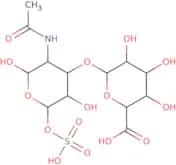
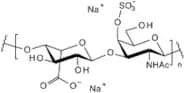
CAS:Dermatan sulphate is a glycosaminoglycan found in skin, blood vessels, heart valves, tendons, aorta, spleen and brain and is usually isolated from pig skin or beef lung tissue. The disaccharide repeat unit is composed of L-iduronic acid and N-acetyl-galactosamine-4-sulphate linked β-(1,3) and β-(1,4). There are also small amounts of D-glucuronic acid.
Cor e Forma:PowderPeso molecular:1,526.03 g/molRef: 3D-YD30120
Produto descontinuadoMethyl cellulose - viscosity ca 15cP
CAS:Methyl cellulose is a water-soluble polymer that is used as a binder or thickener in pharmaceutical, food, and ceramic processing applications. Methylcellulose has an unusual lower critical solution temperature (LCST) between 40 °C and 50 °C. At temperatures below the LCST it is readily soluble in water; above the LCST it is not soluble, which has a paradoxical effect that heating a saturated solution of methylcellulose will turn it solid, because methylcellulose will precipitate out. The temperature at which this occurs depends on DS-value, with higher DS-values giving lower solubility and lower precipitation temperatures because the polar hydroxyl groups are masked.
Cor e Forma:White PowderDextran 5 - MW 4,000 to 6,000
CAS:Dextran is α-(1,6)-linked α-D-glucan with α-(1,3)-linked glucose branch points produced by fermentation of Leuconostoc mesenteroides via the action of the enzyme dextransucrase on sucrose. The main use for native dextran is as an extender in blood transfusions and products having a range of sharp cut-off molecular weights are produced commercially for this and other applications. A complex of iron with dextran, known as iron dextran, is used as a source of iron for baby piglets which are often anaemic at birth.
Cor e Forma:White PowderHyaluronic sodium - Average MW 0.2-0.5 million Daltons
CAS:The sodium salt of hyaluronic acid is a glycosaminoglycan found in many organs, where it functions as a joint lubricant and shock absorber. It is obtained principally from synovial fluid, vitreous humor of the eye, umbilical tissue and cocks comb. The chemical structure of hyaluronic is a disaccharide repeat of β-(1,3) glucuronic acid and β-(1,4) N-acetyl glucosamine.Fórmula:(C14H20NO11Na)nPureza:Min. 95%Cor e Forma:PowderRef: 3D-YH72470
Produto descontinuadoCarboxymethyl curdlan
CAS:Carboxymethyl curdlan is widely used in the preparation of nanoparticles for biomedical applications. Following the synthesis of superparamagnetic iron oxide nanoparticles (SPIN) capped with carboxymethyl curdlan for use in cellular and in vivo imaging applications, the stability and dispersibility of SPIN in water were greatly improved with the introduction of the carboxymethyl curdlan moiety. Recently, a green and simple route was proposed to synthesize Ag nanoparticles using carboxymethylcurdlan under UV irradiation.
Cor e Forma:PowderRef: 3D-YC46079
Produto descontinuadoKonjac glucomannan
CAS:Konjac glucomannan is an acetylated (1,4)-β-D-glucomannan obtained from the tubers of Amorphophallus konjac or Konnyaku root. It is widely used in foods, pharmaceuticals paints and explosives. It has been shown that ternary mixtures of konjac glucomannan, xanthan gum and sodium alginate can form a non-covalently linked complex which exhibits enhanced rheological properties of value in, for example, functional foods.
Pureza:Min. 75%Cor e Forma:White PowderMannan (ex Saccharomyces cerevisiae)
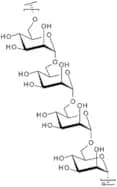
CAS:The main cell-wall components of baker’s yeast (Saccharomyces cerevisiae) as well as β-glucan are mannans with an α-1,6 mannose backbone and α-1,2 and α-1,3 mannose branches.
The image was kindly provided by Dr. Chris Lawson.Cor e Forma:White Slightly Brown PowderAmylose
CAS:Starch consists of two polysaccharides, amylose and amylopectin and represents approximately 20-25% of the total polysaccharide content in starch. Amylose molecules consist of single mostly unbranched chains of 500-20,000 α-(1->4)-D-glucose residues dependent on source (e.g. wheat, rice, potato, tapioca, etc). Amylose can form an extended shape (hydrodynamic radius 7-22 nm) but generally tends to wind up into a rather stiff left-handed single helix or form even stiffer parallel left-handed double helical junction zones. Hydrogen bonding between aligned chains causes retrogradation and releases some of the bound water (syneresis). The aligned chains may then form double stranded crystallites that are resistant to amylases. These possess extensive inter- and intra-strand hydrogen bonding, resulting in a fairly hydrophobic structure of low solubility. The amylose content of starches is thus the major cause of resistant starch formation.
Fórmula:(C6H10O5)nCor e Forma:White Off-White PowderFucogalactan - from Undaria pinnatifida
CAS:Fucogalactan (GFS) is a polysaccharide isolated and purified from the brown seaweed Undaria pinnatifida. The polysaccharide is a sulphated galactose containing fucan. Fucogalactan is currently under investigation for possible therapeutic indications including anti-inflammatory properties, immuno- modulating activities, inhibition of tumor growth, stem cell replentishment, antiviral activity, dementia and ulcer healing.Fucoidan ≥ 75 %
The image was kindly provided by Prof Mike Guiry from Cork who runs ‘The Seaweed Site’.Pureza:(%) Min. 75%Cor e Forma:Off-White PowderLM Pectin
CAS:Pectins are regarded as linear chains of α-1,4-linked D-galacturonic acid, a homogalacturonan (pectic acid). In the products of commerce, the degree of methylation has a vital influence on the properties of pectin, especially the solubility and gel forming characteristics.
Cor e Forma:PowderRef: 3D-YL158537
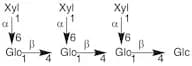
Produto descontinuadoHeptasaccharide Glc4Xyl3
CAS:Fórmula:C39H66O33Pureza:>80.0%(HPLC)Cor e Forma:White to Almost white powder to crystalPeso molecular:1,062.92HM Pectin
CAS:Pectins are regarded as linear chains of α-1,4-linked D-galacturonic acid, a homogalacturonan (pectic acid). In the products of commerce, the degree of methylation has a vital influence on the properties of pectin, especially the solubility and gel forming characteristics. Commercial high methoxy (HM) pectin has > 70% of hydroxyl groups methyl esterified. HM pectin forms gels in the presence of sucrose and for this reason it is used in jams often in combination with other fruits.
Pureza:(%) Min. 85%Cor e Forma:PowderRef: 3D-YH158538
Produto descontinuado