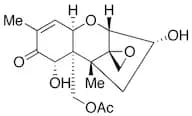
Antibióticos Naturais e Semissintéticos
Os antibióticos naturais e semissintéticos são caracterizados por estruturas químicas com anéis heterocíclicos e grupos funcionais ativos que inibem o crescimento de microrganismos. Suas estruturas permitem-lhes interagir com os processos vitais das bactérias, tornando-os úteis para o tratamento de infecções bacterianas. Os antibióticos semissintéticos podem ser modificados para melhorar o espectro de atividade ou a resistência à degradação.
Na CymitQuimica, oferecemos antibióticos naturais e semissintéticos de alta qualidade para pesquisa em microbiologia e desenvolvimento farmacêutico.
Foram encontrados 6347 produtos de "Antibióticos Naturais e Semissintéticos"
Ordenar por
Pureza (%)
0
100
|
0
|
50
|
90
|
95
|
100
Ref: 4Z-E-110019
Produto descontinuadoRef: 4Z-C-126010
Produto descontinuadoRef: 4Z-C-3740
Produto descontinuadoRef: 4Z-R-1823
Produto descontinuadoRef: 4Z-A-2653
Produto descontinuadoRef: 4Z-E-110026
Produto descontinuadoRef: 4Z-M-1810
Produto descontinuadoRef: 4Z-C-3729
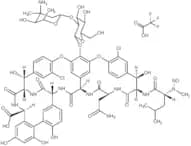
Produto descontinuadoN-Nitroso Vancomycin EP Impurity G Trifluoroacetate
Fórmula:C66H71Cl2N9O25·C2HF3O2Peso molecular:1461.23 1140.2Ref: 4Z-V-032040
Produto descontinuadoN-Nitroso Vancomycin EP Impurity H Trifluoroacetate
Fórmula:C66H75ClN10O25·C2HF3O2Peso molecular:1443.82 114.02Ref: 4Z-V-032041
Produto descontinuadoRef: 4Z-A-2323
Produto descontinuadoN-Nitroso Vancomycin EP Impurity J Trifluoroacetate
Fórmula:C66H74Cl2N10O25·C2HF3O2Peso molecular:1478.26 114.02Ref: 4Z-V-032042
Produto descontinuadoRef: 4Z-A-2674
Produto descontinuadoN-Nitroso Vancomycin EP Impurity B Trifluoroacetate
Fórmula:C66H73Cl2N9O26·C2HF3O2Peso molecular:1479.25 114.02Ref: 4Z-V-032035
Produto descontinuadoRef: 4Z-P-3896
Produto descontinuadoRef: 4Z-E-2055
Produto descontinuadoN-Nitroso Vancomycin EP Impurity F Trifluoroacetate
Fórmula:C67H76Cl2N10O25·C2HF3O2Peso molecular:1492.29 114.02Ref: 4Z-V-032039
Produto descontinuadoRef: 4Z-T-153005
Produto descontinuadoRef: 4Z-C-5092
Produto descontinuadoRef: 4Z-PC-155030
Produto descontinuadoRef: 4Z-P-0453
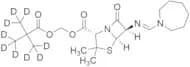
Produto descontinuadoSultamicillin EP Impurity C (Ampicillin, Piperacillin EP Impurity A)
CAS:Fórmula:C16H19N3O4SPeso molecular:349.41Ref: 4Z-S-081002
Produto descontinuadoRef: 4Z-P-0454
Produto descontinuadoRef: 4Z-P-0455
Produto descontinuadoN-Nitroso Benzylpenicillin Potassium EP Impurity E (N-Nitroso Benzylpenicillin (Benzathine), Benzylpenicillin Sodium EP Impurity E, N-Nitroso Benzylpenicillin (Procaine) EP Impurity B) (Mixture of Diastereomers)
Fórmula:C16H19N3O6SPeso molecular:381.40Ref: 4Z-P-0463
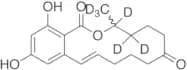
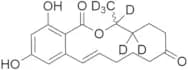
Produto descontinuadorac Zearalenone-d6
CAS:Produto Controlado<p>Applications Estrogenic mycotoxin produced by Fusarium fungi commonly found in grains. One of a group of compounds known as resorcylic acid lactones.Environmental contaminants; Food contaminants<br> Not a dangerous good if item is equal to or less than 1g/ml and there is less than 100g/ml in the package<br>References Tanaka, T., et al.: J. Agric. Food Chem., 36, 979 (1988), Hamilton, S., et al.: Anticancer Res., 16, 3597 (1996), Hecht, S., et al.: Cancer Lett., 150, 49 (2000), Hussein, H., et al.: Toxicology, 167, 101 (2001), Lim, H., et al.: J. Immunol., 175, 4180 (2005),<br></p>Fórmula:C18H16D6O5Cor e Forma:BeigePeso molecular:324.40Deoxynivalenol
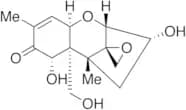
CAS:Produto Controlado<p>Applications Deoxynivalenol is a tricothecene mycotoxin and potent protein synthesis inhibitor. Deoxynivalenol exhibits cytotoxic activity in vivo via the ribotoxic stress response. Deoxynivalenol induces p38-mediated gene expression and apoptosis in leukocytes; activity results in systemic expression of interleukin-6 (IL-6) and other proinflammatory cytokines. Also induces migration of NF-κB into the nucleus.Environmental contaminants; Food contaminants<br> Not a dangerous good if item is equal to or less than 1g/ml and there is less than 100g/ml in the package<br>References Bae, et al.: Toxicol. Sci., 105, 59 (2008), Shi, et al.: Toxicol. Sci., 109, 247 (2009), Krishnaswamy, et al.: Free Radic. Biol. Med., 49 50 (2010),<br></p>Fórmula:C15H20O6Cor e Forma:NeatPeso molecular:296.32Fumonisin B1
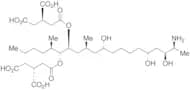
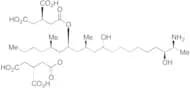
CAS:<p>Stability Hygroscopic<br>Applications A mycotoxin produced by mold associated with corn. Fungal metabolite believed to cause leukoencephalomalacia in horses.Environmental contaminants; Food contaminants<br>References Monbaliu, S., et al.: J. Agric. Food Chem., 58, 10475 (2010), Klosowski, G., et al.: Biores. Technol., 101, 9723 (2010), Soerensen, L., et al.: Anal. Bioanal. Chem., 398, 1535 (2010),<br></p>Fórmula:C34H59NO15Cor e Forma:NeatPeso molecular:721.83β-Zearalenol-d4 (Major)
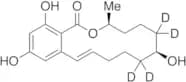
CAS:Produto Controlado<p>Stability Light Sensitive<br>Applications Isotope labelled β-Zearalenol is an more active metabolite of Zearalenone (Z270500), a estrogenic mycotoxin produced by Fusarium fungi commonly found in grains.<br> Not a dangerous good if item is equal to or less than 1g/ml and there is less than 100g/ml in the package<br>References Olsen, M., et al.: Acta Pharmacol. Toxicol., 48, 15 (1981), Chang, W., et al.: Food Chem. Toxicol., 22, 887 (1984), El Golli, E., et al.: Toxicol Lett., 166, 122 (2006), Hassen, W., et al.: Toxicology, 232, 294 (2007), Benzoni, E., et al.: Reprod. Toxicol., 25, 461 (2008),<br></p>Fórmula:C18H20D4O5Cor e Forma:NeatPeso molecular:324.4HT-2 Toxin (>85%)
CAS:Produto Controlado<p>Stability Hygroscopic<br>Applications HT-2 Toxin is a trichothecene group mycotoxin. HT-2 Toxin is the 4-hydroxy analogue of T-2 Toxin (T002980) which has been shown to induce DNA damage and cell death on prolonged administration.Environmental contaminants; Food contaminants<br> Not a dangerous good if item is equal to or less than 1g/ml and there is less than 100g/ml in the package<br>References Weidner, M. et al.: J. Agric. Food Chem., 60, 5676 (2012); Choi, H. et al.: Toxicol. Appl. Pharmacol., 240, 46 (2009); Amuzie, C. et al.: Toxicol. Sci., 113, 412 (2010);<br></p>Fórmula:C22H32O8Pureza:>85%Cor e Forma:Off-WhitePeso molecular:424.48T-2 Toxin
CAS:Produto Controlado<p>Applications T-2 Toxin is a tricothecene mycotoxin produced by fungi of the genus Fusarium. T-2 Toxin induces DNA damage and cell death on prolonged administration.Environmental contaminants; Food contaminants<br> Not a dangerous good if item is equal to or less than 1g/ml and there is less than 100g/ml in the package<br>References Kim, C., et al.: Cancer Res., 57, 3115 (1997), Bottrel, R., et al.: Antimicrob. Agents Chemother., 1999, 43, 856 (1999), Murray, P., et al.: J. Immunol., 178, 2623 (2007), Choi, H., et al.: Toxicol. Appl. Pharmacol., 240, 46 (2009), Amuzie, C., et al.: Toxicol. Sci., 113, 412 (2010),<br></p>Fórmula:C24H34O9Cor e Forma:White SolidPeso molecular:466.52Fumonisin B2
CAS:Produto Controlado<p>Stability Hygroscopic, Toxic<br>Applications A mycotoxin produced by mold associated with corn. Inhibitor of sphingosine N-acyltransferase. Blocks the formation of ceramide from sphingosine.<br> Not a dangerous good if item is equal to or less than 1g/ml and there is less than 100g/ml in the package<br>References Monbaliu, S., et al.: J. Agric. Food Chem., 58, 10475 (2010), Klosowski, G., et al.: Biores. Technol., 101, 9723 (2010), Soerensen, L., et al.: Anal. Bioanal. Chem., 398, 1535 (2010),<br></p>Fórmula:C34H59NO14Cor e Forma:Off-WhitePeso molecular:705.83Ref: TR-F862755
Produto descontinuadoZearalenone
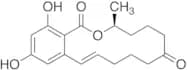
CAS:<p>Applications Estrogenic mycotoxin produced by Fusarium fungi commonly found in grains. One of a group of compounds known as resorcylic acid lactones.Environmental contaminants; Food contaminants<br> Not a dangerous good if item is equal to or less than 1g/ml and there is less than 100g/ml in the package<br>References Tanaka, T., et al.: J. Agric. Food Chem., 36, 979 (1988), Hamilton, S., et al.: Anticancer Res., 16, 3597 (1996), Hecht, S., et al.: Cancer Lett., 150, 49 (2000), Hussein, H., et al.: Toxicology, 167, 101 (2001), Lim, H., et al.: J. Immunol., 175, 4180 (2005),<br></p>Fórmula:C18H22O5Cor e Forma:White To Light BrownPeso molecular:318.36Zearalenone 4-Sulfate Ammonium Salt
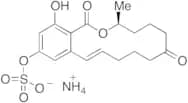
CAS:Produto ControladoFórmula:C18H25NO8SCor e Forma:NeatPeso molecular:415.46α-Zearalenol-d4 (Major)
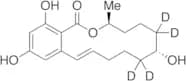
CAS:Produto Controlado<p>Applications α-Zearalenol-d4 is the isotope labelled metabolite of Zearalenone (Z270500), an estrogenic mycotoxin produced by Fusarium fungi commonly found in grains.<br>References Olsen, M., et al.: Acta Pharmacol. Toxicol., 48, 15 (1981), Chang, W., et al.: Food Chem. Toxicol., 22, 887 (1984), El Golli, E., et al.: Toxicol Lett., 166, 122 (2006), Hassen, W., et al.: Toxicology, 232, 294 (2007), Benzoni, E., et al.: Reprod. Toxicol., 25, 461 (2008),<br></p>Fórmula:C18H20D4O5Cor e Forma:NeatPeso molecular:324.4rac Zearalenone-d6 (major)
CAS:Produto ControladoFórmula:C18H16D6O5Cor e Forma:NeatPeso molecular:324.40Fumonisin B3
CAS:Produto Controlado<p>Stability Hygroscopic<br>Applications Fumonisin B3 is a mycotoxin present in corn. Fungal metabolite believed to cause leukoencephalomalacia in horses.<br>References Azcona-Olivera, J. et al.: J. Agric. Food Chem., 40, 531 (1992); Hopmans, E. et al.: J. Agric. Food Chem., 41, 1655 (1993); Monbaliu, S., et al.: J. Agric. Food Chem., 58, 10475 (2010), Klosowski, G., et al.: Biores. Technol., 101, 9723 (2010), Soerensen, L., et al.: Anal. Bioanal. Chem., 398, 1535 (2010),<br></p>Fórmula:C34H59NO14Cor e Forma:BeigePeso molecular:705.8315-O-Demethyl Tacrolimus
CAS:<p>Tacrolimus is a macrolide that is used as an immunosuppressive drug. It has been shown to bind to the FK-binding protein, which in turn inhibits calcineurin. This prevents the release of IL-2, TNF-α and other cytokines. The immunosuppressive effects of tacrolimus have been evaluated using analytical methods such as coefficients, affinity, and monitoring techniques such as immunoassays and agglutination. These techniques are used to evaluate the plasma concentration of tacrolimus. Tacrolimus also binds to proteins in the blood samples and can be detected by turbidimetric or electrochemiluminescence immunoassay reagents.</p>Fórmula:C43H67NO12Pureza:Min. 95%Peso molecular:789.99 g/mol3-Acetyldeoxynivalenol
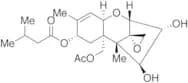
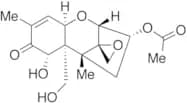
CAS:Produto Controlado<p>Stability Appears to decompose in DMSO<br>Applications 3-Acetyldeoxynivalenol is a trichothecene mycotoxin that is produced in a plant-pathogenic fungus, Fusarium graminearum Schwabe.Environmental contaminants; Food contaminants<br> Not a dangerous good if item is equal to or less than 1g/ml and there is less than 100g/ml in the package<br>References Beyer, M., et al.: Int. J. Food. Microbiol., 119, 153 (2007); Schiefer, H.B., et al.: Can. J. Comp. Med., 49, 315 (1985); Mirocha, C.J., et al.: App. Enviro.Microbiol., 55, 1315 (1989);<br></p>Fórmula:C17H22O7Cor e Forma:WhitePeso molecular:338.354H-Furo[2,3-c]pyranyl Mupirocin Sodium Impurity
CAS:<p>Impurity Mupirocin EP Impurity D<br>Stability Hygroscopic<br>Applications Mupirocin (M794000) impurity. (Mupirocin EP Impurity D) The rearrangement isomer of Mupirocin is prepared using an enzyme-catalyzed, selective deesterification.<br>References Sime, J.T., et al.: Tetrahedron Lett., 28, 5169 (1987),<br></p>Fórmula:C26H43O9·NaCor e Forma:NeatPeso molecular:522.6015-Acetyl Deoxynivalenol (~90%)
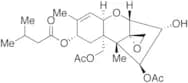
CAS:Produto Controlado<p>Applications A mycotoxin produced by the fungi Fusarium culmorum and Fusarium graminearum, inhibits protein synthesis.Environmental contaminants; Food contaminants<br> Not a dangerous good if item is equal to or less than 1g/ml and there is less than 100g/ml in the package<br>References Ashraf, A.; et al.: Int. J. Biol. Biotechnol., 4, 391 (2007), Burlakoti, R., et al.: App. Environ. Microbiol., 74, 6513 (2008), Steinmetz, W., et al.: Eur. J. Med. Chem., 44, 4485 (2009), Zhang, Y., et al.: Phytopathol., 99, 95 (2009),<br></p>Fórmula:C17H22O7Pureza:~90%Cor e Forma:WhitePeso molecular:338.35













![4H-Furo[2,3-c]pyranyl Mupirocin Sodium Impurity](/_next/image/?url=https%3A%2Fstatic.cymitquimica.com%2Fproducts%2FTR%2Fthumb-webp%2FF864850.webp&w=3840&q=75)