Monossacáridos
Subcategorias de "Monossacáridos"
- Aloses(11 produtos)
- Arabinoses(21 produtos)
- Eritroses(11 produtos)
- Frutoses(9 produtos)
- Fucoses(36 produtos)
- Galactosamina(41 produtos)
- Galactoses(262 produtos)
- Glucoses(365 produtos)
- Ácidos Glucurónicos(52 produtos)
- Glico-substratos para enzimas(78 produtos)
- Guloses(6 produtos)
- Idoses(4 produtos)
- Inositóis(15 produtos)
- Lixoses(4 produtos)
- Mannoses(65 produtos)
- O-Glicanos(48 produtos)
- Psicoses(3 produtos)
- Ramnoses(10 produtos)
- Riboses(61 produtos)
- Ácidos siálicos(100 produtos)
- Sorboses(4 produtos)
- Açúcares(173 produtos)
- Tagatoses(4 produtos)
- Taloses(8 produtos)
- Xiloses(20 produtos)
Foram encontrados 6089 produtos de "Monossacáridos"
7-Deoxy-1,2:4,5-di-O-isopropylidene-L-glycero-D-gluco-heptitol
7-Deoxy-1,2:4,5-di-O-isopropylidene-L-glycero-D-glucoheptitol is a high purity synthetic compound that can be custom synthesized to order. It is a white powder with a molecular weight of 264.27 grams per mole and is soluble in water and DMSO. The CAS No. for this compound is 2206188-76-3. It has been fluorinated at the C2 position and has been modified with a click chemistry reaction to create an oligosaccharide or polysaccharide. This product is available for purchase from our store at www.sigmaaldrichchemicals.com/7deoxy1,2:4,5diOisopropylideneLglyceroDglucoheptitolPureza:Min. 95%2-Azido- 2- deoxy- 2- C- methyl- 3, 5- O-benzylidene -D- ribonic acid γ-lactone
2-Azido-2-deoxy-2-C-methyl-3,5-O-benzylidene -D-ribonic acid gamma-lactone is a custom synthesis of an oligosaccharide with a complex carbohydrate. It has CAS No. and is listed as Polysaccharide in the Modification section. This chemical is modified by methylation, glycosylation, and click modification. 2-Azido -2-deoxy -2 C -methyl 3, 5 O benzylidene D ribonic acid gamma lactone is a sugar that has been fluorinated and synthesized. The chemical has high purity and can be used in glycobiology research.br>Pureza:Min. 95%2,3:5,6-Di-O-isopropylidene-2-C-hydroxymethyl-D-allono-1,4-lactone
2,3:5,6-Di-O-isopropylidene-2-C-hydroxymethyl-D-allono-1,4-lactone is a synthetic monosaccharide that is used in the synthesis of glycosides and polysaccharides. It is an acetal of D - allonic acid and 2,3:5,6 - di - O - isopropylidene - 1,4 - lactone. This compound has been shown to be effective in modifying the properties of saccharides and oligosaccharides. This compound can be custom synthesized to meet your needs.Pureza:Min. 95%(2R, 3R, 4R) -2- (Hydroxymethyl) - 2- methyl- 3, 4- pyrrolidinediol
CAS:(2R, 3R, 4R) -2- (Hydroxymethyl) - 2- methyl- 3, 4- pyrrolidinediol is a modification of oligosaccharides. It is synthesized from monosaccharides or disaccharides and can be modified with fluorine or methyl groups. This product has the highest purity available on the market and can be used in a variety of applications such as glycosylation, polysaccharide synthesis, sugar fluorination, saccharide click modification and more.Fórmula:C6H13NO3Pureza:Min. 95%Peso molecular:147.17 g/molMethyl 2,3,4-tri-O-pivaloyl-6-O-triisopropylsilyl-a-D-galactopyranoside
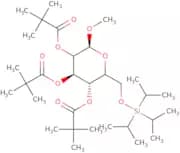
Methyl 2,3,4-tri-O-pivaloyl-6-O-triisopropylsilyl-a-D-galactopyranoside is a glycosylated sugar that can be custom synthesized or purchased. This product is a fluorinated oligosaccharide with a methyl group at C2. The chemical name for this modified sugar is O-(3,4,5,6-tetra-O-(1,1,1,3,3,3,-hexafluoroethoxy)propyl)-a-D-galactopyranose. It can be used in glycosylation reactions to modify the saccharides and it has an average purity of 99%. Methyl 2,3,4-tri-O-pivaloyl-6-O--triisopropylsilyl--a--D--galactopyranoside has a CASFórmula:C31H58O9SiPureza:Min. 95%Peso molecular:602.87 g/mol(2S, 3S, 4S) -1-Butyl-4- (hydroxymethyl) - N- methyl- 3- (phenylmethoxy) - 2- azetidinecarboxamide
(2S, 3S, 4S) -1-Butyl-4- (hydroxymethyl) - N- methyl- 3- (phenylmethoxy) - 2- azetidinecarboxamide is a synthetic compound that can be used for glycosylation reactions. It has the following characteristics: Glycosylation, complex carbohydrate, Methylation, Click modification, Polysaccharide, Fluorination and Saccharide Modification. The CAS registry number for this compound is 109972-04-6. This product is available for custom synthesis and can be ordered with high purity.Pureza:Min. 95%1,2-Dideoxy-5-O-DMT-D-ribose
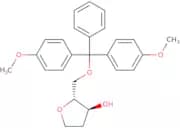
CAS:1,2-Dideoxy-5-O-DMT-D-ribose is a methylation inhibitor that inhibits the transfer of a methyl group from S-adenosylmethionine to a substrate. This modification can be found in many biological systems, including DNA and RNA. It is also used as an intermediate in the synthesis of other compounds such as oligosaccharides and polysaccharides. 1,2-Dideoxy-5-O-DMT-D-ribose has been shown to inhibit the growth of bacteria by inhibiting bacterial cell wall synthesis. It is believed to work by binding to glycosidic bonds in bacterial cell walls, preventing the formation of new bonds and therefore inhibiting cell wall biosynthesis.
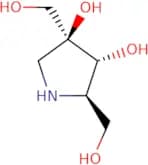
1,2 - Dideoxy - 5 - O - DMT - D - ribose can be used for fluorination reactions with various types of compounds, including sugars and other complex carbohydrates.Fórmula:C26H28O5Pureza:Min. 97 Area-%Cor e Forma:White PowderPeso molecular:420.5 g/mol(2R, 3R, 4S) -3, 4- Dihydroxy- 2, 4- pyrrolidinedimethano l
CAS:(2R, 3R, 4S) -3, 4- Dihydroxy- 2, 4- pyrrolidinedimethano l is a fluorinated methylated saccharide that is used in the synthesis of complex carbohydrates. It can be used as a glycosylation or a click modification reagent. This compound has been shown to be effective in the synthesis of oligosaccharides and glycosylations.Pureza:Min. 95%N-Benzyl-3,5-dideoxy-3,5-imino-1,2-O-isopropylidene-b-L-lyxofuranose
N-Benzyl-3,5-dideoxy-3,5-imino-1,2-O-isopropylidene-b-L-lyxofuranose is an oligosaccharide with a 3,5 dideoxy sugar. It is a modification of the natural carbohydrate L -lyxohexaose. This synthetic compound was custom synthesized and has high purity. The CAS No. for this compound is: 233878-37-6. N -Benzyl -3,5 -dideoxy -3,5 -imino -1,2--O--isopropylidene--b--L--lyxofuranose is not a monosaccharide or polysaccharide but rather a sugar that can be methylated or glycosylated. It has fluorination and saccharides that are modified with fluorine.Pureza:Min. 95%3,5-O-Benzylidene-D-lyxono-1,4-lactone
3,5-O-Benzylidene-D-lyxono-1,4-lactone is a crystalline compound with a molecular formula of C6H8O3. It has the molecular weight of 154.11 g/mol and melting point of 104°C. 3,5-O-Benzylidene-D-lyxono-1,4-lactone has been shown to be an inhibitor for the enzyme xanthine oxidase. This compound may be useful in treating conditions such as hyperuricemia or gout.Fórmula:C11H10O5Pureza:Min. 95%Peso molecular:222.2 g/mol6-O-Tert.butyldimethylsilyl - 2, 3- O- isopropylidene-L- gulonic acid γ-lactone
6-O-Tert.butyldimethylsilyl - 2, 3- O- isopropylidene-L- gulonic acid gamma-lactone is a glycosylate of 6-O-tert.butyl dimesitylglycolic acid. It is a monosaccharide with an α--glycosidic linkage that may be used in the synthesis of complex carbohydrates or as a sugar surrogate for saccharide chemistry applications. This product can be custom synthesized to your specifications and has high purity.Pureza:Min. 95%(1R) -1- [(2R, 3S) -3-Hydroxy- N-nonyl-1- azetidinyl] -1, 2- ethanediol
(1R) -1- [(2R, 3S) -3-Hydroxy- N-nonyl-1- azetidinyl] -1, 2- ethanediol is a methylated saccharide that can be used in the synthesis of oligosaccharides. It has been shown to be an effective inhibitor of glycosylation and can be used for the modification of carbohydrates. The compound has a CAS number and is available for custom synthesis. It also has high purity and stability, as well as being a synthetic product.Pureza:Min. 95%UDP-6-azido-6-deoxy-D-galactose triethylammonium
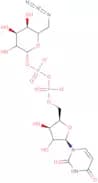
CAS:UDP-6-azido-6-deoxy-D-galactose triethylammonium salt (UDP-6AzGal) is an analogue of UDP-Galactose, where the primary hydroxyl group is replaced with an azide. UDP-6AzGal was confirmed to act as a galactotransferase substrate after it was used in an in vitro glycosylation reaction on lysates from HEK 293TH cells overexpressing ceramide galactosyltransferase. UDP-6AzGal was also used as a label to visualise glycosylation patterns in developing zebrafish embryos.Fórmula:C15H21N5O16P2•(C6H16N)2Pureza:Min. 95%Cor e Forma:Clear LiquidPeso molecular:793.69 g/molGalactostatin bisulfite
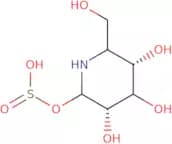
CAS:Inhibitor of β-galactosidase
Fórmula:C6H13NO7SPureza:Min. 95%Cor e Forma:PowderPeso molecular:243.24 g/mol(2S, 3S, 4S) -1-Butyl-4- (hydroxymethyl) - N- methyl- 3-hydroxy-2- azetidinecarboxamide
(2S, 3S, 4S) -1-Butyl-4- (hydroxymethyl) - N- methyl- 3-hydroxy-2- azetidinecarboxamide is a modification of an oligosaccharide. It is synthesized by custom synthesis and high purity. This product is used for the modification of carbohydrates, such as glycosylation and polysaccharide. It has CAS No., and its molecular weight is 242.Pureza:Min. 95%2-Acetylamino-3,4-O-benzylidene-2-deoxy-D-arabino-1,4-lactone
2-Acetylamino-3,4-O-benzylidene-2-deoxy-D-arabino-1,4-lactone is a synthetic compound that is used to modify the carbohydrate chains in Glycopeptides. This modification can be done by either fluorination or methylation. The click modification has been shown to be effective for complex carbohydrates such as oligosaccharides and polysaccharides.Pureza:Min. 95%N-(Succinyl)-O-b-D-glucopyranosylhydroxylamine
N-(Succinyl)-O-b-D-glucopyranosylhydroxylamine is a glycosylation agent that is used in the synthesis of complex carbohydrates, such as oligosaccharides and polysaccharides. It is synthesized by reacting enzymatically with glycogen or a glycogen derivative, such as amyloglucosidase, to release glucose from the glycogen molecule. The resulting product can be methylated or fluorinated to generate different derivatives. This product can be custom synthesized to meet the needs of your application.Pureza:Min. 95%1-Deoxy-1-nitro-L-mannitol
CAS:1-Deoxy-1-nitro-L-mannitol is an irreversible inhibitor of the enzyme mannitol dehydrogenase. It also inhibits other enzymes, such as L-arabinose isomerase and L-azide amidohydrolase, which are involved in the biosynthesis of arabinose and azide. The synthesis of 1-deoxy-1 nitro mannitol can be achieved through a one step reaction with hydroxide and l-arabinose (or l-xylose) in the presence of carbonate or sulfate. This product can be used in syntheses of amphoteric compounds.
Fórmula:C6H13NO7Pureza:Min. 95%Peso molecular:211.17 g/molDeferiprone 3-O-β-D-glucuronide
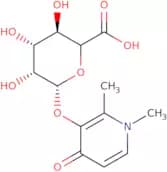
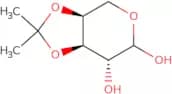
CAS:Deferiprone 3-O-b-D-glucuronide is a modification of deferiprone. It is synthesized by methylation, glycosylation, and polysaccharide modification with fluorine. Deferiprone 3-O-b-D-glucuronide is monosaccharide in nature and has high purity and custom synthesis.Fórmula:C13H17NO8Pureza:Min. 95%Cor e Forma:Light (Or Pale) Yellow SolidPeso molecular:315.28 g/mol3,4-O-Isopropylidene-L-arabinose
CAS:3,4-O-Isopropylidene-L-arabinose (3,4-OIRA) is an isopropylidene derivative of L-arabinose. 3,4-OIRA has been shown to be a substrate for glycosylation reactions with various other sugars. It can also undergo methylation reactions and has been modified by fluorination. 3,4-OIRA is a food additive that belongs to the category of complex carbohydrates.
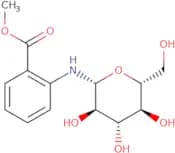
Fórmula:C8H14O5Pureza:Min. 98 Area-%Cor e Forma:PowderPeso molecular:190.19 g/molMethylanthranilate glucoside
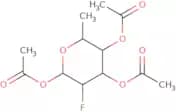
CAS:Methylanthranilate glucoside is a carbohydrate that is custom synthesized to order. It is a synthetic, high purity, methylated, glycosylated, and click-modified oligosaccharide. This product has CAS No. 1875079-80-3 and can be used in medical research for the identification of saccharides or glycans with a specific modification pattern.Fórmula:C14H19NO7Pureza:Min. 95%Cor e Forma:PowderPeso molecular:313.3 g/mol1,3,4-Tri-O-acetyl-2-deoxy-2-fluoro-α-L-fucopyranose
CAS:Fucosyltransferase inhibitor, peracetylated to improve cell permeabilityFórmula:C12H17FO7Pureza:Max. 5%Cor e Forma:PowderPeso molecular:292.26 g/mol(2R, 3S, 4S) - 1- Butyl-3-fluoro-4- (hydroxymethyl) - 2- azetidinecarboxylic acid N-methylamide
(2R, 3S, 4S) - 1- Butyl-3-fluoro-4- (hydroxymethyl) - 2- azetidinecarboxylic acid N-methylamide is a fluorinated monosaccharide that is synthesized from the reaction of methyl acetoacetate and formaldehyde. The compound is used in glycosylation reactions to produce oligosaccharides or polysaccharides. This product has been modified with a click chemistry reaction to produce a new sugar that can be used in the synthesis of complex carbohydrates. The purity of this product is > 98%.Pureza:Min. 95%[2S- (2a, 3b, 4a, 5b) ] - 1-Benzyl - 2-methyl-3, 4, 5- piperidinetriol
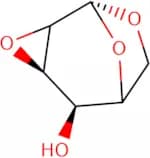
This product is a custom synthesis. It is a fluorinated, modified monosaccharide that has been synthesized by click chemistry and contains an O-glycosyl group. This product can be used in the synthesis of glycosylated polysaccharides and oligosaccharides, or as a building block for modification of complex carbohydrates to produce new compounds with novel properties, such as fluorescence.Pureza:Min. 95%1,6:2,3-Dianhydro-b-D-mannopyranose
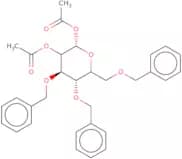
CAS:1,6:2,3-Dianhydro-b-D-mannopyranose is a high purity sugar used in the synthesis of complex carbohydrates. This compound is an oligosaccharide that has been modified by methylation and glycosylation. It can be found in the CAS registry number 3868-03-9.Fórmula:C6H8O4Pureza:Min. 95%Cor e Forma:PowderPeso molecular:144.13 g/mol1,2-Di-O-acetyl-3,4,6-tri-O-benzyl-b-D-galactopyranoside
CAS:1,2-Di-O-acetyl-3,4,6-tri-O-benzyl-b-D-galactopyranoside is a synthetic glycosylate sugar. It is a high purity material that can be custom synthesized to meet your needs. This product has been modified with a fluorine atom at the 3' position of the sugar. It is an Oligosaccharide that is useful in the synthesis of complex carbohydrates. It is also used in Click chemistry and can be methylated or acetylated.Fórmula:C31H34O8Pureza:Min. 95%Cor e Forma:White PowderPeso molecular:534.6 g/molMaltol glucoside
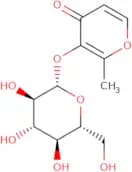
CAS:Maltol is a polyhydric alcohol that is a natural product of plants. Maltol glucoside is an oligomer of maltol that is formed by the glycosylation of maltol with glucose. This compound has been used as a diagnostic agent to detect lymphocyte transformation and bound form in viruses. It has also been shown to inhibit cancer cell growth, which may be due to its ability to interact with complex enzyme systems. Maltol glucoside has been shown to have anti-inflammatory effects in humans, which may be due to its inhibition of inflammatory enzymes such as cyclooxygenase-2 (COX-2) and lipoxygenase (LOX).Fórmula:C12H16O8Pureza:Min. 95%Cor e Forma:PowderPeso molecular:288.25 g/molPalatinose hydrate
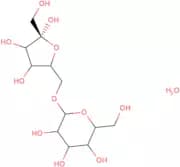
CAS:Palatinose hydrate is a polyol that is produced by the hydrolysis of inulin. It has been shown to have antibacterial activity against Lactococcus lactis, an important probiotic bacteria. Palatinose hydrate also has an amine group that can react with the carbonyl group of other compounds. This makes it effective against bacteria such as Echinocandin, which contains a reactive carbonyl group. Palatinose hydrate is used in food products and has been shown to have anti-viral properties. The viscosity of this compound can be increased by mixing with glycerol or sorbitol.Fórmula:C12H22O11·xH2OPureza:Min. 95%Cor e Forma:PowderPeso molecular:342.3 g/mol6-Deoxy-L-glucitol
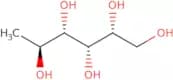
CAS:6-Deoxy-L-glucitol is a sugar alcohol that is found in the body and has been used as a substitute for sucrose. 6-Deoxy-L-glucitol is metabolized by deamination and reduction to produce lactobionic acid. This reaction can be catalyzed by either an enzyme or by chemical means. 6-Deoxy-L-glucitol can also be partially reduced to form 6-phospho--erythritol, which can be further reduced to form erythritol. Muscle cells contain hexokinases and phosphofructokinase, which are required for the final step in glucose metabolism. These enzymes are important in the regulation of blood sugar levels and energy production. In addition, these enzymes play a role in the metabolism of other sugars such as fructose and galactose.Fórmula:C6H14O5Pureza:Min. 95%Peso molecular:166.17 g/mol(2S, 3S, 4S, 5S) -2- ((tertButylsilyloxy)methyl) - 3-O-benzoyl-4-O-tert butyldimethylsilyl-5- methyl-3, 4- pyrrolidinediol
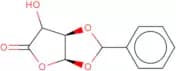
(2S, 3S, 4S, 5S) -2- ((tertButylsilyloxy)methyl) - 3-O-benzoyl-4-O-tert butyldimethylsilyl-5- methyl-3, 4- pyrrolidinediol is a glycoconjugate that can be used as a drug to treat cancer. It consists of a glycosylation site on the 2 position of the pyrrole ring and an oligosaccharide chain with a terminal glucose molecule on the 5 position. This product is custom synthesized and is available in high purity.Pureza:Min. 95%2-Azido-2-deoxy-3,5-O-benzylidene-D-lyxono-1,4-lactone
2-Azido-2-deoxy-3,5-O-benzylidene-D-lyxono-1,4-lactone is a custom synthesis that is methylated with an azide group. It has been modified with a click reaction to attach an oligosaccharide or polysaccharide and then fluorinated. The modification of this product is not limited to methylation, but includes many other modifications such as fluoroquinolone resistance. 2-Azido-2-deoxy-3,5-O-benzylidene -D-lyxono--1,4--lactone can be used for the preparation of complex carbohydrates. This product can also be used in the synthesis of monosaccharides and sugars.
Pureza:Min. 95%2-C-Methyl- 2, 3- O- isopropylidene - D- lyxonic acid g- lactone
2-C-Methyl- 2,3-O-isopropylidene -D-lyxonic acid g-lactone is a synthetic monosaccharide that is used as a building block in the synthesis of complex carbohydrates. It can be fluorinated and glycosylated to form saccharides. This product has been custom synthesized and is offered at high purity levels.Pureza:Min. 95%2,3:5,6-Bis-O-(1-methylethylidene)- D-gulonic acid g-lactone
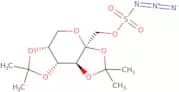
CAS:2,3:5,6-Bis-O-(1-methylethylidene)-D-gulonic acid g-lactone is a synthetic sugar with a molecular weight of 588. It is used in the synthesis of oligosaccharides and saccharides. 2,3:5,6-Bis-O-(1-methylethylidene)-D-gulonic acid g-lactone can be fluorinated for use in click chemistry applications. This product has been shown to have high purity and custom synthesis capabilities.Pureza:Min. 95%2,3:4,5-Di-O-isopropylidene-b-D-fructopyranose azide sulphate
CAS:2,3:4,5-Di-O-isopropylidene-b-D-fructopyranose azide sulphate is a custom synthesis. It has been fluorinated and methylated by the click chemistry method. The compound is a complex carbohydrate with a high purity and modification level. 2,3:4,5-Di-O-isopropylidene-b-D-fructopyranose azide sulphate can be used for glycosylation or oligosaccharide synthesis. CAS No. 106881-35-0Fórmula:C12H19N3O8SPureza:Min. 95%Peso molecular:365.36 g/mol1-Deoxy-D-ribose
CAS:1-Deoxy-D-ribose is a sugar that is synthesized from the sugar ribose. It can be produced by reductive cleavage of the sugar sulfate adenosine, which gives rise to 1-deoxy-D-ribose and sulfite. This compound also has an important role in DNA synthesis. The natural source of this compound is D-ribose, which can be found in many sources such as yeast extract, pectin, and honey. 1-Deoxy-D-ribose is a nucleoside that has the cyclic form of ribose. This compound was first isolated in 1957 and was originally synthesized in 1891 by Emil Fischer. 1-Deoxy-D-ribose binds to adenosine with a connective bond and forms a cyclic molecule called pyrrolo[2,3]pyrimidine.Fórmula:C5H10O4Pureza:Min. 95%Cor e Forma:PowderPeso molecular:134.2 g/mol2-Amino- 2- deoxy- 3, 4- di- O- methyl-D- glucose
CAS:2-Amino- 2-deoxy-3,4-di-O-methyl-D-glucose is a sugar that belongs to the group of carbohydrates. It has been custom synthesized and modified with fluorine and methyl groups. This product is available in high purity, which can be used as a building block for glycosylation or click modification.Fórmula:C8H17NO5Pureza:Min. 95%Peso molecular:207.22 g/mol1,2:3,4-Di-O-isopropylidene-6-deoxy-6-C-(2-pyridyl)-D-galactopyranose
This product is a high purity, custom synthesis, sugar. It is Click modification, fluorination, glycosylation and synthetic. This product has CAS No. and Oligosaccharide, Monosaccharide, saccharide and Carbohydrate. This product also has complex carbohydrate.Fórmula:C17H23NO5Pureza:Min. 95%Peso molecular:321.34 g/mol1,2:5,6-Di-O-isopropylidene-a-D-allofuranose
CAS:Synthetic building blockFórmula:C12H20O6Pureza:Min. 95%Cor e Forma:White PowderPeso molecular:260.28 g/mol1-Deoxy- 3- O- tert.butyldimethylsilyl - 4, 5- O- isopropylidene -L- fructopyranose
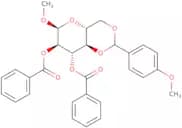
1-Deoxy- 3- O- tert.butyldimethylsilyl - 4, 5- O- isopropylidene -L- fructopyranose is a synthetic compound that has the ability to modify oligosaccharides and polysaccharides. The synthesis of this compound can be used to introduce fluorine at any position on the sugar molecule. This modification allows for the fluorination of sugars and saccharides, which in turn provides different properties such as increased resistance to enzymatic digestion and increased water solubility. 1-Deoxy- 3- O- tert.butyldimethylsilyl - 4, 5- O- isopropylidene -L- fructopyranose has been shown to have click modification capabilities. It can be used for glycosylation reactions with proteins or carbohydrates by reacting with the amino acid side chains of proteins or carbohydrates respectively in aqueous solutionPureza:Min. 95%Methyl 2,3-di-O-benzoyl-4,6-O-(4-methoxybenzylidene)-a-D-glucopyranoside
CAS:Methyl 2,3-di-O-benzoyl-4,6-O-(4-methoxybenzylidene)-a-D-glucopyranoside is a synthetic carbohydrate. The chemical name is methyl 2,3-di-O-benzoyl-4,6--O-(4--methoxybenzylidene) -a -D--glucopyranoside. It is a white or off white powder that is soluble in water and methanol. This product can be used as a monosaccharide for glycosylation or polysaccharide for saccharide modification.Fórmula:C29H28O9Pureza:Min. 95%Peso molecular:520.54 g/mol2,3-Di-O-benzyl-4,6-O-ethylidene-D-glucopyranose
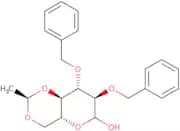
CAS:2,3-Di-O-benzyl-4,6-O-ethylidene-D-glucopyranose is a synthetic oligosaccharide that can be used as a starting material for the synthesis of glycosylated polysaccharides. It is custom synthesized to your specifications and is available in high purity.Fórmula:C22H26O6Pureza:Min. 95%Cor e Forma:PowderPeso molecular:386.44 g/mol2-Acetamido-1,3,4,6-tetra-O-acetyl-2-deoxy-b-D-galactopyranose
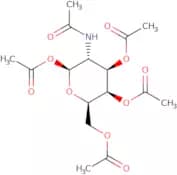
CAS:2-Acetamido-1,3,4,6-tetra-O-acetyl-2-deoxy-b-D-galactopyranose is fully acetylated D-galactosamine (C4 epimer of D-glucosamine). 2-Acetamido-1,3,4,6-tetra-O-acetyl-2-deoxy-b-D-galactopyranose is used in the synthesis of α- and β-linked acetamido pyranosides, which have anti-inflammatory properties as inhibitors of TLR4.Fórmula:C16H23NO10Pureza:Min. 95%Cor e Forma:PowderPeso molecular:389.35 g/mol2,5-Anhydro-L-iditol
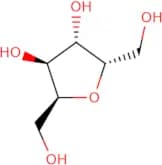
CAS:2,5-Anhydro-L-iditol is a kinetic product of transglycosylation. It has been shown to be stereoselective and can be used as an acid catalyst in the synthesis of furanic compounds. 2,5-Anhydro-L-iditol is also a nucleophilic reagent that can participate in reactions with hydrogen chloride and tetraose chloride. This compound is useful for the production of polyols and glycols via dehydration reactions. 2,5-Anhydro-L-iditol has been used in carbohydrate chemistry techniques.Fórmula:C6H12O5Pureza:Min. 95%Cor e Forma:PowderPeso molecular:164.16 g/mol(2S,3R,4R,5S)-3-O-Benzyl-3,4,5-trihydroxy-2-hydroxymethylpiperidine
(2S,3R,4R,5S)-3-O-Benzyl-3,4,5-trihydroxy-2-hydroxymethylpiperidine is a custom synthesis that is used as a building block for the preparation of sugar oligosaccharides and polysaccharides. It is also used in glycosylation reactions to form complex carbohydrates. This compound has been a valuable reagent for the introduction of fluorine atoms into carbohydrate molecules. The structure contains an oxygen atom at C1 and two hydroxyl groups at C2 and C5. The molecule has CAS number .Pureza:Min. 95%2a,3b,19a-trihydroxyurs-12-en-28-oic acid 28-b-D-glucopyranosyl ester
2a,3b,19a-trihydroxyurs-12-en-28-oic acid 28-b-D-glucopyranosyl ester is a glycosylated complex carbohydrate that can be methylated, fluorinated, or custom synthesized. It is typically used as an intermediate in the synthesis of polysaccharides, saccharides and oligosaccharides.Pureza:Min. 95%Benzoyl 2,3-O-isopropylidene-L-ribofuranoside
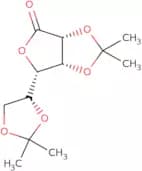
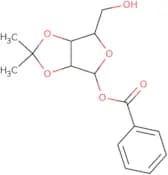
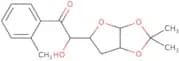
CAS:Benzoyl 2,3-O-isopropylidene-L-ribofuranoside is a custom synthesis that can be modified with fluorination and methylation. It is a monosaccharide that has been synthesized from L-ribose, which are sugar molecules found in the cell walls of bacteria. The chemical structure of benzoyl 2,3-O-isopropylidene-L-ribofuranoside has been shown to be similar to the sugar molecule found on glycoproteins on the surface of staphylococci. This chemical has also been shown to inhibit the production of enzymes that are necessary for the synthesis of glycosaminoglycans.Fórmula:C15H18O6Pureza:Min. 95%Peso molecular:294.3 g/mol(5R, 8S, 9R) -8- [(4R) - 2, 2- Dimethyl- 1, 3- dioxolan- 4- yl] - 9- hydroxy- 2, 2- dimethyl- 1, 3, 7- trioxaspiro[4.4] nonan- 6- on e
(5R, 8S, 9R) -8- [(4R) - 2, 2- Dimethyl- 1, 3- dioxolan- 4- yl] - 9- hydroxy- 2, 2- dimethyl- 1, 3, 7- trioxaspiro[4.4] nonan- 6- on e is a synthetic and fluorinated glycosylation product of an oligosaccharide with a methyl group at the C5 position. It has been shown to have excellent purity and stability in the presence of water.Pureza:Min. 95%(2S, 3S, 4S) -1-Butyl-4- (hydroxymethyl) - 3- (phenylmethoxy) - 2- azetidinecarboxylic acid, methyl ester
(2S, 3S, 4S) -1-Butyl-4- (hydroxymethyl) - 3- (phenylmethoxy) - 2- azetidinecarboxylic acid, methyl ester is a product that can be custom synthesized. It can be used for the modification of complex carbohydrates, for example oligosaccharides and polysaccharides. This product has been fluorinated to improve its stability and modify saccharide linkages. The hydroxy methyl group at C2 position in this product is capable of being modified with Click chemistry.Pureza:Min. 95%N,O-Didesmethyl venlafaxine D-glucuronide
N,O-Didesmethyl venlafaxine D-glucuronide is a custom synthesis, complex carbohydrate. It is an Oligosaccharide with CAS No. that is Polysaccharide and Modification. It has Methylation and Glycosylation. The saccharide in the molecule is a sugar or Carbohydrate and sugar. The high purity of the product makes it Fluorination and Synthetic.Pureza:Min. 95%4-Aminophenyl β-D-galactopyranoside
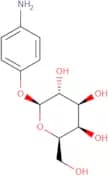
CAS:4-Aminophenyl-beta-D-galactopyranoside is a substrate for beta-galactosidase. 4-aminophenol is released upon cleavage by beta-galactosidase. 4-aminophenol can be assayed by electro-oxidation to 4-imino quinone while recording changes in potential or current of a galvanic system. 4-Aminophenyl-beta-D-galactopyranoside can be used in affinity chromatography for the isolation of galactose-binding lectins.Fórmula:C12H17NO6Pureza:Min. 95%Cor e Forma:PowderPeso molecular:271.27 g/molEthyl 2,3,4-tri-O-acetyl-b-L-thiofucopyranoside
CAS:Ethyl 2,3,4-tri-O-acetyl-b-L-thiofucopyranoside is a modified form of the sugar fucose. It is used as an intermediate in the synthesis of polysaccharides. Ethyl 2,3,4-tri-O-acetyl-b-L-thiofucopyranoside is used in the synthesis of oligosaccharides and polysaccharides by methylation and click modification reactions. This compound has CAS number 127501-41-1 and can be found with a purity of >99%.Fórmula:C14H22O7SPureza:Min. 98 Area-%Cor e Forma:White PowderPeso molecular:334.39 g/mol5-Deoxy-1,2-O-isopropylidene-5-[(2R-phenylpyrrolidine)-1-yl]-a-D-xylofuranose
CAS:5-Deoxy-1,2-O-isopropylidene-5-[(2R-phenylpyrrolidine)-1-yl]-a-D-xylofuranose is a sugar that is used in the synthesis of oligosaccharides and monosaccharides. It is also used to modify saccharides and carbohydrates. 5DIOX can be synthesized from deoxyribose phosphate, 2-(2′,4′,6′,8'-tetraoxohexyl)benzaldehyde, and 2-(2′,4′,6′,8'-tetraoxohexyl)pyrrole. The CAS number for 5DIOX is 1014404-86-4.Fórmula:C18H25NO4Pureza:Min. 95%Peso molecular:319.4 g/mol4-Deoxy-4-fluoro-D-mannose
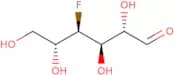
CAS:4-Deoxy-4-fluoro-D-mannose is a sugar that is an analog of 3-deoxy-3-fluoro-d-mannose. It is synthesized by the transfer of a 6-hydroxyl group from 6,6'-dideoxyadenosine to the C6 hydroxyl group of 3,6'-dihexadecylthio adenosine. 4,4'-Difluoro D-mannose is then obtained by hydrolysis and decarboxylation. This process can be catalyzed by enzyme catalysis with phosphofructokinase or hexokinase. 4,4'-Difluoro D mannose has been used in biochemical studies as an analog for 6,6'-dideoxydaunosine. It has also been used as a substrate for virus glycosylation and protein glycosylation in living cells. In addition, it has been shown to inhibitFórmula:C6H11FO5Pureza:Min. 95%Cor e Forma:PowderPeso molecular:182.15 g/molPhenyl 2,3-di-O-benzoyl-4,6-O-benzylidene-b-D-thioglucopyranoside
Phenyl 2,3-di-O-benzoyl-4,6-O-benzylidene-b-D-thioglucopyranoside is a high purity custom synthesis. It is a sugar with Click modification and fluorination. This product is synthesized from glycosylation, methylation, and modification. Phenyl 2,3-di-O-benzoyl-4,6-O-benzylidene-b-D-thioglucopyranoside has CAS No. and can be used as an oligosaccharide or monosaccharide in complex carbohydrates.Pureza:Min. 95%(1R) -1- [(2S, 3R,4S) -4-(Acetylamino)methyl-N-butyl-3- hydroxy- 1- azetidinyl] -1, 2- ethanediol
(1R) -1- [(2S, 3R,4S) -4-(Acetylamino)methyl-N-butyl-3- hydroxy- 1- azetidinyl] -1, 2- ethanediol is a synthetic glycoside that has been modified with fluorine. It has a number of applications in the synthesis of saccharides and polysaccharides for use as pharmaceuticals or food additives.Pureza:Min. 95%5-Azido-5-deoxy-2,3-O-isopropylidene-D-ribono-1.4-lactone
5-Azido-5-deoxy-2,3-O-isopropylidene-D-ribono-1.4-lactone is a synthetic glycosylate with a fluorinated sugar. It is custom synthesized to order and can be modified with methylation, monosaccharide, or polysaccharide modifications. The CAS number of 5-Azido-5-deoxy-2,3 -O -isopropylidene -D -ribono -1.4 -lactone is 84762–27–6.Pureza:Min. 95%(1R) -1- [(2R, 3S) -3- Hydroxy- 1- azetidinyl] -1, 2- ethanediol
CAS:The compound is a custom synthesis of (1R) -1- [(2R, 3S) -3- Hydroxy- 1- azetidinyl] -1, 2- ethanediol. The compound has been modified with fluorination and methylation. This modification has been confirmed by high resolution mass spectrometry and nuclear magnetic resonance spectroscopy. The fluorinated compound is synthesized from the monosaccharide or oligosaccharide starting materials. The modification process includes Click chemistry that is used to introduce saccharide groups onto the oligosaccharides or polysaccharides for glycosylation reactions. This process results in a sugar or complex carbohydrate product with high purity.Fórmula:C5H11NO3Pureza:Min. 95%Peso molecular:133.15 g/mol(1R) -1- [(2S, 3S) - 3- Hydroxy- 1- azetidinyl] -1, 2- ethanediol
(1R) -1- [(2S, 3S) - 3- Hydroxy- 1- azetidinyl] -1, 2- ethanediol is a glycoside that can be used as a fluorination agent. It reacts with the hydroxyl group of carbohydrates to form a covalent bond between the oxygen atom and fluorine atom. This product is custom synthesized and has high purity. The CAS number for this product is 53872-68-9.Pureza:Min. 95%1-Deoxy-D-xylulose - Aqueous solution
CAS:1-Deoxy-D-xylulose is a potent inhibitor of the enzyme xylulokinase, which catalyses the first step in the metabolism of D-xylulose to form 5-phosphate. This prevents the conversion of D-xylulose to xylitol and inhibits body formation. The 1-deoxy--D-xylulose molecule has been shown to bind selectively to sodium citrate by x-ray diffraction data. Sodium citrate is an antimicrobial agent used for food preservation and as a preservative in pharmaceuticals. It also has been shown to control enzyme activities that are involved in infectious diseases such as malaria, tuberculosis, and leprosy. 1-Deoxy--D--xylulose is one of many high purity steviol glycosides that have been identified as potential drug targets for inhibiting body formation or growth.Fórmula:C5H10O4Pureza:Min. 97 Area-%Cor e Forma:Clear LiquidPeso molecular:134.13 g/mol3-Deoxy-1,2-O-isopropylidene-5-O-toluoyl-b-L-ribofuranose
CAS:3-Deoxy-1,2-O-isopropylidene-5-O-toluoyl-b-L-ribofuranose is a sugar that is a methylated form of ribose. It also forms the backbone of polysaccharides and is modified with glycosylation. 3DOTRB can be custom synthesized in high purity and has CAS No. 2072145-19-6.Pureza:Min. 95%4-Methylphenyl 2-O-acetyl-3-O-benzyl-4-O-levulinoyl-b-D-thioglucuronide methyl ester
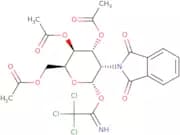
4-Methylphenyl 2-O-acetyl-3-O-benzyl-4-O-levulinoyl-b-D-thioglucuronide methyl ester is a high purity, custom synthesis, sugar modified, Click modification, fluorination, glycosylation, synthetic compound. CAS No. is 8072159–1. It is an Oligosaccharide, Monosaccharide and Carbohydrate with complex carbohydrate structure.Fórmula:C28H32O9SPureza:Min. 95%Peso molecular:544.62 g/mol3,4,6-Tri-O-acetyl-2-deoxy-2-phthalimido-b-D-glucopyranosyl trichloroacetimidate
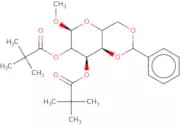
CAS:3,4,6-Tri-O-acetyl-2-deoxy-2-phthalimido-b-D-glucopyranosyl trichloroacetimidate is a custom synthesis that has been modified with fluorine. It is a white powder and is soluble in water. 3,4,6-Tri-O-acetyl-2-deoxy-2-phthalimido-b-D--glucopyranosyl trichloroacetimidate is used for the production of saccharide and carbohydrate derivatives. This product has a CAS number of 871906788 and an ACD/IEC number of P077G10.Fórmula:C22H21Cl3N2O10Cor e Forma:PowderPeso molecular:579.77 g/molMethyl 4,6-O-benzylidene-2,3-di-O-pivaloyl-a-D-mannopyranoside
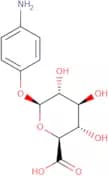
Methyl 4,6-O-benzylidene-2,3-di-O-pivaloyl-a-D-mannopyranoside is a synthetic carbohydrate. It is a methylated saccharide that has been modified with a click modification and an Oligosaccharide. This product is also fluorinated and complexed with other sugars.Fórmula:C24H34O8Pureza:Min. 95%Peso molecular:450.53 g/mol4-Aminophenyl β-D-glucuronide sodium
CAS:4-Aminophenyl β-D-Glucuronide can be used to analyse acetaminophen and other metabolites in plasma.Fórmula:C12H14NO7•NaPureza:Min. 95%Cor e Forma:PowderPeso molecular:307.23 g/mol2-Deoxy-2-fluoro-D-ribofuranose
CAS:2-Deoxy-2-fluoro-D-ribofuranose is a dinucleoside that stabilizes the ribose moiety of uridine and guanosine, which are important for bacterial DNA replication. 2-Deoxy-2-fluoro-D-ribofuranose binds to the ribosomal enzyme Uridylate Kinase and inhibits its activity, thereby preventing the synthesis of nucleotide precursors. This product has been shown to be effective against bacteria such as Escherichia coli and Staphylococcus aureus. The hydration properties of 2-deoxy -2 fluorodeoxy D ribofuranose make it an ideal ligand for binding to enzymes in order to inhibit their function. The nature of this compound also makes it an ideal candidate for thermodynamic studies.Fórmula:C5H9FO4Pureza:Min. 95%Cor e Forma:White PowderPeso molecular:152.12 g/molMethyl 4,6-O-benzylidene-2-deoxy-a-D-allopyranoside
Methyl 4,6-O-benzylidene-2-deoxy-a-D-allopyranoside is an oligosaccharide that has a complex carbohydrate structure with a fluorination modification. It is synthesized by the methylation of 4,6-O-benzylidene-2,3,4,6 tetra deoxy aldopyranose and the glycosylation with methylated glucose. Methyl 4,6-O-benzylidene-2-deoxy-a -D allopyranoside is used in research to study the synthesis of saccharides and glycoconjugates. Its CAS number is 6891–51–8. This product is available for custom synthesis.Fórmula:C14H18O5Pureza:Min. 95%Peso molecular:266.29 g/mol(5S, 8S, 9S) -8- [(4S) - 2, 2-Dimethyl- 1, 3- dioxolan- 4- yl] - 9- hydroxy- 2, 2- dimethyl- 1, 3, 7- trioxaspiro[4.4] nonan- 6- one
(5S, 8S, 9S) -8- [(4S) - 2, 2-Dimethyl- 1, 3- dioxolan- 4- yl] - 9- hydroxy- 2, 2- dimethyl- 1, 3, 7- trioxaspiro[4.4] nonan- 6- one is a synthetic molecule that has been modified to include fluorine atoms at the C3 and C4 positions. It is a sugar that is found in many plants and animals. This sugar can be methylated or modified with other molecules to form complex carbohydrates. The ability of this sugar to form oligosaccharides and polysaccharides makes it an important part of carbohydrate metabolism.
Pureza:Min. 95%3, 4- O- [(R) -Benzylidene] -2-O-trifluormethansulfonyl-D- ribonic acid d- lactone
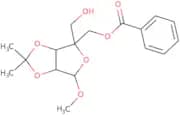
3, 4- O- [(R) -Benzylidene] -2-O-trifluormethansulfonyl-D- ribonic acid d- lactone is a sugar derivative that is used as a reagent in organic synthesis. It has been used as a building block for the preparation of acetonitrile derivatives, which are useful for the synthesis of heterocycles. 3, 4- O- [(R) -Benzylidene] -2-O-trifluormethansulfonyl-D- ribonic acid d- lactone has also been shown to be an active site for catalyzing the reaction between nitroglycerin and trinitrate with dioxane as solvent. This compound can also be used to synthesize the antihypertensive drug hydroxypropanolamine by reacting with hydroxylamine and acetone in acidic conditions.Pureza:Min. 95%Methyl 5-O-Benzoyl-4-C-hydroxymethyl-2,3-O-isopropylidene-b-D-ribofuranoside
CAS:Methyl 5-O-benzoyl-4-C-hydroxymethyl-2,3-O-isopropylidene-β-D-ribofuranoside is a monosaccharide. The methyl group is attached to the 5th carbon atom on the furan ring. This modification can be used in glycosylation reactions to produce complex carbohydrates, such as oligosaccharides and polysaccharides. Methyl 5-O-benzoyl4C hydroxymethyl2,3O isopropylideneb D ribofuranoside has a molecular formula of C6H8O6 and a molecular weight of 180.1 daltons. It is soluble in water and alcohols.Pureza:Min. 95%α-D-Galacturonic acid 1-phosphate
a-D-Galacturonic acid 1-phosphate is a component of the polygalacturonate skeleton. It is an intermediate in the biosynthesis of d-galacturonic acid and galacturonic acid. This compound is also involved in cellular growth, as it is a precursor for uronic acids. The enzyme catalyzing the conversion of a-D-galacturonic acid 1-phosphate to uronic acid has been purified from Phaseolus vulgaris. It has been shown that this enzyme can be inhibited by phosphatase inhibitors such as pyridoxal phosphate, and that it can be activated by nucleotide analogs such as adenosine 5'-diphosphate (ADP) or cytidine 5'-triphosphate (CTP).Fórmula:C6H11O10PPureza:Min. 95%Cor e Forma:PowderPeso molecular:274.12 g/molN-Acetyl-D-glucosamine 2-epimerase
CAS:N-Acetyl-D-glucosamine 2-epimerase is an enzyme that catalyzes the conversion of N-acetyl D-glucosamine to N-acetyl D-mannosamine. This enzyme is a recombinant protein. It has been shown to be active against bacterial cells and has been used as a target for antibodies in research. The enzyme is insoluble at high concentrations, so it must be refolded before use. It is active in a denatured form, but can be made inactive by heat or other denaturing agents such as urea, guanidine hydrochloride, or sodium dodecyl sulfate (SDS). Refolding strategies include dilution, dialysis, or adsorption onto a solid support such as agarose beads. !--Pureza:Min. 95%Cor e Forma:Grey to brown solid.(2R, 3S, 4R, 5S) -3,4-O-Isopropylidene-2- butyl-3, 4, 5- piperidinetriol
The following product descriptions are from the company's website:Pureza:Min. 95%(1R) -1- [(2R, 3R,4S) -N-Benzyl-3- benzyloxy- 4-hydroxymethyl-1- azetidinyl] -1, 2- ethanediol
(1R) -1- [(2R, 3R,4S) -N-Benzyl-3- benzyloxy- 4-hydroxymethyl-1- azetidinyl] -1, 2- ethanediol is a modification of the oligosaccharide glycogen. It is a synthetic compound that has been modified by methylation and glycosylation. This compound is soluble in water and ethanol, but insoluble in ether. It has a CAS number of 55634-00-2.Pureza:Min. 95%1,2-O-Isopropylidene-b-L-arabinofuranose
1,2-O-Isopropylidene-b-L-arabinofuranose is a custom synthesis. It is modified by fluorination, methylation, and monosaccharide synthesis. This product can be used in the creation of oligosaccharides and saccharides. 1,2-O-Isopropylidene-b-L-arabinofuranose is a carbohydrate that has been glycosylated and polysaccharided with other sugars to form complex carbohydrates.Pureza:Min. 95%3-O-Benzyl-1,2-O-isopropylidene-a-D-xylopentodialdo-1,4-furanose
CAS:3-O-Benzyl-1,2-O-isopropylidene-a-D-xylopentodialdo-1,4-furanose is a synthetic sugar that can be used as a building block for the synthesis of glycoproteins, polysaccharides and other complex carbohydrates. It is also used for the modification of saccharide chains by methylation and fluorination. 3Bz DAPF was custom synthesized using high purity chemicals and has been shown to have an excellent level of purity.Fórmula:C15H18O5·xH2OPureza:Min. 95%Cor e Forma:Colourless LiquidPeso molecular:278.3Benzyl 2-O-benzyl-b-D-arabinopyranoside
Benzyl 2-O-benzyl-b-D-arabinopyranoside is a custom synthesis that is a complex carbohydrate. It is an oligosaccharide with CAS No. and has the molecular weight of 947. It is modified by methylation, glycosylation, and click modification. This product is made using sugar as a raw material and has high purity. The product has been fluorinated to increase its stability. The product is synthetic and can be used in research applications such as the modification of saccharides, methylation, glycosylation, or click chemistry.Pureza:Min. 95%Lumefantrine b-D-Glucuronide
CAS:Lumefantrine b-D-Glucuronide is an anti-malarial drug with a high purity and custom synthesis. It can be synthesized by click modification, fluorination, glycosylation, and methylation of the sugar. Lumefantrine b-D-Glucuronide is an oligosaccharide that contains saccharides and complex carbohydrates. Lumefantrine b-D-Glucuronide is a sugar modified to produce a molecule that is more soluble in water. It has a CAS No. 460745-26-0 and can also be found under the name Oligosaccharide, Monosaccharide, Saccharide, Carbohydrate.Fórmula:C36H40Cl3NO7Pureza:Min. 95%Peso molecular:705.06 g/mol(2S, 3S, 4S) -2- (Hydroxymethyl) - 2- methyl- 3, 4- pyrrolidinediol
CAS:The product is a Carbohydrate, Modification, saccharide, Oligosaccharide. It is an artificial sugar that has been synthesized and modified for use in the food industry. The material is a complex carbohydrate with a high purity level and custom synthesis. It can be used in the production of sweeteners or as a flavor enhancer. The product is fluorinated to slow down its rate of degradation, which allows it to be used as an ingredient in processed foods. The product also has glycosylation sites that can be methylated or click-modified.Fórmula:C6H13NO3Pureza:Min. 95%Peso molecular:147.17 g/molD-Fructose-1,6-diphosphate tetra(cyclohexylammonium) salt
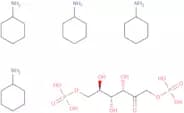
CAS:D-Fructose-1,6-diphosphate tetra(cyclohexylammonium) salt is a white to off-white crystalline powder. It is soluble in water and ethanol and insoluble in ether, chloroform, and benzene. D-Fructose-1,6-diphosphate tetra(cyclohexylammonium) salt is used as a raw material for the production of mono and oligosaccharides by click chemistry or glycosylation. The chemical formula for this substance is CHNO4.H2O4C8H11N.Fórmula:C6H14O12P2·4C6H13NPureza:Min. 95%Peso molecular:736.81 g/mol(2R, 3R, 4R, 5S) -3, 4, 5- Trihydroxy- 2- (hydroxymethyl) - 1- piperidinepropanoic acid
CAS:Glycosylation, complex carbohydrate, Methylation, Click modification, Polysaccharide, Fluorination, saccharide and Modification of sugars are some of the reactions that can be performed on this compound. It is a synthetic monosaccharide with CAS No. 78013-18-0. This product is available for custom synthesis and has been shown to have high purity.Fórmula:C9H17NO6Pureza:Min. 95%Peso molecular:235.23 g/mol1,2,3,4-Tetra-O-benzyl-6-O-triisopropylsilyl-b-D-glucopyranose
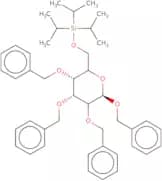
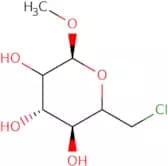
1,2,3,4-Tetra-O-benzyl-6-O-triisopropylsilyl-b-D-glucopyranose is a Fluorination reagent for glycosylation. It is used to introduce fluorine atoms into the sugar molecule and can be used in a variety of synthesis reactions. It is often used as a precursor to other sugars or carbohydrates and it provides a high degree of purity. Click modification of 1,2,3,4-Tetra-O-benzyl-6-O-triisopropylsilyl-b-D-glucopyranose has been shown to be an effective way to increase the stability of this compound.Fórmula:C43H56O6SiPureza:Min. 95%Peso molecular:697.01 g/molMethyl 6-chloro-6-deoxy-a-D-altropyranoside
Methyl 6-chloro-6-deoxy-a-D-altropyranoside is a custom synthesis that has been modified to have fluorination and methylation. This product is a monosaccharide that has been synthesized with the click modification and oligosaccharides. It is also polysaccharides and glycosylations, which are complex carbohydrates. These modifications can be found by CAS number.Fórmula:C7H13ClO5Pureza:Min. 95%Peso molecular:212.63 g/molMethyl N-benzyl-4,6-dideoxy-4,6-imino-2,3-O-isopropylidene-b-D-talopyranoside
Methyl N-benzyl-4,6-dideoxy-4,6-imino-2,3-O-isopropylidene-b-D-talopyranoside is a fluorinated monosaccharide with a custom synthesis. It is a synthetic oligosaccharide that has undergone glycosylation and polysaccharide modification. This compound has been modified by methylation, click chemistry, and sugar formation. It is available in high purity with a CAS number of 29059-07-1.
Pureza:Min. 95%(1R) -1- [(2S, 3R) - N-Benzyl-3- hydroxy- 1- azetidinyl] -1, 2- ethanediol
(1R) -1- [(2S, 3R) - N-Benzyl-3- hydroxy- 1- azetidinyl] -1, 2- ethanediol is a synthetic product that can be custom synthesized. It has been used in glycosylation reactions to produce oligosaccharides and monosaccharides. The chemical composition of the product is: C6H10O5 (CAS No. ).Pureza:Min. 95%2-Acetamido-2,6-dideoxy-L-mannose
2-Acetamido-2,6-dideoxy-L-mannose is a deoxyhexose that is found in lipopolysaccharides from Gram-negative bacteria. 2-Acetamido-2,6-dideoxy-L-mannose is the only hexose that can be used for O antigen synthesis, which makes it an important component of LPS and O antigens. It has been sequenced in many organisms including animals, plants, and bacteria. 2-Acetamido-2,6-dideoxy-L-mannose may be involved in the translocation of bacteria across the gut epithelium into the bloodstream. The monosaccharide also plays a role in serogrouping and serotyping of bacteria.Pureza:Min. 95%Topiramate impurity D
CAS:Topiramate impurity D is a custom synthesis with CAS number. It is an oligosaccharide that has been modified by methylation and glycosylation. Topiramate impurity D is a complex carbohydrate with saccharide units, which are modified by fluorination and click chemistry. This product is high purity and has been synthesized using the synthetic method of glycosylation, Oligosaccharide, Methylation, and Carbohydrate.Fórmula:C12H20O6Pureza:Min. 95%Peso molecular:260.28 g/mol5-Azido-6-benzylamino-N-benzyloxycarbonyl-5,6-dideoxy-1,2-O-isopropylidene-a-L-idofuranose
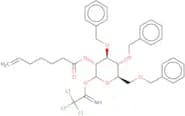
5-Azido-6-benzylamino-N-benzyloxycarbonyl-5,6-dideoxy-1,2-O-isopropylidene-a-L-idofuranose (5ABB) is a methylated and fluorinated oligosaccharide. This compound is a synthetic monosaccharide that can be used in the modification of complex carbohydrate structures. 5ABB is an excellent choice for the synthesis of oligosaccharides because it offers high purity and quality.Pureza:Min. 95%3,4,6-Tri-O-acetyl-2-azido-2-deoxy-β-D-galactopyranosyl trichloroacetimidate
CAS:3,4,6-Tri-O-acetyl-2-azido-2-deoxy-beta-D-galactopyranosyl trichloroacetimidate is a custom synthesis that has been modified with fluorination and methylation. It is a monosaccharide containing the sugar galactose and it can be found in a saccharide or polysaccharide. This compound was synthesized using click chemistry.Fórmula:C14H17Cl3N4O8Pureza:Min. 95 Area-%Peso molecular:475.67 g/mol(1S) -1- [(2R, 3R,4S) -4-Hydroxymethyl-3- hydroxy- 1- azetidinyl] -1, 2- ethanediol hydrochloride
(1S) -1- [(2R, 3R,4S) -4-Hydroxymethyl-3- hydroxy- 1- azetidinyl] -1, 2- ethanediol hydrochloride is a synthetic sugar that can be used in the synthesis of complex carbohydrates. The sugar is not naturally occurring and must be custom synthesized. It has been modified using fluorination, monosaccharides, and oligosaccharides to produce a glycosylation product. This modification is important for the production of polysaccharides with high purity.Pureza:Min. 95%1,2-O-Isopropylidene-a-D-glucofuranose
CAS:1,2-O-Isopropylidene-a-D-glucofuranose (IPDF) is a natural compound that has been isolated from the leaves of the plant Cinnamomum camphora. IPDF has been shown to have biological properties such as inhibiting hl-60 cells and inducing apoptosis in leukemia cells. The metabolic rate of IPDF was studied in isolated hearts and it was found that the compound slows fatty acid oxidation. The enzyme substrate specificity of IPDF was also tested by adding trifluoroacetic acid, which yielded no reaction.Fórmula:C9H16O6Cor e Forma:White Off-White PowderPeso molecular:220.22 g/molIron sucrose
CAS:Iron sucrose is a sucrose-iron complex that is administered intravenously for the treatment of bowel disease and iron deficiency. Iron sucrose has been shown to have potent inducers of oxidative injury, which may be due to the formation of reactive oxygen species. Iron sucrose has also been shown to increase cellular transformation and congestive heart failure in mice. Long-term toxicity studies have not been conducted.
Fórmula:C12H22O11FePureza:Min. 95%Cor e Forma:Brown PowderPeso molecular:398.141-Amino-2,5-anhydro-1-deoxy-D-mannitol
CAS:1-Amino-2,5-anhydro-1-deoxy-D-mannitol is an amino sugar that is synthesized by reductive amination of d-fructose and nitrous acid. It has been shown to be a substrate for the transporter protein, which transports it into the cell. 1-Amino-2,5-anhydro-1-deoxy-D-mannitol has been used in the synthesis of arylamines with nitrous acid as a reducing agent. This process has been used to study the stereospecificity of reductive amination.Fórmula:C6H13NO4Pureza:Min. 95%Cor e Forma:PowderPeso molecular:163.17 g/molN-[(4'-Dimethylaminophenyl)-1-propenyl]imino-2,3,4,6-tetra-O-pivaloyl-D-glucopyranose
CAS:N-[(4'-Dimethylaminophenyl)-1-propenyl]imino-2,3,4,6-tetra-O-pivaloyl-D-glucopyranose is a fluorinated sugar that can be used for the synthesis of glycoconjugates. It is an oligosaccharide with an acetal linkage to the hydroxyl group at C2 and a pivaloyl group linked to the hydroxyl group at C3. This compound has been shown to be effective in methylation reactions.Fórmula:C37H58N2O9Pureza:Min. 95%Peso molecular:674.88 g/mol1-Amino-2,4-O-benzylidene-D-butane-2,3,4-triol
1-Amino-2,4-O-benzylidene-D-butane-2,3,4-triol is a custom synthesis. This compound is an oligosaccharide that has been modified with methylation, glycosylation, and click modification. Carbohydrate molecules are saccharides that have a sugar as their backbone. Saccharides can be classified as monosaccharides (simple sugars) or polysaccharides (complex carbohydrates). This compound is a high purity synthetic that has been fluorinated and has undergone glycose chemistry to produce a desired product.Pureza:Min. 95%1,2:3,4-Diacetone-β-D-glucopyranoside
CAS:1,2:3,4-Diacetone-b-D-glucopyranoside is a glycosylation agent that is used in the synthesis of polysaccharides. It reacts with the hydroxyl groups of saccharide molecules to form glycosidic bonds. 1,2:3,4-Diacetone-b-D-glucopyranoside can be modified by methylation and fluorination reactions to produce different derivatives. This product is CAS No. 496879-67-5 and has a purity of >98%.Fórmula:C12H20O6Pureza:Min. 97 Area-%Cor e Forma:PowderPeso molecular:260.29 g/mol(2S,3S,4R,5R)-3,4-O-Benzylidene-2-cyano-N-(4-methoxybenzyl)-3,4,5-trihydroxy-piperidine
The modification of a polysaccharide with an oligosaccharide, which is the process of adding one or more sugar residues to the polysaccharide. This can be done enzymatically or chemically. The addition of a carbohydrate residue to another carbohydrate-bearing molecule. This can be done enzymatically or chemically. The synthesis of an organic compound that contains only carbon, hydrogen, and oxygen atoms in its molecular structure. This can be done enzymatically or chemically. The process of adding a methyl group to an organic compound. This can be done enzymatically or chemically. A monosaccharide is a simple sugar that cannot be hydrolyzed into simpler sugars by chemical means. It is one of the three main types of biomolecules found in living things (along with lipids and nucleic acids). Methylation is a chemical reaction involving the transfer of a methyl group from one chemical entity to another one; for example, from methanol to dimPureza:Min. 95%Allyl 2-O-acetyl-3-O-benzyl-a-L-rhamnopyranoside
CAS:Allyl 2-O-acetyl-3-O-benzyl-a-L-rhamnopyranoside is a synthetic monosaccharide that is used in the synthesis of complex carbohydrates. It has a CAS number of 940274-20-4 and may be modified with fluorine or methyl groups. Synthetic allyl 2-O-acetyl-3-O-benzyl-a -L -rhamnopyranoside is also known as "Methylated, Custom synthesis, Click modification, Oligosaccharide, Polysaccharide, saccharide, sugar."
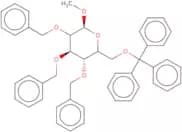
Fórmula:C18H24O6Pureza:Min. 95%Peso molecular:336.39 g/molMethyl 2,3,4-tri-O-benzyl-6-O-trityl-a-D-galactopyranoside
CAS:Methyl 2,3,4-tri-O-benzyl-6-O-trityl-a-D-galactopyranoside is a synthetic modified oligosaccharide. It has been shown to have potent antiplaque activity in animal models of dental caries and has been demonstrated to be an effective inhibitor of the glycosylation reaction. Methyl 2,3,4-tri-O-benzyl-6-O-trityl galactopyranoside is soluble in water and can be used as a fluorinated monosaccharide. The compound can also be used as a click modification with other sugars or saccharides.Fórmula:C47H46O6Pureza:Min. 95%Peso molecular:706.89 g/molEthyl 4,6-O-benzylidene-β-D-thiogalactopyranoside
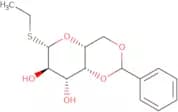
CAS:Ethyl 4,6-O-benzylidene-b-D-thiogalactopyranoside is a synthetically produced carbohydrate typically used as a building block in oligo-saccharide synthesis.
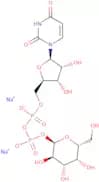
Fórmula:C15H20O5SPureza:Min. 95%Cor e Forma:PowderPeso molecular:312.39 g/molUDP-a-D-galactose ammonium salt
CAS:UDP-a-D-galactose ammonium salt is a nucleotide sugar that is synthesized from uridine and D-galactose. It plays a role in cellular energy metabolism by providing substrate for the synthesis of phospholipids and glycolipids. UDP-a-D-galactose ammonium salt has been shown to be involved in the transcriptional regulation of genes encoding enzymes involved in galactose metabolism. This nucleotide sugar also has been shown to be an exogenous acceptor for various oligosaccharides, including those present on glycoproteins and glycolipids.Fórmula:C15H30N4O17P2Pureza:Min. 95%Peso molecular:600.36 g/mol

![(1R) -1- [(2R, 3S) -3-Hydroxy- N-nonyl-1- azetidinyl] -1, 2- ethanediol](/_next/image/?url=https%3A%2Fstatic.cymitquimica.com%2Fproducts%2F3D%2Fthumb-webp%2FMH163400.webp&w=3840&q=75)


![[2S- (2a, 3b, 4a, 5b) ] - 1-Benzyl - 2-methyl-3, 4, 5- piperidinetriol](/_next/image/?url=https%3A%2Fstatic.cymitquimica.com%2Fproducts%2F3D%2Fthumb-webp%2FMB163330.webp&w=3840&q=75)



![(5R, 8S, 9R) -8- [(4R) - 2, 2- Dimethyl- 1, 3- dioxolan- 4- yl] - 9- hydroxy- 2, 2- dimethyl- 1, 3…](/_next/image/?url=https%3A%2Fstatic.cymitquimica.com%2Fproducts%2F3D%2Fthumb-webp%2FMD170676.webp&w=3840&q=75)

![5-Deoxy-1,2-O-isopropylidene-5-[(2R-phenylpyrrolidine)-1-yl]-a-D-xylofuranose](/_next/image/?url=https%3A%2Fstatic.cymitquimica.com%2Fproducts%2F3D%2Fthumb-webp%2FMD07486.webp&w=3840&q=75)
![(1R) -1- [(2S, 3R,4S) -4-(Acetylamino)methyl-N-butyl-3- hydroxy- 1- azetidinyl] -1, 2- ethanediol](/_next/image/?url=https%3A%2Fstatic.cymitquimica.com%2Fproducts%2F3D%2Fthumb-webp%2FMA163406.webp&w=3840&q=75)
![(1R) -1- [(2R, 3S) -3- Hydroxy- 1- azetidinyl] -1, 2- ethanediol](/_next/image/?url=https%3A%2Fstatic.cymitquimica.com%2Fproducts%2F3D%2Fthumb-webp%2FMH163408.webp&w=3840&q=75)
![(1R) -1- [(2S, 3S) - 3- Hydroxy- 1- azetidinyl] -1, 2- ethanediol](/_next/image/?url=https%3A%2Fstatic.cymitquimica.com%2Fproducts%2F3D%2Fthumb-webp%2FMH163405.webp&w=3840&q=75)


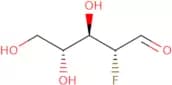

![(5S, 8S, 9S) -8- [(4S) - 2, 2-Dimethyl- 1, 3- dioxolan- 4- yl] - 9- hydroxy- 2, 2- dimethyl- 1, 3,…](/_next/image/?url=https%3A%2Fstatic.cymitquimica.com%2Fproducts%2F3D%2Fthumb-webp%2FMD170667.webp&w=3840&q=75)
![3, 4- O- [(R) -Benzylidene] -2-O-trifluormethansulfonyl-D- ribonic acid d- lactone](/_next/image/?url=https%3A%2Fstatic.cymitquimica.com%2Fproducts%2F3D%2Fthumb-webp%2FMB163971.webp&w=3840&q=75)


![(1R) -1- [(2R, 3R,4S) -N-Benzyl-3- benzyloxy- 4-hydroxymethyl-1- azetidinyl] -1, 2- ethanediol](/_next/image/?url=https%3A%2Fstatic.cymitquimica.com%2Fproducts%2F3D%2Fthumb-webp%2FMB163369.webp&w=3840&q=75)



![(1R) -1- [(2S, 3R) - N-Benzyl-3- hydroxy- 1- azetidinyl] -1, 2- ethanediol](/_next/image/?url=https%3A%2Fstatic.cymitquimica.com%2Fproducts%2F3D%2Fthumb-webp%2FMB163413.webp&w=3840&q=75)
![(1S) -1- [(2R, 3R,4S) -4-Hydroxymethyl-3- hydroxy- 1- azetidinyl] -1, 2- ethanediol hydrochloride](/_next/image/?url=https%3A%2Fstatic.cymitquimica.com%2Fproducts%2F3D%2Fthumb-webp%2FMH163376.webp&w=3840&q=75)
![N-[(4'-Dimethylaminophenyl)-1-propenyl]imino-2,3,4,6-tetra-O-pivaloyl-D-glucopyranose](/_next/image/?url=https%3A%2Fstatic.cymitquimica.com%2Fproducts%2F3D%2Fthumb-webp%2FMD08489.webp&w=3840&q=75)