Monossacáridos
Monossacarídeos são a forma mais simples de carboidratos e servem como building blocks fundamentais para açúcares mais complexos e polissacarídeos. Essas moléculas de açúcar único desempenham papéis críticos no metabolismo energético, na comunicação celular e nos componentes estruturais das células. Nesta seção, você encontrará uma ampla variedade de monossacarídeos essenciais para pesquisas em bioquímica, biologia molecular e glicociência. Esses compostos são cruciais para estudar vias metabólicas, processos de glicosilação e desenvolvimento de agentes terapêuticos. Na CymitQuimica, oferecemos monossacarídeos de alta qualidade para apoiar suas necessidades de pesquisa, garantindo precisão e confiabilidade em suas investigações científicas.
Subcategorias de "Monossacáridos"
- Aloses(11 produtos)
- Arabinoses(21 produtos)
- Eritroses(11 produtos)
- Frutoses(9 produtos)
- Fucoses(36 produtos)
- Galactosamina(41 produtos)
- Galactoses(260 produtos)
- Glucoses(365 produtos)
- Ácidos Glucurónicos(51 produtos)
- Glico-substratos para enzimas(77 produtos)
- Guloses(6 produtos)
- Idoses(4 produtos)
- Inositóis(15 produtos)
- Lixoses(4 produtos)
- Mannoses(65 produtos)
- O-Glicanos(48 produtos)
- Psicoses(3 produtos)
- Ramnoses(10 produtos)
- Riboses(61 produtos)
- Ácidos siálicos(100 produtos)
- Sorboses(4 produtos)
- Açúcares(173 produtos)
- Tagatoses(4 produtos)
- Taloses(8 produtos)
- Xiloses(20 produtos)
Exibir 17 mais subcategorias
Foram encontrados 6088 produtos de "Monossacáridos"
Ordenar por
Pureza (%)
0
100
|
0
|
50
|
90
|
95
|
100
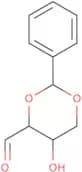
2,4-O-Benzylidene-D-Threose
CAS:<p>2,4-O-Benzylidene-D-Threose is a chemical compound that is used as a reagent in the synthesis of glycosphingolipids. It is prepared by the Wittig reaction of 2,4-dibromobenzaldehyde with potassium azide and phytosphingosine. The compound has also been used as a tool in biological studies to study the biosynthesis of glycosphingolipids. This product can react with carbinols to produce acetylides or diphosphate esters. 2,4-O-Benzylidene-D-Threose can be used as a reagent for the synthesis of methylmagnesium chloride, which is a Grignard reagent.</p>Pureza:Min. 95%Methyl 7,8,9-Tri-O-acetyl-5-N,4-O-carbonyl-3,5-dideoxy-2-S-phenyl-2-thio-D-glycero-b-D-galacto-2-nonulopyranosylonate
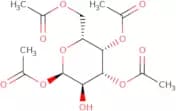
CAS:<p>Methyl 7,8,9-Tri-O-acetyl-5-N,4-O-carbonyl-3,5-dideoxy-2-S-phenyl-2-thio-D-glycero -b-(1→4)-D-(1→3)-galacto-(1→4)-2-[N-[(1R,2R)-2-(methoxyimino)ethoxy]acetamido]-nonulopyranosylonate is a synthetic carbohydrate. It has been modified with methylation at position 7 and 8 of the sugar and click modification. Methyl 7,8,9 -triacetyl 5 -N, 4 -O carbonyl 3 , 5 -dideoxy 2 -S phenyl 2 -thiophenediol glycero b D galacto 2 nonulopyranoside is a complex carbohydrate.</p>Fórmula:C23H27NO11SPureza:Min. 95%Peso molecular:525.53 g/mol1,3,4,6-Tetra-O-acetyl-a-D-galactopyranose
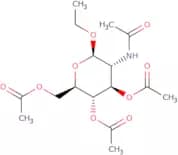
CAS:<p>1,3,4,6-Tetra-O-acetyl-a-D-galactopyranose is a custom synthesis of 1,3,4,6-tetra-O-acetyl-a-D-galactopyranose. It is used in the modification of saccharides and polysaccharides. The modification is done by Click chemistry with the incorporation of fluorine in the sugar ring. This product is available as a white powder and has a CAS number of 19186-40-4.</p>Fórmula:C14H20O10Pureza:Min. 95%Cor e Forma:White PowderPeso molecular:348.3 g/molEthyl 2-acetamido-3,4,6-tri-O-acetyl-2-deoxy-β-D-glucopyranoside
CAS:<p>Ethyl 2-acetamido-3,4,6-tri-O-acetyl-2-deoxy-b-D-glucopyranoside is a compound with a molecular mass of 536.35 Da. It is an inhibitor of the enzyme catalase and has been shown to bind to monoclonal antibodies that are specific for human vascular endothelial growth factor (VEGF). This inhibition prevents the binding of VEGF to its receptor, which blocks the activation of the VEGF pathway. Ethyl 2-acetamido-3,4,6-tri-O-acetyl-2-deoxy--b D glucopyranoside has also been shown to inhibit HIV replication in vitro.</p>Fórmula:C16H25NO9Pureza:Min. 95%Cor e Forma:White To Off-White SolidPeso molecular:375.37 g/mol2-Chloro-2-deoxy-D-glucose
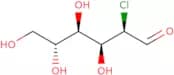
CAS:<p>2-Chloro-2-deoxy-D-glucose (2CDG) is a chemical compound that has been shown to be an effective inhibitor of hypoxic tumor growth. 2CDG inhibits the production of fatty acids, which are required for cell proliferation and survival. It also has inhibitory properties on the chromatographic system and can be used as a detector in electrochemical methods. The detection of 2CDG in blood serum is used as a diagnostic tool for cancer, with a sensitivity and specificity of up to 100%. This compound has shown promising results for the treatment of hypertension and diabetes.</p>Fórmula:C6H11ClO5Pureza:Min. 95%Cor e Forma:White PowderPeso molecular:198.6 g/mol2-C-Methyl-L-ribono-1,4-lactone
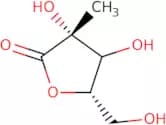
CAS:<p>2-C-Methyl-L-ribono-1,4-lactone is a crystallized carbohydrate that contains the enantiomers L and D. It is a chiral molecule with two asymmetric carbon atoms. The L form has a higher yield than the D form and can be synthesized from l-arabinose, dimethylamine, and isomerisation. This compound is also present in ketoses such as d-xylose and 1-deoxy-d-ribulose. 2CMLR1L4L acts as an inhibitor of the enzyme d-galactose dehydrogenase, which catalyzes the conversion of d-galactose to d-glucose. Cyanide can bind to this compound to form cyanohydrin adducts, which are toxic to cells.</p>Fórmula:C5H10O5Pureza:Min. 95%Peso molecular:150.13 g/mol2-Amino-2-deoxy-glucitol
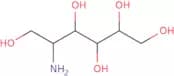
CAS:<p>2-Amino-2-deoxy-glucitol is a kinetic inhibitor of the enzyme glycogen phosphorylase, which catalyzes the rate-limiting step in glycogenolysis. It binds to the enzyme and blocks access to the active site by an amide group, thus inhibiting the phosphorylation of glucose residues. This prevents the breakdown of glycogen and leads to increased levels of blood sugar. 2-Amino-2-deoxy-glucitol is used as a treatment for pertussis (whooping cough) and as an adjunct therapy during insulin shock therapy for diabetic ketoacidosis. The drug has also been shown to bind to histidine residues on the enzyme and inhibit its activity.</p>Fórmula:C6H15NO5Pureza:Min. 95%Peso molecular:181.19 g/molBenzyl α-D-glucopyranoside
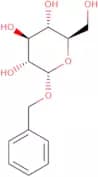
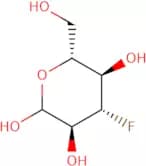
CAS:<p>Benzyl a-D-glucopyranoside is an organic compound with the chemical formula CHO. It is a benzoyl derivative of glucose, which has been shown to be useful in the synthesis of other glycosides. The reaction yield and condition are dependent on reaction temperature and yield rate. The chloride ion reacts with the benzoyl chloride to form an ester, which then hydrolyzes to produce the desired product and hydrogen chloride. The reaction can be carried out at room temperature or under reflux conditions.</p>Fórmula:C13H18O6Pureza:Min. 95%Cor e Forma:PowderPeso molecular:270.28 g/mol3-Deoxy-3-fluoro-D-glucose
CAS:<p>Fluorinated glucose analog</p>Fórmula:C6H11FO5Pureza:Min. 95%Cor e Forma:White PowderPeso molecular:182.15 g/molD-Salicin
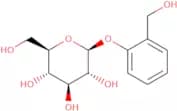
CAS:<p>D-Salicin is a naturally occurring compound, classified as a biologically active glycoside. It is acquired from the bark of willow trees, primarily species within the genus Salix. The primary mode of action of D-Salicin involves its metabolic conversion into salicylic acid within the human body. This conversion occurs in the gastrointestinal tract and bloodstream, ultimately displaying effects similar to non-steroidal anti-inflammatory drugs (NSAIDs).</p>Fórmula:C13H18O7Pureza:Min. 98 Area-%Cor e Forma:White Off-White PowderPeso molecular:286.28 g/molL-Ribose
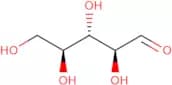
CAS:<p>Constituent of RNA; important resource for RNA- and DNA-related syntheses</p>Fórmula:C5H10O5Pureza:Min. 98 Area-%Cor e Forma:White PowderPeso molecular:150.13 g/mol2,3,4,6-Tetra-O-pivaloyl-D-mannopyranosyl fluoride
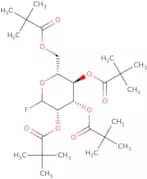
CAS:<p>2,3,4,6-Tetra-O-pivaloyl-D-mannopyranosyl fluoride is a carbohydrate that is synthesized by the modification of D-mannose with 4,6-dichlorohexanoic acid. It is a white powder with a melting point of 170°C. 2,3,4,6-Tetra-O-pivaloyl-D-mannopyranosyl fluoride can be used as a monosaccharide for glycosylation reactions or as an intermediate for custom synthesis. This product has been methylated and glycosylated before the final purification process. It has a high purity level and can be used in Click chemistry reactions.</p>Fórmula:C26H43FO9Pureza:Min. 95%Cor e Forma:White PowderPeso molecular:518.61 g/molD-Galactal
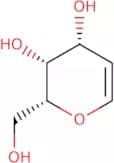
CAS:<p>Building block for oligosaccharide synthesis</p>Fórmula:C6H10O4Pureza:Min. 98 Area-%Cor e Forma:White Off-White PowderPeso molecular:146.14 g/molmeso-Erythritol
CAS:<p>Used in culture medium to differentiate bacteria on the basis of carbohydrate fermentation abilities.</p>Fórmula:C4H10O4Pureza:Min. 98.0 Area-%Peso molecular:122.12 g/molEthyl 2,3-di-O-benzoyl-4,6-O-benzylidene-b-D-thioglucopyranoside
<p>Ethyl 2,3-di-O-benzoyl-4,6-O-benzylidene-b-D-thioglucopyranoside is a modified sugar that is used as an intermediate in the synthesis of saccharides and oligosaccharides. It is synthesized by a modification of the Knorr reaction. This product has been shown to be high purity and can be custom synthesized with a variety of functional groups, such as fluorination. Ethyl 2,3-di-O-benzoyl-4,6-O-benzylidene-b-D-thioglucopyranoside is also available in CAS No. 11764719.</p>Fórmula:C29H28O7SPureza:Min. 95%Cor e Forma:White To Off-White SolidPeso molecular:520.59 g/mol3-O-Benzyl-D-glucopyranose
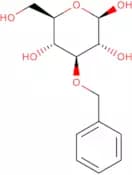
CAS:<p>3-O-Benzyl-D-glucopyranose is a molecule that has been optimized for its autodock score. It binds to the active site of peptidases, which are enzymes that break down proteins in the body. 3-O-Benzyl-D-glucopyranose is a nauclea that can be used as a pharmacokinetic (PK) or pharmacodynamic (PD) inhibitor. Nauclea have shown effectiveness against diabetes by preventing the breakdown of glucose, which is an important energy source for cells. 3-O-Benzyl-D-glucopyranose has also been found to be an effective inhibitor of DPPIV, which is an enzyme involved in breaking down insulin and other hormones in blood circulation. In vitro studies have shown that it may also have antiaging properties due to its ability to inhibit production of inflammatory cytokines such as IL1β, IL6, and TNFα.</p>Fórmula:C13H18O6Pureza:Min. 95%Cor e Forma:PowderPeso molecular:270.28 g/molD-Mannose
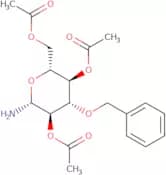
CAS:<p>Mannose (Man) is the C2 epimer of glucose with one hydroxyl group axial which by Hudsons rules makes it slightly less stable than glucose (Hudson, 1948). However, mannose is very common in plants and animals, and occurs in many polysaccharides, such as, galactomannans (e.g. Guar, Locust Bean Gum), mananns (e.g. Ivory Nut Mannan), Spruce Galactoglucomannan, Gum Ghatti (Whistler, 1993) and bakerâs yeast (Saccharomyces cerevisiae) (Manners, 1973). Mannose is one of the key mammalian monosaccharides (Glucose, Galactose, Mannose, Fucose, N-Acetyl Glucosamine, N-Acetyl galactosamine and Sialic acid) and occurs in N-linked glycans where it is a core oligosaccharide (Gabius, 2009).</p>Fórmula:C6H12O6Pureza:Min. 98 Area-%Cor e Forma:White PowderPeso molecular:180.16 g/mol2,4,6-Tri-O-acetyl-3-O-benzyl-b-D-glucopyranosylamine
CAS:<p>Building block for 3-O-modified glucosylamide-linked glyconconjugates</p>Fórmula:C19H25NO8Pureza:Min. 95%Cor e Forma:PowderPeso molecular:395.4 g/molHyacinthacine B3
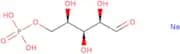
CAS:<p>Hyacinthacine B3 is a compound that was synthesized by the Sharpless asymmetric dihydroxylation of polyhydroxylated aldehyde. It has inhibitory activities against nitrogen atoms and amines, which are important for the synthesis of proteins. The compounds with petasis amines have been shown to be effective in the treatment of influenza A virus.</p>Fórmula:C9H17NO4Pureza:Min. 95%Peso molecular:203.24 g/molD-Xylose-5-phosphate disodium
CAS:<p>D-Xylose-5-phosphate disodium salt is a Custom synthesis that has been fluorinated, methylated, and modified with a click reaction. D-Xylose-5-phosphate disodium salt is also an oligosaccharide and polysaccharide. The CAS No. for this compound is 1083083-57-1.</p>Fórmula:C5H11O8P•Na2Pureza:(%) Min. 80%Cor e Forma:White/Off-White SolidPeso molecular:276.09 g/mol