


Monossacáridos
Subcategorias de "Monossacáridos"
- Aloses(11 produtos)
- Arabinoses(21 produtos)
- Eritroses(11 produtos)
- Frutoses(9 produtos)
- Fucoses(36 produtos)
- Galactosamina(41 produtos)
- Galactoses(261 produtos)
- Glucoses(365 produtos)
- Ácidos Glucurónicos(52 produtos)
- Glico-substratos para enzimas(78 produtos)
- Guloses(6 produtos)
- Idoses(4 produtos)
- Inositóis(15 produtos)
- Lixoses(4 produtos)
- Mannoses(65 produtos)
- O-Glicanos(48 produtos)
- Psicoses(3 produtos)
- Ramnoses(10 produtos)
- Riboses(61 produtos)
- Ácidos siálicos(100 produtos)
- Sorboses(4 produtos)
- Açúcares(173 produtos)
- Tagatoses(4 produtos)
- Taloses(8 produtos)
- Xiloses(20 produtos)
Foram encontrados 6088 produtos de "Monossacáridos"
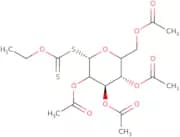
2,3,4,6-Tetra-O-acetyl-b-D-galactopyranosyl ethylxanthate
2,3,4,6-Tetra-O-acetyl-b-D-galactopyranosyl ethylxanthate is a carbohydrate that has been modified through the process of fluorination and methylation. It is a synthetic compound that has been custom synthesized to produce high purity. The CAS number for this compound is 56923-48-8. This compound is used in the modification of saccharides and oligosaccharides as well as other sugar compounds. 2,3,4,6-Tetra-O-acetyl-b-D-galactopyranosyl ethylxanthate is also glycosylated and click modified.Fórmula:C17H24O10S2Pureza:Min. 95%Peso molecular:452.5 g/mol7-Deoxy-1,2:3,4:5,6-tri-O-isopropylidene-L-glycero-L-gulo-heptitol
7-Deoxy-1,2:3,4:5,6-tri-O-isopropylidene-L-glycero-L-guloheptitol is a synthetic oligosaccharide. It is a complex carbohydrate that has been synthesized from glucose and galactose. The sugar's CAS number is 81271-78-9. This product can be custom synthesized to customer specifications and it is available in high purity and high quality. 7-Deoxy-1,2:3,4:5,6 -tri -O -isopropylidene -L -glycero -L -guloheptitol has been fluorinated with chlorine gas to produce the desired product. It has also undergone methylation and glycosylation reactions.Pureza:Min. 95%N- [(3S, 4R, 5S, 6R) - 4, 5- Dihydroxy- 6- (hydroxymethyl) - 3- piperidinyl] -acetamide
N- [(3S, 4R, 5S, 6R) - 4, 5- Dihydroxy- 6- (hydroxymethyl) - 3- piperidinyl] -acetamide is a fluorinated monosaccharide that has been synthesized in the laboratory. The compound is a synthetic oligosaccharide with an acetamide group at position 2. N- [(3S, 4R, 5S, 6R) - 4, 5- Dihydroxy- 6- (hydroxymethyl) - 3- piperidinyl] -acetamide is also a glycosylated polysaccharide that has been modified by methylation and click chemistry.Pureza:Min. 95%3,4:5,6-Di-O-Isopropylidene-2-O-tert.butyldimethylsilyl-L-idonic acid methyl ester
3,4:5,6-Di-O-isopropylidene-2-O-(tert.butyldimethylsilyl)-L-idonic acid methyl ester is an organosilicon compound that is used in the preparation of oligosaccharides and polysaccharides. This compound has a CAS number of 2134160-04-6 and can be custom synthesized to meet your needs. 3,4:5,6-Di-O-isopropylidene-2-O-(tert.butyldimethylsilyl)-L-idonic acid methyl ester is available at a purity of 99% or greater, which makes it ideal for modification to produce monosaccharides or other types of sugar derivatives.Pureza:Min. 95%4-Methoxyphenyl 6-O-tert-butyldimethylsilyl-2-deoxy-2-(2,2,2-trichloroethoxyformamido)-b-D-glucopyranoside
4-Methoxyphenyl 6-O-tert-butyldimethylsilyl-2-deoxy-2-(2,2,2-trichloroethoxyformamido)-b-D-glucopyranoside is a synthetic oligosaccharide that is used as an intermediate in the synthesis of glycosylation products. This product can be custom synthesized and is provided with high purity. The CAS number for this product is 56874-06-1.Pureza:Min. 95%L-Erythrulose
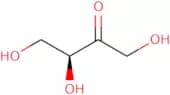
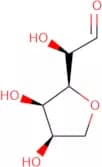
CAS:L-Erythrulose is an organic compound that is a sugar alcohol. It can be synthesized from the aldol reaction of glycolaldehyde and dehydroascorbic acid, which are both found in natural sources. L-Erythrulose has shown to have intramolecular hydrogen transfer (H-transfer) reactions, where the hydroxyl group migrates from one C atom to another. This kinetic data was obtained using surface methodology on model systems containing l-erythrulose and bacteria with wild-type or mutant strains. The conformational properties of L-erythrulose were also investigated by comparing its chemical structures with those of other sugars.
Fórmula:C4H8O4Pureza:Min. 95%Cor e Forma:Yellow Clear LiquidPeso molecular:120.1 g/molAllyl 3-O-benzyl-2-O-chloroacetyl-a-L-rhamnopyranoside
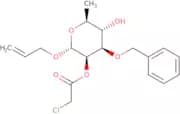
CAS:Allyl 3-O-benzyl-2-O-chloroacetyl-a-L-rhamnopyranoside is a carbohydrate that belongs to the group of modified saccharides. It is a synthetic monosaccharide that can be used in the synthesis of complex carbohydrates and oligosaccharides. The fluorination at C1 position gives this compound high water solubility and improved stability. CAS No. 943307-50-4, Custom synthesis, High purity, Methylation, Glycosylation, Click modification.Fórmula:C18H23ClO6Pureza:Min. 95%Peso molecular:370.83 g/mol2,5:3,4-Dianhydro-6-O-2-propenyl-dimethyl acetal-L-talose
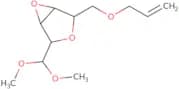
CAS:2,5:3,4-Dianhydro-6-O-2-propenyl-dimethyl acetal-L-talose is a fluorinated sugar that is synthesized by the reaction of an acetal with glycosylation. It has been modified to contain a methyl group and a click modification. 2,5:3,4-Dianhydro-6-O-2-propenyl-dimethyl acetal-L-talose is used as a fluorescent probe for the detection of nucleic acids in living cells. It has high purity and can be custom synthesized to meet customer specifications.Fórmula:C11H18O5Pureza:Min. 95%Peso molecular:230.26 g/mol(2S, 3S, 4S, 5S) -3, 4- Dihydroxy- 5- (hydroxymethyl) - N- methyl- 2- pyrrolidinecarboxami de
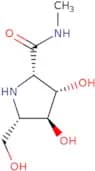
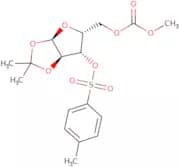
CAS:(2S, 3S, 4S, 5S) -3, 4- Dihydroxy- 5- (hydroxymethyl) - N- methyl- 2- pyrrolidinecarboxami de is a custom synthesis of an oligosaccharide. It is a complex carbohydrate that can be modified to the customer's specifications. The product is available in high purity and with good monosaccharide and methylation yield. The chemical structure of this product contains a fluorinated saccharide.Pureza:Min. 95%5-O-Carbomethoxy-1,2-O-isopropylidene-3-O-p-toluenesulfonyl-α-D-xylofuranose
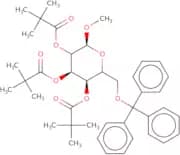
CAS:5-O-Carbomethoxy-1,2-O-isopropylidene-3-O-p-toluenesulfonyl-a-D-xylofuranose is a synthetic chemical that is used in antiperspirant and deodorant products. It works by inhibiting the activity of the eccrine glands and causing a temporary blockage of sweat release. This chemical also decreases the production of bacteria on the skin surface, which can cause bad odors. 5OCMPTOSF is a combination product that includes both an antiperspirant and a deodorant.br> br> Antiperspirants are substances applied to the skin to prevent sweating. They work by blocking sweat from reaching the skin's surface or by masking body odor with their own fragrance. Antiperspirants are most effective when applied to dry skin and can be combined with other cosmetics such as moisturizers or sunscreensFórmula:C17H22O9SPureza:Min. 95%Peso molecular:402.42 g/molMethyl 2,3,4-tri-O-pivaloyl-6-O-trityl-a-D-glucopyranoside
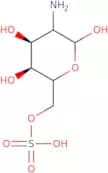
Methyl 2,3,4-tri-O-pivaloyl-6-O-trityl-a-D-glucopyranoside is a custom synthesis of an oligosaccharide. The sugar is attached to the glycosylation site of the peptidoglycan cell wall of bacteria. This modification prevents bacterial growth by interfering with the cell wall biosynthesis that is required for protein synthesis and cell division.Fórmula:C41H52O9Pureza:Min. 95%Peso molecular:688.87 g/molD-Glucosamine-6-O-sulphate
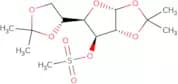
CAS:D-Glucosamine-6-O-sulphate is a disaccharide that is a component of heparin. The molecular docking analysis of this drug with the target proteins, d-glucosamine 6-O-sulphate and l-iduronic acid, has been performed using the protein data sets from proteomics. D-Glucosamine-6-O-sulphate has been found to be related to psoriasis patients in urine samples. The macroscopic and microscopic structure of this drug was also studied and characterized by liquid chromatography.Fórmula:C6H13NO8SPureza:Min. 95 Area-%Cor e Forma:White PowderPeso molecular:259.23 g/mol1,2:5,6-Di-O-isopropylidene-3-O-methanesulfonyl-α-D-glucofuranose
CAS:A protected glucofuranose.
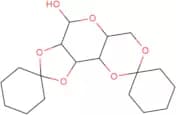
Fórmula:C13H22O8SPureza:Min. 95%Cor e Forma:White To Off-White SolidPeso molecular:338.37 g/mol2,3:4,6-Di-O-cyclohexylidene-a-D-mannopyranose
CAS:2,3:4,6-Di-O-cyclohexylidene-a-D-mannopyranose is a custom synthesis product. It can be modified with fluorination, methylation or monosaccharide substitution. The synthesis of 2,3:4,6-Di-O-cyclohexylidene-a-D-mannopyranose involves an oxidative coupling of glycerol and acetone to the corresponding 1,1,2,2 tetraacetate. The latter is then converted to the desired product by means of an acid catalyzed cyclization reaction. This compound is also synthetically derived from the sugar mannose via a series of reactions including methylation and glycosylation.Fórmula:C18H28O6Pureza:Min. 95%Cor e Forma:PowderPeso molecular:340.41 g/mol(1R) -1- [(2R, 3S) -3- Hydroxy- 1- azetidinyl] -1, 2- ethanediol
CAS:The compound is a custom synthesis of (1R) -1- [(2R, 3S) -3- Hydroxy- 1- azetidinyl] -1, 2- ethanediol. The compound has been modified with fluorination and methylation. This modification has been confirmed by high resolution mass spectrometry and nuclear magnetic resonance spectroscopy. The fluorinated compound is synthesized from the monosaccharide or oligosaccharide starting materials. The modification process includes Click chemistry that is used to introduce saccharide groups onto the oligosaccharides or polysaccharides for glycosylation reactions. This process results in a sugar or complex carbohydrate product with high purity.Fórmula:C5H11NO3Pureza:Min. 95%Peso molecular:133.15 g/mol1-Deoxy-D-xylulose - Aqueous solution
CAS:1-Deoxy-D-xylulose is a potent inhibitor of the enzyme xylulokinase, which catalyses the first step in the metabolism of D-xylulose to form 5-phosphate. This prevents the conversion of D-xylulose to xylitol and inhibits body formation. The 1-deoxy--D-xylulose molecule has been shown to bind selectively to sodium citrate by x-ray diffraction data. Sodium citrate is an antimicrobial agent used for food preservation and as a preservative in pharmaceuticals. It also has been shown to control enzyme activities that are involved in infectious diseases such as malaria, tuberculosis, and leprosy. 1-Deoxy--D--xylulose is one of many high purity steviol glycosides that have been identified as potential drug targets for inhibiting body formation or growth.Fórmula:C5H10O4Pureza:Min. 97 Area-%Cor e Forma:Clear LiquidPeso molecular:134.13 g/mol3-Deoxy-1,2-O-isopropylidene-5-O-toluoyl-b-L-ribofuranose
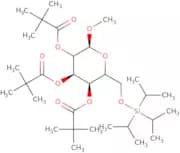
CAS:3-Deoxy-1,2-O-isopropylidene-5-O-toluoyl-b-L-ribofuranose is a sugar that is a methylated form of ribose. It also forms the backbone of polysaccharides and is modified with glycosylation. 3DOTRB can be custom synthesized in high purity and has CAS No. 2072145-19-6.Pureza:Min. 95%Methyl 2,3,4-tri-O-pivaloyl-6-O-triisopropylsilyl-a-D-mannopyranoside
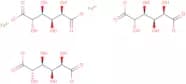
Methyl 2,3,4-tri-O-pivaloyl-6-O-triisopropylsilyl-a-D-mannopyranoside is a custom synthesis of an oligosaccharide with high purity. It is a complex carbohydrate that has been modified to have fluorination. The modification of the saccharide was done by Click chemistry, which is a type of radical reaction. Methyl 2,3,4-tri-O-pivaloyl-6-O-triisopropylsilyl-a-D-mannopyranoside is a monosaccharides and sugar that has been synthesized.Fórmula:C31H58O9SiPureza:Min. 95%Peso molecular:602.89 g/molD-[UL-13C6]Galacturonic acid potassium salt
CAS:D-[UL-13C6]Galacturonic acid potassium salt is a fatty acid that is used as a feedstock in the production of monoclonal antibodies. The 13C isotope provides information on the structure and function of proteins, such as enzyme activities and covalent linkages. D-[UL-13C6]Galacturonic acid potassium salt has been shown to inhibit the growth of bacteria and can be used for the treatment of infectious diseases. D-[UL-13C6]Galacturonic acid potassium salt binds to bacterial cell surfaces by interacting with hydroxyl groups on lipopolysaccharides, which are found on the outer membrane of Gram-negative bacteria, preventing their replication and inhibiting their ability to form biofilms. D-[UL-13C6]Galacturonic acid potassium salt has also been shown to be effective against hyperproliferative disease cells, such as prostate cancer cells.Fórmula:C6H9O7·KPureza:Min. 95%Cor e Forma:PowderPeso molecular:238.19 g/molBenzyl-2,3,3,6-tetra-O-acetyl-tio-D-glucopyranoside
This compound is a custom synthesis, modification and fluorination of an acetylated glycoside. It is a methylated monosaccharide with a saccharide at the reducing end. This product can be used in the synthesis of oligosaccharides, glycosylation and sugar modifications. The CAS number for this compound is 58907-27-3.Pureza:Min. 95%N-Acetyl-D-glucosamine 2-epimerase
CAS:N-Acetyl-D-glucosamine 2-epimerase is an enzyme that catalyzes the conversion of N-acetyl D-glucosamine to N-acetyl D-mannosamine. This enzyme is a recombinant protein. It has been shown to be active against bacterial cells and has been used as a target for antibodies in research. The enzyme is insoluble at high concentrations, so it must be refolded before use. It is active in a denatured form, but can be made inactive by heat or other denaturing agents such as urea, guanidine hydrochloride, or sodium dodecyl sulfate (SDS). Refolding strategies include dilution, dialysis, or adsorption onto a solid support such as agarose beads. !--Pureza:Min. 95%Cor e Forma:Grey to brown solid.D-[5-2H]Glucose
CAS:Produto ControladoD-[5-2H]Glucose is a deuterated form of glucose that is used in the study of lipid synthesis. This isotopically labeled compound can be incorporated into cellular lipids and their derivatives, such as glycerides and phospholipids. D-[5-2H]Glucose can be used to investigate the biosynthesis of lipids by measuring the incorporation rate and the number of 2H atoms found in each molecule. D-[5-2H]Glucose may also be used to study membrane lipid synthesis, which includes anomeric effects on lipid synthesis. The theory behind this is that when a molecule is incorporated into a lipid, it will have at least one hydrogen atom from deuterium instead of hydrogen. This isotopically labeled compound can be used to measure how anomeric effects influence lipid synthesis.Fórmula:C6H11DO6Pureza:Min. 95%Cor e Forma:White PowderPeso molecular:181.16 g/mol5-O-Benzoyl-3-deoxy-1,2-O-isopropylidene-3C-methyl-a-D-ribofuranose
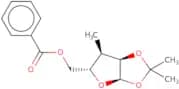
CAS:5-O-Benzoyl-3-deoxy-1,2-O-isopropylidene-3C-methyl-a-D-ribofuranose is a methylated sugar that has been modified with a click modification. It has been synthesized from D-(+)-ribose and 5′,5′′′-(1,2,3,4,5,6) -O-(benzoyl)-D-(+)-glycero 3C -methyluridine. This compound is soluble in water and can be used to modify polysaccharides.Pureza:Min. 95%3,6-Anhydro-D-glucose
CAS:3,6-Anhydro-D-glucose is a compound that is produced by the dehydration of D-glucose. It has been synthesized in an acidic hydrolysis reaction involving mercaptoacetic acid and sodium carbonate. The synthesis of 3,6-Anhydro-D-glucose involves the use of chloride as a reactive agent and metal ion catalysis. This compound can be used to create isomers with other sugars. It also has supramolecular chemistry properties due to its ability to form complexes with other molecules.Fórmula:C6H10O5Pureza:Min. 97 Area-%Cor e Forma:White Off-White PowderPeso molecular:162.14 g/molLumefantrine b-D-Glucuronide
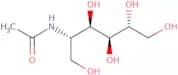
CAS:Lumefantrine b-D-Glucuronide is an anti-malarial drug with a high purity and custom synthesis. It can be synthesized by click modification, fluorination, glycosylation, and methylation of the sugar. Lumefantrine b-D-Glucuronide is an oligosaccharide that contains saccharides and complex carbohydrates. Lumefantrine b-D-Glucuronide is a sugar modified to produce a molecule that is more soluble in water. It has a CAS No. 460745-26-0 and can also be found under the name Oligosaccharide, Monosaccharide, Saccharide, Carbohydrate.Fórmula:C36H40Cl3NO7Pureza:Min. 95%Peso molecular:705.06 g/molN-Acetyl-D-glucosaminitol
CAS:N-Acetyl-D-glucosaminitol is a fatty acid that is found in blood group antigens. It has been shown to be a potent inhibitor of human liver serine proteases, with an IC50 of 10 μM and a Ki value of 1.6 μM. N-Acetyl-D-glucosaminitol also inhibits the terminal steps in glycolysis and can be used as a substrate for glycosidases. It is capable of forming oligosaccharides with terminal residues and can be analyzed using titration calorimetry. The molecular weight of N-acetyl-D-glucosaminitol is calculated to be 398 Da by nmr spectroscopy. Structural analysis shows that this compound contains monoclonal antibodies and sugar residues, which are important for its function.Fórmula:C8H17NO6Pureza:Min. 95%Cor e Forma:White PowderPeso molecular:223.22 g/mol1-Deoxy-3,4:6,7-Di-O-isopropylidene L-gulo-hept-2-ulose
CAS:1-Deoxy-3,4:6,7-Di-O-isopropylidene L-gulo-hept-2-ulose is a synthetic sugar that can be used to synthesize oligosaccharides. It is a methylated derivative of the natural sugar galactose and has been modified with fluorine atoms at C1 and C3 positions. This product is offered as a custom synthesis and can be ordered in high purity. Methylation of 1,2,3,4 tetra-, penta-, hexa-, or octa-saccharides is a way to introduce new chemical functionalities into the molecule. This process can be achieved through the use of methyl donors such as methanol or dimethyl sulfate. In this case, the methyl groups are introduced on the oxygen atom of glucose at position 3, 4, 6 or 7. The result is a new type of sugar called an oligosaccharidePureza:Min. 95%1,2:5,6-Di-O-isopropylidene-α-D-ribo-hexofuranose-3-ulose hydrate
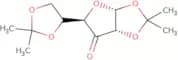
CAS:This is a sugar that is found in the urine of reindeer and caribou. It was first identified in the urine of animals captured in Alaska during the winter months. It has been shown to be present in human urine, as well, but at lower concentrations. Radiocarbon dating has revealed that this sugar is produced seasonally, with higher levels being found during the winter months. The seasonal variation may be due to changes in diet or metabolism.Fórmula:C12H18O6Pureza:Min. 95%Cor e Forma:PowderPeso molecular:258.27 g/molTopiramate impurity D
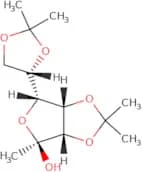
CAS:Topiramate impurity D is a custom synthesis with CAS number. It is an oligosaccharide that has been modified by methylation and glycosylation. Topiramate impurity D is a complex carbohydrate with saccharide units, which are modified by fluorination and click chemistry. This product is high purity and has been synthesized using the synthetic method of glycosylation, Oligosaccharide, Methylation, and Carbohydrate.Fórmula:C12H20O6Pureza:Min. 95%Peso molecular:260.28 g/mol3,4,6-Tri-O-acetyl-2-azido-2-deoxy-β-D-galactopyranosyl trichloroacetimidate
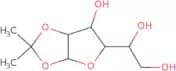
CAS:3,4,6-Tri-O-acetyl-2-azido-2-deoxy-beta-D-galactopyranosyl trichloroacetimidate is a custom synthesis that has been modified with fluorination and methylation. It is a monosaccharide containing the sugar galactose and it can be found in a saccharide or polysaccharide. This compound was synthesized using click chemistry.Fórmula:C14H17Cl3N4O8Pureza:Min. 95 Area-%Peso molecular:475.67 g/mol1,2-O-Isopropylidene-a-D-glucofuranose
CAS:1,2-O-Isopropylidene-a-D-glucofuranose (IPDF) is a natural compound that has been isolated from the leaves of the plant Cinnamomum camphora. IPDF has been shown to have biological properties such as inhibiting hl-60 cells and inducing apoptosis in leukemia cells. The metabolic rate of IPDF was studied in isolated hearts and it was found that the compound slows fatty acid oxidation. The enzyme substrate specificity of IPDF was also tested by adding trifluoroacetic acid, which yielded no reaction.Fórmula:C9H16O6Cor e Forma:White Off-White PowderPeso molecular:220.22 g/molIron sucrose
CAS:Iron sucrose is a sucrose-iron complex that is administered intravenously for the treatment of bowel disease and iron deficiency. Iron sucrose has been shown to have potent inducers of oxidative injury, which may be due to the formation of reactive oxygen species. Iron sucrose has also been shown to increase cellular transformation and congestive heart failure in mice. Long-term toxicity studies have not been conducted.
Fórmula:C12H22O11FePureza:Min. 95%Cor e Forma:Brown PowderPeso molecular:398.143-O-Benzyl-a- D- glucofuranose cyclic 5, 6- carbonate
3-O-Benzyl-a-D-Glucofuranose Cyclic 5,6-Carbonate is a custom synthesis that can be modified with fluorination, methylation, and click modification. It is a saccharide with CAS number. 3-O-Benzyl-a-D-Glucofuranose Cyclic 5,6-Carbonate is an oligosaccharide and polysaccharide that has a sugar and carbohydrate structure.
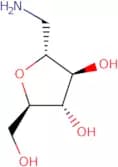
Pureza:Min. 95%1-Amino-2,5-anhydro-1-deoxy-D-mannitol
CAS:1-Amino-2,5-anhydro-1-deoxy-D-mannitol is an amino sugar that is synthesized by reductive amination of d-fructose and nitrous acid. It has been shown to be a substrate for the transporter protein, which transports it into the cell. 1-Amino-2,5-anhydro-1-deoxy-D-mannitol has been used in the synthesis of arylamines with nitrous acid as a reducing agent. This process has been used to study the stereospecificity of reductive amination.Fórmula:C6H13NO4Pureza:Min. 95%Cor e Forma:PowderPeso molecular:163.17 g/mol1-Deoxytagatose
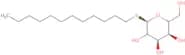
1-Deoxytagatose is a fluorescent ketone that can be used as a chemical probe for the detection of protein synthesis. The fluorescence properties of 1-deoxytagatose are well suited for use as a marker in fluorometric assays and it has been used to measure ketone bodies in urine. The mechanism of 1-deoxytagatose is not fully understood, but it has been found to react with phosphate groups and form a phosphoric acid derivative.Pureza:Min. 95%Dodecyl a-D-thiomannopyranoside
Dodecyl a-D-thiomannopyranoside is a glycosylation reagent that has been used in the synthesis of complex carbohydrates, polysaccharides, and oligosaccharides. It is a methylated thioglycoside that can be used for click modification. Dodecyl a-D-thiomannopyranoside is an excellent fluorinating agent for saccharides and sugars, which can be accomplished using sodium hypofluorite. Dodecyl a-D-thiomannopyranoside is also an excellent monosaccharide synthesizer and custom synthesiser. This compound has CAS number 95734-05-1 and can be ordered at very high purity from various chemical suppliers.Fórmula:C18H36O5SPureza:Min. 95%Peso molecular:364.54 g/molCerebroside sulfate
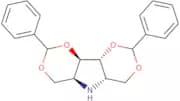
CAS:Myelin component; opioid receptorFórmula:C42H80NNaO11SPureza:Min. 95%Cor e Forma:White PowderPeso molecular:830.14 g/mol1,3:4,6-Di-O-benzylidene-2,5-dideoxy-2,5-imino-L-iditol
CAS:1,3:4,6-Di-O-benzylidene-2,5-dideoxy-2,5-imino-L-iditol is a synthetic oligosaccharide that can be used as a glycosylation probe. It has been shown to have high purity and good stability in the presence of strong acids and bases. The methyl group on the benzene ring can be replaced with other functional groups such as fluoro or chloro. This product is also available in custom synthesis for those who need it.Fórmula:C20H21NO4Pureza:Min. 95%Cor e Forma:White PowderPeso molecular:339.39 g/molN-Benzyl-3,5-dideoxy-3,5-imino-1,2-O-isopropylidene-D-arabinofuranose
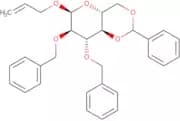
N-Benzyl-3,5-dideoxy-3,5-imino-1,2-O-isopropylidene-D-arabinofuranose is a high purity custom synthesis sugar that has been modified with fluorination and glycosylation. The CAS number for this molecule is 51459-06-8 and it is an oligosaccharide. This molecule can be methylated or modified with other sugars to create complex carbohydrates.Pureza:Min. 95%Allyl 2,3-di-O-benzyl-4,6-O-benzylidene-a-D-glucopyranoside
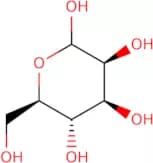
CAS:Allyl 2,3-di-O-benzyl-4,6-O-benzylidene-a-D-glucopyranoside is a synthetic, water soluble glycoside with a high purity that has been fluorinated and methylated. This product is stable at room temperature in both the solid and liquid form. It has a CAS number of 20746-71-8.Fórmula:C30H32O6Pureza:Min. 95%Peso molecular:488.57 g/molD-Mannose
CAS:Used to differentiate microorganisms based on their metabolic properties.Fórmula:C6H12O6Pureza:Min. 99.5 Area-%Peso molecular:180.16 g/molRef: 3D-M-1000
-Unit-kgkgA consultar1kgA consultar5kgA consultar50gA consultar500gA consultar2500gA consultar5-Azido-2-C-(benzylaminomethyl)-5-deoxy-2,3-O-isopropylidene-L-lyxonic acid b-lactam
5-Azido-2-C-(benzylaminomethyl)-5-deoxy-2,3-O-isopropylidene-L-lyxonic acid b-lactam is a synthetic glycoside. It is an intermediate in the synthesis of various saccharides and oligosaccharides. 5-Azido-2-C-(benzylaminomethyl)-5-deoxy-2,3-O-isopropylidene L -lyxonic acid b -lactam has been shown to be useful for click modification, a technique used to modify saccharides and oligosaccharides with azide groups.Pureza:Min. 95%Methyl 2,3-di-O-p-toluenesulfonyl-a-D-glucopyranoside
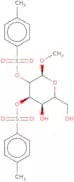
Methyl 2,3-di-O-p-toluenesulfonyl-a-D-glucopyranoside is a high purity, custom synthesis sugar that is used in glycosylation and modification. It has a CAS number of 83792-07-4 and can be synthesized from methyl p-toluenesulfonate, D-glucose, and sodium hydroxide. Methyl 2,3-di-O-p-toluenesulfonyl-a-Dglucopyranoside has been shown to react with fluorine to form fluoro derivatives. This compound reacts with glycosylations and modifications such as methylation or acetylation. It is also an oligosaccharide that is composed of monosaccharides and saccharides.
Fórmula:C21H26O10S2Pureza:Min. 95%Peso molecular:502.56 g/mol(2S, 3R, 4R, 5R, 6R) -2-Ethyl- 6- (hydroxymethyl) -3, 4, 5- piperidinetriol
(2S, 3R, 4R, 5R, 6R) -2-Ethyl- 6- (hydroxymethyl) -3, 4, 5- piperidinetriol is a synthetic monosaccharide that is modified with fluorine. The physicochemical properties of this chemical compound are:Pureza:Min. 95%Methyl 3,5-di-O-acetyl-2-deoxy-b-D-ribofuranoside
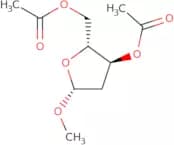
CAS:Methyl 3,5-di-O-acetyl-2-deoxy-b-D-ribofuranoside is a synthetic sugar that is used in the synthesis of glycosides. It is a high purity product and can be custom synthesized to meet your needs. This product is available as a solution in water and is also offered as an oil. Methyl 3,5-di-O-acetyl-2-deoxy-b-D-ribofuranoside is soluble in alcohols and ethers, but insoluble in hydrocarbons or chlorinated solvents. The CAS number for this product is 62853–55–8. Methyl 3,5-di-O-[(acetyloxymethyl)oxymethyl]-2 deoxy-[beta]D ribofuranoside can be used for Click modification reactions to introduce acetyl groups on the sugar moiety. Click chemistry has been shown to haveFórmula:C10H16O6Pureza:Min. 95%Peso molecular:232.23 g/molN-(2-Furylacetonitrile)-2,3,4,6-tetra-O-pivaloyl-b-D-glucopyranoside
The compound is a custom synthesis. It is a polysaccharide that has been modified by methylation and glycosylation, as well as being click-modified at the C6 position. The compound is a complex carbohydrate with an Oligosaccharide in the center. The CAS number for this compound isFórmula:C32H48N2O10Pureza:Min. 95%Peso molecular:620.73 g/mol(3S, 4R,5S) -3-O-Benzhydryloxybis(trimethylsilyloxy)silyl- 1-benzyl-4,5-O-isopropylidene-3, 4, 5- piperidinetriol
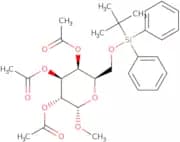
(3S, 4R,5S) -3-O-Benzhydryloxybis(trimethylsilyloxy)silyl- 1-benzyl-4,5-O-isopropylidene-3, 4, 5- piperidinetriol is a synthetic monosaccharide that can be used in the synthesis of oligosaccharides and complex carbohydrates. This compound has a molecular weight of 487.43 g/mol and a CAS number of 634265-09-2. It is an Oligosaccharide that contains a sugar chain with three to five monosaccharide units. This product has been custom synthesized for the modification of glycans or polysaccharides by methylation or click chemistry.Pureza:Min. 95%Methyl 2,3,4-tri-O-acetyl-6-O-tert-butyldiphenylsilyl-a-D-galactopyranoside
CAS:Methyl 2,3,4-tri-O-acetyl-6-O-tert-butyldiphenylsilyl a-D-galactopyranoside is an oligosaccharide that has been modified with methylation, glycosylation and fluorination. It is an important compound in carbohydrate chemistry. The oligosaccharide is synthesized by the condensation of 3 molecules of galactose with 1 molecule of mannose to form a disaccharide. This product is manufactured by custom synthesis and has been purified to high purity.Fórmula:C29H38O9SiPureza:Min. 95%Peso molecular:558.71 g/mol2,5-Anhydro-D-mannitol-1-phosphate barium salt hydrate
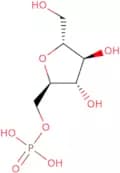
CAS:2,5-Anhydro-D-mannitol-1-phosphate barium salt hydrate is a fluorinated synthetic oligosaccharide. It is a complex carbohydrate that can be modified with the addition of methyl groups or click chemistry. This product is CAS No. 352000-02-3 and has been synthesized with glycosylation and polysaccharide modifications. The chemical formula for this product is C6H14O7P2Ba.Fórmula:C6H11BaO8P·H2OPureza:Min. 95%Peso molecular:397.46 g/mol(1R) -1- [(2S, 3R) - 3- Hydroxy- 1- butyl - 2- azetidinyl] -1, 2- ethanediol
(1R) -1- [(2S, 3R) - 3- Hydroxy- 1- butyl - 2- azetidinyl] -1, 2- ethanediol is a glycosylase that catalyzes the hydrolysis of terminal sialic acid residues from oligosaccharides and monosaccharides. It is used in the synthesis of complex carbohydrates. This glycosylase has been shown to be highly specific for terminal sialic acids and can also be used to produce oligosaccharides with desired linkages between the sugars. The enzyme is most active at low pH and high temperatures.
Pureza:Min. 95%

![N- [(3S, 4R, 5S, 6R) - 4, 5- Dihydroxy- 6- (hydroxymethyl) - 3- piperidinyl] -acetamide](/_next/image/?url=https%3A%2Fstatic.cymitquimica.com%2Fproducts%2F3D%2Fthumb-webp%2FMD163935.webp&w=3840&q=75)
![(1R) -1- [(2R, 3S) -3- Hydroxy- 1- azetidinyl] -1, 2- ethanediol](/_next/image/?url=https%3A%2Fstatic.cymitquimica.com%2Fproducts%2F3D%2Fthumb-webp%2FMH163408.webp&w=3840&q=75)

![D-[UL-13C6]Galacturonic acid potassium salt](/_next/image/?url=https%3A%2Fstatic.cymitquimica.com%2Fproducts%2F3D%2Fthumb-webp%2FMG106395.webp&w=3840&q=75)
![D-[5-2H]Glucose](/_next/image/?url=https%3A%2Fstatic.cymitquimica.com%2Fproducts%2F3D%2Fthumb-webp%2FMG75100.webp&w=3840&q=75)

![(1R) -1- [(2S, 3R) - 3- Hydroxy- 1- butyl - 2- azetidinyl] -1, 2- ethanediol](/_next/image/?url=https%3A%2Fstatic.cymitquimica.com%2Fproducts%2F3D%2Fthumb-webp%2FMH163534.webp&w=3840&q=75)