Sais metálicos
Foram encontrados 2872 produtos de "Sais metálicos"
Iodosulfuron-methyl sodium
CAS:Iodosulfuron-methyl sodium is a herbicide that inhibits the activity of lipid-metabolizing enzymes in plants. It inhibits the action of phosphatases, which are enzymes that catalyze hydrolysis of phosphoric acid esters, and can be used to control weeds. Iodosulfuron-methyl sodium has been shown to have synergistic interactions with other herbicides, such as 2,4-D or dicamba. The effective dose for this product varies depending on the plant species and type of soil.
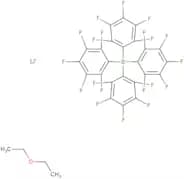
Fórmula:C14H13IN5NaO6SPureza:Min. 90 Area-%Cor e Forma:White Off-White PowderPeso molecular:529.24 g/molLithium Tetrakis(pentafluorophenyl)borate - Ethyl Ether Complex
CAS:Produto ControladoLithium tetrakis(pentafluorophenyl)borate - ethyl ether complex is a ligand that has the ability to bind to magnesium. The complex is highly soluble in organic solvents such as ethylene and ether, but not in water. It can be used to produce high yields of ethylene with magnesium as a co-catalyst. The complex binds to magnesium by forming a six-membered ring with the borate group and two oxygen atoms from the ether molecule. The crystal structure of this complex was determined using x-ray crystallography. This complex has been found naturally in plants such as spinach and beets, although it is not yet known what role it plays in these plants.Pureza:70%NmrTetrakis[N-phthaloyl-(S)-phenylalaninato]dirhodium Ethyl Acetate Adduct
CAS:Please enquire for more information about Tetrakis[N-phthaloyl-(S)-phenylalaninato]dirhodium Ethyl Acetate Adduct including the price, delivery time and more detailed product information at the technical inquiry form on this pageFórmula:C68H48N4O16Rh2·C4H8O2Pureza:Min. 95%Peso molecular:1,471.04 g/molLithium tetrachloroaluminate
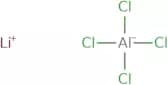
CAS:Lithium tetrachloroaluminate is a compound that consists of lithium, copper, and aluminum. It has an average particle diameter of about 1 micrometer. Lithium tetrachloroaluminate can be used as a catalyst for the reduction of inorganic and organic solutes. This compound is soluble in water and organic solvents, which may be due to its ionic nature. Lithium tetrachloroaluminate can be used as a rechargeable battery electrode material because it has a high capacity for storing lithium ions. The reaction with chloride ions produces chlorine gas, which is corrosive and toxic under certain conditions.
Fórmula:LiAlCl4Pureza:(%) Min. 98%Cor e Forma:White PowderPeso molecular:175.73 g/molShikimate-3-phosphate trisodium salt
CAS:Shikimate-3-phosphate trisodium salt (SPTS) is a herbicide that inhibits the enzyme EPSPS, which is essential for the production of aromatic amino acids in plants. It binds to the active site of the enzyme and prevents it from functioning properly. SPTS is used as a pesticide on crops such as wheat, rye, barley, oats, rice, soybeans, maize, potato and sugar beet. The herbicide has been shown to be effective in nanomolar range concentrations. It can be detected using biosensors designed for environmental monitoring purposes. The surface of these biosensors are functionalized with SPTS and immobilized on a solid support such as glass or silicon dioxide. These sensors have been shown to detect glyphosate at concentrations as low as 0.01 ppm. SPTS has been investigated for use in developing biosensors that could be used to monitor levels of this herbicide in water sources such as rivers and streams.END>Fórmula:C7H8Na3O8PPureza:Min. 95%Cor e Forma:White PowderPeso molecular:320.08 g/molBarium tetracyanoplatinate(II) hydrate
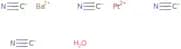
CAS:Produto ControladoPlease enquire for more information about Barium tetracyanoplatinate(II) hydrate including the price, delivery time and more detailed product information at the technical inquiry form on this pageFórmula:C4H2BaN4OPtPureza:Min. 95%Peso molecular:454.5 g/molAllylpalladium(II) chloride dimer
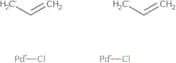
CAS:Allylpalladium(II) chloride dimer is a homogeneous catalyst that can be used for the asymmetric synthesis of organosilicon compounds. It is an allylation agent and has been shown to react with certain nitrogen-containing compounds to form a palladium nitride complex. This compound is also a good transport agent, due to its high solubility in organic solvents. Allylpalladium(II) chloride dimer has been shown to be effective in the production of cancer chemotherapeutic agents, including chlorambucil, as well as anti-inflammatory drugs such as ibuprofen. This catalyst has also been used for cross-coupling reactions with alkyl bromides and iodides. A major drawback of this catalyst is that it often leads to an isolated yield of the product, which can be improved by using a solvent or by adding water or alcohols.
Fórmula:C6H10Cl2Pd2Pureza:95%NmrPeso molecular:365.89 g/molSilver tetrafluoroborate
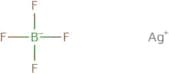
CAS:Silver tetrafluoroborate (AgBF) is a chemical reagent that is used in analytical chemistry and structural analysis. It has shown to be a stable complex with organic molecules, such as fatty acids, and has been used to study the properties of these compounds. AgBF is an inorganic salt that can be synthesized by reacting silver nitrate and barium fluoride in the presence of trifluoroacetic acid. This compound has also been found to form stable complexes with organic molecules containing a hydroxyl group or nitrogen atom. The structure of AgBF has been determined through X-ray crystal structures and electron diffraction patterns. The molecule consists of two symmetric chains joined by a central disulfide bond.
Fórmula:AgBF4Pureza:Min. 95%Cor e Forma:PowderPeso molecular:194.67 g/molBis (1,5-Cyclooctadiene) rhodium(I)tetrafluoroborate
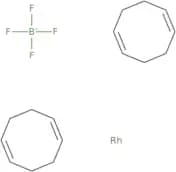
CAS:Bis (1,5-Cyclooctadiene) rhodium(I)tetrafluoroborate (BODIPY) is a catalyst that enhances the rate of hydrosilylation reactions. This catalyst has been shown to be effective in the synthesis of aryl chlorides from amines and aldehydes with high enantioselectivity. BODIPY is also immobilized on silica gel to create an active catalyst for asymmetric synthesis. The immobilization process on silica gel is done by reacting BODIPY with ammonium formate and amines. The resulting catalyst can be used for the synthesis of functionalized organic compounds, such as pyrrolidines, tetrahydrofurans, and thiophenes.Fórmula:C16H24BF4RhPureza:Min. 95%Peso molecular:406.07 g/molSodium phenoxide
CAS:Sodium phenoxide is a glycol ether that has been used to treat wastewater containing phenol and p-hydroxybenzoic acid. The reaction solution is prepared by mixing the desired amount of sodium phenoxide with an excess of copper chloride in anhydrous sodium. This process can be monitored using electrochemical impedance spectroscopy, which provides information about the chemical stability of the product. The use of sodium phenoxide as a wastewater treatment agent can be evaluated through treatment trials, where it is mixed with wastewater containing different concentrations of inhibitor drugs such as metoprolol succinate. Langmuir adsorption isotherm can also be used to determine the effectiveness of this product for wastewater treatment purposes.Fórmula:C6H5O·NaPureza:Min. 95%Cor e Forma:PowderPeso molecular:116.09 g/molBromoferrocene
CAS:Bromoferrocene is a ligand that binds to the ferrocenecarboxylic acid skeleton. It is an aromatic hydrocarbon that has been shown to be a potent inhibitor of cervical cancer proliferation. Bromoferrocene was synthesized by a Friedel-Crafts reaction between styrene and hydrobromic acid. The bromine atom in this compound is electron-withdrawing and therefore has radical character, which makes it a reactive molecule with potential for biological activity. Bromoferrocene is chiral and thus can exist as two enantiomers - one with R configuration, the other L.Fórmula:C10H9BrFePureza:90%NmrPeso molecular:264.93 g/molCesium bicarbonate
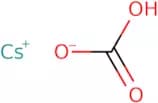
CAS:An inorganic cesium saltFórmula:CsHCO3Pureza:Min. 95%Cor e Forma:PowderPeso molecular:193.92 g/molZinc trifluoromethanesulfonate
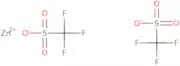
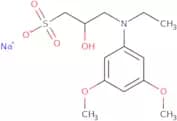
CAS:Zinc trifluoromethanesulfonate is a catalyst that catalyses the reaction of amines with coumarin derivatives, producing an electrochemical impedance spectroscopy. It has been shown to have a redox potential that is higher than ferrocenecarboxylic acid. Zinc trifluoromethanesulfonate has been used in asymmetric synthesis, which involves substituting a hydrogen atom with another atom or group, and in salt metathesis, which is the process of forming new chemical compounds from reactants without using any energy. The zinc trifluoromethanesulfonate can also be activated by light or heat. This makes it possible for this compound to release the corrosive sulfur dioxide gas when heated to high temperatures, producing a synergic effect with other substances such as potassium permanganate (KMnO4).Fórmula:C2F6O6S2ZnPureza:Min. 95%Cor e Forma:White PowderPeso molecular:363.52 g/molN-Ethyl-N-(2-hydroxy-3-sulfopropyl)-3,5-dimethoxyaniline sodium salt
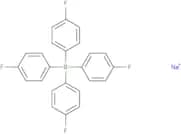
CAS:N-Ethyl-N-(2-hydroxy-3-sulfopropyl)-3,5-dimethoxyaniline sodium salt is an antioxidant that has been shown to have antiviral properties. This drug has been found to be a potent inhibitor of HIV replication in wild type mice and was able to inhibit the virus in human serum. The mechanism by which this drug inhibits the virus is not known, but it may be due to its ability to scavenge free radicals and protect cells against oxidative stress. Studies have also shown that this drug can increase the activity of antioxidant enzymes such as superoxide dismutase, catalase, and glutathione reductase. It has also been found to decrease lipoprotein lipase activity in vitro. These effects are thought to be due to the ability of this drug to bind with proteins and lipids on cell membranes and prevent them from being oxidized. Clinical trials have shown that N-Ethyl-N-(2Fórmula:C13H20NO6S·NaPureza:Min. 98 Area-%Cor e Forma:White PowderPeso molecular:341.36 g/molTetrakis(4-Fluorophenyl)-Borate Sodium (1:1)
CAS:Tetrakis(4-fluorophenyl)borate sodium (1:1) is a solid that is soluble in organic solvents. It has been used as an adsorbent for nuclear waste and organic molecules. Tetrakis(4-fluorophenyl)borate sodium (1:1) has been shown to adsorb hydrophobic molecules such as polycyclic aromatic hydrocarbons, which are difficult to remove from the environment. Tetrakis(4-fluorophenyl)borate sodium (1:1) can be prepared by reacting tetraphenylborate with 4-fluoroboric acid. This reaction produces a mixture of products, of which tetrakis(4-fluorophenyl)borate sodium (1:1) is the most common. Tetrakis(4-fluorophenyl)borate sodium (1:1), like other borate salts, is used in zeolites toFórmula:C24H16BF4NaPureza:Min. 95%Peso molecular:414.18 g/molPotassium bicarbonate
CAS:Potassium bicarbonate is a chemical compound that is used as a buffer in a variety of applications. It is commonly used to maintain the pH of laboratory solutions and can be found in many home products such as baking powder, fire extinguishers, and antacids. Potassium bicarbonate has been shown to bind to metal ions, such as hydrogen fluoride and metal chelates, which may be responsible for its ability to inhibit cox-2 activity. Potassium bicarbonate also has high water permeability properties. This property makes it useful in blood sampling, where it causes the red blood cells to swell up and burst so they can be removed by centrifugation. Potassium bicarbonate also has hydrogen bonding interactions with water molecules (H2O).
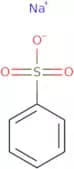
Fórmula:KHCO3Pureza:Min. 99.0%Cor e Forma:White Clear LiquidPeso molecular:100.12 g/molSodium benzenesulfonate
CAS:Sodium benzenesulfonate is a glycol ester that is used as an additive in detergents. It produces foam with air entrainment, which makes it suitable for cleaning surfaces and fabrics. Sodium benzenesulfonate can be used as a co-solvent to enhance the solubility of other substances. It has been shown to have synergistic effects with sodium pentachlorophenate, sodium hydroxide, and sodium hypochlorite when used for wastewater treatment. The reaction mechanism of this compound is not well understood, but it is thought to involve the formation of a sulfonic acid in water solution. Sodium benzenesulfonate also has analytical applications such as determining the concentration of human serum albumin or x-ray diffraction data to identify its crystalline structure.
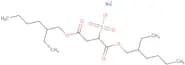
Fórmula:C6H5NaO3SPureza:Min. 95%Peso molecular:180.16 g/molDioctyl sulfosuccinate sodium salt
CAS:Dioctyl sulfosuccinate sodium salt (DSS) is a surfactant that is used in the formulation of aerosol products. It can be used as a matrix for the analytical determination of enzyme activities such as glutathione reductase and cytochrome p450, which are involved in the metabolism of xenobiotics. DSS has been shown to have an optimum concentration of 0.1% and fluorescence probe with a pH range between 7-9. The surfactant also shows ionotropic gelation properties at concentrations greater than 1%.
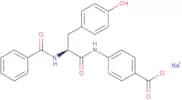
Fórmula:C20H37NaO7SPureza:Min. 95%Cor e Forma:White PowderPeso molecular:444.57 g/molBz-Tyr-4-Abz-OH·sodium salt
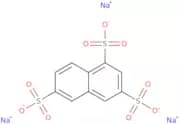
CAS:Please enquire for more information about Bz-Tyr-4-Abz-OH·sodium salt including the price, delivery time and more detailed product information at the technical inquiry form on this pageFórmula:C23H19N2NaO5Pureza:Min. 95%Peso molecular:426.4 g/molTrisodium 1,3,6-naphthalenetrisulfonate
CAS:Trisodium 1,3,6-naphthalenetrisulfonate is a polymer coating that can be used for industrial applications such as water treatment, oil and gas drilling, or textile manufacturing. It has been shown to have a high hydrophobicity and low surface tension. Trisodium 1,3,6-naphthalenetrisulfonate has also been shown to have a ring structure that can interact with other materials. Trisodium 1,3,6-naphthalenetrisulfonate has been observed to form supramolecular structures when in contact with surfactants and other additives. Trisodium 1,3,6-naphthalenetrisulfonate is reactive and can be used as an alternative to chromium plating for the production of plates.Fórmula:C10H8O9S3•Na3Pureza:Min. 95%Cor e Forma:White To Reddish Yellow SolidPeso molecular:437.33 g/mol


![Tetrakis[N-phthaloyl-(S)-phenylalaninato]dirhodium Ethyl Acetate Adduct](/_next/image/?url=https%3A%2Fstatic.cymitquimica.com%2Fproducts%2F3D%2Fthumb-webp%2FFT60014.webp&w=3840&q=75)