Sais metálicos
Foram encontrados 2872 produtos de "Sais metálicos"
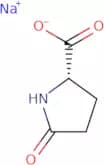
Sodium pyroglutamate
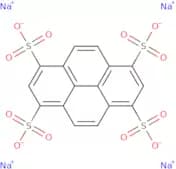
CAS:Sodium pyroglutamate is a surface methodology that inhibits leukemia inhibitory factor and has been shown to be effective in inhibiting the growth of mouse tumor cells. Sodium pyroglutamate has been shown to be cytotoxic to prostate cancer cells, which may be due to its ability to inhibit glutamate-mediated activation of the MAP kinase pathway. This drug also has anti-tumor effects on skin cells, which may be due to its inhibition of cell proliferation and induction of apoptosis. Sodium pyroglutamate also inhibits the production of collagenase, a major enzyme in the degradation of extracellular matrix, by human fibroblast cells. It also has an anti-inflammatory effect and is used as a food additive.Fórmula:C5H7NO3•NaPureza:Min. 95%Cor e Forma:Colorless PowderPeso molecular:152.1 g/mol1,3,6,8-Pyrenetetrasulfonic acid tetrasodium, 10% aqueous solution
CAS:1,3,6,8-Pyrenetetrasulfonic acid tetrasodium salt (PTS) is a palladium complex that is used as a catalyst in the chemical industry. It can be prepared by the reaction of palladium chloride with sodium sulfide and sodium hydroxide. PTS has been shown to react with diethyl succinate, forming a solid catalyst that can be stored for longer periods of time. This compound has been found to catalyze hydrogenations under constant pressure conditions and also exhibit low energy consumption when performing reactions. PTS is able to bind to DNA, leading to cancer cell death. PTS also has fluorescence properties and can be used in electrochemical impedance spectroscopy.Fórmula:C16H10O12S4•Na4Pureza:Min. 95%Cor e Forma:Clear LiquidPeso molecular:614.47 g/molRuthenium dioxide
CAS:Ruthenium dioxide is a chemical compound that can be used as an oxidation catalyst. It is a solid material with high resistance and can be used in the water treatment process as well as in electrochemical processes, such as wastewater treatment. Ruthenium dioxide has been shown to have an acidic reaction mechanism, which is related to the particle size of the substance. The large particle size leads to a higher surface area for catalytic activity. Ruthenium dioxide also has the ability to react with hydrogen gas and form hydrogen bonds. This property makes it useful for electrochemical processes, such as wastewater treatment. Ruthenium dioxide also reacts with cationic surfactants containing boron nitride, which allows it to be used in catalysis and electrochemical processes.
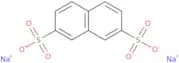
Fórmula:RuO2Pureza:Min. 95%Peso molecular:133.07 g/mol2,7-Naphthalenedisulfonic acid disodium salt
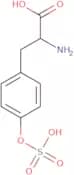
CAS:2,7-Naphthalenedisulfonic acid disodium salt is a heteronuclear molecule that is synthesized by the reaction of 2,7-naphthalenedisulfonyl chloride with sodium sulfite in water. It has been used in the manufacture of dyes and pigments, as a corrosion inhibitor for steel and aluminum, and as an intermediate in the synthesis of pharmaceuticals. The compound has been detected in groundwater samples at concentrations up to 10 mg/L. The compound is also found in geothermal waters at concentrations up to 0.6 mg/L.Fórmula:C10H6Na2O6S2Pureza:Min. 95%Peso molecular:332.26 g/molH-Tyr(SO3H)-OH sodium salt
CAS:Please enquire for more information about H-Tyr(SO3H)-OH sodium salt including the price, delivery time and more detailed product information at the technical inquiry form on this page
Fórmula:C9H11NO6SPureza:Min. 95%Peso molecular:261.25 g/molZinc trifluoromethanesulfonate
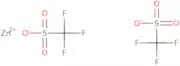
CAS:Zinc trifluoromethanesulfonate is a catalyst that catalyses the reaction of amines with coumarin derivatives, producing an electrochemical impedance spectroscopy. It has been shown to have a redox potential that is higher than ferrocenecarboxylic acid. Zinc trifluoromethanesulfonate has been used in asymmetric synthesis, which involves substituting a hydrogen atom with another atom or group, and in salt metathesis, which is the process of forming new chemical compounds from reactants without using any energy. The zinc trifluoromethanesulfonate can also be activated by light or heat. This makes it possible for this compound to release the corrosive sulfur dioxide gas when heated to high temperatures, producing a synergic effect with other substances such as potassium permanganate (KMnO4).Fórmula:C2F6O6S2ZnPureza:Min. 95%Cor e Forma:White PowderPeso molecular:363.52 g/molPotassium 4-methoxycinnamate
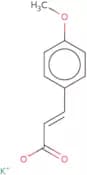
CAS:Potassium 4-methoxycinnamate is a fine chemical that is used as a versatile building block in the synthesis of complex compounds. It can be used in research and as a reagent or speciality chemical. It is also a useful building block for high quality, useful intermediate, and reaction component. Potassium 4-methoxycinnamate can be used as a scaffold to synthesize compounds with diverse applications such as pharmaceuticals, polymers, and agrochemicals.Fórmula:C10H9O3·KPureza:Min. 95%Peso molecular:216.27 g/mol1-Butanesulfonic acid sodium
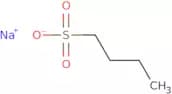
CAS:1-Butanesulfonic acid sodium salt is a perfluorinated compound that inhibits the activity of various enzymes in the body, such as kinases and phosphatases. It has been used to study the effects of these enzymes on chemical reactions. 1-Butanesulfonic acid sodium salt is also used to detect the presence of selenium compounds in urine samples. The inhibition of an enzyme by this compound results in a decreased rate of reaction and a change in kinetic behavior. This can be observed by measuring the time it takes for the reaction to reach half its maximum value. Sodium taurocholate, chloride, and trifluoroacetic acid are all reagents that are commonly used with this compound when performing kinetic studies. 1-Butanesulfonic acid sodium salt has been shown to inhibit cholesterol synthesis in many animal models. In addition, this compound has been shown to bind to and inhibit plasma mass spectrometry by chromatography on silica gel from human plasmaFórmula:C4H10O3S•NaPureza:Min. 95%Cor e Forma:PowderPeso molecular:161.18 g/molTetrakis(4-Fluorophenyl)-Borate Sodium (1:1)
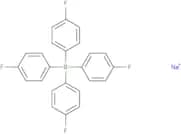
CAS:Tetrakis(4-fluorophenyl)borate sodium (1:1) is a solid that is soluble in organic solvents. It has been used as an adsorbent for nuclear waste and organic molecules. Tetrakis(4-fluorophenyl)borate sodium (1:1) has been shown to adsorb hydrophobic molecules such as polycyclic aromatic hydrocarbons, which are difficult to remove from the environment. Tetrakis(4-fluorophenyl)borate sodium (1:1) can be prepared by reacting tetraphenylborate with 4-fluoroboric acid. This reaction produces a mixture of products, of which tetrakis(4-fluorophenyl)borate sodium (1:1) is the most common. Tetrakis(4-fluorophenyl)borate sodium (1:1), like other borate salts, is used in zeolites toFórmula:C24H16BF4NaPureza:Min. 95%Peso molecular:414.18 g/molDiethyldithiocarbamic acid sodium trihydrate
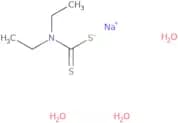
CAS:Diethyldithiocarbamic acid sodium salt trihydrate (DDC) is an inhibitor of the response element that belongs to a class of pharmacological agents called diethyldithiocarbamates. DDC inhibits the growth of tumor cells by blocking enzyme activities and decreasing the production of GSH-Px enzymes, which are required for cellular protection against oxidative stress. DDC is also a potent inducer of experimental models for myocardial infarcts. The matrix effect is another mechanism by which DDC exerts its antitumor activity. This effect is due to its ability to inhibit protein synthesis in tumor cells and its ability to inhibit the synthesis of collagen in endothelial cells, thereby preventing angiogenesis.Fórmula:C5H11NS2•Na•(H2O)3Pureza:Min. 95%Cor e Forma:PowderPeso molecular:226.32 g/molSodium-O-pantothenate
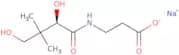
CAS:Sodium-O-pantothenate is a natural form of vitamin B5. It is the sodium salt of pantothenic acid, which is used in the synthesis of coenzyme A and acetylcholine. Sodium-O-pantothenate has been shown to be nontoxic in animals and humans when ingested as an additive in food. In vitro studies have shown that this compound inhibits the production of epidermal growth factor, an effect that may be due to its ability to inhibit phospholipase A2 activity. Sodium-O-pantothenate also has been found to enhance the production of erythrocytes, platelets, and leukocytes in human serum. This compound is used as a cofactor for many enzyme reactions involving pyridoxine hydrochloride (B6) and calcium pantothenate.Fórmula:C9H16NNaO5Pureza:Min. 95%Cor e Forma:White PowderPeso molecular:241.22 g/molSodium 2-thiobarbiturate
CAS:Produto ControladoSodium 2-thiobarbiturate is a nitrosating agent that has been shown to protect the lungs from ischemia–reperfusion injury in vitro. It exerts its protective effects by inhibiting the release of nitric oxide (NO) and protects against neuronal death by preventing mitochondrial dysfunction. Sodium 2-thiobarbiturate also has genotoxic effects, which are reduced in the presence of antioxidants, and can cause DNA damage. This drug is reactive with oxygen, so it should not be stored in airtight containers or exposed to light.Fórmula:C4H4N2O2S·NaPureza:Min. 95%Cor e Forma:White/Off-White SolidPeso molecular:167.14 g/molPotassium diformate
CAS:Potassium diformate is a fatty acid that is used for dietary purposes, as it may be helpful in the treatment of pancreatic enzyme deficiencies. It has been shown to inhibit the growth of lactic acid bacteria, such as Lactobacillus acidophilus, and other microorganisms. Potassium diformate reacts with sodium hydroxide to form potassium hydroxide, which is then reacted with hydrogen chloride gas to produce potassium chloride. This reaction provides an alternative method for industrial preparation of potassium chloride from potash. Potassium diformate also shows potential use as an antimicrobial agent due to its ability to bind and disrupt bacterial cell membranes.
Fórmula:CH2O2·CHKO2Pureza:Min. 95%Peso molecular:130.14 g/molLithium bis(oxalato)borate
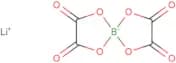
CAS:Lithium bis(oxalato)borate (LBBO), also known as Lithiumbis(oxalato)borate, is a lithium salt of the borate ester. The optimum concentration for LBBO is 1-2 mol/L. LBBO is soluble in water and reacts with glycol esters to form lithium glycolates. This reaction is reversible and the equilibrium can be shifted by changing the temperature or pressure. The NMR spectra of LBBO show a peak at 3.3 ppm which corresponds to the carbon atom attached to the carbonyl group, which is indicative of an organic solution. LBBO has been shown to be an electrolyte for lithium ion batteries but it has not been studied extensively because it decomposes at temperatures above 400°C and exhibits poor transport properties, limiting its application in electronic devices.Fórmula:C4BO8•LiPureza:Min. 95%Peso molecular:193.79 g/molPhenethyl glucosinolate potassium salt
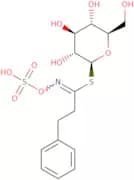
CAS:Phenethyl glucosinolate potassium salt is a compound found in plants belonging to the Brassicaceae family. It has been shown to be highly toxic to larvae of the cabbage butterfly and other insects that feed on brassica plants. Phenethyl glucosinolate potassium salt has been shown to inhibit the development of these insects, probably by inhibiting protein synthesis in the insect's gut. The major sulfur-containing compound in this product is gluconasturtiin, which has been shown to inhibit growth of pekinensis at high temperatures. This compound also inhibits radiation-induced DNA damage and does not show significant effects on nonsignificant organisms such as yeast and mold.Fórmula:C15H20NO9S2KPureza:Min. 95%Cor e Forma:PowderPeso molecular:461.55 g/molPhosphoramidon sodium
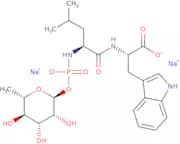
CAS:Phosphoramidon sodium is a chemical inhibitor that is used in wastewater treatment. It has been shown to decrease bronchial reactivity in humans by modulating the activity of peptidases, which are enzymes that break down proteins. Phosphoramidon sodium has also been shown to reduce pain responses in animal models by inhibiting the release of fatty acids from nerve cells. This drug also decreases inflammation and swelling by preventing the production of prostaglandins and leukotrienes.Fórmula:C23H34N3O10P·xNaPureza:Min. 95%Cor e Forma:PowderPeso molecular:587.47 g/molSodium dimethyldithiocarbamate hydrate
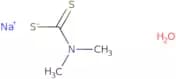
CAS:Sodium dimethyldithiocarbamate hydrate is a salt of dimethyldithiocarbamic acid. It is used as an additive in paints and coatings to prevent corrosion of metal. Sodium dimethyldithiocarbamate hydrate is also used in the production of polyurethane and polyester resins, where it acts as a curing agent. Dimethyldithiocarbamic acid has been shown to be a ligand for the influenza virus, inhibiting viral activity by binding to the hemagglutinin protein. The crystal system of this substance is hexagonal; its salts exist in both acidic and basic forms. The functional theory explains the stabilization of this compound through coordination with nitrogen atoms on one side and phenyl substituents on the other side. Hexamethylenetetramine reacts with sodium chloride to form sodium dimethyldithiocarbamate hydrate, which can then react with methanol or eth
Fórmula:C3H6NNaS2·xH2OPureza:Min. 95%Cor e Forma:White PowderPeso molecular:143.2 g/molCalcium ascorbate dihydrate
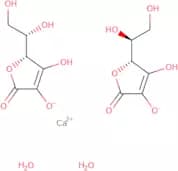
CAS:Calcium ascorbate dihydrate (CAD) is a model system of the skin tumor formation in response to ionizing radiation. CAD is a reaction solution that contains calcium and ascorbate ions. The optimum concentration for CAD is 8 mg/ml. This solution has been shown to be an effective inhibitor of microbial growth and can be used as an antimicrobial agent. It also has a protective effect against acute toxicities, such as those caused by ascorbic acid or sodium citrate.Fórmula:C12H14CaO12•(H2O)2Pureza:Min. 95%Peso molecular:426.34 g/molFmoc-Tyr(SO3H)-OH barium salt
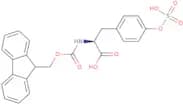
CAS:Please enquire for more information about Fmoc-Tyr(SO3H)-OH barium salt including the price, delivery time and more detailed product information at the technical inquiry form on this pageFórmula:C24H21NO8SPureza:Min. 95%Peso molecular:483.49 g/molBis(N-butylcyclopentadienyl)zirconiumdichloride
CAS:Please enquire for more information about Bis(N-butylcyclopentadienyl)zirconiumdichloride including the price, delivery time and more detailed product information at the technical inquiry form on this pageFórmula:C18H26Cl2ZrPureza:Min. 95%Peso molecular:404.53 g/mol