Sais metálicos
Foram encontrados 2872 produtos de "Sais metálicos"
(1S,2S)-N,N'-Bis(2-acetyl-3-oxo-2-butenylidene)-1,2-dimesitylethylenediaminato Cobalt(II)
CAS:(1S,2S)-N,N'-Bis(2-acetyl-3-oxo-2-butenylidene)-1,2-dimesitylethylenediaminato Cobalt(II) is a catalyst in cycloaddition reactions. It is soluble in organic solvents and has been used as a catalyst for the synthesis of imines and aryl ketones. This compound also catalyzes the reduction of borohydride to form borane.Fórmula:C32H38CoN2O4Pureza:Min. 95%Peso molecular:573.59 g/molZinc oxalate dihydrate
CAS:Zinc oxalate hydrate is a skin condition treatment that is made of zinc oxide and oxalic acid. It is used to treat acne, eczema, and psoriasis by inhibiting bacterial growth. The reaction solution is prepared by adding sodium citrate to a solution of vitamin B3 in dextrose. The mixture is heated until the crystals dissolve and then cooled down. The final product has a liquid phase synthesis and contains ZnO, Na2C6H5O7, C6H12O6, and H2O. Other uses for this compound include its use as an antibacterial agent for biomineralization or as a dextrose substitute in the manufacture of cyclic hydrocarbons. This product also has the ability to form nanowires when it is dehydrated under high temperatures.Fórmula:ZnC2O4•2H2OPureza:Min. 95%Cor e Forma:Powder1,9-Dimethyl-methylene blue zinc chloride
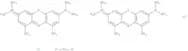
CAS:1,9-Dimethyl-methylene blue zinc chloride double salt is a fluorescent dye that has been used in the study of hyaluronic acid and mesenchymal stem cells. The compound absorbs light at a wavelength of 580 nm, which is the same as the absorption wavelength for hyaluronic acid and mesenchymal stem cells. 1,9-Dimethyl-methylene blue zinc chloride double salt can be used to measure the amount of these compounds in tissues. This dye also shows sensitivity to artifacts such as hemolysis and lipemia, making it useful for research purposes.Fórmula:(C18H22ClN3S)2•ZnCl2Pureza:Min. 95%Cor e Forma:PowderPeso molecular:832.11 g/molSodiumbenzotriazole
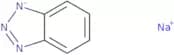
CAS:Sodiumbenzotriazole is an organic compound with the chemical formula C6H4N3Na. Sodiumbenzotriazolate has been shown to be active against infectious diseases caused by bacteria, such as Streptococcus pyogenes and Neisseria meningitidis. It also has been shown to have anti-inflammatory properties in mice with collagen-induced arthritis, as well as inhibitory effects on inflammatory diseases such as Crohn's disease and colitis. The mechanism of action for these effects may be due to its ability to act as a metal chelator and scavenger of reactive oxygen species.
Fórmula:C6H4N3NaPureza:Min. 95%Cor e Forma:Clear LiquidPeso molecular:141.11 g/molPotassium cyanate
CAS:Potassium cyanate is an active analogue of sodium cyanate. It is used in biochemical research for the preparation of samples and in the study of reactions that involve the formation of carboxylic acid derivatives from primary alkyl halides. This compound was found to be significantly cytotoxic, with a median lethal dose (LD50) at 3,000 mg/kg. The mechanism of action is not known. Potassium cyanate has been shown to inhibit human serum cholesterol levels and reduce atherosclerotic cardiovascular events in animal models, which may be due to its ability to inhibit cholesterol synthesis by inhibiting HMG-CoA reductase activity.Fórmula:KOCNPureza:Min. 95%Peso molecular:81.12 g/molSodium selenite
CAS:Sodium selenite is an inorganic chemical compound that is a byproduct of the refining process of crude oil. It is used as a dietary supplement and in clinical studies for inflammatory bowel disease. Sodium selenite is a strong reducing agent because it has a redox potential of -1.5 V, which can cause genotoxic effects in cells with low antioxidant defenses. The pro-oxidant effect may be due to its ability to generate reactive oxygen species, such as hydrogen peroxide and hydroxyl radicals. It also exhibits antimicrobial activity against bacteria, fungi, and yeast.
Fórmula:Na2SeO3Pureza:Min. 95%Cor e Forma:PowderPeso molecular:174.95 g/molMercaptoacetic acid sodium salt
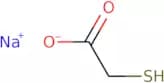
CAS:Mercaptoacetic acid sodium salt (MAS) is an oxidation catalyst that is used to convert ethyl alcohol into acetic acid. It has been shown to be a good catalyst for the oxidation of hydroxyl groups in the presence of metal hydroxides or inorganic acids, such as sodium carbonate. MAS has also been shown to be toxic to human serum and is not recommended for use in humans. The toxicity of MAS may be due to its ability to react with fatty acids and form mercaptans, which are volatile compounds that can cause irritation. Mercaptoacetic acid sodium salt reacts with potassium dichromate and forms mercaptans and other products, which may contribute to its toxicity.Fórmula:C2H3NaO2SPureza:(Titration) Min. 90%Cor e Forma:PowderPeso molecular:114.1 g/molSulfo-N-succinimidyl 4-maleimidobutyrate sodium salt
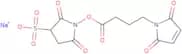
CAS:Please enquire for more information about Sulfo-N-succinimidyl 4-maleimidobutyrate sodium salt including the price, delivery time and more detailed product information at the technical inquiry form on this pageFórmula:C12H11N2NaO9SPureza:Min. 95%Peso molecular:382.28 g/molDehydroacetic acid sodium salt
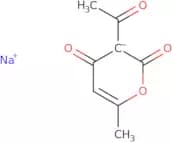
CAS:Dehydroacetic acid sodium salt is a chemical compound with the formula CH3COOCH2NaO2. It is an ionic liquid that can be used as a preservative or stabilizer in foods and other products. Dehydroacetic acid sodium salt has been shown to inhibit the growth of bacteria and fungi in biological studies. The analytical method for dehydroacetic acid sodium salt is based on x-ray diffraction data, which is used to identify its purity and concentration. The reaction solution includes dehydroacetic acid, water vapor, sodium salts, phosphorus pentoxide, and control analysis.Fórmula:C8H7O4NaPureza:Min. 95%Cor e Forma:PowderPeso molecular:190.13 g/molPotassium thiocyanate
CAS:Produto ControladoPotassium thiocyanate is a salt that contains potassium and thiocyanate ions. It is a white, crystalline solid with an alkaline pH. The Langmuir adsorption isotherm for potassium thiocyanate has a maximum at a specific concentration, which indicates that the compound has high affinity for water molecules. It also has strong hypoglycemic effects in humans and animals. Potassium thiocyanate can be used to remove hydrogen fluoride from wastewater and it can also be used as an additive in phase transition temperature measurements.
Fórmula:CNS·KPureza:Min. 95%Cor e Forma:PowderPeso molecular:97.18 g/molPotassium Glycerophosphate - 75% solution
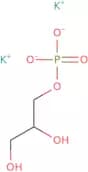
CAS:Potassium Glycerophosphate is a phosphoric acid and potassium salt that is used as a buffer for biochemical research. It can be used to provide the necessary buffering capacity for reactions involving inorganic acids, such as hydrochloric acid, or organic acids, such as acetic acid. This product has been shown to have an acidic pH of 3.5-4.5 and a pKa of 10.5-11.5 at 20°C. The compound is also soluble in water and alcohols, but insoluble in ethers and chloroform. Potassium Glycerophosphate has been shown to inhibit the growth of Saccharomyces cerevisiae when used as a nutrient source.Fórmula:C3H7O6P·2KPureza:Min. 95%Cor e Forma:LiquidPeso molecular:248.26 g/molIndium (III) chloride
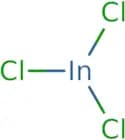
CAS:Indium (III) chloride is a reactive metal with a high oxidation state that has been shown to have significant cytotoxic effects in vitro. It is also genotoxic, which may be due to the generation of hydroxyl radicals and other reactive oxygen species. Indium (III) chloride has been used for the treatment of various infectious diseases, including HIV, Epstein-Barr virus, herpes simplex virus type 1, and influenza A virus. The toxicity of this metal is dependent on the concentration and duration of exposure. Indium (III) chloride is metabolized by plasma mass spectrometry as a substrate molecule for cytochrome P450 enzymes. This reaction results in the formation of an active metabolite that can bind to DNA and affect mitochondrial membrane potential. Indium (III) chloride has also been used as a contrast agent in fluorescein angiography or particle imaging techniques to visualize the presence of biological materials such as tissue necrosis or inflammation.Fórmula:Cl3InPureza:Min. 95%Cor e Forma:Clear LiquidPeso molecular:221.18 g/mol1,2,3,4,5-Pentaphenyl-1'-(di-tert-butylphosphino)ferrocene
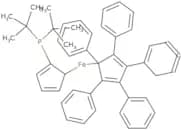
CAS:1,2,3,4,5-Pentaphenyl-1'-(di-tert-butylphosphino)ferrocene (Pd(dba)2) is a reagent in the form of a dark brown liquid that can be used to synthesize benzene derivatives. It has been shown to be soluble in chloroform and toluene. This compound is stable at room temperature and it can be eluted with phenyl chloride. Pd(dba)2 is a ligand that binds to the metal palladium in order to facilitate the formation of complex compounds.
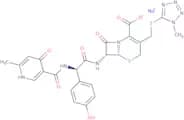
Fórmula:C48H47FePPureza:Min. 95%Cor e Forma:Pink To Dark Red SolidPeso molecular:710.71 g/molCefpiramide sodium
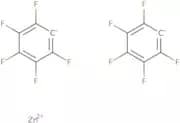
CAS:Cefpiramide sodium is a cephalosporin antibiotic that has been shown to be effective against a wide range of bacteria, including those which are resistant to other antibiotics. Cefpiramide sodium is used for the treatment of skin and soft tissue infections in infants or for the treatment of respiratory tract infections in adults. The antibiotic binds to bacterial cell membranes and inhibits bacterial growth by inhibiting fatty acid synthesis, which is important for the production of cell walls. Cefpiramide sodium has been shown to have antiviral properties as well as antibacterial properties. These effects may be due to its ability to inhibit viral protein synthesis or by binding directly to the virus itself. Cefpiramide Sodium is an anti-infective drug that belongs to a group called cephalosporins, which are antibiotics that inhibit growth of bacteria by binding to their cell walls and preventing them from synthesizing essential fatty acids required for building their cell walls. It also has antiviral properties.Pureza:Min. 95%Bis(pentafluorophenyl)zinc
CAS:Bis(pentafluorophenyl)zinc (BPFPZn) is a ring-opening polymerization catalyst that is used to synthesize polymers with pendant covalent adducts. BPFPZn has shown synergistic effects when used in combination with lactide, which is a monomer that can be polymerized to form polylactic acid. The reaction system used for the synthesis of BPFPZn and lactide involves nucleophilic attack on the zinc cation by the carbonyl group of lactide, leading to reductive elimination and coordination chemistry. This reaction system has been shown to produce architectures such as block copolymers and star polymers.
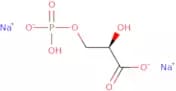
Fórmula:C12F10ZnPureza:Min. 95%Cor e Forma:PowderPeso molecular:399.49 g/molD-(-)-3-Phosphoglyceric acid disodium
CAS:D-(-)-3-Phosphoglyceric acid disodium is a homologue of D-glyceric acid and is used in the synthesis of phosphatidylcholine. It binds to the active site of phosphatases and prevents them from hydrolyzing phosphate groups, which are critical for the production of adenosine triphosphate (ATP). The chemical stability and the availability make this compound an excellent candidate for biochemical studies. D-(-)-3-Phosphoglyceric acid disodium has been shown to be essential in biological function, as it functions as a substrate for many metabolic pathways such as glycolysis, gluconeogenesis, pentose phosphate pathway, and fatty acid biosynthesis. The molecule is also involved in a number of biochemical reactions that are catalyzed by enzymes. Mutational studies have shown that organisms without this compound will not survive.
Fórmula:C3H5O7PNa2Pureza:Min. 93%Cor e Forma:White PowderPeso molecular:230.02 g/molCholesteryl sulfate potassium salt
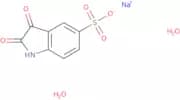
CAS:Cholesteryl sulfate potassium salt (CSK) is a solid lipid with a high melting point. It can be used as an active compound to form nanoparticles, which have the ability to penetrate cell membranes and enter cells. CSK has been shown to disrupt the lipid bilayer of cellular membranes, thereby releasing lipids such as cholesterol from the membrane surface. CSK also has polynucleotide binding properties that may lead to gene expression changes in cells. CSK is an anionic lipid, which makes it more likely to interact with negatively charged cell surfaces and membranes. Cholesteryl sulfate potassium salt has been shown to inhibit cholesterol synthesis in liver cells and increase LDL receptor activity in hepatocytes.Fórmula:C27H45KO4SPureza:Min. 95%Peso molecular:504.81 g/molIsatin-5-sulfonic acid sodium salt dihydrate
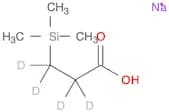
CAS:Isatin-5-sulfonic acid sodium salt dihydrate is a potent inhibitor of caspases. It has been shown to inhibit the activity of caspase-3 in vitro, thereby inhibiting apoptosis. Isatin-5-sulfonic acid sodium salt dihydrate has also been shown to increase survival rates in animal models of neurodegenerative diseases such as Parkinson's disease and Huntington's disease. Isatin-5-sulfonic acid sodium salt dihydrate may have neuroprotective effects by inhibiting the release of proinflammatory cytokines and nitric oxide, which are associated with neuronal death. This drug also inhibits monoamine oxidase A (MAO-A) and zymosterone B (ZVAD).Fórmula:C8H4NNaO5S·2H2OPureza:Min. 95%Cor e Forma:PowderPeso molecular:285.21 g/molPropionic-2,2,3,3-d4 acid, 3-(trimethylsilyl)-, sodium salt (1:1)
CAS:Fórmula:C6H9D4NaO2SiPureza:%Cor e Forma:SolidPeso molecular:172.2661Ref: IN-DA002OBA
Produto descontinuado