Sais metálicos
Foram encontrados 2872 produtos de "Sais metálicos"
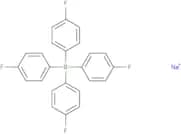
Tetrakis(4-Fluorophenyl)-Borate Sodium (1:1)
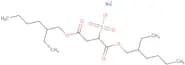
CAS:Tetrakis(4-fluorophenyl)borate sodium (1:1) is a solid that is soluble in organic solvents. It has been used as an adsorbent for nuclear waste and organic molecules. Tetrakis(4-fluorophenyl)borate sodium (1:1) has been shown to adsorb hydrophobic molecules such as polycyclic aromatic hydrocarbons, which are difficult to remove from the environment. Tetrakis(4-fluorophenyl)borate sodium (1:1) can be prepared by reacting tetraphenylborate with 4-fluoroboric acid. This reaction produces a mixture of products, of which tetrakis(4-fluorophenyl)borate sodium (1:1) is the most common. Tetrakis(4-fluorophenyl)borate sodium (1:1), like other borate salts, is used in zeolites toFórmula:C24H16BF4NaPureza:Min. 95%Peso molecular:414.18 g/molDioctyl sulfosuccinate sodium salt
CAS:Dioctyl sulfosuccinate sodium salt (DSS) is a surfactant that is used in the formulation of aerosol products. It can be used as a matrix for the analytical determination of enzyme activities such as glutathione reductase and cytochrome p450, which are involved in the metabolism of xenobiotics. DSS has been shown to have an optimum concentration of 0.1% and fluorescence probe with a pH range between 7-9. The surfactant also shows ionotropic gelation properties at concentrations greater than 1%.
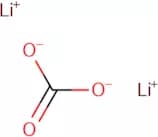
Fórmula:C20H37NaO7SPureza:Min. 95%Cor e Forma:White PowderPeso molecular:444.57 g/molLithium carbonate
CAS:Produto ControladoLithium carbonate is a salt that contains lithium and carbonate ions. It is used as a mood stabilizer, primarily to treat bipolar disorder. Lithium carbonate is available in three different concentrations: lithium carbonate 5% (Li2CO3), lithium carbonate 10% (Li2CO3), and lithium carbonate 15% (Li2CO3). The optimum concentration of lithium carbonate for the treatment of bipolar disorder is 10%. Lithium has been shown to increase the activity index in combination therapy groups with either mianserin hydrochloride or carbamazepine. Electrochemical impedance spectroscopy has also been used to measure the effect of lithium on human body mass index (BMI).Fórmula:CLi2O3Pureza:Min. 95%Peso molecular:73.89 g/mol4-Sulpho-1,8-naphthalic anhydride potassium salt
CAS:4-Sulpho-1,8-naphthalic anhydride potassium salt is a reagent that belongs to the family of sulfonic acids. It is used for recycling purposes in biochemical studies and for the synthesis of other compounds in organic chemistry. The chloride ion can be substituted with bromide or iodide ions to yield 4-bromobenzaldehyde. Studies have also shown that 4-SNAK can act as an electron acceptor in cellular respiration pathways and has been shown to inhibit synaptic transmission.
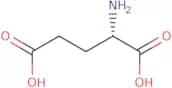
Fórmula:C12H5KO6SPureza:Min. 95%Cor e Forma:SolidPeso molecular:316.33 g/molγ-Polyglutamic acid sodium - MW 800-1500
CAS:Polymer of glutamic acid
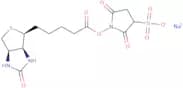
Fórmula:(C5H9NO3)nPureza:Min. 95%Cor e Forma:PowderBiotin 3-sulfo-N-hydroxysuccinimide ester sodium salt
CAS:Biotin 3-sulfo-N-hydroxysuccinimide ester sodium salt (BSHES) is a reactive molecule that can be used as a pharmacological agent. It has been shown to have biological properties in vivo models and in vitro cell lysis experiments. BSHES has also been shown to bind to the receptor molecule epidermal growth factor, which may account for its toxicity. In addition, this drug has been shown to bind dna binding domains, such as streptavidin or monoclonal antibodies. This drug is often used experimentally with an apical electrochemical impedance spectroscopy model.
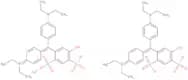
Fórmula:C14H19N3S2O8NaPureza:Min. 95%Cor e Forma:White PowderPeso molecular:444.44 g/molPatent blue V Calcium salt
CAS:Patent Blue V calcium salt is a calcium salt of Patent Blue V, which is a light-sensitive dye with an absorption peak at 450 nm. It has been used in analytical chemistry to measure the fatty acid content of oils and fats. Patent Blue V calcium salt has also been used as a reagent in kinetic studies to measure the rate of reactions involving detergent compositions, cationic surfactants, and hydroxyl groups. The lymphatic vessels react to this dye by showing an increase in permeability. The activation energies for these reactions have been determined using kinetic data.Fórmula:C27H31N2O7S2·5CaPureza:Min. 85.0 Area-%Cor e Forma:PowderPeso molecular:582.7 g/mol1,1'-Dibenzoylferrocene
CAS:1,1'-Dibenzoylferrocene is a ferrocene derivative that has been shown to be an excellent ligand for the separation of heavy metal ions. The physicochemical properties of 1,1'-dibenzoylferrocene make it a good candidate for ionization and separation techniques. It can accommodate different substituents on the ferrocene molecule, which allows it to interact with different types of metal ions. 1,1'-Dibenzoylferrocene has been used in metallocene catalysis as a solvent, although its use as a ligand has not yet been explored.
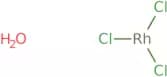
Fórmula:C24H18FeO2Pureza:Min. 95%Peso molecular:394.24 g/molRhodium(III) chloride hydrate
CAS:Rhodium(III) chloride hydrate is a catalyst that is used in the oxidation of aromatic hydrocarbons. It has been shown to have an acidic reaction with hydrochloric acid and is used in the oxidation of benzene, toluene, ethylbenzene, and xylene. Rhodium(III) chloride hydrate has also been shown to be a good catalyst for the production of polycyclic aromatic hydrocarbons from light emitting diodes. This product can be used as an oxidizing agent in organic synthesis reactions. The 6-Fluoro-3-indoxyl-beta-D-galactopyranoside is an antituberculosis drug that belongs to the class of rifamycins. It is the most active of the rifamycins for the treatment of tuberculosis. Rifapentine inhibits bacterial growth by binding to DNA-dependent RNA polymerase, thereby preventing transcription and replication. The high frequency of
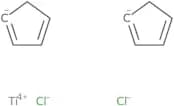
Fórmula:RhCl3·xH2OPureza:Min. 95%Peso molecular:209.26 g/molBis(cyclopentadienyl)titanium (IV) dichloride
CAS:Bis(cyclopentadienyl)titanium (IV) dichloride is a cationic polymerization catalyst that has been used to produce polyolefins with high molecular weights. It is also an important component of solid catalysts for the production of butadiene and styrene. Bis(cyclopentadienyl)titanium (IV) dichloride is a potent carcinogen in animals and is mutagenic in bacteria. It has been shown to cause cancer in animal models, and has been shown to be mutagenic in bacterial mutation assay tests. Bis(cyclopentadienyl)titanium (IV) dichloride reacts with dimethylformamide and aromatic hydrocarbons to produce photochemical properties that can lead to skin irritation or sensitization. This compound also has hydroxyl groups, which can react with oxidants such as chlorine gas to form chlorohydrins, which are toxic compounds that may be carcinogenic.
Fórmula:C10H10TiCl2Pureza:Min. 95%Cor e Forma:Red Clear LiquidPeso molecular:248.96 g/molPotassium 4-methoxycinnamate
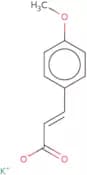
CAS:Potassium 4-methoxycinnamate is a fine chemical that is used as a versatile building block in the synthesis of complex compounds. It can be used in research and as a reagent or speciality chemical. It is also a useful building block for high quality, useful intermediate, and reaction component. Potassium 4-methoxycinnamate can be used as a scaffold to synthesize compounds with diverse applications such as pharmaceuticals, polymers, and agrochemicals.Fórmula:C10H9O3·KPureza:Min. 95%Peso molecular:216.27 g/molSodium pyroglutamate
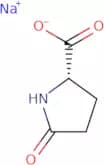
CAS:Sodium pyroglutamate is a surface methodology that inhibits leukemia inhibitory factor and has been shown to be effective in inhibiting the growth of mouse tumor cells. Sodium pyroglutamate has been shown to be cytotoxic to prostate cancer cells, which may be due to its ability to inhibit glutamate-mediated activation of the MAP kinase pathway. This drug also has anti-tumor effects on skin cells, which may be due to its inhibition of cell proliferation and induction of apoptosis. Sodium pyroglutamate also inhibits the production of collagenase, a major enzyme in the degradation of extracellular matrix, by human fibroblast cells. It also has an anti-inflammatory effect and is used as a food additive.Fórmula:C5H7NO3•NaPureza:Min. 95%Cor e Forma:Colorless PowderPeso molecular:152.1 g/mol(Trifluoromethylthio) Silver(I)
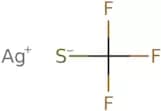
CAS:(Trifluoromethylthio) silver(I) is an efficient method for the synthesis of chiral, functionalized organosulfur compounds. It is prepared by the trifluoromethylthiolation of aryl acetonitriles in the presence of persulfate and a radical coupling agent. The reaction time can be adjusted to suit the desired product, with shorter times producing more complex molecules. This compound can be used as a nucleophile in organic reactions, including sulfide activation reactions.Fórmula:CHAgF3SPureza:Min. 95%Peso molecular:209.95 g/molBis(tri-tert-butylphosphine)platinum(0)
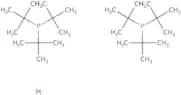
CAS:Bis(tri-tert-butylphosphine)platinum(0) is a coordination complex with a chemical formula of Pt[P(C)(CH)]. It has been shown that this compound is obtained in high yields when the platinum metal is heated to temperatures between 500 and 600 degrees Celsius. This compound has been shown to be soluble in acetone at low temperatures, and it crystallizes to form a purple solid. Bis(tri-tert-butylphosphine)platinum(0) has been shown to have magnetic properties, as well as being active in x-ray crystallographic studies. The crystal diffraction pattern of this compound was found to be similar to that observed for the ligand phosphine, which is consistent with the proposed structure of bis(tri-tert-butylphosphine)platinum(0).Fórmula:C24H54P2PtPureza:Min. 95%Peso molecular:599.72 g/mol4,4'-Dichlorodiphenylsulfone-3,3'-disulfonic acid disodium salt
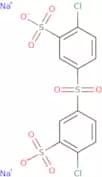
CAS:Please enquire for more information about 4,4'-Dichlorodiphenylsulfone-3,3'-disulfonic acid disodium salt including the price, delivery time and more detailed product information at the technical inquiry form on this pageFórmula:C12H6Cl2Na2O8S3Pureza:Min. 95 Area-%Cor e Forma:White Off-White PowderPeso molecular:491.25 g/molDichloro(pentamethylcyclopentadienyl)iridium(III) dimer
CAS:Dichloro(pentamethylcyclopentadienyl)iridium(III) dimer (DCPI) is a synthetic ligand that can be used in biomolecular and chemical applications. DCPI has been shown to be stable in the presence of chloride, which is needed for many catalytic reactions. This compound has high activity as a transfer agent and is also able to transfer amines and cyclic compounds. DCPI can be used in fluorescence-based assays, due to its strong fluorescence emission.Fórmula:C20H30Cl4Ir2Pureza:Min. 95%Cor e Forma:PowderPeso molecular:796.7 g/molCalcium carbonate
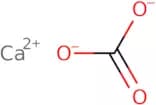
CAS:Calcium carbonate is a chemical compound that can be found in natural limestone, marble and seashells. It is used as an industrial mineral for the production of lime and cement, as well as a chemical agent in wastewater treatment. Calcium carbonate has been shown to have synergistic effects with sodium carbonate when used to treat sewage effluent. It also has a high solubility in water, which makes it suitable for use in the production of concrete. The reaction mechanism is dependent on the particle size and temperature. The thermal expansion coefficient of calcium carbonate is 2.6x10^-5/°C, meaning that it expands by 0.26% per degree Celsius increase in temperature.Fórmula:CaCO3Pureza:Min. 95%Cor e Forma:PowderPeso molecular:100.09 g/molLithium acetoacetate
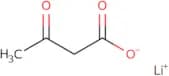
CAS:Lithium acetoacetate is a compound that is used in the treatment of cancer. It is a salt that contains lithium and acetoacetate. Lithium acetoacetate has been shown to be clinically relevant for the treatment of cancer, particularly in patients who have not responded well to other treatments. This drug has also been shown to induce apoptosis in animal cells, which may be due to its ability to produce acid.Fórmula:C4H6O3•LiPureza:Min. 95%Cor e Forma:PowderPeso molecular:109.03 g/molSodium 2,2,2-trifluoroethanolate
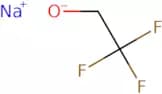
CAS:Sodium 2,2,2-trifluoroethanolate is a fluorinated alcohol. It is used as an animal health drug and has been shown to have a significant inhibitory effect on the growth of bacteria. The reaction intermediate for this compound is trifluoroacetic acid, which can be formed from sodium and hydrogen fluoride in the presence of ethylene glycol. This molecule also reacts with nitrosyl chloride to form a nitrogen-containing product. Sodium 2,2,2-trifluoroethanolate has been shown to be active against both Gram-positive and Gram-negative bacteria. The FTIR spectra for this compound shows that it has two sets of absorption bands at 3,200 cm−1 (due to C–H stretching) and 3,000 cm−1 (due to C=C stretching).Fórmula:C2H2F3NaOPureza:Min. 95%Cor e Forma:PowderPeso molecular:122.02 g/molSodium 2-mercaptobenzothiazole - 50% aqueous solution
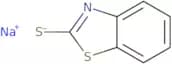
CAS:2-Mercaptobenzothiazole is a white crystalline powder that is soluble in water and insoluble in organic solvents. It has an odor threshold of 1.5 ppm and a melting point of 158°C. 2-Mercaptobenzothiazole is used as an absorption enhancer for ultraviolet light, infrared radiation, or X-rays. It is also used to improve the efficiency of chemical reactions, such as the synthesis of polyurethane resins and other polymers. The most common application for 2-mercaptobenzothiazole is as a cationic surfactant, which is often used in textile processing and oil refining. This compound can be prepared by reacting sodium carbonate with hydrochloric acid and glycol ether, followed by the addition of water vapor to produce hydrogen chloride gas. 2-Mercaptobenzothiazole can be synthesized using a liquid chromatography method with electrochemical impedance spectroscopy (Fórmula:C7H4NNaS2Pureza:Min. 95%Cor e Forma:Yellow To Brown LiquidPeso molecular:189.24 g/mol