Sais metálicos
Foram encontrados 2872 produtos de "Sais metálicos"
DISODIUM HYDRATE [(2R,3S,5R)-5-(2-AMINO-6-OXO-6,9-DIHYDRO-1H-PURIN-9-YL)-3-HYDROXYOXOLAN-2-YL]METHYL PHOSPHATE
CAS:Fórmula:C10H12N5Na2O7PPureza:98%Cor e Forma:SolidPeso molecular:391.1849Ref: IN-DA003H5A
Produto descontinuadoSodium hexafluorosilicate
CAS:Fórmula:Na2SiF6Pureza:≥ 98.0%Cor e Forma:White to off-white powderPeso molecular:188.06Potassium fluoride
CAS:Fórmula:FKPureza:≥ 99.0%Cor e Forma:White crystalline powder or crystalsPeso molecular:58.10(1,1''-Bis(diphenylphosphino)ferrocene)palladium(II) dichloride, complex with Dichloromethane
CAS:Fórmula:(C17H14P)2Fe·PdCl2Pureza:(Pd) ≥ 12.0%Cor e Forma:Orange to red crystalline powderPeso molecular:731.70Tellurium oxide, 99.999%
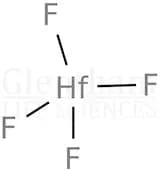
CAS:Fórmula:TeO2Pureza:≥ 99.999%Cor e Forma:White to almost white powder or crystalline powderPeso molecular:159.60Hafnium fluoride
CAS:Fórmula:HfF4Pureza:≥ 99.9%Cor e Forma:White to off-white powderPeso molecular:254.50Raltegravir potassium
CAS:Anti-viral; HIV integrase inhibitor
Fórmula:C20H20FKN6O5Pureza:Min. 98 Area-%Cor e Forma:White Off-White PowderPeso molecular:482.51 g/molRef: 3D-FR27670
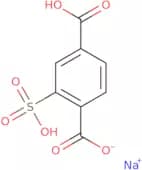
Produto descontinuado2-Sulphoterephthalic monosodium
CAS:2-Sulphoterephthalic monosodium (2-SPM) is a zirconium oxide that is synthesized by reacting 5-hydroxymethylfurfural with hydrochloric acid in the presence of 2-aminoterephthalic acid. It has been shown to be an efficient catalyst for the synthesis of 5-hmf from glucose in aqueous media. This product also exhibits strong protonation properties and can be used as a hydrogen bonding donor. The fluorescence properties of 2-SPM have also been studied, which may lead to its potential use as a supramolecular fluorescent probe.
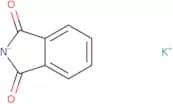
Fórmula:C8H5NaO7SPureza:Min. 95%Cor e Forma:White PowderPeso molecular:268.18 g/molPhthalimide potassium
CAS:Phthalimide potassium is a chemical that reacts with oxygen nucleophiles to form the corresponding N-hydroxyphthalimide. It has been shown as an effective treatment for cancer by targeting tumor cells and inhibiting their growth. The mechanism of action involves binding to 5-HT2 receptors in the cell membrane, which leads to inhibition of the enzyme adenylate cyclase, leading to decreased levels of cAMP. This decreases the activity of protein kinase A, which in turn leads to decreased production of proteins such as p21WAF1/CIP1, which are required for cell cycle progression. Phthalimide potassium has also been shown to be active against HIV infection and may be useful for other diseases involving virus infections. This drug binds covalently with HLA proteins on the surface of infected cells and inhibits viral replication by preventing reverse transcription.
Fórmula:C8H4KNO2Cor e Forma:White PowderPeso molecular:185.22 g/molRef: 3D-FP32310
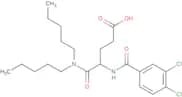
Produto descontinuadoLorglumide sodium salt
CAS:Lorglumide sodium salt is a guanine nucleotide-binding protein that has low potency and is used as an experimental model for polymerase chain reaction. It interacts with the transcriptional regulator cck-a, which inhibits the production of estradiol benzoate, cortisol concentration, and energy metabolism. Lorglumide sodium salt also interacts with receptors to inhibit the activity of peptide hormones and carcinoma cell lines.
Fórmula:C22H31Cl2N2NaO4Pureza:Min. 95%Cor e Forma:PowderPeso molecular:481.39 g/molRef: 3D-FL43268
Produto descontinuadoCreatine zinc chloride
CAS:Creatine zinc chloride is a basic protein that is metabolized to creatinine and guanidinoacetate. Creatine zinc chloride has been shown to inhibit the mitochondrial membrane potential, leading to the inhibition of cardiac muscle contraction and myocardial infarct size. Creatine zinc chloride also has physiological functions in energy metabolism, cytosolic calcium regulation, and glomerular filtration rate. Creatine zinc chloride may be used for the treatment of metabolic disorders, such as obesity and diabetes mellitus type II.
Fórmula:C4H9N3O2·ZnCl2Pureza:Min. 99%Cor e Forma:PowderPeso molecular:267.43 g/molSodium O-ethyl isopropylphosphonothiolate
CAS:Produto ControladoPlease enquire for more information about Sodium O-ethyl isopropylphosphonothiolate including the price, delivery time and more detailed product information at the technical inquiry form on this page
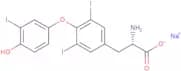
Fórmula:C5H12O2PS·NaPureza:Min. 95%3,3',5-Triiodo-L-thyronine sodium salt
CAS:Synthetic thyroid hormone (T3) analog; promotes adipogenic differentiation
Fórmula:C15H11I3NNaO4Pureza:Min. 95 Area-%Cor e Forma:Slightly Yellow PowderPeso molecular:672.96 g/molRef: 3D-FT28507
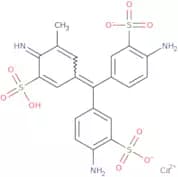
Produto descontinuadoAcid fuchsin calcium
CAS:Acid fuchsin is a water-soluble, non-toxic, acidic dye that is used in histology to stain connective tissue and mucous membranes. It is used as an indicator for calcium in the presence of acid phosphatase. Acid fuchsin can be detected by light microscopy when it is stained on a section of tissue or cells. This dye can be used with immunocytochemistry or cytogenetics to assess the morphology of cells and tissues. The staining intensity varies according to the concentration of the acid fuchsin solution, which can be quantified by measuring the absorbance at 510 nm. A reference range for this measurement would be 0.1 - 1 μg/ml (10 - 100 μM).
Fórmula:C20H19N3O9S3·xCaCor e Forma:PowderPeso molecular:541.58 g/molRef: 3D-FA47020
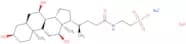
Produto descontinuadoTaurocholic acid sodium salt hydrate
CAS:Taurocholic acid sodium salt hydrate is a potential biomarker for inflammatory bowel disease. It is a chemical that is produced by the liver and stored in the gallbladder. It can be found in the bile, which is made from cholesterol and secreted into the small intestine with fat-soluble substances. Taurocholic acid sodium salt hydrate has been shown to induce necrotic cell death in vitro, which may be due to its ability to activate nuclear factor κB (NF-κB), leading to increased production of cytokines such as tumor necrosis factor-α (TNF-α). The bioavailability of taurocholic acid sodium salt hydrate has been shown to be greater than that of other bile acids in vivo. This bile acid also has protective effects against bacterial translocation because it chaperones bacterial cells and prevents them from attaching to the epithelial cells lining the intestines. Taurocholic acid sodium salt hyd
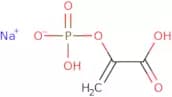
Fórmula:C26H44NNaO7S·xH2OPureza:Min. 97 Area-%Cor e Forma:White Off-White PowderPeso molecular:537.69 g/molPhosphoenolpyruvate monosodium salt hydrate
CAS:PEP is a "high-energy phosphate" compound playing a vital role in enzymatic phosphate-transfer reactions involved in ATP synthesis. It is used in conjunction with pyruvate kinase as a phosphorylating agent for ATP generation. Substrate for phosphoenolpyruvate carboxylase. Reagent for determination of glycerol.
Fórmula:C3H4NaO6P·xH2OPureza:Min. 95%Cor e Forma:PowderPeso molecular:190.02 g/molRef: 3D-FP29995
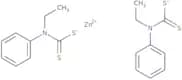
Produto descontinuadoZinc ethylphenyl dithiocarbamate
CAS:Zinc ethylphenyl dithiocarbamate is a hydrogenated zinc diethyldithiocarbamate that is used as an industrial chemical. The process of hydrogenation changes the chemical properties of the molecule by replacing one or more hydrogens with a hydrogen atom. It has been shown to have strong antioxidant properties and to inhibit the oxidation of fats, oils, and other organic substances. Zinc ethylphenyl dithiocarbamate has also been shown to be anti-inflammatory and to have hemolytic activity. This product is a white powder that is soluble in organic solvents such as ethers, benzene, and chloroform. It can be mixed into molten waxes and oils at high temperatures without decomposing.
Fórmula:C18H20N2S4ZnPureza:Min. 95%Cor e Forma:White PowderPeso molecular:458.01 g/molRef: 3D-FZ41181
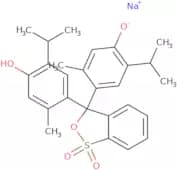
Produto descontinuadoThymol blue sodium salt
CAS:Thymol blue sodium salt is a dye that is used to stain fatty acids. The hydroxyl group of thymol blue sodium salt reacts with the carboxylic acid group of fatty acids, forming a cross-link between the two groups. This reaction can be monitored by measuring changes in the intensity of light transmitted through the solution. Thymol blue sodium salt has also been used as a cross-linking agent in polycarboxylic acid hydration reactions, and as an analytical method for determining cationic polymerization. Optical sensors have been developed that are capable of measuring changes in cavity size due to hydration or cationic polymerization.
Fórmula:C37H40N2Na4O13SPureza:Min. 95%Cor e Forma:PowderPeso molecular:844.74 g/molRef: 3D-FT01471
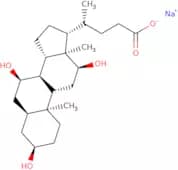
Produto descontinuadoCholic acid sodium salt
CAS:Produto ControladoCholic acid sodium salt is a bile acid sodium salt, which is primarily derived from the bile of mammals. It functions as a surfactant that facilitates the emulsification of fats and lipids, enhancing their subsequent absorption and digestion. This compound plays a critical role in the synthesis and regulation of cholesterol in the body.
Fórmula:C24H39NaO5Pureza:Min. 95%Cor e Forma:PowderPeso molecular:430.55 g/molRef: 3D-FC14775
Produto descontinuado
![DISODIUM HYDRATE [(2R,3S,5R)-5-(2-AMINO-6-OXO-6,9-DIHYDRO-1H-PURIN-9-YL)-3-HYDROXYOXOLAN-2-YL]METH…](/_next/image/?url=https%3A%2Fstatic.cymitquimica.com%2Fproducts%2FIN%2Fthumb-webp%2FDA003H5A.webp&w=3840&q=75)