Sais metálicos
Foram encontrados 2872 produtos de "Sais metálicos"
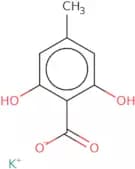
2,6-Dihydroxy-4-methylbenzoic acid potassium
CAS:2,6-Dihydroxy-4-methylbenzoic acid potassium salt (2,6-DMBAK) is a high quality reagent that is used as an intermediate in the synthesis of complex compounds. CAS No. 856177-01-0. It is a white crystalline solid with an mp of about 190 degrees Celsius and a bp of about 315 degrees Celsius. 2,6-DMBAK has been shown to be useful in the synthesis of speciality chemicals and research chemicals. This product can be used as a versatile building block for the preparation of various kinds of chemical compounds, and it also has many applications in organic synthesis because it reacts well with many different types of compounds.
Fórmula:C8H8O4•KPureza:Min. 95%Cor e Forma:PowderPeso molecular:207.25 g/molRef: 3D-FD70873
Produto descontinuadoCreatine zinc chloride
CAS:Creatine zinc chloride is a basic protein that is metabolized to creatinine and guanidinoacetate. Creatine zinc chloride has been shown to inhibit the mitochondrial membrane potential, leading to the inhibition of cardiac muscle contraction and myocardial infarct size. Creatine zinc chloride also has physiological functions in energy metabolism, cytosolic calcium regulation, and glomerular filtration rate. Creatine zinc chloride may be used for the treatment of metabolic disorders, such as obesity and diabetes mellitus type II.
Fórmula:C4H9N3O2·ZnCl2Pureza:Min. 99%Cor e Forma:PowderPeso molecular:267.43 g/molSulfobromophthalein disodium salt hydrate
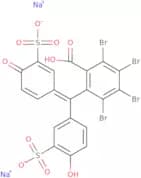
CAS:Sulfobromophthalein disodium salt hydrate is a fluorescent chemical that is used as a marker for renal function. It is most commonly used to assess the function of proximal tubules in the kidney and to assess the presence of cancer cells in various tissues. The uptake of sulfobromophthalein by the renal proximal tubules can be measured with an assay involving caco-2 cells. Multidrug resistance-associated protein (MRP) and other efflux pumps are expressed in these cells, which limits the amount of drug that can be absorbed into the cell. MRP also plays a role in multidrug resistance by pumping drugs back out of cells into the extracellular fluid, preventing them from being reabsorbed into circulation. This causes higher concentrations of drugs to accumulate inside the cell, leading to apoptosis. Sulfobromophthalein has been shown to attenuate cancer progression, as well as reduce multidrug resistanceFórmula:C20H8Br4O10S2·2Na·xH2OCor e Forma:White PowderPeso molecular:838 g/molCarboxyethylsilanetriol sodium salt - 25% in water
CAS:Carboxyethylsilanetriol sodium salt - 25% in water is a reagent that is used to form complex compounds. It can be used as a reaction component or a building block to create more complex compounds, such as new medicines. Carboxyethylsilanetriol sodium salt - 25% in water has been shown to be an efficient and versatile scaffold for the production of fine chemicals and research chemicals. CAS No. 18191-40-7 is a speciality chemical that can react with other organic compounds to form new compounds for research purposes. Carboxyethylsilanetriol sodium salt - 25% in water is a useful intermediate and building block for various synthetic reactions because it can easily react with other organics to form new compounds which are useful in pharmaceuticals, agrochemicals, and other industries.
Fórmula:C3H6Na2O5SiPureza:Approximately 25%Cor e Forma:Clear LiquidPeso molecular:196.14 g/molRef: 3D-FC139273
Produto descontinuadoCalcium dobesilate
CAS:Calcium dobesilate is a calcium salt that emits chemiluminescence in the presence of an oxidant. It has been used as a treatment for hypercalcemia, which is caused by high levels of calcium in the blood, and to prevent skin cancer. The experimental model was conducted on human serum and showed that calcium dobesilate reduced the enzyme activities in serum samples by 30% after 15 minutes of incubation. This reduction was statistically significant when compared to untreated groups. Calcium dobesilate also inhibited the growth of skin cancer cells in a pharmacological agent-induced experimental model.
Fórmula:C8H6O5S•Ca0Pureza:Min. 98 Area-%Cor e Forma:PowderPeso molecular:418.41 g/molRef: 3D-FC40877
Produto descontinuadoMetamizol sodium monohydrate
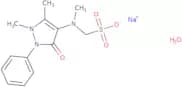
CAS:Metamizol sodium monohydrate is a nonsteroidal anti-inflammatory drug that is used as an analgesic and antipyretic. Metamizol sodium monerate is metabolized in the liver via cytochrome P450 (CYP) to form metamizole. It has been shown to inhibit chemiluminescence of polycyclic aromatic hydrocarbons using a dipyrone-treated biological sample, and the rate constant for this inhibition has been determined by the use of a chemiluminescence method. An analytical method for metamizol sodium monohydrate has also been developed using polymerase chain reaction (PCR) amplification of DNA sequences from human squamous cells, which can be used for forensic purposes. Metamizol sodium monohydrate has shown anti-inflammatory activity against rat paw edema and carrageenan-induced inflammation in rats, but it can cause side effects such as dizziness, drowsiness, headache, nausea,
Fórmula:C13H16N3O4S•H2O•NaPureza:Min. 95%Peso molecular:351.36 g/molSilver trifluoromethanesulfonate
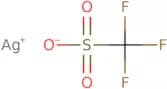
CAS:Silver trifluoromethanesulfonate is a silver salt that is used in carbohydrate chemistry. It can be used for the synthesis of coumarin derivatives, which are important for the development of pharmaceuticals and other organic compounds. The reaction with acylating agents produces an acylated silver ion that reacts with amines to form a cationic polymerization. This polymerization is activated by the presence of high salt or amines, and proceeds with high efficiency. The asymmetric synthesis of carbohydrates using this method has been demonstrated using x-ray diffraction data and nmr spectroscopic data.
Fórmula:CAgF3O3SPureza:Min. 95%Cor e Forma:White PowderPeso molecular:256.94 g/mol1-Octanesulfonic sodium salt monohydrate
CAS:1-Octanesulfonic acid sodium salt monohydrate is an animal drug that has been used for the long-term treatment of chronic exposure to animals. It can be used as a component of a chromatographic method for the analysis of dopamine in biological fluids. 1-Octanesulfonic acid sodium salt monohydrate has also been shown to have antipsychotic effects, which may be due to its ability to increase dopaminergic neurotransmission by inhibiting the reuptake of dopamine. This drug is not active against human cancer cells, but it does inhibit imatinib (the active form) and other tyrosine kinase inhibitors at micromolar concentrations, making it a potential candidate for use in pharmaceutical dosages as an adjunct therapy for chronic myeloid leukemia.Fórmula:C8H17O3SNa•H2OPureza:Min. 95%Cor e Forma:White PowderPeso molecular:234.29 g/molRef: 3D-FO52664
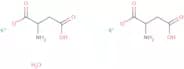
Produto descontinuadoPotassium DL-aspartate hemihydrate
CAS:Potassium DL-aspartate hemihydrate is a versatile building block that can be used as a reagent and as a speciality chemical. It is useful for research and development, as well as for the production of high-quality compounds and intermediates. This compound can be used in organic synthesis reactions and has been shown to be useful in the construction of scaffolds.
Fórmula:C4H7NO4H2O·KPureza:Min. 95%Cor e Forma:White PowderPeso molecular:181.21 g/molRef: 3D-FP43133
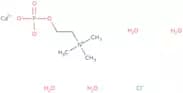
Produto descontinuadoPhosphocholine chloride calcium salt tetrahydrate
CAS:Phosphocholine chloride calcium salt tetrahydrate is a lipid-regulating agent that can be used in health-care products. It has a safety profile and does not cause any adverse reactions when taken orally. The uptake of phosphocholine chloride calcium salt tetrahydrate is pH dependent, and it has been shown to inhibit lipoprotein lipase activity at acidic pH levels (below 4.5). This drug is used in the preparation of samples for fluorescence assays, such as monoclonal antibodies or density lipoprotein, which requires hydrophobic substances to bind with the fluorescent dye. Phosphocholine chloride calcium salt tetrahydrate can also be used as an emulsifying agent in enzymatic methods, such as calcium carbonate or chloride.Fórmula:C5H13CaClNO4P·4H2OCor e Forma:White PowderPeso molecular:329.73 g/molRef: 3D-FP75521
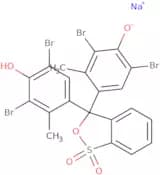
Produto descontinuadoBromocresol green, sodium salt
CAS:Bromocresol green is a dye that is used in biological assays to measure the kinetics of fluorescence. It is a type of tryptophan-releasing compound that releases a yellowish-green light when it absorbs light at wavelengths between 350 and 450 nm. Bromocresol green has been quantified by measuring the intensity of the fluorescence emission as a function of time. This can be done visually or using an instrument called a fluorometer, which detects changes in light intensity over time. Bromocresol green can be used to detect the presence of amino acid residues in proteins through protonation reactions with their tryptophan residues and subsequent quenching with acetonitrile. The bromocresol green dye is also used in lithographic printing, where it serves as an acceptor for electrons from an arene (aromatic hydrocarbon). This process generates energy for lithography and also provides contrast between regions with different electron densities.
Fórmula:C21H14Br4O5SNaCor e Forma:PowderPeso molecular:721 g/molRef: 3D-FB01465
Produto descontinuadoCesium chloride
CAS:Cesium chloride is a cationic salt that is used in research as a model system for nuclear DNA. It has been used to study the response element of the nitrate reductase gene and the polymerase chain reaction. Cesium chloride has been found to be an optimum concentration of 0.5mM for 3T3-L1 preadipocytes, which are cells that play a role in obesity and bowel disease. Cesium chloride also has been shown to inhibit papillary muscle contraction and whole-cell recordings from live cells. The compound may have therapeutic potential for treating heart failure by inhibiting diatomic molecule activity in the heart.
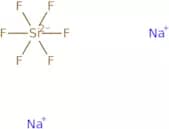
Fórmula:CsClCor e Forma:White PowderPeso molecular:168.36 g/molSodium fluorosilicate
CAS:Produto ControladoSodium fluorosilicate is an inorganic acid that can be prepared by dissolving sodium carbonate and hydrogen fluoride in water. It is used as a sample preparation agent for electrochemical impedance spectroscopy, as well as a reagent for the determination of acidic properties. Sodium fluorosilicate has been shown to inhibit the growth of epidermal cells, which may be due to its ability to cause an increase in the mitochondrial membrane potential. This compound also inhibits the synthesis of proteins from RNA, which may result from its coordination geometry or hydrogen-bonding interactions. Sodium fluorosilicate has been used in analytical methods involving x-ray diffraction data and plasma mass spectrometry.
Fórmula:Na2SiF6Pureza:Min. 95%Peso molecular:188.06 g/molPotassium phosphate tribasic trihydrate
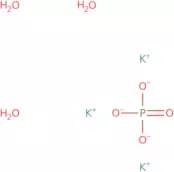
CAS:Potassium phosphate tribasic trihydrate is an inorganic salt that is used as a buffer. It has a molecular weight of 266.08, and it is soluble in water. Potassium phosphate tribasic trihydrate can be used to treat acidosis and kidney stones due to its high potassium content. This compound also has biological properties that allow it to be used in the preparation of urine samples for gravimetric analysis and biological properties.
Fórmula:H6K3O7PCor e Forma:White PowderPeso molecular:266.31 g/molPotassium pyrophosphate
CAS:Potassium pyrophosphate is a salt of pyrophosphoric acid, which is a weak acid with pKa = 2.8. It is used in the laboratory to generate phosphate ions from adenosine triphosphate (ATP) and magnesium ions. This reaction is used for the synthesis of nucleotides. Potassium pyrophosphate also inhibits bacterial growth by binding to an enzyme that is necessary for the synthesis of adenine nucleotide, which is essential for protein synthesis.
Fórmula:K4P2O7Cor e Forma:White Off-White PowderPeso molecular:330.34 g/molRef: 3D-FP63067
Produto descontinuadoZinc acetate
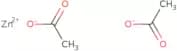
CAS:Zinc acetate is a chemical compound that contains zinc, oxygen, and carbon. It is used in the treatment of infectious diseases, such as bowel disease. Zinc acetate also functions as an antiseptic and astringent. The reaction mechanism for this compound is ionotropic gelation. This process involves the formation of hydrogen bonds between molecules that are then converted to a solid state. Zinc acetate will react with phosphorus pentoxide to form zinc phosphate, which can be used as a structural analysis for x-ray diffraction data. In addition, it has been shown to have high values when nitrogen atoms are present and zinc acetate is also soluble in water vapor and reacts with copper chloride to form zirconium oxide.
Fórmula:C4H6O4ZnPureza:Min. 95%Cor e Forma:PowderPeso molecular:183.47 g/molRef: 3D-FZ32609
Produto descontinuadoGlycocholic acid, sodium salt hydrate
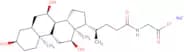
CAS:Glycocholic acid, sodium salt hydrate is a bile acid derivative, which is primarily derived from cholesterol in the liver. It is formed by the conjugation of cholic acid with the amino acid glycine. This compound acts primarily as a detergent in the digestive system, aiding in the emulsification and absorption of lipids and fat-soluble vitamins in the small intestine.
Fórmula:C26H42NNaO6(anhydrousbasis)Pureza:Min. 98 Area-%Cor e Forma:White PowderPeso molecular:487.62 g/molTris(2,4-pentanedionato)chromium(III)
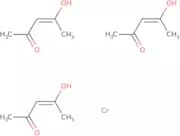
CAS:Tris(2,4-pentanedionato)chromium(III) is a chemical compound that is stable in the presence of acids and bases. It has been characterized using thermodynamic data, electrochemical impedance spectroscopy, and laser ablation. Tris(2,4-pentanedionato)chromium(III) has a high resistance to oxidation and reduction reactions. The phase transition temperature for this compound is -35 °C. Tris(2,4-pentanedionato)chromium(III) can be used as an oxidation catalyst for organic compounds. It can also be used to catalyze the decomposition of water vapor into hydrogen and oxygen gas.
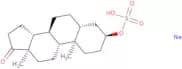
Fórmula:C15H21CrO6Pureza:Min. 95%Cor e Forma:Red PowderPeso molecular:349.32 g/molAndrosterone sulfate sodium
CAS:Androsterone sulfate sodium is a fine chemical that is used as a versatile building block in the synthesis of complex compounds. It is also a valuable reagent in research and speciality chemicals. Androsterone sulfate sodium is used as a high-quality reaction component and can be used as an intermediate to produce other useful compounds. This compound has the CAS number 1852-41-1 and can be used as a scaffold to generate other related compounds.
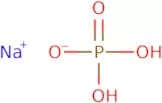
Fórmula:C19H29NaO5SPureza:Min. 95 Area-%Cor e Forma:White PowderPeso molecular:392.49 g/molSodium phosphate monobasic
CAS:Sodium phosphate monobasic is a salt of sodium and phosphoric acid. It is used as a buffer to maintain the pH of an aqueous solution at the desired level. The pH of this solution can be adjusted by adding either acid or base. Sodium phosphate monobasic has been shown to react with calcium pantothenate, sodium salts, and ambroxol hydrochloride injection in a model system to produce hydrogen phosphate and water vapor. This reaction is the first step in the production of hydrogen phosphate, which is an important intermediate for many chemical reactions.
Fórmula:H3O4P·NaCor e Forma:White Off-White PowderPeso molecular:120.98 g/molRef: 3D-FS42365
Produto descontinuado