Sais metálicos
Foram encontrados 2872 produtos de "Sais metálicos"
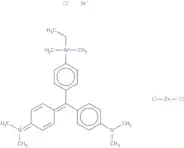
Methyl green, zinc chloride
CAS:Methyl green zinc chloride is a reagent that is used as a building block for research chemicals, speciality chemicals, and fine chemicals. It is also an intermediate in the synthesis of many biologically active compounds. Methyl green zinc chloride can be used as a versatile building block in the preparation of complex compounds. It is soluble in water and has CAS number 7114-03-6.
Fórmula:C27H35BrClN3•ZnCl2Pureza:Min. 95%Cor e Forma:PowderPeso molecular:653.23 g/molRef: 3D-FM40148
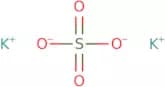
Produto descontinuadoPotassium sulfate
CAS:Potassium sulfate is a salt of potassium and sulfuric acid. It has a synergistic effect with sodium salts in the treatment of water hardness, which leads to a phase transition temperature below that of sodium sulfate alone. Potassium sulfate is also used as an analytical reagent for the determination of sulfate in solution. The reaction solution is heated to release the adsorbed gas, which is then analyzed by gas chromatography or infrared spectroscopy. Structural analysis was performed using X-ray crystallography on potassium sulfate crystals. Potassium sulfate has been shown to have physiological effects such as an increase in the concentration of iron in blood plasma and an increase in phosphate excretion from the kidneys at high doses. It has also been shown to have biological properties such as thermal expansion and phosphorus pentoxide reactivity.
Fórmula:K2SO4Pureza:Min. 95%Cor e Forma:PowderPeso molecular:174.26 g/molRef: 3D-FP40347
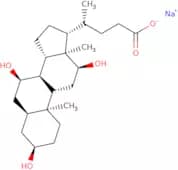
Produto descontinuadoCholic acid sodium salt
CAS:Produto ControladoCholic acid sodium salt is a bile acid sodium salt, which is primarily derived from the bile of mammals. It functions as a surfactant that facilitates the emulsification of fats and lipids, enhancing their subsequent absorption and digestion. This compound plays a critical role in the synthesis and regulation of cholesterol in the body.
Fórmula:C24H39NaO5Pureza:Min. 95%Cor e Forma:PowderPeso molecular:430.55 g/molRef: 3D-FC14775
Produto descontinuadoSodium 1-decanesulfonate
CAS:Sodium 1-decanesulfonate is a chemical compound that has been shown to have an inhibitory effect on the drug transporter P-glycoprotein. The inhibition of this transporter by sodium 1-decanesulfonate may be due to its ability to bind to the drug in the membrane, thereby preventing it from being transported out of the cell. Sodium 1-decanesulfonate was also found to increase the amount of sn-38, a radioactive form of sodium, in metastatic colorectal cancer cells. It has also been shown that sodium 1-decanesulfonate is thermally stable and chemically stable at high temperatures. This compound can be used as a standard in analytical methods such as titration calorimetry and polyvinyl chloride (PVC) analysis. Sodium 1-decanesulfonate can also be used as a fluorescent dye for particle size distribution measurements.
Fórmula:C10H22O3S•NaPureza:Min. 95%Cor e Forma:PowderPeso molecular:245.34 g/molRef: 3D-FS34253
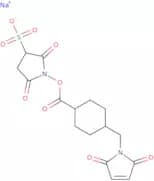
Produto descontinuadoSulfo-SMCC sodium
CAS:Crosslinker reacting rapidly with primary amines. It is used as a protein crosslinker where it reacts with cysteine to yield specific conjugates. The cyclohexane bridge confers added stability to the maleimide group making it ideal for maleimide activation of proteins. It is soluble in water and many other aqueous buffers although it is less stable then in DMSO or DMF.
Fórmula:C16H17N2O9SNaPureza:Min. 95 Area-%Cor e Forma:White Off-White PowderPeso molecular:436.37 g/molPhosphoenolpyruvate monosodium salt hydrate
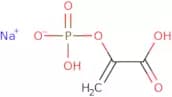
CAS:PEP is a "high-energy phosphate" compound playing a vital role in enzymatic phosphate-transfer reactions involved in ATP synthesis. It is used in conjunction with pyruvate kinase as a phosphorylating agent for ATP generation. Substrate for phosphoenolpyruvate carboxylase. Reagent for determination of glycerol.
Fórmula:C3H4NaO6P·xH2OPureza:Min. 95%Cor e Forma:PowderPeso molecular:190.02 g/molRef: 3D-FP29995
Produto descontinuadoSodium phytate
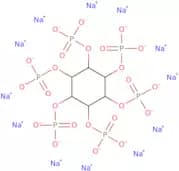
CAS:Chelator of multivalent metal ions; food perservative; antioxidant
Fórmula:C6H6Na12O24P6Cor e Forma:White PowderPeso molecular:923.82 g/molThymol blue sodium salt
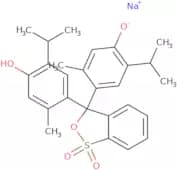
CAS:Thymol blue sodium salt is a dye that is used to stain fatty acids. The hydroxyl group of thymol blue sodium salt reacts with the carboxylic acid group of fatty acids, forming a cross-link between the two groups. This reaction can be monitored by measuring changes in the intensity of light transmitted through the solution. Thymol blue sodium salt has also been used as a cross-linking agent in polycarboxylic acid hydration reactions, and as an analytical method for determining cationic polymerization. Optical sensors have been developed that are capable of measuring changes in cavity size due to hydration or cationic polymerization.
Fórmula:C37H40N2Na4O13SPureza:Min. 95%Cor e Forma:PowderPeso molecular:844.74 g/molRef: 3D-FT01471
Produto descontinuadoZinc ethylphenyl dithiocarbamate
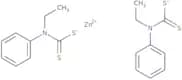
CAS:Zinc ethylphenyl dithiocarbamate is a hydrogenated zinc diethyldithiocarbamate that is used as an industrial chemical. The process of hydrogenation changes the chemical properties of the molecule by replacing one or more hydrogens with a hydrogen atom. It has been shown to have strong antioxidant properties and to inhibit the oxidation of fats, oils, and other organic substances. Zinc ethylphenyl dithiocarbamate has also been shown to be anti-inflammatory and to have hemolytic activity. This product is a white powder that is soluble in organic solvents such as ethers, benzene, and chloroform. It can be mixed into molten waxes and oils at high temperatures without decomposing.
Fórmula:C18H20N2S4ZnPureza:Min. 95%Cor e Forma:White PowderPeso molecular:458.01 g/molRef: 3D-FZ41181
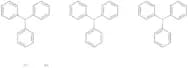
Produto descontinuadoTris(triphenylphosphine)rhodium(I) chloride
CAS:Homogeneous hydrogenation catalyst
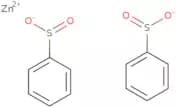
Fórmula:C54H45ClP3RhPureza:Min. 95%Cor e Forma:PowderPeso molecular:925.21 g/molZinc benzenesulfinate dihydrate
CAS:Zinc benzenesulfinate dihydrate is a white crystalline powder. It is soluble in water and has a molecular weight of 306.3. Zinc benzenesulfinate dihydrate can be used as a research chemical, reagent, or speciality chemical in the synthesis of other compounds. Zinc benzenesulfinate dihydrate can also be used as a reaction component in the synthesis of other compounds, or as an intermediate or scaffold for complex compounds.
Fórmula:C6H6O2S•(H2O)2•Zn0Pureza:Min. 95%Cor e Forma:White To Off-White SolidPeso molecular:421.81 g/molRef: 3D-FZ45907
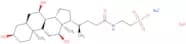
Produto descontinuadoTaurocholic acid sodium salt hydrate
CAS:Taurocholic acid sodium salt hydrate is a potential biomarker for inflammatory bowel disease. It is a chemical that is produced by the liver and stored in the gallbladder. It can be found in the bile, which is made from cholesterol and secreted into the small intestine with fat-soluble substances. Taurocholic acid sodium salt hydrate has been shown to induce necrotic cell death in vitro, which may be due to its ability to activate nuclear factor κB (NF-κB), leading to increased production of cytokines such as tumor necrosis factor-α (TNF-α). The bioavailability of taurocholic acid sodium salt hydrate has been shown to be greater than that of other bile acids in vivo. This bile acid also has protective effects against bacterial translocation because it chaperones bacterial cells and prevents them from attaching to the epithelial cells lining the intestines. Taurocholic acid sodium salt hyd
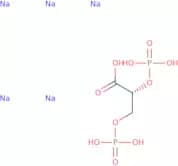
Fórmula:C26H44NNaO7S·xH2OPureza:Min. 97 Area-%Cor e Forma:White Off-White PowderPeso molecular:537.69 g/mol2,3-Diphospho-D-glyceric acid pentasodium salt
CAS:2,3-Diphospho-D-glyceric acid pentasodium salt is a pyridine complex that is found in nature as a constant. It is also synthesized by humans and can be formed in the laboratory. 2,3-Diphospho-D-glyceric acid pentasodium salt is reactive and has been shown to be useful for producing radical species. This compound has been analysed in the human body at physiological concentrations and has been shown to interact with endogenous molecules such as lipids. The interaction of this compound with lipids could be due to its ability to form emulsions.Fórmula:C3H3Na5O10P2Pureza:Min. 95%Cor e Forma:PowderPeso molecular:375.95 g/molAtorvastatin calcium
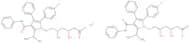
CAS:HMG-CoA reductase inhibitor; anti-hypercholesterolemia agent
Fórmula:C66H68CaF2N4O10Pureza:Min. 97 Area-%Cor e Forma:White PowderPeso molecular:1,155.34 g/molAcid fuchsin calcium
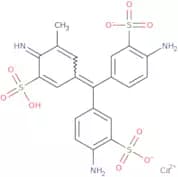
CAS:Acid fuchsin is a water-soluble, non-toxic, acidic dye that is used in histology to stain connective tissue and mucous membranes. It is used as an indicator for calcium in the presence of acid phosphatase. Acid fuchsin can be detected by light microscopy when it is stained on a section of tissue or cells. This dye can be used with immunocytochemistry or cytogenetics to assess the morphology of cells and tissues. The staining intensity varies according to the concentration of the acid fuchsin solution, which can be quantified by measuring the absorbance at 510 nm. A reference range for this measurement would be 0.1 - 1 μg/ml (10 - 100 μM).
Fórmula:C20H19N3O9S3·xCaCor e Forma:PowderPeso molecular:541.58 g/molRef: 3D-FA47020
Produto descontinuado3,3',5-Triiodo-L-thyronine sodium salt
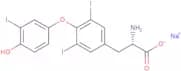
CAS:Synthetic thyroid hormone (T3) analog; promotes adipogenic differentiation
Fórmula:C15H11I3NNaO4Pureza:Min. 95 Area-%Cor e Forma:Slightly Yellow PowderPeso molecular:672.96 g/molRef: 3D-FT28507
Produto descontinuadoMonopotassium phosphite
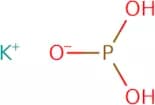
CAS:Monopotassium phosphite is a toxic substance with a strong inhibitory effect on bacteria, microorganisms and autotrophs. Monopotassium phosphite is structurally similar to hypophosphite, whereas monopotassium phosphite has an additional potassium ion. It can be found in high concentrations in the cells of microalgae such as Botryococcus braunii. Monopotassium phosphite inhibits the growth of bacteria by inhibiting the transfer of phosphorus from ATP to other compounds and by altering the structure of bacterial cell membranes. Monopotassium phosphite also inhibits the growth of fungi, algae and plants that require phosphate for their metabolic processes (i.e., photosynthesis).
Fórmula:H2KO3PCor e Forma:PowderPeso molecular:120.09 g/molRef: 3D-FM148946
Produto descontinuadoChloro(triphenylphosphine)gold(I)
CAS:Chloro(triphenylphosphine)gold(I) is a compound that binds to proteins with high affinity and specificity. The binding constants of the two compounds are 1x10 M-1. It has been shown to bind to β-amino acid and organic molecules in human serum, as well as in other biological fluids. Chloro(triphenylphosphine)gold(I) has been shown to have apoptotic properties and can be used for the treatment of cancer cells. It has also been shown to be useful for the treatment of Alzheimer's disease, Parkinson's disease, and Huntington's disease.
Fórmula:C18H15P•AuClPureza:Min. 98 Area-%Cor e Forma:White Off-White PowderPeso molecular:494.7 g/molRef: 3D-FC54928
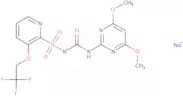
Produto descontinuadoTrifloxysulfuron sodium
CAS:Trifloxysulfuron-sodium is a herbicide that inhibits the growth of plants by interfering with photosynthesis. It is applied to perennial ryegrass, which has been shown to reduce the rate of photosynthesis and increase the rate of respiration. Trifloxysulfuron-sodium can be detected at very low concentrations in deionized water and has been found to inhibit photosynthetic activity at concentrations as low as 0.01 µM in ryegrass. Trifloxysulfuron-sodium has also shown resistance to glyphosate, a popular herbicide, and other pesticides used for weed control. The biological properties of this herbicide are currently unknown.
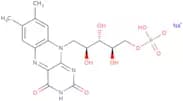
Fórmula:C14H13F3N5NaO6SPureza:Min. 95%Cor e Forma:PowderPeso molecular:459.33 g/molRiboflavin 5'-phosphate sodium
CAS:Riboflavin 5'-phosphate sodium (RB5P) is a form of riboflavin that is used as a co-substrate for the synthesis of other riboflavin-containing compounds. RB5P is an important component in biochemical research, wastewater treatment, and neurodegenerative diseases. The monosodium salt has been shown to be a useful model system for studying the biochemical properties of riboflavin. In vitro studies have shown that RB5P can be used to measure the transfer reactions between nucleotide diphosphates, such as ATP and GTP. RB5P has been used to study the structural analysis and thermodynamic data of dinucleotide phosphate.
Fórmula:C17H20N4NaO9PPureza:73.00 To 79.00%Cor e Forma:Yellow Orange PowderPeso molecular:478.33 g/mol