Sais metálicos
Foram encontrados 2872 produtos de "Sais metálicos"
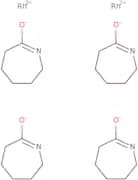
Dirhodium tetracaprolactamate
CAS:Dirhodium tetracaprolactamate is a functionalised dirhodium compound that is used in the preparation of carbenes and biomolecules. The ligand can be prepared by the reaction of diazomethane with an activated acetonitrile, followed by addition of hydroscopic silver nitrate, which gives a complex tetraacetate. This product can be used in organic synthesis as a diazo compound. Dirhodium tetracaprolactamate has been shown to be effective in the synthesis of natural products such as ferulic acid and chlorogenic acid.
Fórmula:C24H40N4O4Rh2Pureza:Min. 95%Cor e Forma:PowderPeso molecular:654.41 g/molPotassium hexafluoronickelate(IV)
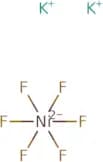
CAS:Potassium hexafluoronickelate is a chemical compound that is a versatile building block and can be used as a reagent in organic synthesis. It is also an important intermediate for the preparation of other chemicals, such as potassium hexafluoroarsenate, which is used to make perfluorocarbons. Potassium hexafluoronickelate has many uses as a research chemical and as an intermediate in the production of other compounds. The compound has been shown to be useful in reactions involving carbon-carbon bond formation, such as the synthesis of heterocycles. Potassium hexafluoronickelate can also be used to produce metal complexes for use in catalysis or polymerization reactions.
Fórmula:F6K2NiPureza:Min. 95%Cor e Forma:PowderPeso molecular:250.88 g/molγ-Polyglutamic acid sodium, MW 200,000-500,000
CAS:Polymer of glutamic acidFórmula:(C5H9NO4)nPureza:Min. 90 Area-%Cor e Forma:White Powder3,5-Dinitrosalicylic acid sodium
CAS:3,5-Dinitrosalicylic acid sodium is an inorganic compound that is used as a biochemical reagent. It can be used to measure the phosphatase activity of muscle and liver samples, as well as to determine the level of autophagy in cells. 3,5-Dinitrosalicylic acid sodium has been shown to inhibit the activity of a number of enzymes, including acid phosphatase and thiourea. When combined with chloroplast or mitochondria, it can be used to determine the rate of electron transport chain. 3,5-Dinitrosalicylic acid sodium binds to sulfhydryl groups on proteins and prevents them from being used for other purposes. This process optimization leads to engulfment followed by lysosomal degradation.
Fórmula:C7H3N2NaO7Pureza:Min. 95%Cor e Forma:PowderPeso molecular:250.1 g/molRef: 3D-FD70879
Produto descontinuadoCefmetazole sodium
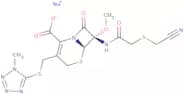
CAS:Cefmetazole sodium is a penicillin-type antibiotic that inhibits the synthesis of bacterial cell walls. It binds to the penicillin-binding proteins in the bacterial cell wall by competitive inhibition, preventing the formation of an antibiotic-inhibitor complex with the enzyme cell wall synthesis that is required for cell wall biosynthesis, inhibiting protein synthesis and cell division. Cefmetazole sodium has been shown to be active against a wide variety of bacteria, including gram-positive and gram-negative bacteria. The drug's activity against most strains of methicillin-resistant Staphylococcus aureus (MRSA) has been confirmed. Cefmetazole sodium is used to treat infectious diseases such as pneumonia and urinary tract infections. Drug interactions are possible, but not well understood at this time.
Fórmula:C15H17N7O5S3•NaPureza:Min. 93 Area-%Cor e Forma:PowderPeso molecular:494.53 g/molRef: 3D-FC38036
Produto descontinuadoSodium N-lauroylsarcosinate
CAS:Sodium N-lauroylsarcosinate is a surfactant that is used in water treatment, wastewater treatment, and as a detergent. It is also used as an analytical tool for the titration calorimetry of sodium salts. Sodium N-lauroylsarcosinate is a sodium salt that belongs to the group of sodium salts. It has been shown to have biological properties such as permeability through human serum and biodegradability. The salt form of this compound has an electrochemical impedance spectrum which can be used to identify it.
Fórmula:C15H28NNaO3Pureza:Min. 94%Cor e Forma:White Off-White PowderPeso molecular:293.38 g/molSodium gualenate
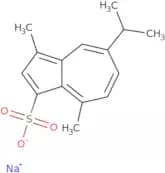
CAS:Sodium gualenate is a skin protectant and anti-inflammatory drug that is used to treat mild to moderate forms of dermatitis. Sodium gualenate is a sodium salt of guaiazulene, which is an epidermal growth factor that has been shown to stimulate the metabolism of skin cells. In vitro studies have demonstrated that dextran sulfate, a water-soluble drug, inhibits the growth of bacteria by binding to the cell surface. The optimum concentration for sodium gualenate appears to be 1%. This drug also has an agonist effect on the hydroxyl group and may interact with cationic surfactants.
Fórmula:C15H17NaO3SPureza:Min. 95%Cor e Forma:Blue PowderPeso molecular:300.35 g/molRef: 3D-FS40724
Produto descontinuadoZinc diethyldithiocarbamate
CAS:Zinc diethyldithiocarbamate is an inorganic compound that has been shown to have potent anti-inflammatory and antipyretic properties. It has been used as a chemical inhibitor of phospholipase A2, which is an enzyme involved in the inflammatory process. Zinc diethyldithiocarbamate also has been shown to be a potent inducer of metallothionein and other proteins that are involved in detoxification processes. This drug has been used as an injection solution for the treatment of infectious diseases such as tuberculosis, leprosy, brucellosis, and malaria. Zinc diethyldithiocarbamate is also used as a pharmacological agent for the treatment of myocardial infarction.
Fórmula:C10H20N2S4ZnPureza:Min. 95%Cor e Forma:PowderPeso molecular:361.92 g/molRef: 3D-FZ58712
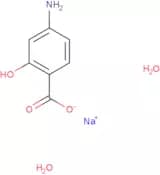
Produto descontinuado4-Aminosalicylic acid sodium salt dihydrate
CAS:4-Aminosalicylic acid sodium salt dihydrate is a molecule that has been shown to be useful for the diagnosis of viral, autoimmune, and cancerous diseases. It is a diagnostic agent that can be used in both the diagnosis and treatment of bowel disease. 4-Aminosalicylic acid sodium salt dihydrate can also be used to treat cavity formation in teeth. It binds to fatty acids in the target tissue, which leads to cell death by apoptosis. This drug has been shown to be effective against inflammatory bowel disease (IBD) as well as other types of bowel disease. This drug has been shown to have no adverse effects on healthy cells or tissues, but it may cause kidney toxicity when taken orally or injected intravenously.
Fórmula:C7H6NNaO3·2H2OPureza:Min. 95%Cor e Forma:White PowderPeso molecular:211.15 g/molRef: 3D-FA32507
Produto descontinuadoSulfosuccinimidyl 3-[[2-(biotinamido)ethyl] dithio]propionate sodium salt
CAS:Sulfosuccinimidyl 3-[[2-(biotinamido)ethyl] dithio]propionate sodium salt (BSP) is a biotin-avidin binding molecule that forms a covalent linkage with the antigen and antibody. It is used in immunoassays to detect specific antigens or antibodies in biological samples. BSP is manufactured by reacting carbodiimide hydrochloride with sulfosuccinic acid. The product can be used for a variety of immunoassays such as enzyme-linked immunosorbent assays, real-time polymerase chain reaction, and immunohistochemistry. The sensitivity of this product has been shown to be greater than those of other detection methods such as Western blotting.Fórmula:C19H27N4NaO9S4Pureza:Min. 95%Cor e Forma:White Off-White PowderPeso molecular:606.69 g/molPotassium hydrogen phthalate
CAS:Potassium hydrogen phthalate is a corrosion inhibitor and a co-catalyst for the production of polyvinyl chloride. It has been shown to exhibit toxic effects on the central nervous system, liver, and kidneys in animal studies. Potassium hydrogen phthalate is also used as a corrosion inhibitor in wastewater treatment plants. The toxicity of potassium hydrogen phthalate may be due to its ability to inhibit ryanodine receptor, an intracellular calcium release channel that regulates cellular functions such as muscle contraction, enzyme activities, and cell cycle progression. Potassium hydrogen phthalate can also be used to produce polyvinyl chloride. It has been shown to have toxic effects on insects as well as thermodynamic data related to water vapor. Potassium hydrogen phthalate is an analytical reagent that can be used for picolinic acid determination.
Fórmula:C8H5KO4Pureza:Min. 95%Cor e Forma:PowderPeso molecular:204.22 g/molRef: 3D-FP43259
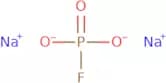
Produto descontinuadoSodium monofluorophosphate
CAS:Sodium monofluorophosphate is a salt that contains sodium cations and fluorine anions. It is used as an agent in the production of dental fillings, toothpaste, and other products. Sodium monofluorophosphate has been shown to inhibit the activity of serine proteases such as trypsin by interfering with their catalytic activity and binding to their active site. This agent has also been shown to react with p-nitrophenyl phosphate to form a fluorescent product, which can be detected at low concentrations. Sodium monofluorophosphate has a thermal expansion coefficient that is only slightly larger than those of water and glycerol, which makes it ideal for use in the production of dental fillings.
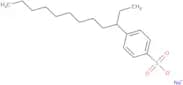
Fórmula:FNa2O3PPureza:Min. 95%Cor e Forma:White PowderPeso molecular:143.95 g/molSodium dodecylbenzenesulfonate (hard type) (mixture)
CAS:Sodium dodecylbenzenesulfonate (SDS) is a synthetic surfactant. It is used as a detergent in household and industrial cleaning products, as well as in textiles and paper manufacturing. SDS is also used to remove protein from cells and tissues during the process of cell harvesting or tissue harvesting. The hard type (mixture) contains sodium dodecylbenzenesulfonate, which has a hydrophilic head group and a hydrophobic tail group that are not ionized at physiological pH. This type of SDS has been shown to have low toxicity in vivo and in vitro.
Fórmula:C18H29NaO3SPureza:Min. 95%Cor e Forma:PowderPeso molecular:348.48 g/molRef: 3D-FS62996
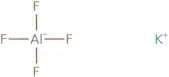
Produto descontinuadoPotassium fluoroaluminate
CAS:Potassium fluoroaluminate (KAlF) is a reactive chemical compound that is used as a reducing agent in metallurgical processes. KAlF is not an aluminothermic reaction product, but it can be produced as a by-product of the reaction between aluminum and hydrogen fluoride. It is produced when potassium reacts with hydrogen fluoride in the presence of sodium carbonate or boron nitride. KAlF does not produce stable complexes with zinc or magnesium, but it does stabilize zirconium oxide to some extent. The human serum contains antibodies against KAlF particles, which may cause allergic reactions following inhalation or skin contact.
Fórmula:AlF4•KCor e Forma:PowderPeso molecular:142.07 g/molSodium fluoride
CAS:Produto ControladoSodium fluoride is a chemical that can be used to treat water and wastewater. It is an effective inhibitor of the growth of bacteria, fungi, and algae. The use of sodium fluoride improves the quality of drinking water by reducing levels of hydrogen ion and trihalomethanes (THMs). This chemical also has been shown to have beneficial effects in patients with inflammatory bowel disease. Sodium fluoride inhibits the activity of enzymes in mitochondria, which are responsible for converting food into energy. The inhibition leads to a decrease in the production of free radicals and reactive oxygen species, which may reduce oxidative stress in the body.
Fórmula:NaFPureza:Min. 95%Cor e Forma:White PowderPeso molecular:41.99 g/molRef: 3D-FS29949
Produto descontinuadoSodium sarcosinate - ca. 40% in water
CAS:Sodium sarcosine is a salt of sarcosine with sodium. It has an average molecular weight of 255 and is soluble in water. Sodium sarcosine is used as a biological sample for non-steroidal anti-inflammatory drugs (NSAIDs) in the study of their inhibitory properties against mammalian DNA polymerase. NSAIDs are also used to treat inflammation, pain, and fever by inhibiting prostaglandin synthesis. The rate constant for the reaction between NSAIDs and DNA polymerase was found to be 1.6x10^-4 M^-1s^-1 at 25°C, which is close to the Km value for the reaction. This finding indicates that NSAIDs may be competitive inhibitors of the enzyme, although further experiments are needed to confirm this hypothesis. Using electrochemical impedance spectroscopy, it was found that NSAIDs have a higher affinity for divalent cations than monovalent cations, suggesting that they bind to a site on the
Fórmula:C3H6NNaO2Pureza:Min. 95%Cor e Forma:Colorless Clear LiquidPeso molecular:111.08 g/molRef: 3D-FS02729
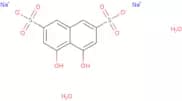
Produto descontinuadoChromotropic acid disodium salt dihydrate - ACS reagent
CAS:Chromotropic acid is a reactive compound that has been shown to be adsorbed on the surface of activated carbon. The adsorption mechanism and the kinetic constants for this reaction have been studied in detail. Chromotropic acid decomposes at high temperatures, releasing hydrogen chloride gas and water vapor. This chemical is also used in pharmaceutical preparations as an additive to inhibit oxidation reactions. It may also serve as a photoreceptor, reacting with tyramine hydrochloride and other compounds to produce a color change.Fórmula:C10H6O8S2Na2·2H2OCor e Forma:PowderPeso molecular:400.29 g/molRef: 3D-FC168034
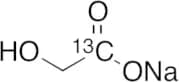
Produto descontinuadoGlycolic Acid-13C Sodium Salt
CAS:Produto ControladoApplications Glycolic Acid-13C Sodium Salt is the isotope labelled analog of Glycolic Acid Sodium Salt; a compound that increases the glycolate oxidase activity in the liver when fed to rats. It also increases the lactate dehydrogenase activity in the liver and kidney. This compound is suitable for lactate dehydrogenase (LDH) related research.
References Murthy M.S.R., et al.: Ann. Nutr. Metab., 27, 355 (1983)Fórmula:CCH3NaO3Cor e Forma:NeatPeso molecular:99.026Indium(III) nitrate hydrate
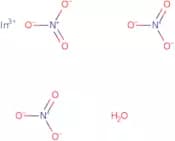
CAS:Indium(III) nitrate hydrate is an inorganic compound that reacts with aqueous solutions of potassium dichromate or malonic acid to produce a precipitate. The chemical stability of this compound has been demonstrated by reacting it with nitric acid, which produced a white solid. A structural analysis of this compound has shown that the reaction mechanism may involve the formation of InO particles and oxide anions. The particle size is between 1-2 microns and the morphology is spherical.
Fórmula:In(NO3)3•(H2O)xPureza:Min. 95%Peso molecular:300.83 g/molRef: 3D-FI106482
Produto descontinuado




![Sulfosuccinimidyl 3-[[2-(biotinamido)ethyl] dithio]propionate sodium salt](/_next/image/?url=https%3A%2Fstatic.cymitquimica.com%2Fproducts%2F3D%2Fthumb-webp%2FFS27965.webp&w=3840&q=75)