Sais metálicos
Foram encontrados 2872 produtos de "Sais metálicos"
Diacetato[(R)-(+)-2,2'-bis(diphenylphosphino)-1,1'-binaphthyl]ruthenium(II)
CAS:Please enquire for more information about Diacetato[(R)-(+)-2,2'-bis(diphenylphosphino)-1,1'-binaphthyl]ruthenium(II) including the price, delivery time and more detailed product information at the technical inquiry form on this page
Fórmula:C48H38O4P2RuPureza:Min. 95%Peso molecular:841.83 g/molCadmium chloride
CAS:Cadmium chloride is a compound that belongs to the group of inorganic compounds. Cadmium chloride inhibits the activity of c-jun, an important transcription factor involved in cell growth and differentiation. It also affects the activity of other transcription factors, such as NF-κB, and has been shown to induce cell death by inhibiting DNA synthesis. The cytotoxicity of cadmium chloride is related to its ability to interact with hydrogen bonding sites on proteins. In vitro studies have shown that it has significant cytotoxicity against tumor cells with a cell specific response. Cadmium chloride has also been used in therapy groups for patients with inflammatory bowel disease and rheumatoid arthritis.
Fórmula:CdCl2Pureza:Min. 95%Peso molecular:183.32 g/molFerroceneacetic acid
CAS:Produto ControladoFerroceneacetic acid is a compound that has been shown to have chemiluminescent properties. It is a potent reductant and oxidant, which means that it can reduce or oxidize other compounds. Ferroceneacetic acid is also an active enzyme, and its redox potential changes depending on the concentration of ferrocene in the solution. Ferroceneacetic acid can be used as a model system for analytical chemistry and electrochemistry.
Fórmula:C12H12FeO2Pureza:Min. 95%Cor e Forma:PowderPeso molecular:244.07 g/molRef: 3D-FF149259
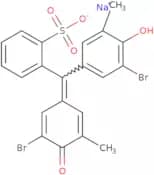
Produto descontinuadoBromocresol purple sodium salt
CAS:Bromocresol purple sodium salt is a dye that emits light when it is irradiated with light of a particular wavelength. It has been used to detect amniotic fluid contamination in the laboratory and as an absorber in polymer films. Bromocresol purple sodium salt absorbs ultraviolet and visible light, which causes it to emit red light. The molecules of bromocresol purple sodium salt are long-chain triazoles, which absorb water vapor and emit infrared radiation. This property can be used to detect the presence of alkali metals. The luminescent property of bromocresol purple sodium salt can be enhanced by adding an alkali metal, such as potassium or lithium chloride, to the solution where it is dissolved.
Fórmula:C21H15Br2O5S·NaPureza:Min. 95%Peso molecular:562.2 g/molFerrocenecarboxaldehyde
CAS:Ferrocenecarboxaldehyde is a fatty acid with a ferrocene carboxylic acid group. It has been shown to have antimicrobial activity against bacteria, fungi, and yeast when it was mixed with nitric acid. Ferrocenecarboxaldehyde can be synthesized by reacting ferrocene with glycerol in the presence of sulfuric acid. The reaction mechanism of this synthesis is as follows: The structural analysis of ferrocenecarboxaldehyde has been studied using FT-IR spectroscopy and NMR spectroscopy. The chemical structure of ferrocenecarboxaldehyde is as follows: The asymmetric synthesis of ferrocenecarboxaldehyde is shown below:
Fórmula:C11H10FeOPureza:Min. 95%Cor e Forma:PowderPeso molecular:214.04 g/molPotassium vinyltrifluoroborate
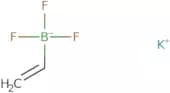
CAS:Potassium vinyltrifluoroborate is a salt that contains the inorganic anion potassium and the organic ligand vinyltrifluoroborate. It is used as an electrolyte in electrochemical cells, such as fuel cells, to increase power output by increasing the conductivity of the electrolyte. This compound has been shown to be effective against chronic kidney disease and infectious diseases such as HIV and malaria. Potassium vinyltrifluoroborate also has anti-cancer properties due to its ability to inhibit cellular proliferation and induce apoptosis in cancer cells. The mechanism of action of this drug is still unclear but may be due to its ability to inhibit proteases, such as ns3 protease found in human erythrocytes.
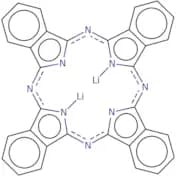
Fórmula:C2H3BF3KPureza:Min. 95%Cor e Forma:PowderPeso molecular:133.95 g/molDilithium phthalocyanine
CAS:Dilithium phthalocyanine is a low-energy metathesis catalyst that is used in the synthesis of organic compounds. It is a coordination complex that has been shown to have a high chemical stability and to be resistant to radiation. The mechanism of action of dilithium phthalocyanine involves the formation of a covalent bond between two molecules or ions. The activation energy for this reaction is relatively low, making it an ideal catalyst for reactions involving ether linkages in which the hydrochloric acid acts as the base. One example of such a reaction is the synthesis of phthalocyanines from lithium and hydrogen chloride.
Pureza:93%MinRef: 3D-FD62482
Produto descontinuadoSodium oxalate
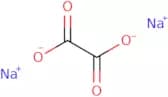
CAS:Sodium oxalate is a salt of oxalic acid and sodium. It can be used as an inhibitor in electrochemical impedance spectroscopy, which is a method for measuring the mass transport of ions in a solution. Sodium oxalate has been shown to inhibit the reaction solution by hydrogen bonding interactions with the citric acid that is present in wastewater. This inhibition leads to the formation of the salt citrate, which is insoluble and can be removed by filtration. The surface methodology was used to measure the kinetic energy of sodium oxalate crystals on surfaces. The x-ray diffraction data was collected from anhydrous sodium oxalate crystals at room temperature.
Fórmula:C2O4Na2Pureza:Min. 95%Cor e Forma:PowderPeso molecular:134 g/molRef: 3D-FS47063
Produto descontinuadoSodium polytungstate
CAS:Sodium polytungstate is a magnetic resonance contrast agent that is used for diagnostic imaging and for the treatment of hyperphosphatemia. Sodium polytungstate consists of tungsten oxide particles coated with sodium carbonate, which are dispersed in water. The dry weight of this contrast agent depends on the particle size and composition, but can range from 500 to 1000 mg/g. Magnetic resonance spectroscopy (MRS) is a technique that can be used to investigate the chemical species present in a sample. It has been shown that MRS can be used to optimise the process by which sodium polytungstate is produced, as well as its biochemical properties.
Fórmula:H2O40W12·6NaPureza:Min. 95%Peso molecular:2,986.03 g/molButynediol sulfopropyl ethersodium
CAS:Produto ControladoPlease enquire for more information about Butynediol sulfopropyl ethersodium including the price, delivery time and more detailed product information at the technical inquiry form on this page
Fórmula:C7H11NaO5SPureza:Min. 95%Peso molecular:230.22 g/molRef: 3D-FB150881
Produto descontinuadoZincphosphinate
CAS:Produto ControladoPlease enquire for more information about Zincphosphinate including the price, delivery time and more detailed product information at the technical inquiry form on this page
Fórmula:O4P2ZnPureza:Min. 95%Peso molecular:191.33 g/molRef: 3D-FZ150551
Produto descontinuadoPotassium p-Toluenethiosulfonate
CAS:Potassium p-Toluenethiosulfonate is a functional group that contains a sulfhydryl (-SH) and a thiol (-S-H). It has been used to prepare radionuclides for cancer diagnosis, such as Tc-99m (technetium-99m), I-123 (iodine-123), and I-131 (iodine-131). This compound has been used in preparative methods for the synthesis of organic chemicals. Potassium p-Toluenethiosulfonate is also used in conjugates with drugs or other molecules, which are used in the diagnosis of cancer. The conjugates can be linked to plasma proteins or tumor cells.
Fórmula:C7H7KO2S2Pureza:Min. 95%Peso molecular:226.36 g/molRef: 3D-FP61284
Produto descontinuadoZinc oxide
CAS:Zinc oxide is a white, crystalline solid that has been used as an antimicrobial agent in the past. It is effective against bacteria, fungi, and viruses. The inhibitory properties of zinc oxide are due to its ability to disrupt energy metabolism. Zinc oxide also has been shown to be toxic to neurons in vitro and is under investigation for use in the treatment of neurodegenerative diseases such as Alzheimer's and Parkinson's disease. Zinc oxide is also used in wastewater treatment because it can bind up metal ions such as copper chloride or zirconium oxide. Zinc oxide nanoparticles have been shown to be effective at killing bacteria in water vapor when irradiated with laser light.
Fórmula:ZnOPureza:Min. 95%Cor e Forma:White Clear LiquidPeso molecular:81.38 g/molBarium selenite
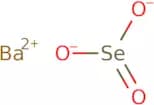
CAS:A barium selenite molecule has a diameter of about 3.5 nm. It is a polyvinyl compound that contains a hydroxyl group and a selenium compound, which is composed of two hydroxy groups (OH-). Barium selenite can be used in the detection and treatment of cancer cells, as well as degenerative diseases. The chemical species may be detected by plasma mass spectrometry. This molecule has an aluminium ion with a redox potential of +1.5 V.
Fórmula:BaO3SePureza:Min. 95%Peso molecular:264.29 g/molVanadium(IV) sulfate oxide hydrate
CAS:Vanadium oxide hydrate is an oxidizing catalyst that is used in the production of polyvinyl chloride (PVC). It is also used as a catalyst in the oxidation of water vapor and in the preparation of hydroxide solutions. The catalytic activity of vanadium oxide hydrate depends on its pH, with a lower pH increasing the rate of oxidation. This compound was shown to induce DNA strand breaks and chromosomal aberrations when tested in vitro. Vanadium oxide hydrate has also been found to have genotoxic effects when tested in vivo, including induction of micronuclei and sister chromatid exchanges. Vanadium oxide hydrate can be used as a dietary supplement to increase growth factor levels, particularly when combined with molybdenum or monoclonal antibody. Vanadium oxide hydrate has a phase transition temperature at around 74°C, which makes it useful for regulating polymer film thickness during processing.
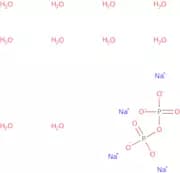
Fórmula:VOSO4·xH2OPureza:Min. 95%Cor e Forma:Blue PowderPeso molecular:163 g/molSodium pyrophosphate decahydrate
CAS:Sodium pyrophosphate decanhydrate is a methyltransferase inhibitor that blocks the enzyme form of the DNA methyltransferase, which is responsible for maintaining DNA methylation patterns. It has been shown to inhibit the enzymatic activity of this enzyme in a model system. Sodium pyrophosphate decanhydrate inhibits the growth of bacteria by binding to water molecules and preventing them from binding to other molecules, causing dehydration. This drug also has potential as a natriuretic peptide levels inhibitor, with electrochemical impedance spectroscopy studies showing that it may have a high affinity for sodium ions. Studies have also shown that sodium pyrophosphate decanhydrate has no toxicity in mice.
Fórmula:H4O7P2•Na4•(H2O)10Pureza:Min. 95%Cor e Forma:PowderPeso molecular:450.09 g/molRef: 3D-FS64805
Produto descontinuadoAlizarin Yellow R sodium salt
CAS:Acid-base indicator dye; textile dye; yellow color
Fórmula:C13H8N3O5NaPureza:Min. 95%Peso molecular:309.21 g/molRef: 3D-FA52710
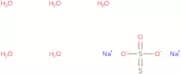
Produto descontinuadoSodium thiosulfate pentahydrate
CAS:Sodium thiosulfate is a chemical compound that is used in the treatment of hyperkalemia, hypoglycemia, and other metabolic disorders. It has been shown to have a variety of biochemical properties, including the ability to inhibit oxidation reactions by acting as an electron donor. Sodium thiosulfate has also been shown to be effective in vitro in reducing oxidative stress-induced apoptosis and cell death. Histological analysis of sodium thiosulfate-treated cells showed reduced DNA damage and improved cell viability. The phase transition temperature for anhydrous sodium thiosulfate is below 0 °C. It reacts with potassium dichromate to produce hydrogen fluoride gas and sodium citrate. Redox potential measurements show that it can act as an electron acceptor when it gains electrons from hydrogen fluoride or sodium citrate, but it can also act as an electron donor when it donates electrons to hydrogen fluoride or sodium citrate. Sodium carbonate has been shown to have a redox potential
Fórmula:Na2S2O3•(H2O)5Pureza:Min. 95%Cor e Forma:White SolidPeso molecular:248.19 g/molRef: 3D-FS47176
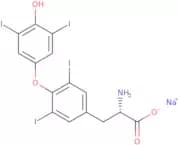
Produto descontinuadoLevothyroxine sodium
CAS:Levothyroxine sodium is a thyroid hormone that is used to treat hypothyroidism. It is also used to treat goiter and other thyroid problems. Levothyroxine sodium comes in three different forms: tablets, oral solution, and levothyroxine sodium for injection. The tablet form of levothyroxine sodium is taken by mouth once daily with or without food. Oral solution is taken by mouth twice daily (morning and evening) with or without food. Injection should be given as directed by a physician or healthcare provider. Levothyroxine sodium can interact with many drugs, especially ones that affect the heart or blood sugar levels, such as potassium supplements, diuretics, beta blockers, calcium channel blockers, erythromycin, clarithromycin and ketoconazole. Levothyroxine sodium can also interact with certain foods such as soybean flour and grapefruit juice. Levothyroxine sodium has been shown to have a linear calibration curve in vivo
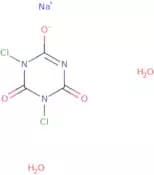
Fórmula:C15H10I4NNaO4Pureza:Min. 95%Cor e Forma:White PowderPeso molecular:798.85 g/molDichloroisocyanuric acid sodium dihydrate
CAS:Dichloroisocyanduric acid sodium salt (DCD) is a disinfectant that is used to control bacteria, fungi, and algae in wastewater treatment plants. DCD has been shown to be an effective antimicrobial agent against bacterial spores and the fungal plant pathogen "Botrytis cinerea" when used at concentrations of 0.1-0.3%. DCD also has a low toxicity for mammals, with LD50 values of 3.5g/kg for rats and 2g/kg for mice. The chemical stability of DCD can be increased by adding sodium carbonate or other alkaline substances in a neutral pH environment.
Fórmula:C3HCl2N3O3•(H2O)2•NaPureza:Min. 95%Cor e Forma:PowderPeso molecular:256.98 g/mol
![Diacetato[(R)-(+)-2,2'-bis(diphenylphosphino)-1,1'-binaphthyl]ruthenium(II)](/_next/image/?url=https%3A%2Fstatic.cymitquimica.com%2Fproducts%2F3D%2Fthumb-webp%2FFD162446.webp&w=3840&q=75)