Sais metálicos
Foram encontrados 2872 produtos de "Sais metálicos"
Potassium methoxide, 25% w/w in methanol
CAS:Potassium methoxide is a strong base that reacts with methanol to produce potassium metal and methanol. It has been used as a model system for studying the reaction mechanism of metal carbonyls. The reaction solution is heated to produce glycol esters, which are catalyzed by the potassium metal. This process can be used to synthesize biologically active molecules, such as anti-inflammatory drugs, which are difficult to make using conventional methods. Potassium methoxide has also been shown to have protective effects against metabolic disorders in mice and has biological properties that may be useful in the treatment of infectious diseases.Fórmula:CH3OKPureza:Min. 95%Cor e Forma:Clear LiquidPeso molecular:70.13 g/molCarbonylbis(triphenylphosphine)rhodium(I) Chloride
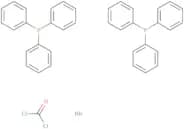
CAS:Produto ControladoCarbonylbis(triphenylphosphine)rhodium(I) Chloride is a carbonyl compound that is prepared by reacting alcohols with diethyl ether in the presence of rhodium chloride. It is used as a reagent for alkylation, recrystallization, and purification of organic compounds. Carbonylbis(triphenylphosphine)rhodium(I) Chloride has been used to synthesize formaldehyde from ethylene glycol and formaldehyde-based resins. It also has been used as a catalyst in the conversion of aliphatic hydrocarbons to alcohols. This compound is insoluble in water and crystallizes yellow when dried.
Fórmula:C37H30ClOP2RhPureza:Min. 95%Peso molecular:690.94 g/molRef: 3D-FC60959
Produto descontinuadoDipotassium glycyrrhizinate
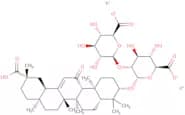
CAS:Dipotassium glycyrrhizinate is a compound that is soluble in water and is found in the roots of Glycyrrhiza glabra, an herb that has been used for centuries to treat a variety of inflammatory conditions. The main component of this extract is glycyrrhizinic acid, a triterpene that has been shown to have anti-inflammatory effects. This compound binds to toll-like receptor 4 (TLR4), which is involved in the innate immune response. Dipotassium glycyrrhizinate can inhibit the production of pro-inflammatory cytokines such as tumor necrosis factor alpha and interleukin-8. It also inhibits the release of histamine from mast cells, which are implicated in allergic reactions.
Fórmula:C42H60K2O16Pureza:75%Peso molecular:899.11 g/molRef: 3D-FD166891
Produto descontinuadoButynediol sulfopropyl ethersodium
CAS:Produto ControladoPlease enquire for more information about Butynediol sulfopropyl ethersodium including the price, delivery time and more detailed product information at the technical inquiry form on this page
Fórmula:C7H11NaO5SPureza:Min. 95%Peso molecular:230.22 g/molRef: 3D-FB150881
Produto descontinuadoSodium pyrophosphate decahydrate
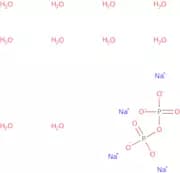
CAS:Sodium pyrophosphate decanhydrate is a methyltransferase inhibitor that blocks the enzyme form of the DNA methyltransferase, which is responsible for maintaining DNA methylation patterns. It has been shown to inhibit the enzymatic activity of this enzyme in a model system. Sodium pyrophosphate decanhydrate inhibits the growth of bacteria by binding to water molecules and preventing them from binding to other molecules, causing dehydration. This drug also has potential as a natriuretic peptide levels inhibitor, with electrochemical impedance spectroscopy studies showing that it may have a high affinity for sodium ions. Studies have also shown that sodium pyrophosphate decanhydrate has no toxicity in mice.
Fórmula:H4O7P2•Na4•(H2O)10Pureza:Min. 95%Cor e Forma:PowderPeso molecular:450.09 g/molRef: 3D-FS64805
Produto descontinuadoD-Lactic acid lithium
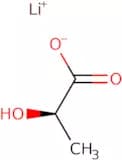
CAS:D(+)-Lactic acid lithium salt is a dipolar molecule with an activation energy of about 44 kJ/mol. It has been studied by NMR techniques and found to have a resonance in the range of 1.8-2.0 ppm, which is characteristic of protons on the oxygen atom. The proton magnetic resonance (PMR) study showed that the d-lactate resonances were very broad and shifted to higher frequencies, whereas the l-lactate resonances were sharp and shifted to lower frequencies. This may be due to the different number of protons on each type of lactate molecule. The magnetic resonance (NMR) study showed that lithium salt was a radical with a spin density distribution around 2.6 ppm in the nmr spectrum.
Fórmula:C3H6O3•LiPureza:Min. 95%Cor e Forma:PowderPeso molecular:97.02 g/molRef: 3D-FF168657
Produto descontinuadoFerrocenecarboxaldehyde
CAS:Ferrocenecarboxaldehyde is a fatty acid with a ferrocene carboxylic acid group. It has been shown to have antimicrobial activity against bacteria, fungi, and yeast when it was mixed with nitric acid. Ferrocenecarboxaldehyde can be synthesized by reacting ferrocene with glycerol in the presence of sulfuric acid. The reaction mechanism of this synthesis is as follows: The structural analysis of ferrocenecarboxaldehyde has been studied using FT-IR spectroscopy and NMR spectroscopy. The chemical structure of ferrocenecarboxaldehyde is as follows: The asymmetric synthesis of ferrocenecarboxaldehyde is shown below:
Fórmula:C11H10FeOPureza:Min. 95%Cor e Forma:PowderPeso molecular:214.04 g/molZincphosphinate
CAS:Produto ControladoPlease enquire for more information about Zincphosphinate including the price, delivery time and more detailed product information at the technical inquiry form on this page
Fórmula:O4P2ZnPureza:Min. 95%Peso molecular:191.33 g/molRef: 3D-FZ150551
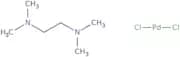
Produto descontinuadocis-Dichloro(N,N,N',N'-tetramethylethylenediamine)palladium(II)
CAS:Produto ControladoPlease enquire for more information about cis-Dichloro(N,N,N',N'-tetramethylethylenediamine)palladium(II) including the price, delivery time and more detailed product information at the technical inquiry form on this pageFórmula:C6H16Cl2N2PdPureza:Min. 95%Peso molecular:293.53 g/molRef: 3D-FD149470
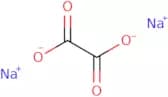
Produto descontinuadoSodium oxalate
CAS:Sodium oxalate is a salt of oxalic acid and sodium. It can be used as an inhibitor in electrochemical impedance spectroscopy, which is a method for measuring the mass transport of ions in a solution. Sodium oxalate has been shown to inhibit the reaction solution by hydrogen bonding interactions with the citric acid that is present in wastewater. This inhibition leads to the formation of the salt citrate, which is insoluble and can be removed by filtration. The surface methodology was used to measure the kinetic energy of sodium oxalate crystals on surfaces. The x-ray diffraction data was collected from anhydrous sodium oxalate crystals at room temperature.
Fórmula:C2O4Na2Pureza:Min. 95%Cor e Forma:PowderPeso molecular:134 g/molRef: 3D-FS47063
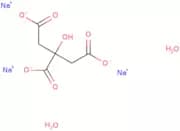
Produto descontinuadoTrisodium citrate dihydrate
CAS:Trisodium citrate dihydrate is a chemical compound that is used as a buffer and to maintain the pH of solutions. It is often used as an acidity regulator in pharmaceutical formulations and food products. Trisodium citrate dihydrate has been shown to be effective at reducing the matrix effect and increasing the concentration response, which can lead to better analytical results. This compound has also been shown to have anti-inflammatory properties, which may be due to its ability to prevent fatty acid production by inhibiting the enzyme lipase.
Fórmula:C6H5Na3O7·2H2OPureza:(Titration) Min. 98%Cor e Forma:White Off-White PowderPeso molecular:294.1 g/molRef: 3D-FT32477
Produto descontinuadoRuthenium(III) nitrosyl nitrate, soluble in 10% dilute nitric acid
CAS:Please enquire for more information about Ruthenium(III) nitrosyl nitrate, soluble in 10% dilute nitric acid including the price, delivery time and more detailed product information at the technical inquiry form on this page
Fórmula:RuN4O10Pureza:Min. 95%Cor e Forma:Clear LiquidPeso molecular:317.09 g/molRef: 3D-FR57258
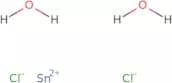
Produto descontinuadoTin(II) chloride dihydrate
CAS:Tin(II) chloride dihydrate is a white or pale yellow crystalline solid. It is soluble in water and has a relatively low melting point. Tin(II) chloride dihydrate is used as an acid catalyst for the preparation of esters from ethyl trifluoroacetate, and as an intermediate for synthesizing quinoline derivatives. Tin(II) chloride dihydrate can also be used to deactivate fatty acids by reacting with them in the presence of water. The reaction vessel is heated to about 300°C to evaporate the solvent and leave a residue of tin chloride, which can then be recovered by distillation. Tin(II) chloride dihydrate has been shown to have transport properties that are similar to those of other metal chlorides at comparable concentrations.
Fórmula:SnCl2•(H2O)2Pureza:Min. 95%Cor e Forma:Colorless Clear LiquidPeso molecular:225.65 g/molRef: 3D-FT44833
Produto descontinuadoCadmium chloride
CAS:Cadmium chloride is a compound that belongs to the group of inorganic compounds. Cadmium chloride inhibits the activity of c-jun, an important transcription factor involved in cell growth and differentiation. It also affects the activity of other transcription factors, such as NF-κB, and has been shown to induce cell death by inhibiting DNA synthesis. The cytotoxicity of cadmium chloride is related to its ability to interact with hydrogen bonding sites on proteins. In vitro studies have shown that it has significant cytotoxicity against tumor cells with a cell specific response. Cadmium chloride has also been used in therapy groups for patients with inflammatory bowel disease and rheumatoid arthritis.
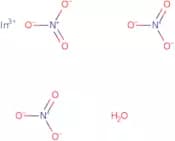
Fórmula:CdCl2Pureza:Min. 95%Peso molecular:183.32 g/molIndium(III) nitrate hydrate
CAS:Indium(III) nitrate hydrate is an inorganic compound that reacts with aqueous solutions of potassium dichromate or malonic acid to produce a precipitate. The chemical stability of this compound has been demonstrated by reacting it with nitric acid, which produced a white solid. A structural analysis of this compound has shown that the reaction mechanism may involve the formation of InO particles and oxide anions. The particle size is between 1-2 microns and the morphology is spherical.
Fórmula:In(NO3)3•(H2O)xPureza:Min. 95%Peso molecular:300.83 g/molRef: 3D-FI106482
Produto descontinuadoSodium chlorite
CAS:Sodium chlorite is a disinfectant that is used to reduce the number of bacteria in the air, water, and surfaces. It is acidic and has been shown to be effective against infectious diseases such as tuberculosis, cholera, and malaria. Sodium chlorite can be produced through the oxidation of sodium chloride by chlorite ion at high temperatures. The optimum concentration for sodium chlorite is 10-15%. This agent can also be used as an analytical method for determining the presence of organic compounds that are difficult to measure by other methods. Laser ablation coupled with mass spectrometry is one example of this technique. Sodium chlorite can also be used to treat wastewater and inhibits oxidative injury in cells.
Fórmula:NaClO2Pureza:Min. 95%Cor e Forma:White To Yellow SolidPeso molecular:90.44 g/molRef: 3D-FS09639
Produto descontinuadoSamarium(II) Iodide (ca. 0.1mol/L in Tetrahydrofuran)
CAS:Samarium(II) iodide is a synthetic carbonyl, soluble in acetonitrile, dioxolane and formyl. It is used as a reactant in preparative methods to produce alkyl halides. Samarium(II) iodide reacts with an aldehyde or ketone in the presence of acetic acid to produce an alkyl halide. This compound has chemoselectivity for the production of secondary alcohols and can be used to prepare coupling products. Samarium(II) iodide can also be used to prepare alkene and ketone compounds by reacting with formaldehyde and acetone respectively.
Fórmula:SmI2Pureza:Min. 95%Peso molecular:404.17 g/molRef: 3D-FS61157
Produto descontinuadoIron nickel oxide
CAS:Produto ControladoIron nickel oxide is a corrosion inhibitor that is used in the architectural industry. It has been shown to have photoelectrochemical properties and has been used as an electrode for the conversion of solar energy into electrical energy. This material can be activated by either dry weight or particle size, with activation energies varying from 150 to 300 mV. Iron nickel oxide also has a high chemical reactivity and can be used as a catalyst for reaction temperatures between 100-300°C.
Iron nickel oxide is an electrochemically active material that exhibits a high resistance to corrosion, which makes it an ideal candidate for use in the production of membranes for water purification systems. The particles of this material are not very large, so the general equation for calculating its resistance to corrosion is R=1/2RIO2t, where I is current intensity, R is resistance to corrosion, I0 is initial value of current intensity, and t is time.Fórmula:Fe2NiO4Pureza:Min. 95%Peso molecular:234.38 g/molRef: 3D-FI170856
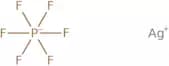
Produto descontinuadoSilver hexafluorophosphate
CAS:Silver hexafluorophosphate (AgPF) is a silver salt of the inorganic acid hexafluoro-phosphoric acid. It has been shown to have a high reactivity with organic compounds and is insoluble in water. Silver hexafluorophosphate is used as an additive for certain polymers, such as PVC, to improve their insulating properties. In addition, AgPF has shown biological properties that may be due to its ability to act as a chelate ligand and bind metal ions. The reaction mechanism of AgPF involves the formation of hydrogen bonding interactions with nitrogen atoms, which are found in biological molecules such as proteins and nucleic acids.
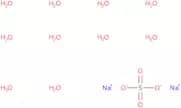
Fórmula:AgPF6Pureza:Min. 95%Peso molecular:252.83 g/molSodium sulphate decahydrate
CAS:Produto ControladoSodium sulphate decahydrate is an inorganic salt that is a salt of sodium and sulfuric acid. It is used as a food additive, preservative, and to control the pH of water. Sodium sulfate decahydrate has been shown to be effective for the treatment of diarrhoea caused by infectious diseases such as rotavirus and enterotoxigenic Escherichia coli. This drug also has inhibitory effects on bacterial growth and may be useful for the prevention or treatment of bowel diseases such as Crohn's disease and ulcerative colitis. The intermolecular hydrogen bonding between the anions in this compound make it highly reactive, which can result in toxic side effects. However, this drug has not exhibited any toxic side effects at concentrations below 0.5%.
Fórmula:H22Na2O14SPureza:Min. 95%Cor e Forma:PowderPeso molecular:324.21 g/molRef: 3D-FS35057
Produto descontinuado